Abstract
Textured label papers and high-gloss UV varnishes create a demanding LED curing application. Paper texture changes the local lamp-to-web distance, ink transfer, and coating appearance. A high-gloss varnish adds film thickness and requires complete surface cure without compromising gloss, adhesion, or downstream handling. Selecting LED lamp heads for this work requires more than choosing a nominal irradiance level. The curing system must provide stable energy across an uneven substrate surface, match the ink and varnish chemistry, fit the narrow-web press layout, and maintain a controlled thermal condition before rewinding.
Introduction
LED UV curing equipment for label presses is frequently specified for smooth paper or film labels. Textured papers require a different evaluation. Laid, embossed, felt-marked, linen, and other uncoated textured stocks can create local changes in surface height and ink laydown. Those changes affect the energy received by the printed image and the visual result after varnishing.
High-gloss varnish can make the contrast more visible. The varnish may level some texture, yet it can also reveal uneven coating weight, incomplete cure, pinholes, gloss variation, or local marking. A label may look acceptable at the press exit but show blocking or scuff defects after it is wound into a roll.
The correct lamp-head selection starts with the highest-risk material combination: the actual textured facestock, the heaviest approved ink coverage, the selected overprint varnish, and the intended commercial press speed. The goal is repeatable cure over the full image area, not maximum LED output.
Textured Papers Change the Optical Working Distance
A textured paper surface is not a flat optical plane. Peaks and valleys in the substrate alter the local distance and angle between the printed surface and the LED lamp head. The difference may be small in physical terms, but it can matter when the cure process operates close to its minimum acceptable energy level.
The surface profile can also influence ink transfer. Ink may sit differently on raised features and lower areas of the sheet. A high-gloss varnish can then create a non-uniform film over the printed image. The final cure requirement becomes a combination of substrate texture, ink-film thickness, and coating weight.
Lamp-head selection should therefore consider working-distance tolerance. A tightly focused optical profile may provide high irradiance at one defined distance but lose consistency when web flutter or surface texture changes the actual image position. A wider optical profile may tolerate more distance variation, but it must still provide enough energy at production speed.
The required balance depends on the paper texture, press geometry, and ink stack. The lamp supplier should define the recommended working-distance range and confirm output uniformity at the actual substrate plane.
LED UV Curing Equipment for Label Presses Needs a Usable Optical Window
The physical width of an LED lamp head is not the same as its usable curing width. The usable width is the area that receives verified, repeatable energy at the operating distance. This distinction is important for textured-paper labels because the image may include dense graphics, varnish panels, or fine type close to a web edge.
Output should be measured across the full active print width. The check should include the operator side, web centre, and drive side. It should also cover the positions where the most demanding graphics run, rather than only an open unprinted area.
The selected lamp head should provide margin beyond the printed width. That margin allows for normal web guiding movement, slight lateral shifts, and the use of different die layouts. A critical varnished panel placed near the boundary of the usable width can receive less stable cure than the same panel placed near the centre.
Lamp segmentation requires similar attention. If the head uses multiple LED modules, the transitions between modules should be tested with solid bars, fine type, and high-gloss varnish. The finished surface should not show gloss changes or cure defects at a segment boundary.
Match Wavelength to Both Ink and Varnish Chemistry
LED systems commonly use wavelengths such as 365 nm, 385 nm, 395 nm, or 405 nm. The selected wavelength must match the photoinitiator package in the flexographic ink and the high-gloss varnish. Compatibility with one material does not confirm compatibility with the full printed stack.
Textured paper labels often use opaque white, dense black, dark spot colours, metallic inks, or high-opacity branding elements. These materials may require more energy than light process colours because pigments can limit useful light penetration through the ink film.
A high-gloss varnish may have a different cure response from the underlying ink. It can develop an attractive appearance while remaining weak beneath the exposed surface. The result can be poor scratch resistance, blocking, loss of gloss, or marks from downstream idlers and rewind pressure.
Material approval should therefore include the actual ink set, varnish, paper stock, and LED wavelength. The final lamp recipe should be based on the highest-demand approved combination, not on a thin process-colour test image.
Separate Irradiance From Energy Dose
Irradiance is the instantaneous optical power delivered to the label surface. Energy dose is the total energy received during exposure. Both influence cure, but they solve different parts of the problem.
Adequate irradiance helps initiate rapid polymerisation at the exposed surface. Adequate dose supports cure through the printed ink and varnish film. A lamp head can deliver high peak irradiance while still providing insufficient total dose if the illuminated length is short or the web speed is too high.
The measurement should be taken at the substrate plane with an instrument suitable for the LED wavelength. The working distance, web speed, illuminated length, and cross-web uniformity should all be recorded with the approved job recipe.
Textured paper makes this measurement more important. The reference plane should represent the printed surface during normal production. The press should not rely only on a reading taken at the lamp face or at a distance that does not match the real web path.
Control Ink Laydown and Varnish Weight
Lamp output cannot compensate for unstable ink transfer. In flexographic printing, anilox volume, cell condition, chamber pressure, doctor blade condition, ink viscosity, and plate design influence the deposited ink film. A heavier film can require greater final dose and may show poor through-cure beneath a cured surface.
Textured papers can make heavy ink laydown more visible. Excess ink may bridge surface features or create uneven colour density on raised areas. Increasing lamp power may harden the surface, but it can leave the root transfer issue unresolved.
The varnish unit needs the same discipline. Anilox volume and coating-transfer conditions determine varnish weight. A heavy high-gloss varnish film may improve visual depth, but it also increases cure demand and the risk of oxygen-inhibited surface tack.
The selected anilox should provide the required gloss and protection without placing the process near its cure limit. The press should verify coating weight before raising final lamp output. A varnish-transfer problem can look like a curing problem, especially when the defect appears only in selected areas.
Arrange Pinning and Final Cure for the Print Stack
Interstation LED heads are often used to pin ink before the web enters the next flexographic unit. Controlled pinning can stabilise large solids, reduce ink movement, and protect fine type on textured label stocks.
Pinning should not automatically become full cure. Excess interstation exposure can add heat, affect wet trapping, and make the surface less receptive to a later high-gloss varnish. The correct setting provides enough stability for the print sequence while preserving compatibility with the next layer.
The final LED head should cure the completed ink-and-varnish stack. It must be placed after the varnish application and before any web contact point that could mark a marginal surface. The final-cure recipe should account for the thickest approved varnish and the most pigmented underlying ink.
Each lamp position should have a documented purpose. This prevents operators from applying the same high output after every station when only selected stages require strong exposure.
Manage Oxygen Inhibition on High-Gloss Surfaces
High-gloss varnish requires reliable surface cure. Free-radical UV varnishes can be affected by oxygen at the exposed surface. If surface conversion is insufficient, the varnish may feel tacky, attract dust, show weak scratch resistance, or block in the rewind roll.
The initial checks should be measurable. Confirm the LED wavelength, output at the web plane, working distance, press speed, lamp-window cleanliness, and varnish weight. Then compare the result after a consistent conditioning period, not only immediately after lamp exposure.
A glossy surface does not prove complete cure. A varnish can look smooth at the press exit and still mark under roll pressure. The approved quality process should include dry-rub, scratch, adhesion, and blocking tests that match the intended label use.
If surface inhibition remains after the process settings are confirmed, the varnish chemistry may require review. Increasing lamp output beyond the stable operating range can create excess heat and reduce the tolerance of the paper or pressure-sensitive construction.
Protect the Textured Label Construction From Heat
LED systems direct less infrared energy toward the web than many conventional UV sources. However, the printed ink and varnish still absorb optical energy. High coverage, dark solids, and thick gloss varnish can raise the temperature of the facestock, adhesive, liner, and web path.
Textured paper labels can be sensitive to curl, moisture-related shape changes, and uneven tension. The label construction may also use a pressure-sensitive adhesive that responds differently from the paper surface. Excess heat can affect register, die-cut accuracy, rewind quality, and label dispensing.
Temperature should be measured after final cure and before rewind under realistic production conditions. The trial should include the intended speed, full print coverage, active lamp sequence, and normal cooling arrangement.
If temperature is excessive, the process should first review wavelength matching, varnish weight, ink-film thickness, and unnecessary pinning. A better material match or a revised cure sequence can reduce heat without sacrificing final performance.
Consider Retrofit Geometry and Service Access
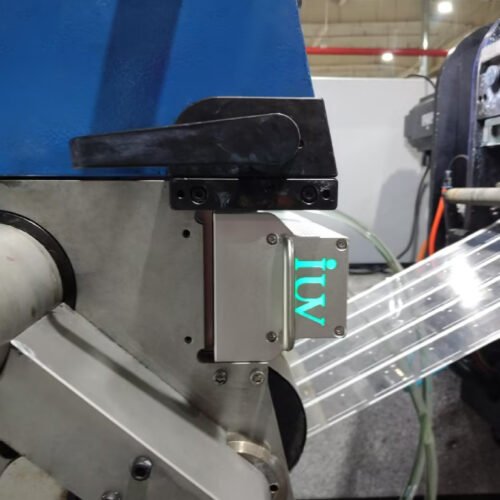
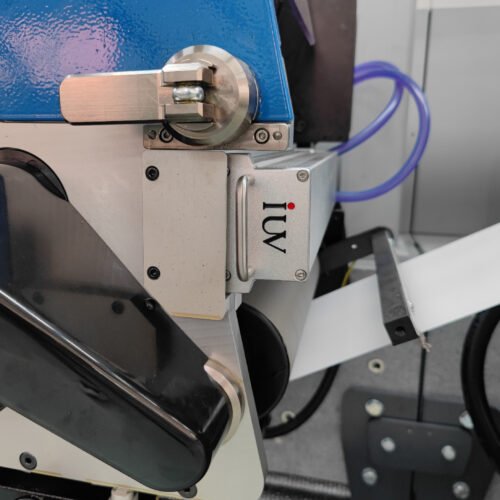
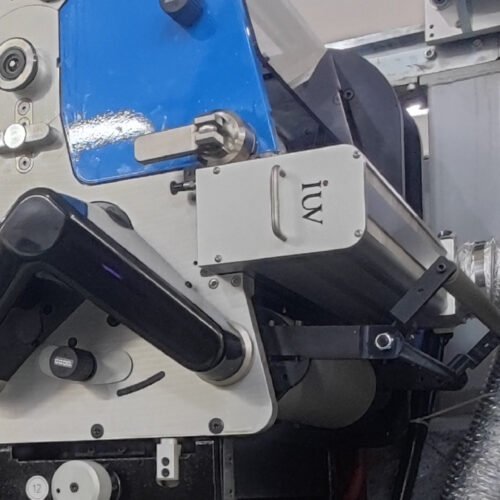
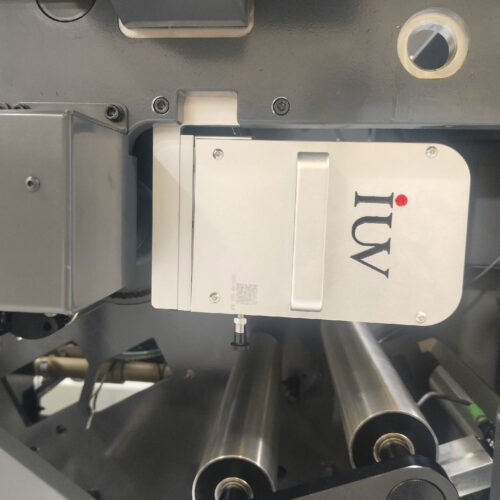
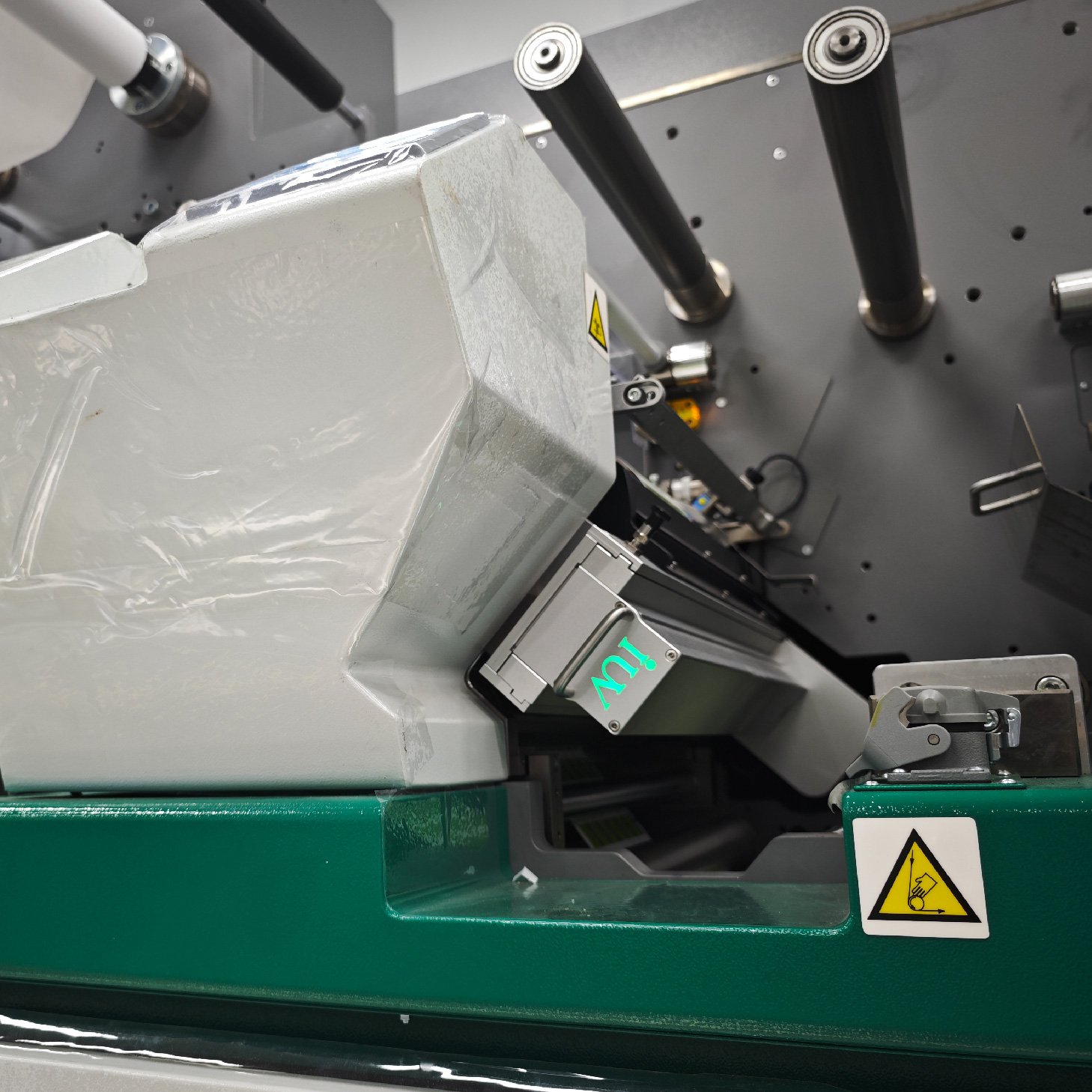
A lamp head must fit the narrow-web press without disturbing web handling or routine maintenance. The installation should define the lamp-to-web distance, available interstation space, guarding, cable routing, cooling requirements, and access for cleaning.
Textured papers can create more lint and dust than smooth film substrates. The lamp assembly should be positioned where operators can inspect and clean the optical window without disrupting normal press setup. The design should also prevent stray UV energy from reaching plates, anilox rolls, chamber seals, and exposed ink.
The controls should link lamp output to press start, stop, and speed. A stationary web should not remain under full production output. This protects textured stocks from local overheating and prevents premature curing on press components.
For retrofit projects, the mechanical survey should include the intended varnish unit and any downstream cooling or rewind components. The lamp head must support the whole converting route, not only the printing unit where it is installed.
Verify Gloss, Cure, and Print Stability Together
The approval test should use representative textured paper and the intended high-gloss varnish. It should include dense solids, fine positive type, reverse type, coated areas, and web-edge graphics. The results should be assessed at production speed and after normal rewinding conditions.
Gloss appearance should be evaluated together with cure performance. A visually smooth varnish may still fail scratch resistance or blocking tests. A hard surface may still show poor varnish adhesion to the underlying ink. The test plan should identify which layer fails when a defect occurs.
Registration and print detail should also be checked. Textured paper can influence ink transfer and make fine text less forgiving. Interstation pinning should support definition without changing the varnish interface or creating excessive heat.
For low-migration or sensitive packaging labels, the approved recipe should include the exact ink set, varnish, substrate construction, lamp wavelength, output range, anilox specification, speed range, and quality checks. A visible gloss result cannot replace documented cure control.
Maintain Optical Output and Surface Consistency
Lamp windows can collect paper lint, dust, ink mist, and varnish splash. Contamination reduces delivered energy and can create uneven cure across the web. On high-gloss labels, local contamination may appear as a gloss difference before it causes an obvious tack defect.
Cooling performance must also remain stable. Air-cooled systems require clean filters and functional fans. Water-cooled systems require stable flow, suitable coolant condition, leak checks, and active alarms. Reduced cooling can alter output consistency during long runs.
Output should be measured periodically at the approved working distance and across the usable print width. The results should be recorded by lamp head and compared over time. This makes gradual drift visible before a repeat job develops gloss or cure variation.
Preventive maintenance should also include anilox inspection, varnish-transfer checks, and web-path cleaning. Surface quality depends on the condition of the complete process, not on the LED head alone.
Troubleshoot Defects by Their Pattern
If the varnish is tacky across the full web, inspect final dose, wavelength compatibility, press speed, varnish weight, and oxygen inhibition. If tack occurs only above a dense ink, investigate ink-film thickness, pigment loading, and cure depth in the print layer.
If the defect appears at one web edge, inspect lamp alignment, cross-web output uniformity, web tracking, and optical-window contamination. If it appears in repeated bands, check lamp-module transitions, coating transfer, and the condition of the anilox roll.
If fine type loses definition while varnished solids remain acceptable, examine plate condition, ink transfer, and interstation pinning. The root cause may be wet-on-wet ink movement rather than insufficient final cure.
A location-based diagnosis prevents unnecessary changes to overall lamp power. It helps the press retain a stable curing condition while correcting the specific issue affecting textured paper or gloss varnish performance.
Conclusion
Selecting LED lamp heads for textured papers and high-gloss varnishes requires attention to optical working-distance tolerance, usable curing width, ink and varnish chemistry, coating weight, and the complete narrow-web process route. The target is stable energy at the real printed surface, not the highest possible lamp setting.
A reliable system uses a wavelength matched to every material layer, controlled pinning before varnish, sufficient final dose for the complete stack, and documented thermal limits before rewind. When output uniformity and coating transfer are validated on the actual textured stock, label presses can maintain consistent gloss, cure, print definition, and finished-roll quality.