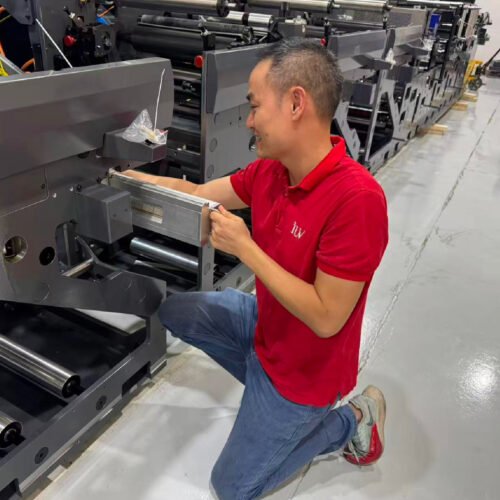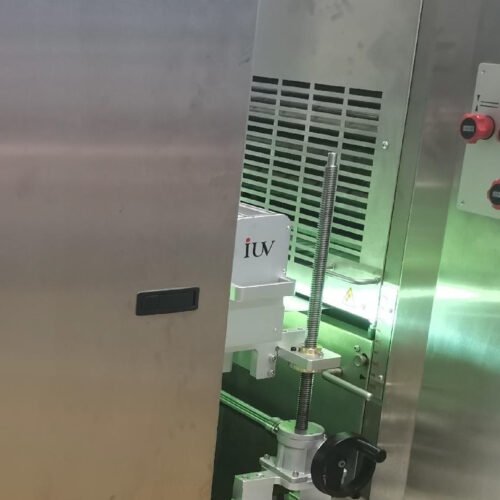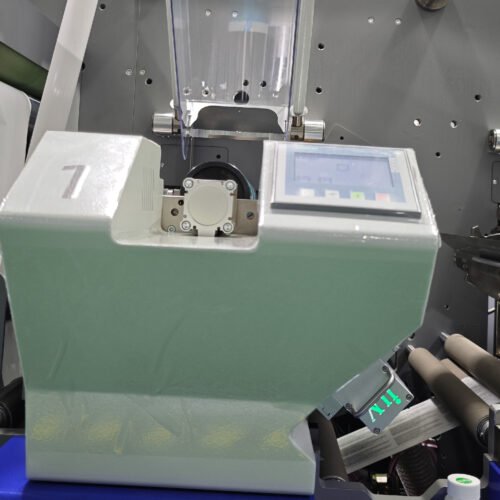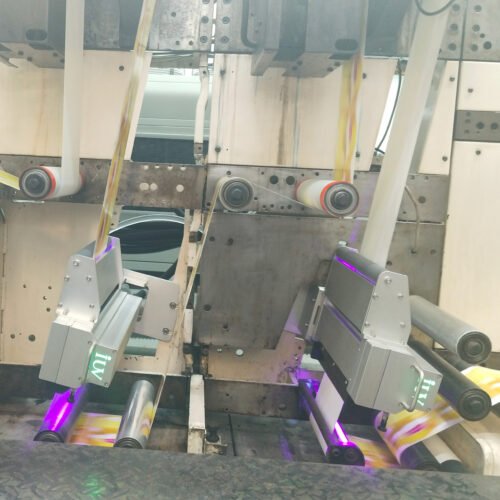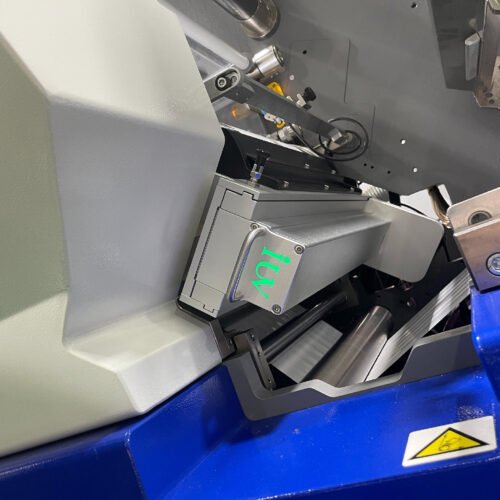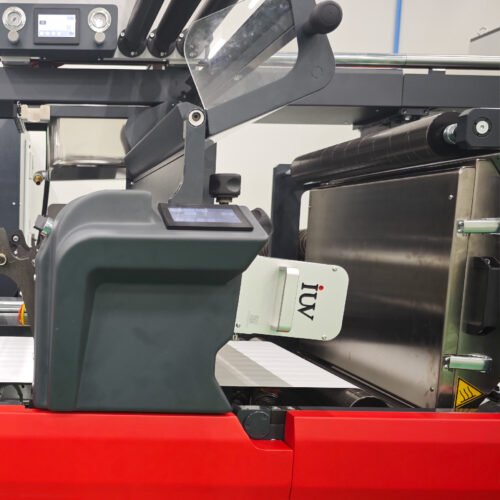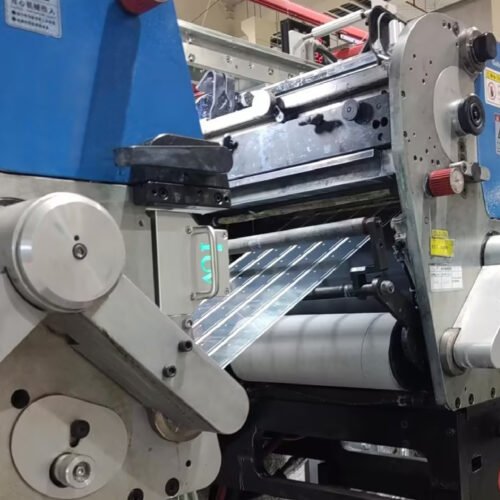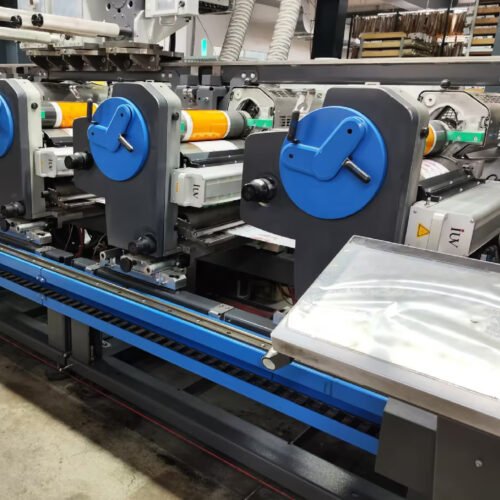
Label converters operating narrow web flexographic and offset presses face increasing demands for versatility. Shorter runs, complex substrates, high-opacity whites, and specialty coatings require adaptable curing technology. Hybrid UV curing strategies address these needs by integrating conventional mercury UV lamps and LED UV stations on a single press line. This configuration combines the broad-spectrum power of traditional arc lamps with the efficiency and control of LED systems, creating a flexible platform for modern label production.
In narrow web environments, curing performance influences not only ink polymerization but also registration stability, substrate integrity, and production speed. Hybrid systems allow operators to match curing characteristics to specific ink layers without compromising throughput. Rather than relying on one universal energy source, the press can deploy the appropriate UV technology at each station.
Understanding the Functional Differences Between Mercury and LED UV
Conventional mercury UV lamps emit a wide spectral range that includes UVA, UVB, and UVC wavelengths. This broad output supports deep penetration in thick ink films and opaque coatings. Mercury systems remain effective for high-build whites, metallic inks, and specialty varnishes. However, they generate significant infrared radiation and require warm-up time, reflector maintenance, and ozone management.
LED UV stations emit energy at specific wavelengths, typically 365 nm, 385 nm, or 395 nm. Their narrow spectral output reduces unnecessary radiation and minimizes heat transfer to the substrate. Instant on-off capability improves energy efficiency and eliminates idle power consumption. For heat-sensitive label materials such as thin BOPP or shrink sleeves, LED systems reduce the risk of distortion.
Hybrid integration leverages these strengths. Mercury units handle applications requiring broad-spectrum depth, while LED modules manage standard process colors or sensitive substrates with greater thermal control.
Strategic Placement of UV Stations on a Single Press Line
Effective hybrid configuration begins with station planning. In multi-color wet-on-wet flexographic printing, early stations often print opaque white underlayers. These layers benefit from the penetration capability of mercury lamps. Installing a conventional UV unit after the white station ensures reliable through-cure before additional colors are applied.
Subsequent process colors may be cured with LED stations. LED systems stabilize ink quickly without excessive heat, preserving dimensional accuracy in narrow web label production. When printing fine gradients or detailed vignettes, controlled LED output supports smoother leveling before polymerization locks the surface.
In offset UV label presses, blanket cylinder temperature and ink-water balance interact with curing energy. Hybrid layouts must consider mechanical constraints, web path geometry, and chill roll positioning. Balanced placement ensures uniform energy distribution and stable registration across the entire press line.
Ink Compatibility and Photoinitiator Considerations
Successful hybrid strategies depend on ink formulation. Conventional UV inks formulated for mercury lamps often contain photoinitiators optimized for shorter wavelengths. LED-compatible inks require photoinitiators responsive to the selected diode emission. When integrating both technologies, converters must coordinate closely with ink suppliers to ensure cross-compatibility.
In many cases, hybrid ink systems are formulated to respond adequately under both light sources. This approach reduces inventory complexity and supports flexible job scheduling. However, curing parameters must still be calibrated carefully. Excessive intensity from either system may cause surface over-cure, while insufficient dose results in incomplete polymerization.
Testing should evaluate adhesion, rub resistance, gloss uniformity, and chemical stability. Monitoring energy dose with calibrated radiometers ensures consistent curing performance across both technologies.
Thermal Management and Substrate Protection
Hybrid UV lines introduce varying thermal profiles along the web path. Mercury lamps contribute significant radiant heat, while LED modules generate less infrared energy but still produce exothermic heat during polymerization. The combined effect must be managed carefully, particularly for pressure-sensitive labels and shrink films.
Chill rolls and cooling drums play a critical role. They stabilize substrate temperature between curing stations and maintain dimensional accuracy. Uneven cooling may create lateral temperature gradients that affect gloss and registration. Temperature mapping across the web width supports consistent output.
By alternating conventional and LED units strategically, operators can distribute thermal load evenly. For example, placing an LED station after a mercury unit allows partial cooling before subsequent curing exposure. This reduces cumulative heat buildup and protects sensitive materials.
Energy Efficiency and Operational Flexibility
One advantage of hybrid integration is improved energy management. Mercury lamps typically consume higher power and require continuous operation during production. LED stations can be activated instantly and adjusted dynamically according to job requirements. Combining both systems allows selective energy use rather than full reliance on one technology.
During short runs or low-coverage jobs, LED modules may handle most curing tasks. Mercury units can remain idle or operate at reduced power. For high-opacity applications, both systems may operate sequentially to achieve deeper cure without excessive speed reduction.
This flexibility enhances production planning in narrow web label environments where job variety is high. Hybrid systems support rapid changeovers and accommodate diverse ink stacks without extensive mechanical modification.
Maintenance and Reliability Considerations
Hybrid press lines require disciplined maintenance routines. Mercury lamps demand regular reflector cleaning, bulb replacement, and airflow monitoring. LED arrays require cooling system inspection and output verification. Consistent radiometer measurement across both systems ensures stable irradiance levels.
Electrical integration must also be robust. Independent power supplies and safety interlocks prevent interference between curing units. Monitoring software can track operating hours and output stability, supporting preventive maintenance planning.
Maintaining uniform irradiance across the web width remains essential. Inconsistent output between stations may produce gloss variation or banding in multi-color gradients. Alignment checks and thermal inspections should be part of routine service procedures.
Performance Optimization in Multi-Color Label Production
Hybrid UV strategies offer advantages in complex multi-layer jobs. In wet-on-wet flexographic printing, an initial mercury cure can secure a dense white layer. Subsequent LED curing stabilizes process colors without overheating the substrate. Final varnish layers may receive either LED or conventional curing depending on film thickness and desired finish.
In UV offset narrow web applications, hybrid curing supports precise control over dot integrity and ink trapping. Offset inks benefit from stable temperature and predictable polymerization kinetics. Coordinating curing type with ink rheology enhances gloss uniformity and surface durability.
When properly configured, hybrid systems improve print quality consistency across diverse substrates, including films, foils, and coated papers. The ability to tailor curing energy to each station enhances overall efficiency and reduces waste caused by incomplete cure or substrate distortion.
Long-Term Strategic Benefits
Integrating conventional and LED UV stations on a single press line provides long-term adaptability. As ink technologies evolve, presses equipped with hybrid capability can accommodate both legacy formulations and new LED-optimized systems. This reduces the risk associated with full conversion to a single curing method.
Hybrid strategies also extend equipment life. Older narrow web presses can be modernized incrementally, preserving mechanical infrastructure while upgrading curing performance. This approach supports gradual investment rather than complete system replacement.
In competitive label markets, production agility and consistent quality are essential. Hybrid UV curing systems deliver both by combining deep penetration capability with precise thermal control. Through careful planning, calibration, and maintenance, converters can achieve reliable polymerization, stable registration, and efficient energy use across diverse label printing applications.