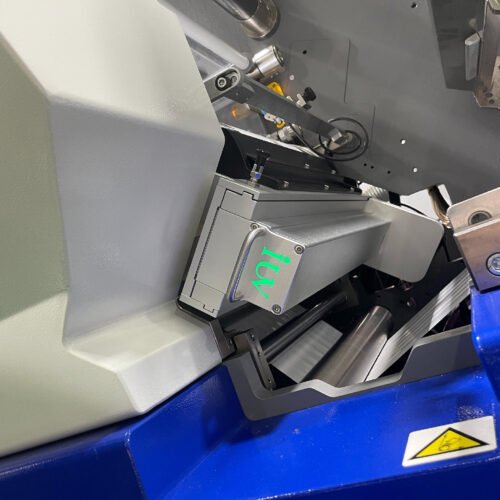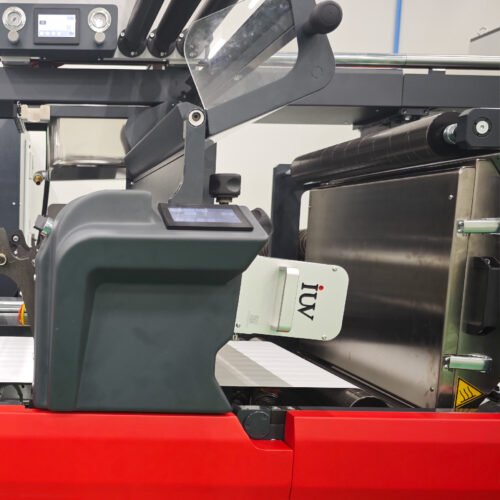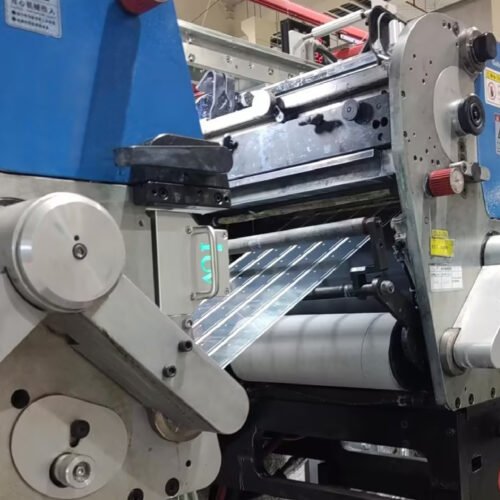
In modern label printing, curing performance is no longer defined only by lamp power or ink chemistry. As LED UV systems become standard on narrow web flexo presses, lamp-to-substrate distance has emerged as a critical variable that directly affects curing efficiency, print quality, and long-run stability. Optimizing LED UV lamp height is not a theoretical adjustment but a practical process that influences daily production results in label, narrow web, and plate-based flexographic printing environments.
Unlike conventional UV systems, LED UV curing relies on concentrated spectral output, controlled irradiance, and precise energy delivery. Lamp height determines how effectively this energy reaches the ink or coating layer. When set incorrectly, even a high-quality LED UV system can underperform, leading to incomplete cure, adhesion issues, or unnecessary stress on substrates and press components.
This guide explains how LED UV lamp height affects curing behavior on flexo presses and how printers can optimize this parameter for consistent, efficient, and repeatable results in label production.
Understanding LED UV Energy Distribution on Flexo Presses
LED UV lamps emit light in a narrow wavelength range, typically centered around 365 nm, 385 nm, or 395 nm, depending on ink formulation and application. Unlike mercury lamps, which produce broad-spectrum UV radiation and rely on reflectors to scatter energy, LED UV systems deliver directional light with minimal divergence.
As lamp height increases, irradiance at the substrate surface decreases due to beam spread and energy dispersion. As lamp height decreases, irradiance increases but the illuminated area becomes more concentrated. This relationship makes lamp height one of the most sensitive parameters in LED UV curing.
On narrow web flexo presses, where print widths are limited and line speeds are high, small adjustments in lamp height can produce noticeable changes in cure response. This is especially true for high-density solids, fine text, and coated label stocks that require uniform surface and through-cure.
Why Lamp Height Matters More in LED UV Than Mercury UV
In traditional mercury lamp systems, curing performance is often adjusted by changing lamp power or shutter exposure. Lamp height is usually fixed because reflectors distribute UV energy across a broader area. While height still matters, its impact is less immediate.
LED UV systems operate differently. They use fixed output levels, instant on-off behavior, and no shutters. Lamp height becomes the primary mechanical variable that controls irradiance intensity and dose delivery.
If the lamp is mounted too high, the ink film may receive insufficient peak irradiance, resulting in surface cure without proper crosslinking through the ink layer. If the lamp is mounted too close, excessive irradiance can cause ink brittleness, substrate deformation, or oxygen inhibition effects at high press speeds.
Optimizing lamp height ensures that the energy delivered matches the ink system, substrate type, and press speed without overexposing or undercuring the print.
Key Factors That Influence Optimal LED UV Lamp Height
There is no universal lamp height that works for all flexo applications. The optimal distance depends on several interacting factors that must be evaluated together.
Ink formulation plays a major role. LED UV inks are engineered for specific wavelengths and energy densities. Some formulations require higher peak irradiance, while others respond better to longer exposure at moderate intensity. Lamp height must align with the ink supplier’s curing window.
Substrate type is equally important. Paper labels, films, foils, and coated stocks reflect and absorb UV energy differently. Thin films may deform if exposed to excessive heat from close lamp positioning, even with LED systems that produce minimal infrared radiation.
Press speed determines how much exposure time the ink receives. At higher speeds, lower lamp height is often required to maintain sufficient dose, while slower speeds allow more flexibility.
Anilox volume and ink film thickness affect how deeply UV energy must penetrate. Thicker ink films typically require higher irradiance or reduced lamp height to achieve complete cure.
Establishing a Baseline Lamp Height on Flexo Presses
The optimization process should begin with a stable baseline setup. Most LED UV system manufacturers provide a recommended initial lamp height range, often between 8 mm and 15 mm from the substrate surface. This range is designed to balance irradiance intensity and coverage uniformity.
Starting within this range allows printers to observe curing performance under controlled conditions. Test prints should be run at standard production speed using the target ink and substrate combination. Adhesion, rub resistance, and odor should be evaluated immediately after printing.
If surface cure appears acceptable but adhesion fails during post-processing, the lamp may be positioned too high. If substrates show curling, shrinkage, or ink cracking, the lamp may be too close.
Fine-Tuning Lamp Height for Maximum Curing Efficiency
Once a baseline is established, fine adjustments should be made in small increments. Changes of 1 to 2 mm can produce measurable differences in curing behavior on narrow web flexo presses.
Lowering the lamp increases peak irradiance and accelerates surface cure. This adjustment is effective for high-speed label printing or dense ink coverage but should be monitored carefully to avoid over-curing.
Raising the lamp reduces irradiance and spreads energy over a wider area. This can improve curing uniformity for sensitive substrates or when printing thin ink films that do not require high peak intensity.
Each adjustment should be followed by consistent testing under production conditions. Cure quality should be evaluated not only on press but also during finishing operations such as die-cutting, slitting, and rewinding, where undercured inks often reveal weaknesses.
Managing Lamp Height Across Different Print Stations
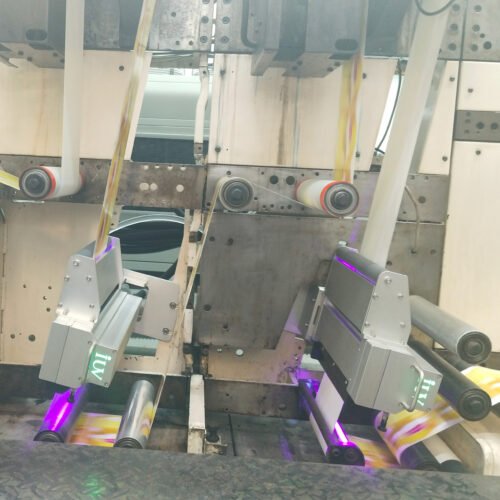
On multi-color flexo presses, lamp height optimization should be considered for each curing position. Different colors, coatings, and varnishes may respond differently to the same curing conditions.
White inks, opaque colors, and tactile coatings often require closer lamp positioning compared to transparent colors or process inks. Applying a uniform lamp height across all stations may simplify setup but can compromise performance in demanding applications.
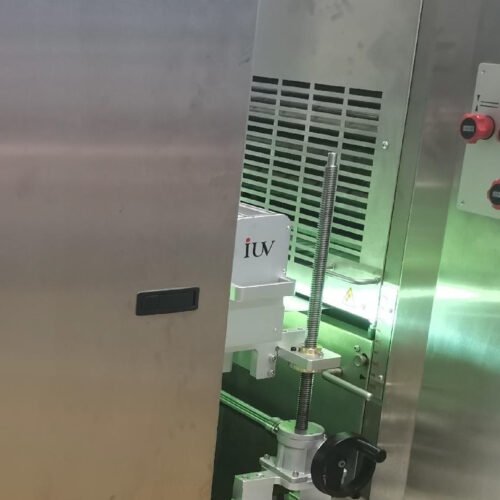
Advanced LED UV systems allow independent height adjustment or modular mounting, enabling printers to fine-tune curing performance without affecting overall press configuration.
Long-Run Stability and Lamp Height Consistency
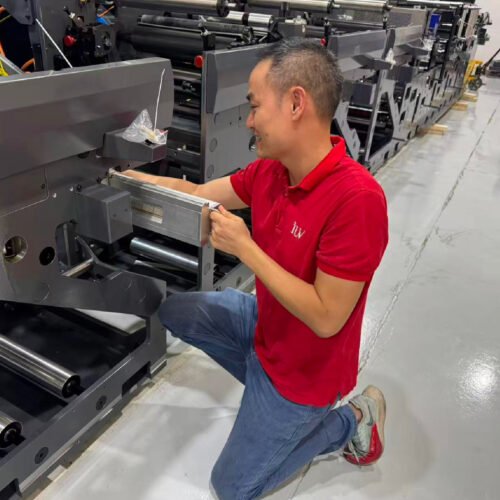
For long-run label production, maintaining consistent lamp height is as important as initial optimization. Mechanical vibration, improper mounting, or frequent press adjustments can alter lamp distance over time.
Regular inspection of lamp mounts and brackets helps prevent gradual changes that affect curing consistency. Operators should verify lamp height during routine maintenance and after major press interventions.
Consistent lamp height contributes to stable output over long runs, reducing color variation, minimizing waste, and improving repeatability across jobs.
Energy Efficiency and Lamp Height Optimization
Optimizing lamp height is not only about cure quality but also about energy efficiency. When lamp height is correctly set, the LED UV system delivers the required energy without unnecessary power consumption or thermal load.
Running lamps too close to compensate for incorrect setup elsewhere often leads to higher energy usage and increased wear on system components. Proper height adjustment allows printers to achieve curing targets while maintaining system longevity.
In high-volume label operations, these efficiency gains translate into measurable cost savings over time.
Integrating Lamp Height Optimization into Standard Operating Procedures
To achieve consistent results, lamp height optimization should be documented and integrated into press setup procedures. Recording optimal settings for specific ink and substrate combinations helps reduce setup time and operator variability.
Training press operators to understand the relationship between lamp height and curing performance ensures that adjustments are made deliberately rather than by trial and error.
Over time, this structured approach supports higher productivity, better print quality, and greater confidence in LED UV curing performance across a wide range of flexographic label applications.
Conclusion
Optimizing LED UV lamp height is a practical and essential step in maximizing curing efficiency on flexo presses. In label, narrow web, and plate-based printing, this adjustment directly affects ink cure, substrate stability, and long-run consistency.
By understanding how lamp height influences irradiance, exposure, and energy delivery, printers can unlock the full potential of LED UV curing systems. Careful setup, incremental adjustment, and consistent monitoring allow flexo operations to achieve reliable curing performance while maintaining efficiency and print quality in demanding production environments.