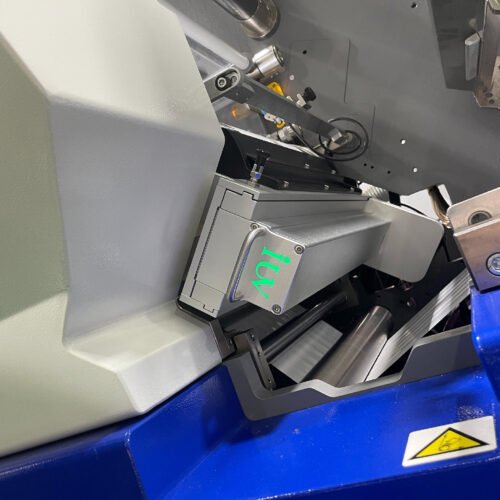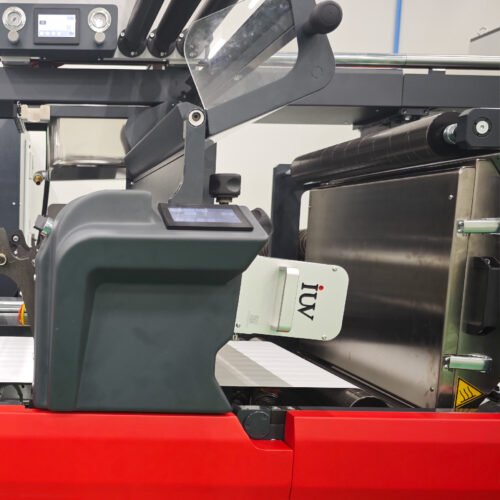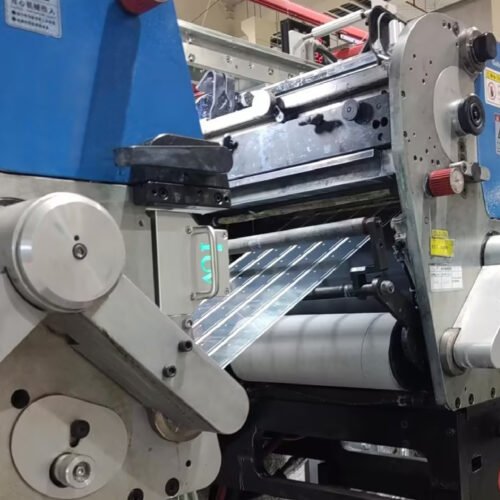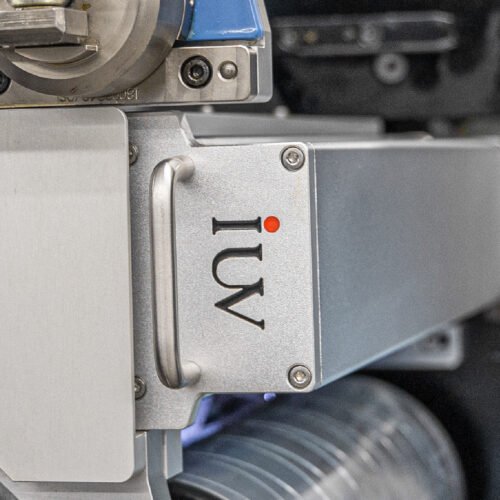
High-opacity white inks play a critical role in modern label printing, especially for premium packaging, shrink sleeves, and multilayer constructions. These inks are often applied at higher film weights to achieve strong hiding power, brightness, and consistency across variable substrates. While LED UV curing offers precise energy control and instant response, achieving full cure depth in dense white ink layers remains one of the most demanding tasks in narrow web flexographic printing.
Incomplete cure in white inks does not always appear on the surface. Labels may pass basic rub tests yet fail during die-cutting, slitting, or downstream converting. Maximizing cure depth is therefore essential for production stability, long-run reliability, and brand quality.
Why High-Opacity White Inks Are Difficult to Cure
White inks rely on high pigment loading, typically titanium dioxide, to achieve opacity. These pigments strongly scatter and absorb UV energy, limiting penetration into the ink layer. As ink film thickness increases, the amount of UV energy reaching the lower layers decreases significantly.
In flexographic label printing, white inks are often printed as a base layer under process colors or used in solid areas for visual contrast. Narrow web presses running at high speed further reduce exposure time, making cure depth control even more critical.
LED UV systems deliver narrow-band energy that must be carefully matched to ink photoinitiators. Without proper setup, surface cure may appear complete while the lower ink layers remain undercured.
Understanding Cure Depth Versus Surface Cure
Surface cure refers to the hardness and dryness of the ink surface immediately after exposure. Cure depth describes the polymerization level throughout the entire ink film, including the interface with the substrate.
Poor cure depth can result in weak adhesion, ink pick during finishing, or deformation during heat exposure. These failures often occur hours or days after printing, making them costly and difficult to trace.
For high-opacity white labels, focusing only on surface results is insufficient. The curing process must be optimized to deliver energy deep into the ink layer without damaging substrates or slowing production.
Matching LED UV Wavelength to White Ink Chemistry
Successful cure depth begins with proper wavelength selection. Most LED UV systems operate at 365 nm, 385 nm, 395 nm, or combinations of these wavelengths. White inks formulated for LED curing are designed to respond to specific wavelength ranges.
Shorter wavelengths generally provide higher energy absorption near the surface, while slightly longer wavelengths can improve penetration into thicker ink films. Using an LED UV system that aligns with the ink’s photoinitiator package is essential for achieving balanced curing.
When cure depth issues arise, the first step should be confirming that ink formulation and lamp wavelength are fully compatible.
Controlling Ink Film Thickness on Flexo Presses
Ink film thickness is a primary factor affecting cure depth. In flexographic printing, anilox selection directly determines the volume of white ink applied. Excessive anilox volume may improve opacity but dramatically reduce curing efficiency.
Optimizing cure depth often involves finding the balance between ink laydown and visual requirements. In many cases, using two thinner white layers with intermediate curing can produce better results than one heavy layer.
Consistent ink transfer, stable viscosity, and clean anilox cells help maintain predictable film thickness and improve curing performance across the web.
Optimizing LED UV Lamp Power for White Inks
Lamp power must be set high enough to cure the full ink film at production speed, but excessive power does not always improve cure depth. Overexposure can cause rapid surface polymerization that blocks UV penetration into lower layers.
For white inks, gradual energy delivery is often more effective than maximum intensity. Adjusting lamp power to avoid instant surface skinning allows energy to reach deeper into the ink layer.
Calibration should always be performed at real production speed using actual substrates and inks, not test conditions.
Managing Lamp Height and Exposure Geometry
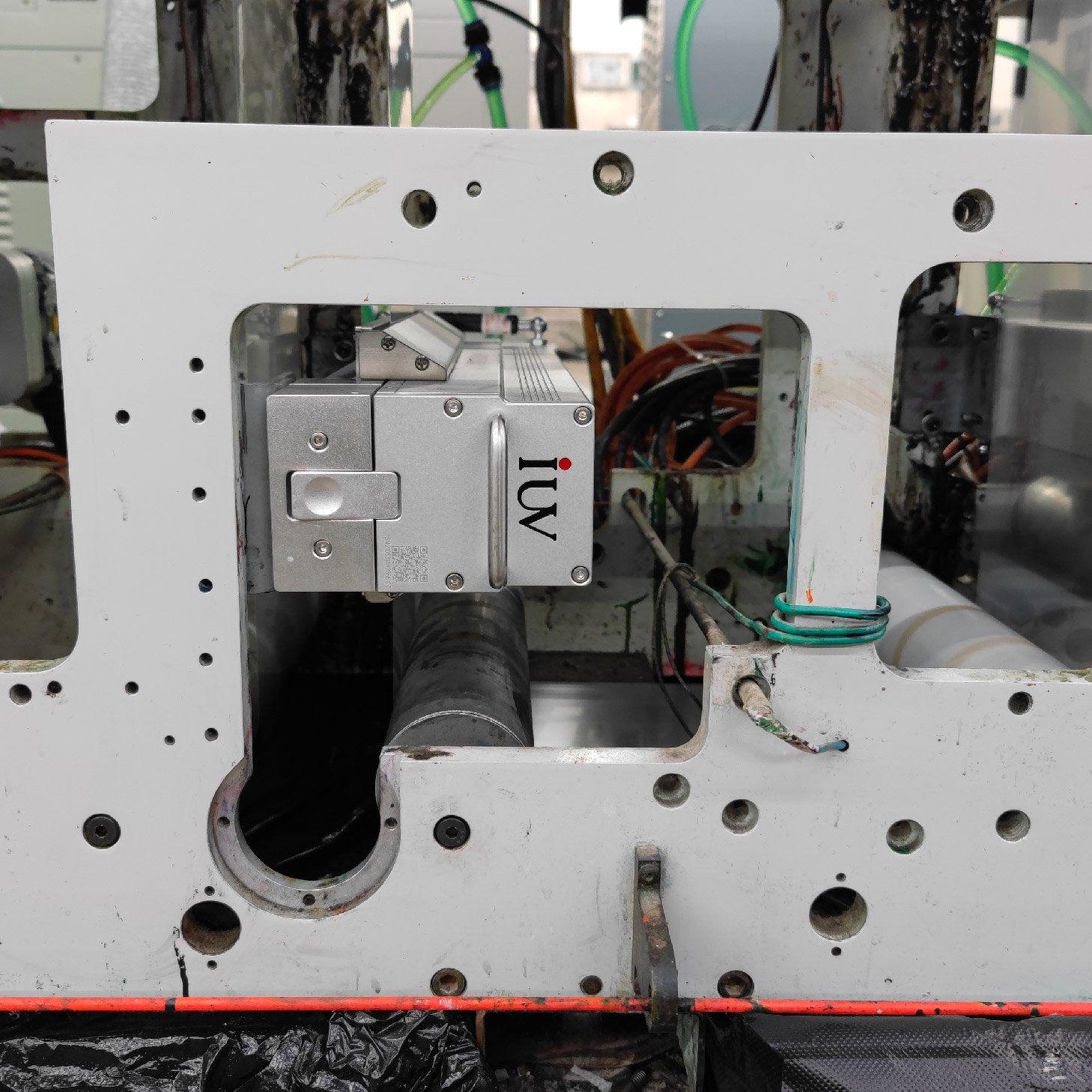
Lamp height plays a significant role in how UV energy is distributed across the ink surface. A lower lamp height increases irradiance but reduces the illuminated area, while a higher lamp height spreads energy more evenly with lower peak intensity.
For high-opacity white inks, slightly increased lamp distance can improve energy distribution and penetration, especially when combined with appropriate power settings.
Consistent lamp positioning across the press ensures uniform cure depth from edge to edge, reducing variation in wide solid white areas.
Using Multiple LED UV Exposures Strategically
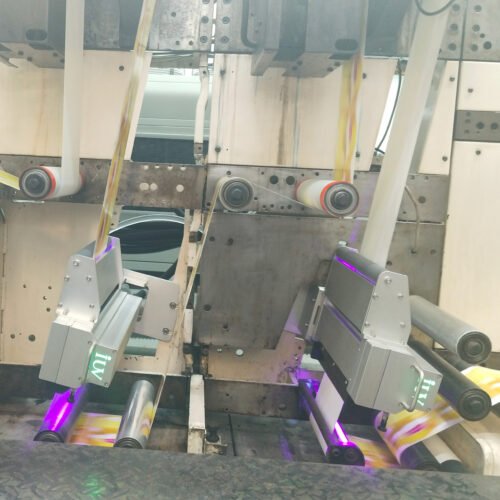
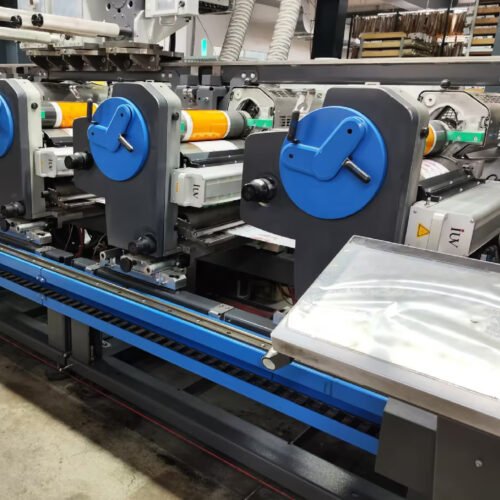
In narrow web label printing, multiple curing stations can be used to improve cure depth without sacrificing speed. Applying white ink, followed by partial curing, then final curing downstream allows energy to reach deeper layers progressively.
This staged approach reduces surface overcuring and improves adhesion, particularly on non-porous films and coated papers. It also helps manage heat-sensitive substrates by distributing energy over distance rather than concentrating it in one zone.
When available, this strategy is highly effective for demanding white ink applications.
Evaluating Cure Depth in Real Production Conditions
Cure depth should be evaluated using more than surface tests. Adhesion testing, scratch resistance after aging, and performance during die-cutting provide better indicators of full cure.
Observing ink behavior during slitting and rewinding is especially valuable. Soft or undercured ink often shows deformation or edge buildup at this stage.
Regular sampling during long runs helps detect gradual changes caused by temperature, press speed variation, or material changes.
Addressing Substrate Influence on Cure Depth
Substrate type significantly affects curing behavior. Films reflect UV energy differently than paper, and coated stocks may block energy absorption at the ink interface.
White inks printed on clear or metallized films often require higher energy input or modified curing strategies. Surface treatments such as corona can improve adhesion but do not replace proper cure depth.
Understanding substrate interaction allows operators to adjust curing parameters proactively rather than reacting to defects.
Maintaining Stability Over Long Label Runs
LED UV systems offer excellent output stability, but long runs still require monitoring. Ink temperature, press speed consistency, and web tension can all influence cure depth indirectly.
Documenting optimal curing settings for specific white ink jobs helps maintain repeatability across shifts and future reorders. Stable processes reduce waste and increase confidence in demanding label applications.
Consistent cure depth also improves downstream efficiency, reducing customer complaints and rework.
Conclusion
Maximizing ink cure depth on high-opacity white labels requires a controlled balance of ink formulation, film thickness, lamp wavelength, power settings, and press configuration. LED UV curing provides the precision needed for this task, but only when systems are calibrated with real production conditions in mind.
By focusing on energy penetration rather than surface appearance, label printers can achieve reliable curing in even the most demanding white ink applications. Proper optimization improves print durability, finishing performance, and long-term quality, allowing LED UV technology to fully support high-speed narrow web flexographic production.