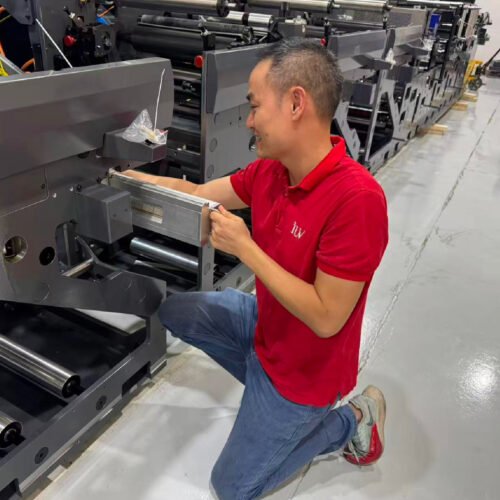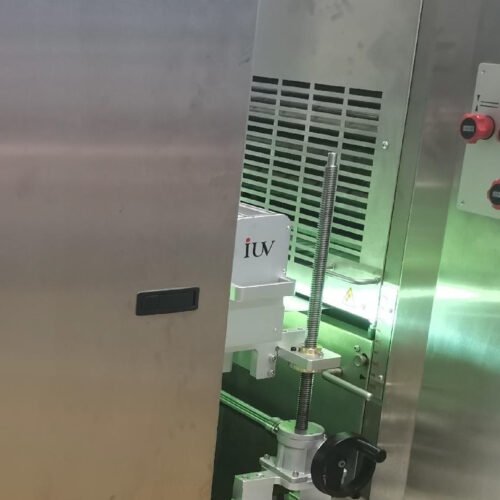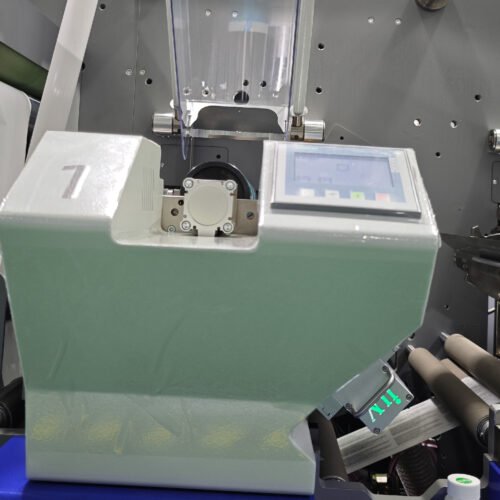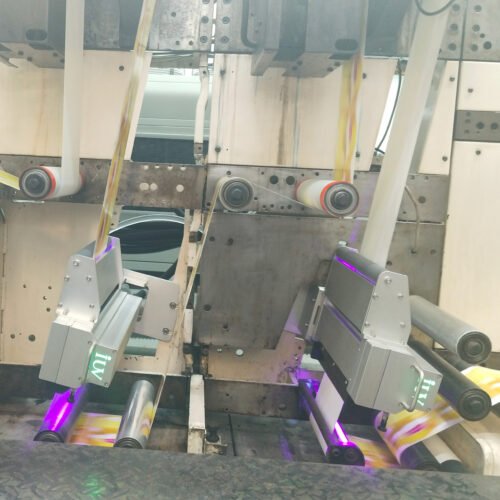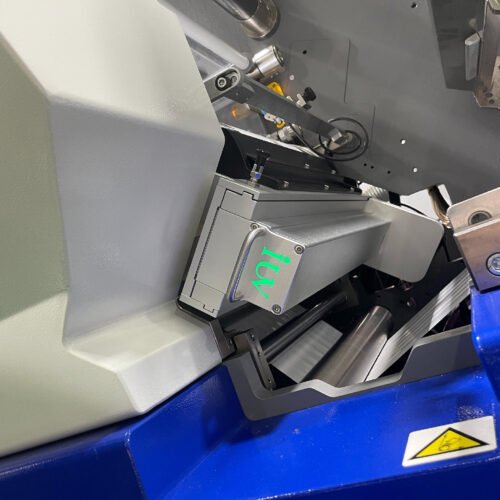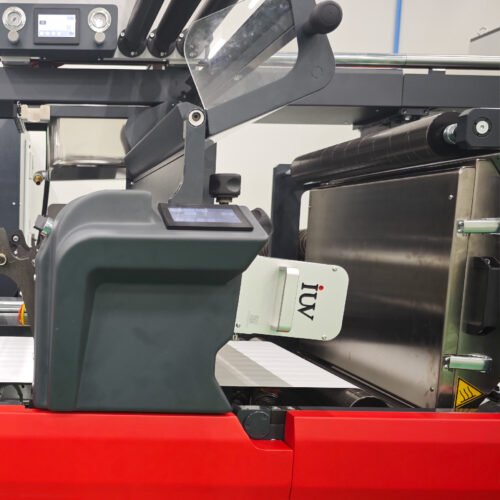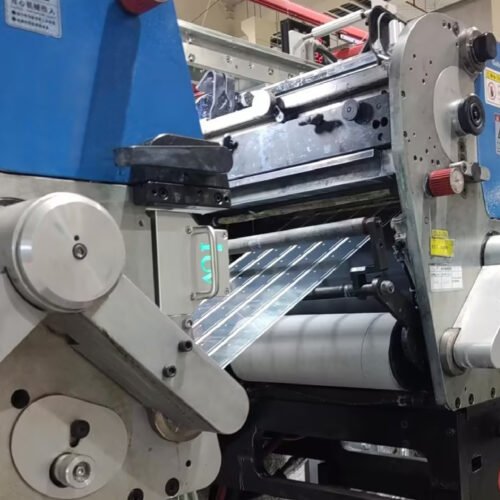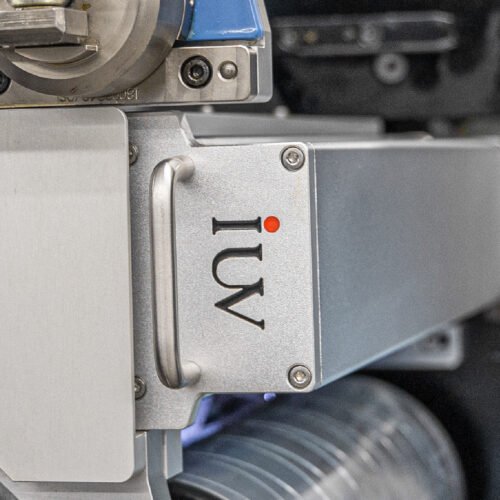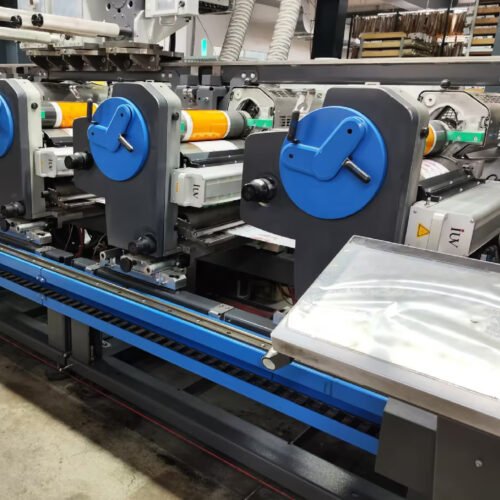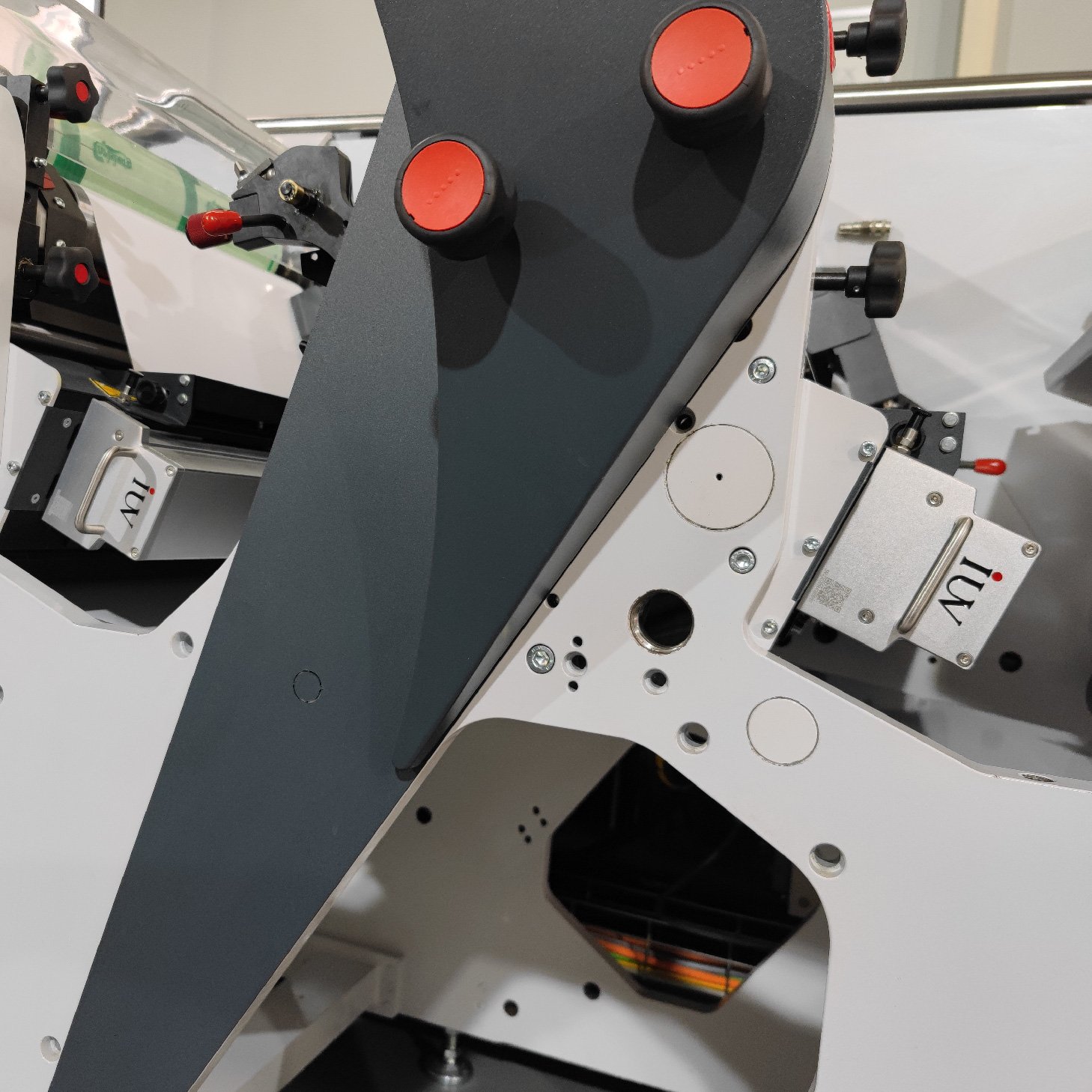
Multi-color wet-on-wet flexographic printing is widely used in narrow web label production. In this process, several ink layers are applied sequentially without intermediate curing. UV exposure occurs after multiple stations, or at the end of the print sequence. This configuration increases productivity and improves intercolor trapping, but it requires precise calibration of UV irradiance levels.
UV irradiance refers to the intensity of ultraviolet energy delivered to the ink surface, typically measured in mW/cm². Energy dose, expressed in mJ/cm², combines irradiance and exposure time. In wet-on-wet flexo printing, both values must be carefully controlled. Insufficient irradiance leads to incomplete cure in lower ink layers. Excessive irradiance may cause surface over-curing, reduced intercoat adhesion, or substrate deformation, especially in heat-sensitive label materials.
Proper calibration ensures full polymerization across all ink layers while maintaining print quality, color vibrancy, and dimensional stability.
The Complexity of Multi-Layer Ink Stacks
In wet-on-wet narrow web flexography, ink films are stacked before curing. A typical label job may include white underprint, process colors, spot colors, and varnish. Each layer influences UV penetration and polymerization efficiency. Opaque whites and dense pigments can block ultraviolet light, reducing energy reaching deeper layers.
The curing unit must deliver sufficient energy to polymerize the entire ink stack. However, simply increasing irradiance is not an effective solution. High peak intensity can cure the top layer rapidly while limiting light transmission below. This creates a hardened surface shell with partially cured ink beneath.
Ink formulation, anilox volume, pigment concentration, and film thickness all affect UV absorption. In narrow web label presses, where ink films are often thicker than in other flexographic segments, accurate irradiance calibration becomes critical.
Differences Between Mercury and LED UV Systems
Traditional mercury arc lamps emit broad-spectrum UV radiation, including UVA, UVB, and UVC. They also generate significant infrared heat. While they provide deep penetration in some applications, the thermal load may distort shrink films and pressure-sensitive substrates.
LED UV systems operate at defined wavelengths, commonly 365 nm, 385 nm, or 395 nm. They emit minimal infrared radiation, reducing substrate heating. However, LED curing relies on photoinitiators specifically matched to the emitted wavelength. In wet-on-wet flexographic printing, LED irradiance must be optimized for ink chemistry and stack configuration.
Mercury systems often require shutter control and lamp power adjustments. LED systems allow more precise intensity modulation. This enables stepwise calibration to match multi-color wet-on-wet requirements without excessive heat buildup.
Establishing a Baseline for Irradiance Calibration
Effective calibration begins with baseline measurement. Use a calibrated radiometer compatible with the lamp type. Measure peak irradiance and total energy dose at production speed. Record readings at multiple positions across the web width to detect uneven output.
Next, verify ink film thickness. Anilox cell volume and plate surface characteristics influence ink deposit. Thicker films demand higher total energy dose but not necessarily higher peak irradiance. In wet-on-wet applications, the goal is balanced polymerization throughout the stack.
Start with manufacturer-recommended irradiance levels for the ink series. Run a controlled test at moderate press speed. Evaluate cure quality using rub resistance tests, tape adhesion tests, and solvent resistance checks. Inspect intercolor adhesion and surface gloss consistency.
Adjusting Irradiance for Deep Cure Performance
If lower layers show incomplete cure, first assess exposure time rather than peak intensity. Reducing press speed increases energy dose without raising instantaneous heat. This often improves through-cure in stacked ink systems.
If speed adjustments are insufficient, increase irradiance incrementally. Avoid abrupt increases that may cause surface over-polymerization. Monitor substrate temperature during each adjustment, especially when printing on thin BOPP, PE, or shrink sleeve materials.
In multi-color wet-on-wet printing, white underprints typically require the highest curing energy. Opaque titanium dioxide pigments scatter UV radiation. Consider using high-reactivity white inks designed for LED curing. Matching photoinitiator absorption to lamp wavelength enhances efficiency without excessive irradiance.
For LED systems operating at 395 nm, ensure the ink formulation contains suitable photoinitiators with strong absorption in that range. Poor spectral alignment often results in under-cured lower layers despite high measured irradiance.
Managing Oxygen Inhibition and Surface Cure
Oxygen inhibition affects radical polymerization at the ink surface. In wet-on-wet configurations, upper layers may shield lower films from oxygen exposure, slightly improving internal cure. However, the topmost layer remains susceptible.
If surface tack persists despite adequate irradiance, consider inerting systems or nitrogen-assisted curing in high-performance label applications. Alternatively, verify that peak irradiance is sufficient to overcome oxygen interference without overheating the substrate.
Balancing irradiance to manage both surface and deep cure is essential. Overemphasis on surface hardness can mask incomplete internal polymerization. Perform cross-sectional cure evaluation when necessary, particularly for high-build coatings and tactile varnishes.
Thermal Considerations in Narrow Web Label Presses
Although LED UV systems reduce infrared radiation, polymerization generates heat within the ink film. In multi-color wet-on-wet printing, cumulative energy from several layers increases thermal load.
Monitor substrate temperature before and after curing. Excessive heat can cause dimensional instability, leading to registration drift. Shrink sleeve labels are especially sensitive. Proper chill roll function and web tension control complement irradiance calibration.
When using mercury lamps, regularly inspect reflectors and cooling systems. Reduced airflow or contaminated reflectors can alter effective irradiance distribution and increase substrate heating. Consistent maintenance ensures stable curing conditions.
Integration with Press Speed and Production Efficiency
Irradiance calibration must align with production targets. High-speed narrow web flexo presses demand efficient energy delivery. Rather than maximizing lamp output continuously, optimize the relationship between speed, dose, and ink stack configuration.
Document optimal settings for repeat jobs. Record irradiance, dose, press speed, substrate type, and ink configuration. Establish standard operating procedures for multi-color wet-on-wet applications.
In hybrid presses combining flexography and offset, coordinate UV curing settings across stations. Offset inks may require different energy profiles than flexo inks. Ensure compatibility when stacking technologies within the same label construction.
Quality Control and Long-Term Stability
Consistent irradiance calibration supports long-term print durability. Proper polymerization improves abrasion resistance, chemical stability, and adhesion to films and pressure-sensitive substrates. It also reduces odor retention and migration risk in food and pharmaceutical labels.
Routine verification with radiometers ensures lamp output stability. LED modules degrade gradually over time. Periodic measurement prevents unnoticed drops in irradiance that compromise curing quality.
In wet-on-wet flexographic printing, stable irradiance levels maintain color integrity and prevent intercolor mixing. Balanced curing enhances gloss uniformity and tactile consistency across the label surface.
By integrating precise irradiance measurement, controlled exposure time, matched ink chemistry, and effective cooling systems, printers can achieve complete polymerization across multi-layer ink stacks. Accurate calibration improves efficiency, reduces waste, and maintains high-quality output in demanding narrow web label production environments.