Label printing demands precision, consistency, and durability across various substrates, from coated papers to synthetic films. UV curing printing has become a cornerstone technology in modern narrow web production, enabling high-speed operations while maintaining exceptional print quality. By using controlled UV energy, inks and coatings achieve rapid polymerization, ensuring sharp image reproduction and reliable adhesion across multi-color sequences. Printers employing UV LED systems can precisely adjust irradiance and wavelength to match ink photoinitiators, optimizing performance for each substrate and job type.
UV curing offers a significant advantage over traditional drying methods due to instant-on polymerization. This immediacy prevents ink from spreading or smearing, preserving dot integrity and color accuracy. In flexographic and offset narrow web presses, controlling the UV dose is critical for maintaining consistent print density. LED UV units also produce minimal heat compared to conventional mercury lamps, reducing the risk of substrate distortion, especially with heat-sensitive materials. Operators can therefore maintain tight tolerances and smooth gloss levels without sacrificing production speed or quality.
Optimizing Ink Adhesion and Layer Stability
In multi-layer label applications, ink adhesion is essential for long-term durability. UV curing stabilizes each ink layer immediately after deposition, allowing successive layers to be applied without intermixing or contamination. This is particularly relevant in wet-on-wet processes where rapid curing ensures color separation and reduces dot gain. Different substrates respond uniquely to UV energy; films may require lower irradiance, whereas coated papers often need higher energy to achieve full polymerization. By fine-tuning the curing parameters, operators can optimize adhesion and surface uniformity across the entire web.
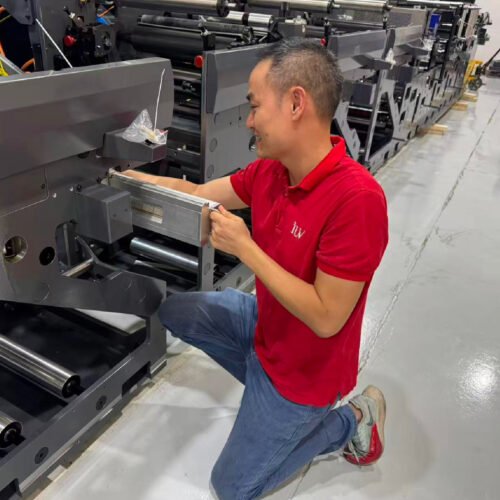
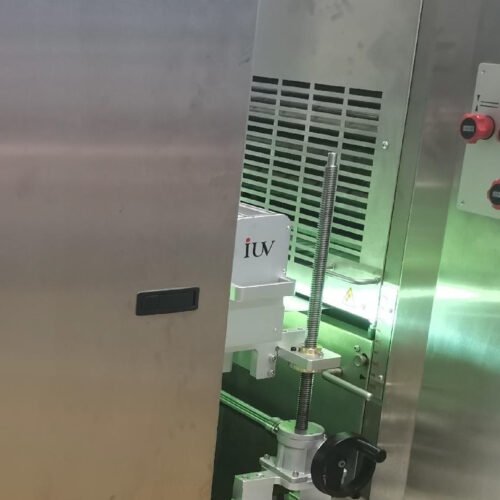
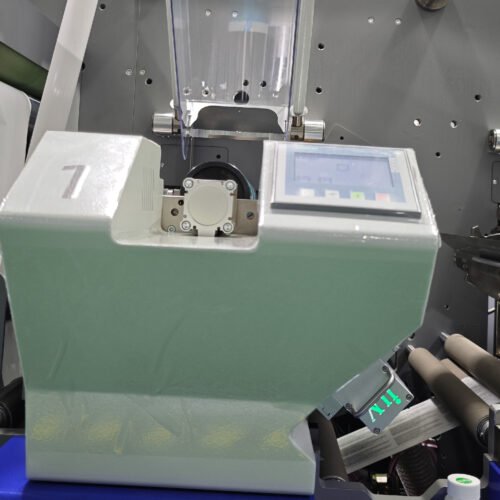
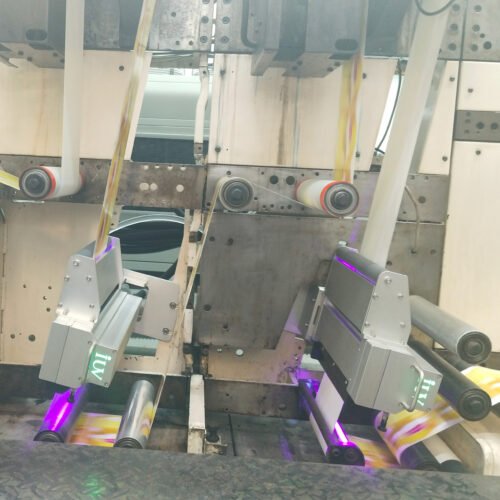
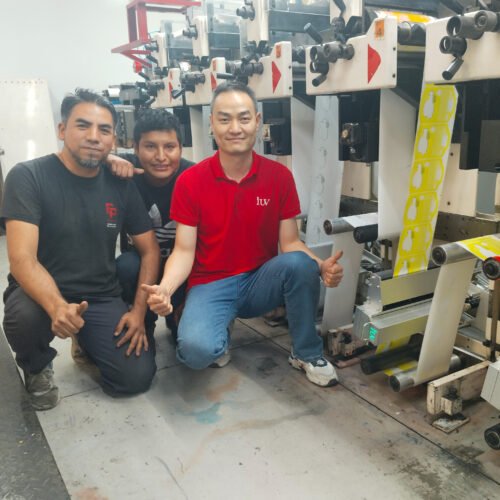
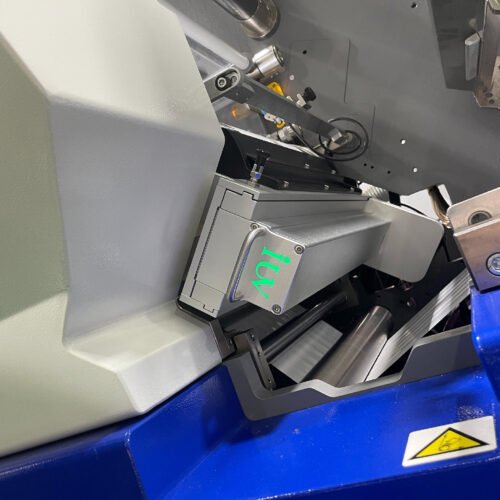
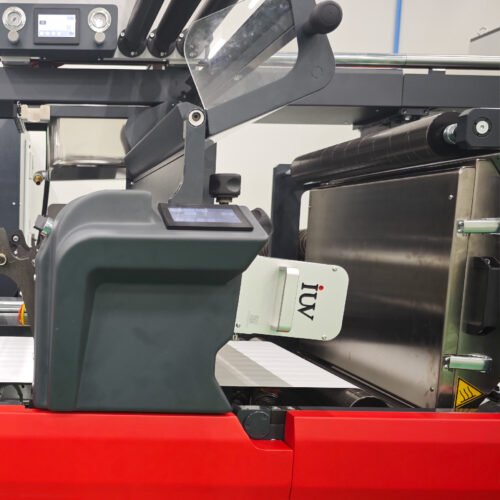
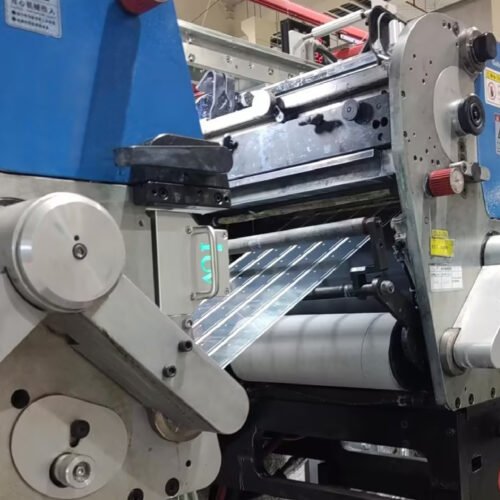
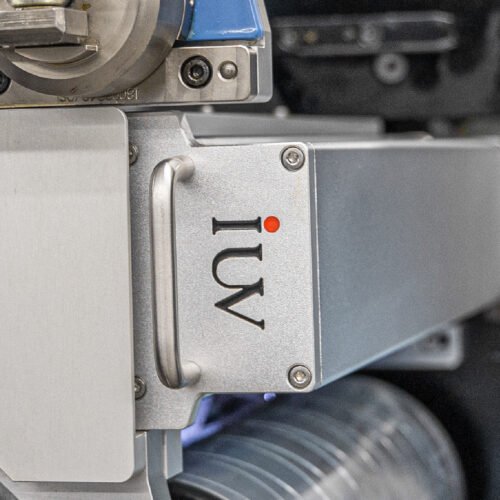
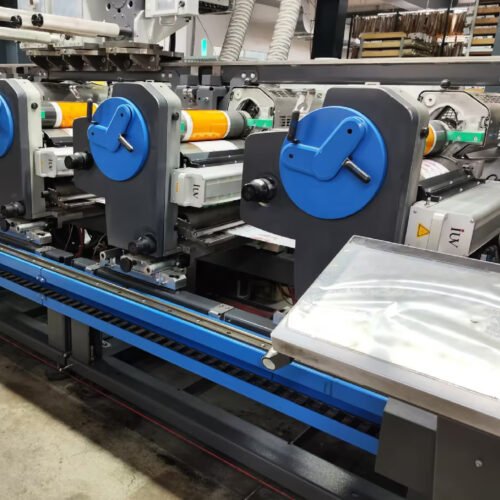
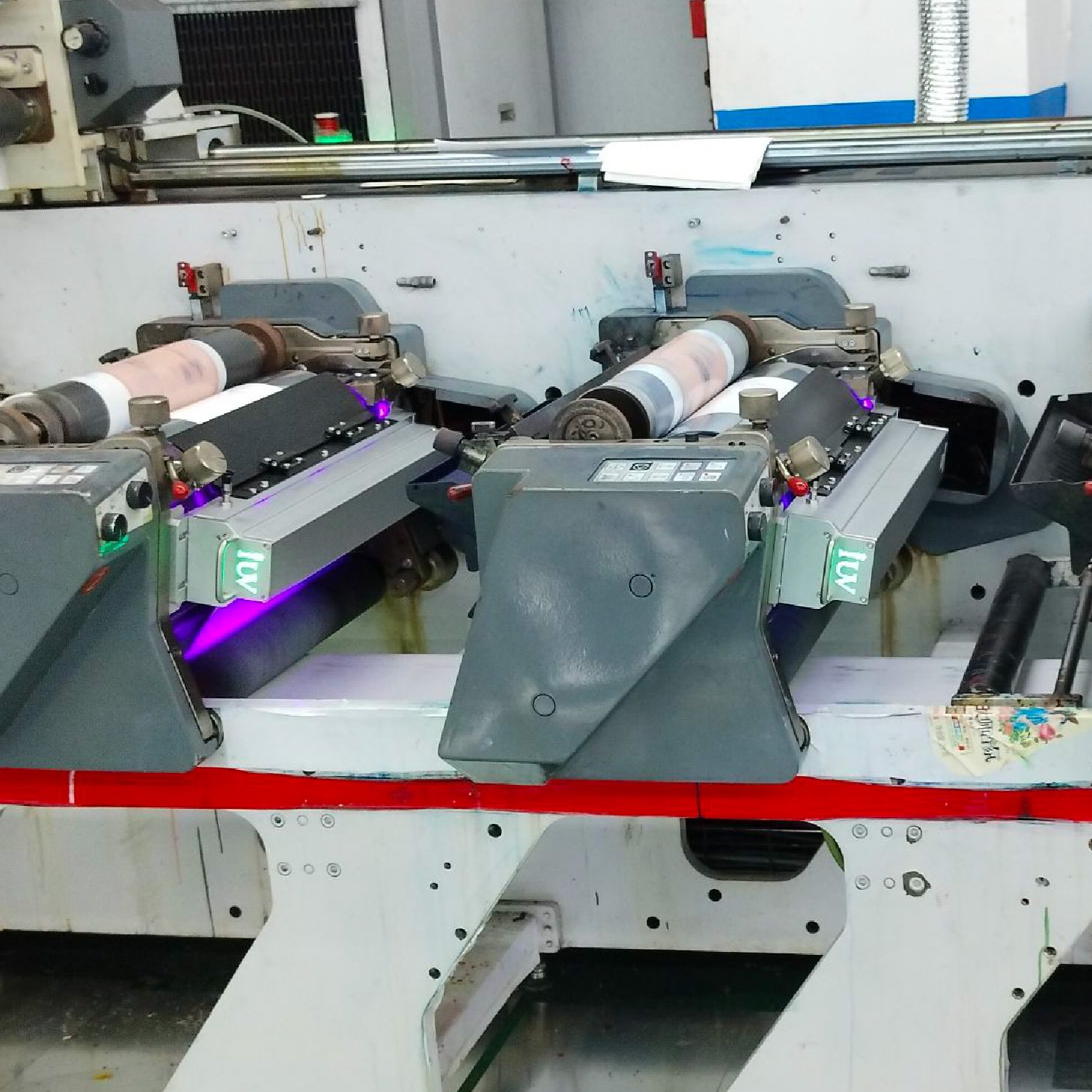
Modern flexographic presses, including systems from OMET, integrate modular UV LED units to provide interstation curing. This setup allows partial curing between print stations, enhancing layer stability while controlling gloss and texture. End-of-line curing completes the polymerization process, ensuring consistent hardness and chemical resistance. These capabilities are critical for labels exposed to handling, moisture, or chemical environments, where improper curing could lead to scratching, lifting, or fading.
Maintaining High-Resolution Output
UV curing printing is particularly effective in reproducing fine details, making it ideal for narrow web label production. Anilox rolls with high screen ruling benefit from uniform curing across the ink film, preventing undercured or overcured spots that can blur small text or intricate graphics. LED UV systems provide consistent spectral output tailored to the photoinitiators in specialized inks. This precise matching ensures that polymerization occurs evenly across the image, preserving sharp edges, accurate color density, and uniform gloss.
Curing consistency is also essential for multi-color processes. By adjusting irradiance and exposure time, printers can maintain registration and prevent cross-contamination between ink layers. UV curing reduces the risk of pinholing, surface cratering, and other common defects that degrade visual quality. Fine-tuning the interaction between ink formulation, lamp intensity, and press speed allows narrow web operators to achieve predictable, high-quality results across diverse label applications.
Increasing Production Speed and Operational Efficiency
UV curing technology enables high-speed printing without compromising quality. LED systems offer instant-on operation, eliminating warm-up delays and supporting quick job changes. Their low heat output reduces the need for extensive cooling, allowing tighter control over web tension and minimizing substrate distortion. Modular LED units also allow energy to be adjusted according to ink coverage and press speed, ensuring complete curing while optimizing power consumption.
By integrating UV curing into flexographic and offset presses, manufacturers can achieve shorter cycle times and higher throughput. Reduced downtime, fewer rejects, and consistent print quality translate to operational cost savings. Additionally, the ability to rapidly switch between jobs with minimal setup time is particularly beneficial for label converters handling diverse substrates and variable print runs.
Addressing Environmental and Energy Considerations
LED UV curing systems consume significantly less energy than traditional mercury lamps, offering economic and environmental benefits. Lower energy use reduces operational costs and heat load, minimizing cooling requirements and extending the lifespan of press components. LEDs eliminate mercury-related disposal concerns, contributing to regulatory compliance and workplace safety. For environmentally conscious label production, adopting LED UV technology represents a sustainable alternative without sacrificing performance or quality.
Troubleshooting Common UV Curing Challenges
Even with optimized systems, operators must address potential issues such as uneven curing, ink adhesion failures, and surface defects. Regular maintenance of LED optics, calibration of irradiance levels, and monitoring of ink-substrate compatibility are essential to maintaining consistent output. Interstation and end-of-line curing parameters should be verified for each substrate and ink type to prevent undercured spots, which can result in smearing or reduced chemical resistance. Employing diagnostic tools and maintaining clean optics ensures that the UV energy is delivered uniformly across the web, supporting stable and repeatable production.
Conclusion
Enhancing label print quality with UV curing techniques requires careful integration of LED systems, precise control of irradiance, and understanding of substrate-specific requirements. By stabilizing ink layers, preserving fine detail, and increasing production efficiency, UV curing supports reliable and high-quality narrow web operations. Presses from OMET equipped with modular LED units allow flexible adjustment to different substrates and ink types, ensuring optimal polymerization and adhesion. The combination of instant-on curing, low heat, and energy efficiency positions UV technology as a central component of modern label printing, delivering consistent, durable, and visually striking results.