Abstract
Reliable LED-UV curing on pressure-sensitive label presses depends on more than lamp power. The lamp, ink, anilox specification, substrate, press speed, and thermal limits must operate as one controlled process. This is especially important in narrow-web flexography, where ink films vary by color station and labels may run on heat-sensitive filmic facestocks. This paper explains how OEMs, converters, and press engineers can select industrial UV curing systems for dependable ink cure. It focuses on wavelength matching, irradiance, energy dose, lamp geometry, heat management, low-migration production, and practical fault diagnosis.
Introduction
Pressure-sensitive label production often combines demanding graphics with high web speeds and short job runs. A single press may print paper labels in the morning and shrinkable film labels in the afternoon. It may also switch between process colors, opaque white, varnishes, and highly pigmented spot colors.
LED-UV curing can support this production model when the curing system is selected around the actual ink and substrate window. A lamp that cures a thin cyan process ink may not fully cure an opaque white, a dense black, or a high-build tactile varnish. A lamp that delivers sufficient cure on paper may create unacceptable web temperature on polyethylene or polypropylene film.
Industrial UV curing systems for pressure-sensitive label presses should therefore be specified as a process package. The target is not the highest irradiance number on a data sheet. The target is stable cure across the full production range, with predictable registration, acceptable substrate temperature, and repeatable quality checks.
Start with the Actual Cure Window
The first selection step is to define the press operating window. This includes the maximum web speed, web width, typical repeat lengths, print unit layout, available interstation space, and the range of substrates. It should also include the heaviest ink films that will be run regularly, not only standard process-color work.
For a narrow-web flexographic press, the cure window is influenced by anilox volume, line screen, plate design, ink transfer, and color sequence. A higher-volume anilox can place a thicker ink film on the web. That film may need more energy, a more suitable wavelength, or a second exposure position. Opaque white, metallic inks, and heavily pigmented colors often require separate validation because light penetration is reduced.
The assessment should identify whether each station requires pinning, full cure, or both. Pinning is a partial cure that controls dot gain, ink movement, and intercolor mixing before the next unit. Full cure develops the surface and through-cure needed for converting, rewinding, and end use. Treating these two functions as identical can lead to unnecessary heat or incomplete downstream cure.
Wavelength Must Match the Ink Formulation
LED lamps emit within a relatively narrow wavelength band. Common industrial options include 365 nm, 385 nm, 395 nm, and 405 nm. The correct choice depends on the photoinitiator package in the ink, coating, adhesive, or varnish. It cannot be selected solely from a preferred lamp wavelength or an existing press configuration.
Many modern label inks are designed for 385 nm or 395 nm LED-UV systems. However, an ink developed for conventional mercury UV may not respond efficiently at those wavelengths. It may cure slowly, show a tacky surface, or retain unreacted material beneath the surface. A successful conversion requires confirmation from the ink supplier that the formulation is designed for the proposed LED wavelength and output range.
Photoinitiator absorption also matters when ink films are thick or strongly pigmented. Surface cure can appear acceptable while the lower part of the ink film remains undercured. This risk is higher with opaque white, black, dense reds, and special-effect inks. The cure test must therefore go beyond surface feel. It should include rub resistance, scratch resistance, tape pull, solvent resistance where appropriate, odor assessment, and adhesion after a defined dwell period.
Irradiance and Energy Dose Serve Different Purposes
Lamp irradiance is the instantaneous optical power reaching the substrate surface. It is commonly expressed in watts per square centimetre. High irradiance helps initiate a fast reaction and is useful when web speed is high or exposure time is short.
Energy dose is the total energy delivered during exposure. It is commonly expressed in joules per square centimetre. Dose depends on irradiance, exposure time, lamp geometry, working distance, and web speed. Two systems can show similar peak irradiance yet deliver different practical cure results because their exposure footprints and optical uniformity differ.
For label presses, both values should be measured at the substrate plane. Measurements should use an instrument that is suitable for the LED wavelength being evaluated. A meter intended for broad-spectrum mercury UV can produce misleading results when used with a narrow-band LED source.
The working distance between the LED head and the web is part of the cure design. Increasing that distance can reduce irradiance and affect edge-to-edge uniformity. Reducing the distance may improve energy delivery but can limit press access, increase contamination risk, or create clearance issues around plates, sleeves, and web guides. The selected lamp should maintain useful uniformity across the full printable width, including the outer lanes.
Lamp Geometry Matters on Narrow-Web Flexo Presses
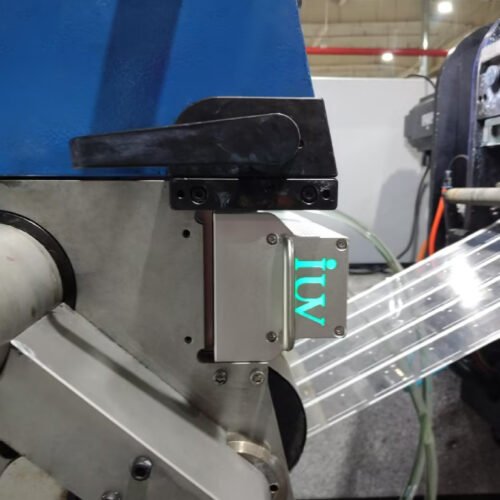
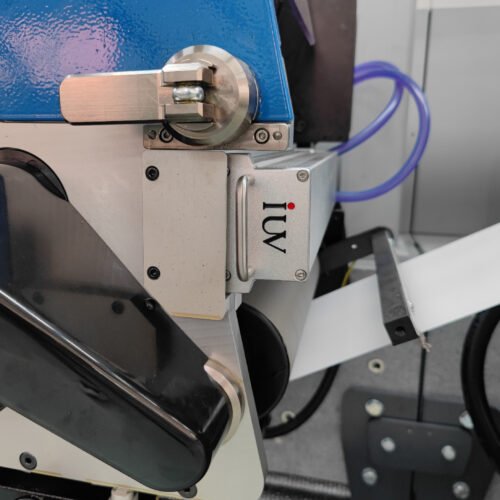
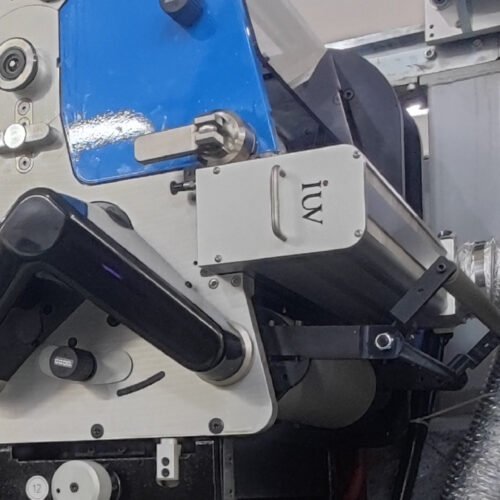
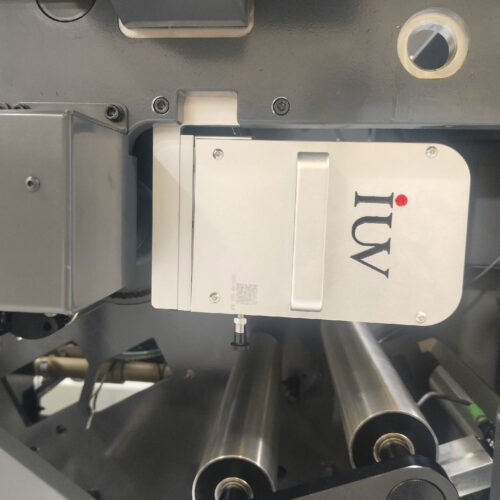
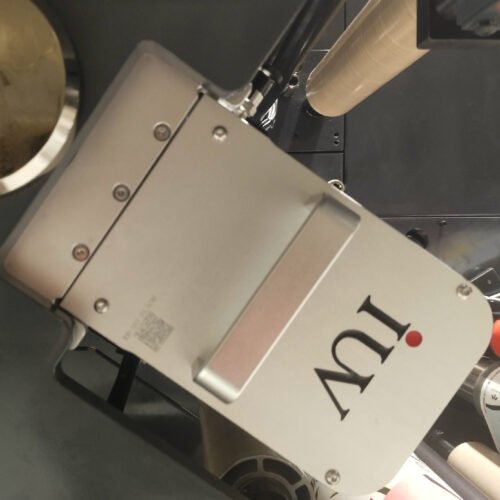
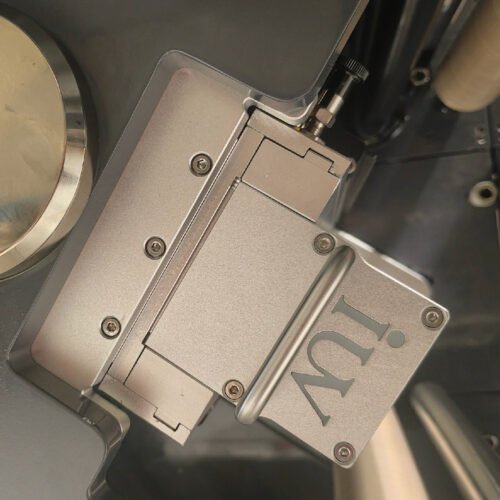
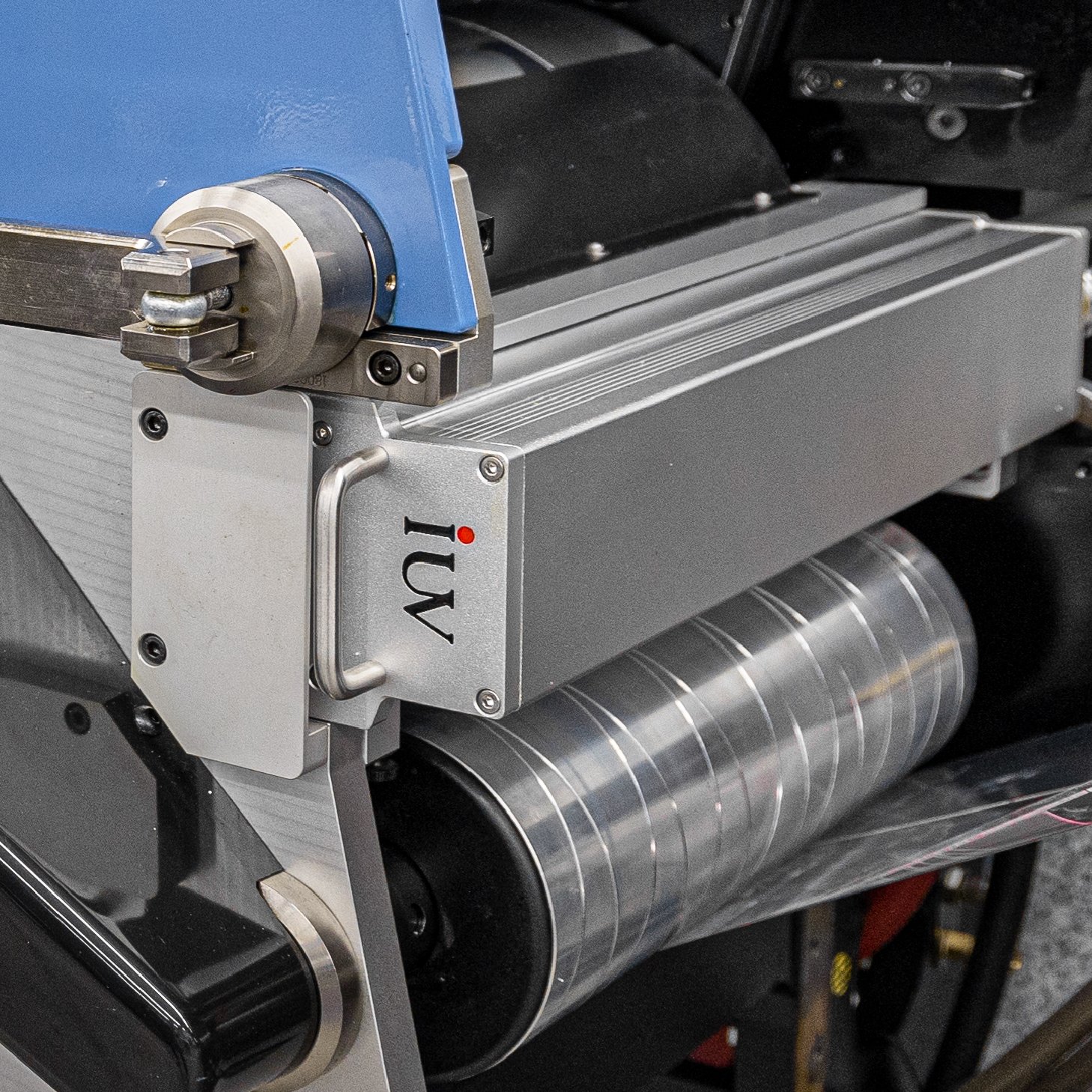
A compact LED head often fits well between flexographic stations, but the mechanical installation must still be reviewed carefully. The head needs a stable mounting position, defined web-to-lamp distance, guarded access, and enough clearance for normal cleaning and maintenance.
For interstation use, the lamp footprint should match the press layout and the required pinning or full-cure task. A short exposure zone may be sufficient for process-color pinning. Thick white ink or a high-build coating may need a longer exposure path, higher dose, or a dedicated final-cure head after the last print station.
Reflector design and optical shielding also affect performance. Stray UV energy can prematurely cure ink on the plate, anilox roll, chamber seals, or open ink surfaces. This can alter ink transfer and create cleaning problems. Proper shielding should protect press components while allowing the web to receive consistent exposure.
OEMs should evaluate electrical integration at the same time. The curing system must communicate safely with press start-stop functions, web-break protection, emergency stops, cooling alarms, and job recipes. A lamp that remains at production output while the web is stationary can damage heat-sensitive material and create a serious quality risk.
Heat Management Includes the Web, Not Only the Lamp
LED-UV lamps generate less infrared radiation toward the web than many conventional UV sources. That does not mean a label web remains cool. The LED modules, power electronics, reflected energy, and repeated exposures can still raise substrate temperature.
Film facestocks require particular attention. Polypropylene, polyethylene, PET, and thin unsupported films respond differently to heat and web tension. Shrinkable materials can distort, wrinkle, or change dimensional stability before the operator notices a visible defect. Adhesive-coated constructions may also react differently from uncoated film.
A practical thermal evaluation measures web temperature under realistic press conditions. It should include the highest expected speed, full lamp output, the most demanding ink coverage, and any chill roll configuration. Temperature must be measured at locations that represent the actual converting path, not only beside the lamp head.
If temperature is excessive, the solution may involve lowering output, improving optical efficiency, adding a chill roll, increasing airflow control, or relocating cure stages. It may also require changing the ink system. Raising lamp power without addressing the process cause can worsen film deformation and registration variation.
Reliable Cure Begins with Controlled Ink Laydown
An LED curing system cannot compensate for unstable ink transfer. In flexography, anilox condition and ink film thickness strongly influence cure response. Worn cells, plugged cells, incorrect volume selection, excessive doctor blade pressure, or poor viscosity control can create station-to-station variation.
A thicker film does not always provide better color strength. It can make through-cure harder, increase surface oxygen inhibition, and raise the risk of odor or poor adhesion. The anilox specification should be selected for the target solid density, line work, and cure capability of the ink system.
The press team should record anilox volume, plate type, ink batch, viscosity or rheology control method, and lamp recipe for validated jobs. This record shortens setup time and helps distinguish a curing issue from an ink-transfer issue. It also supports consistent results when a job moves between presses.
Oxygen Inhibition Requires a Practical Response
Free-radical UV inks can be affected by oxygen at the exposed surface. The result may be a slightly tacky finish, weak rub resistance, or reduced surface cure. The problem is more likely when ink films are thick, energy dose is low, or the ink formulation is not well matched to the lamp wavelength.
First, confirm that the lamp output and web-to-lamp distance are within the validated range. Then verify the ink formulation, anilox volume, and press speed. A change in lamp window cleanliness can also reduce delivered energy enough to expose a marginal process.
Some demanding applications may benefit from inerting or from ink chemistry designed for improved surface cure in air. This decision should be based on the required performance, not used as a substitute for basic wavelength and dose matching. In most label applications, stable ink laydown and correctly specified LED output provide the primary cure control.
Low-Migration Label Work Requires Process Validation
Low-migration printing is not achieved by selecting a lamp alone. It depends on compatible inks, coatings, adhesives, substrates, press hygiene, and validated curing conditions. The required standard will vary with the label application, package structure, and end-use market.
For food, pharmaceutical, cosmetic, or sensitive-product labels, the press should operate within documented cure parameters. Operators should not compensate for a cure issue by increasing speed, reducing output, or changing ink volume without revalidation. A label may look dry while still failing the required migration or organoleptic criteria.
Cross-contamination control is equally important. Low-migration work should have clear procedures for ink storage, wash-up, rollers, anilox handling, and job changeover. Curing verification should be linked to the job record so that the final product can be traced to the approved process settings.
Registration Stability and Curing Sequence
LED-UV systems can improve handling by pinning ink before the web reaches the next printing unit. This can reduce dot distortion and limit intercolor contamination. However, excessive interstation cure can reduce intercoat adhesion if the following ink or coating requires a reactive surface.
The cure sequence should be developed around the print stack. Process colors may need controlled pinning between stations, while an overprint varnish may need a stronger final cure. Opaque white printed beneath colors can require a different strategy from white printed as a final backing layer.
Web tension, sleeve condition, plate mounting, and chilled-roll settings should be reviewed alongside cure settings. A registration shift that appears after a lamp upgrade may be caused by web temperature, tension changes, or altered drag through the press. The lamp system should be part of the troubleshooting plan, not assumed to be the sole cause.
Maintenance Protects the Validated Cure Condition
LED modules usually avoid the regular bulb changes associated with conventional UV technology, but they still require disciplined maintenance. Dust, ink mist, paper lint, and coating splash can contaminate protective windows. Even a thin deposit can reduce delivered energy and create uneven cure across the web.
Cooling performance must also be monitored. Air-cooled systems need clean airflow paths and functional fans. Water-cooled systems need correct flow, fluid condition, leak checks, and alarm verification. Elevated module temperature can limit output or shorten component life.
A maintenance plan should include routine window inspection, output measurement, cooling checks, electrical connection inspection, and verification of safety interlocks. Measurements should be trended by lamp head and by press. A declining output trend is easier to correct before it produces customer complaints or rejected rolls.
Common Defects and a Structured Troubleshooting Method
Tacky ink, poor rub resistance, weak tape adhesion, odor, and blocking in the rewind roll are common indicators of insufficient cure. The first checks should be lamp output, wavelength compatibility, web speed, working distance, window cleanliness, and ink film thickness. These factors often explain the problem without changing the entire press setup.
If the defect occurs only in one color, compare the anilox volume, pigment loading, ink batch, and plate coverage with the other stations. If it occurs only at the web edge, inspect lamp width, optical alignment, and the web path. If the defect appears after a long run, investigate thermal output reduction, contaminated windows, or cooling performance.
Film distortion, curl, and registration drift point toward a different group of causes. Check web temperature, lamp placement, chill-roll performance, tension settings, and repeated exposure from several heads. The cure process should be adjusted with measured evidence rather than by visual judgment alone.
Conclusion
Selecting LED lamps for a pressure-sensitive label press is an engineering decision based on cure chemistry, ink laydown, web speed, substrate temperature, and press layout. A reliable system uses a wavelength matched to the ink formulation, sufficient irradiance and dose at the web, stable optical uniformity, and controlled heat input.
The strongest implementation begins with the most demanding production conditions, including dense inks, heavy anilox volumes, high speeds, and heat-sensitive films. Once those conditions are validated, the press can use documented lamp recipes, maintenance controls, and quality checks to maintain repeatable cure across routine label work.