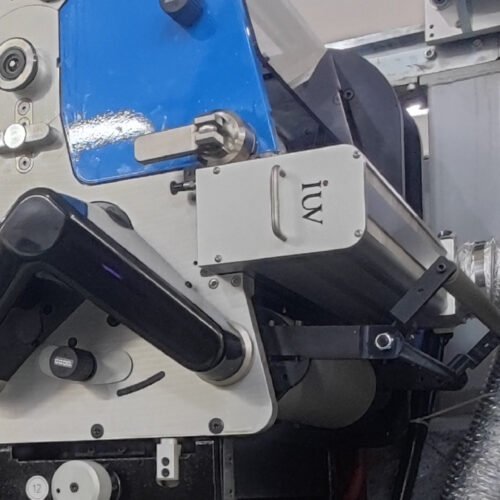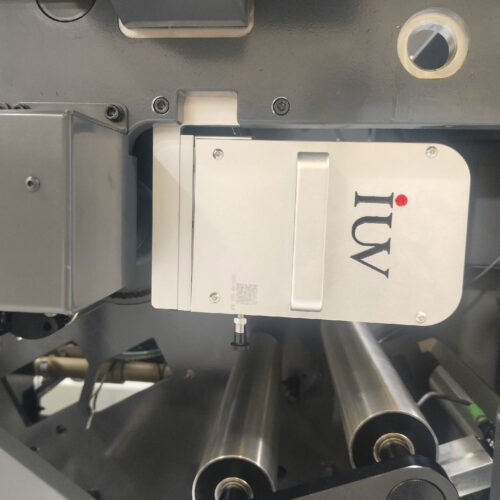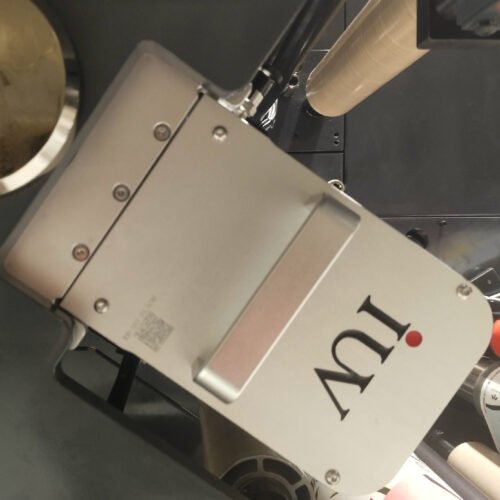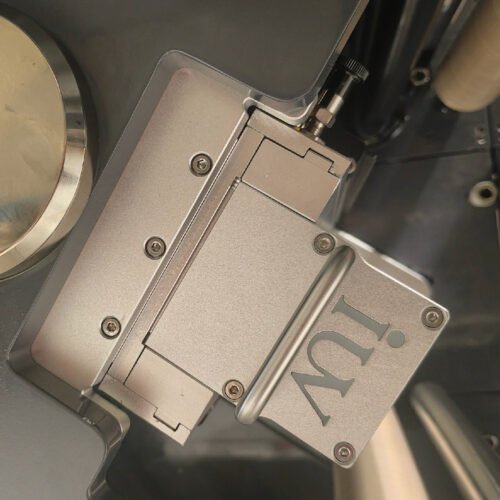
The selection of a UV curing system for printing equipment requires a precise understanding of production conditions, especially irradiance requirements and press speed. In modern label printing, flexographic printing, offset printing, and narrow web applications, curing performance directly affects ink adhesion, coating durability, surface quality, and overall production efficiency.
Many printing companies initially evaluate UV curing systems according to lamp power ratings or physical size. However, these factors alone do not determine whether a curing system can achieve reliable polymerization. The actual curing capability depends on the relationship between ultraviolet irradiance, energy density, exposure time, ink chemistry, substrate properties, and machine speed.
As printing presses continue to operate at higher speeds, the sizing of UV curing equipment becomes increasingly important. An undersized curing system may cause incomplete curing, while an oversized system may increase investment and operating costs without providing additional production value.
Proper UV curing system sizing requires engineering analysis based on real production conditions. By evaluating irradiance requirements together with press speed, converters can select curing equipment that provides stable performance for demanding packaging and label printing applications.
Understanding the Relationship Between Irradiance and Energy Density
UV curing performance is determined by the amount of ultraviolet energy delivered to the printed material. Two important parameters must be considered: irradiance and energy density.
Irradiance represents the instantaneous intensity of UV radiation reaching the ink surface. It is usually measured in watts per square centimeter (W/cm²). Energy density represents the total UV dose received during the curing process and is measured in joules per square centimeter (J/cm²).
Although these two parameters are closely related, they influence curing in different ways. High irradiance allows rapid initiation of polymerization, while sufficient energy density ensures that the reaction continues throughout the complete ink layer.
For example, a high-speed flexographic press may require higher irradiance because the substrate passes through the curing zone quickly. However, if the total exposure time is too short, the ink may still receive insufficient energy for complete curing.
Therefore, UV curing system sizing should not focus only on maximum irradiance. The relationship between irradiance, curing length, and press speed must be evaluated together.
How Press Speed Influences UV Curing Requirements
Press speed is one of the most important factors when determining curing system capacity.
As web speed increases, the available curing time decreases. A substrate traveling at 200 meters per minute receives significantly less exposure time than the same substrate moving at 80 meters per minute.
This reduction in exposure time directly affects the required UV output.
High-speed printing applications typically require one or more of the following adjustments:
- Higher irradiance output
- Longer curing zones
- Additional curing stations
- Optimized wavelength selection
- Improved optical efficiency
For narrow web label printing, where production speeds continue to increase, the curing system must provide sufficient energy within a very short exposure period.
This is especially important for applications involving opaque white inks, heavy varnishes, cold foil coatings, and specialty effects, where curing demand is higher than standard process colors.
Calculating UV Curing Requirements for Printing Applications
A practical approach to UV curing system sizing begins with evaluating the required energy density.
The basic relationship between curing performance and production speed involves:
- UV irradiance
- Exposure time
- Curing distance
- Number of curing units
- Ink film thickness
Exposure time decreases as press speed increases. Therefore, a faster press requires higher irradiance or additional curing length to maintain the required UV dose.
In industrial applications, engineers normally evaluate the highest expected production condition rather than average operating speed. This ensures that the curing system can maintain quality during maximum productivity.
For example, a label converter operating at moderate speeds today may upgrade to a faster press configuration in the future. Selecting a curing system with sufficient capacity allows future production expansion without another major investment.
The Influence of Ink Chemistry and Coating Thickness
UV curing system sizing cannot be separated from ink and coating characteristics.
Different formulations require different curing energy levels. Thin transparent coatings may cure easily, while thick protective varnishes or opaque white inks require significantly more UV energy.
White inks create additional challenges because titanium dioxide pigments reflect and scatter ultraviolet radiation. Black inks may also require careful evaluation because carbon-based pigments can absorb UV energy.
Important factors include:
- Pigment concentration
- Ink layer thickness
- Photoinitiator type
- Surface requirements
- Final application conditions
In flexographic label printing, where multiple ink stations and coatings are often combined, the final curing requirement should be based on the most demanding application rather than standard printing conditions.
Selecting the Correct UV LED Wavelength
Modern UV LED curing systems provide different wavelength options, commonly including 365 nm, 385 nm, and 395 nm.
The selected wavelength must match the photoinitiator absorption characteristics of the ink or coating.
A mismatch between wavelength output and photoinitiator response can reduce curing efficiency even when irradiance is high.
For many label printing and narrow web applications, 395 nm UV LED systems are widely adopted because many commercial UV inks are optimized for this wavelength range. Other applications may require different wavelengths depending on coating chemistry and curing depth requirements.
Proper wavelength selection improves energy utilization and prevents unnecessary increases in power consumption.
UV LED Advantages in High-Speed Printing Environments
The development of LED UV curing technology has changed how converters approach curing system design.
Compared with traditional mercury UV systems, LED UV systems provide:
- Stable spectral output
- Lower heat generation
- Instant operation
- Reduced maintenance requirements
- Longer service life
These characteristics are particularly valuable for high-speed printing environments.
Lower heat output protects sensitive substrates such as PET, BOPP, PE, and unsupported films. Stable spectral performance improves curing consistency between production runs.
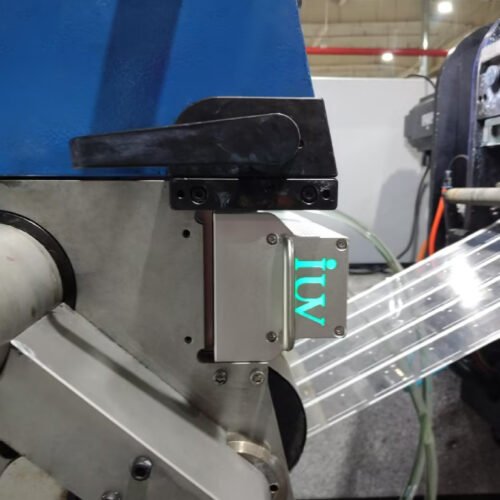
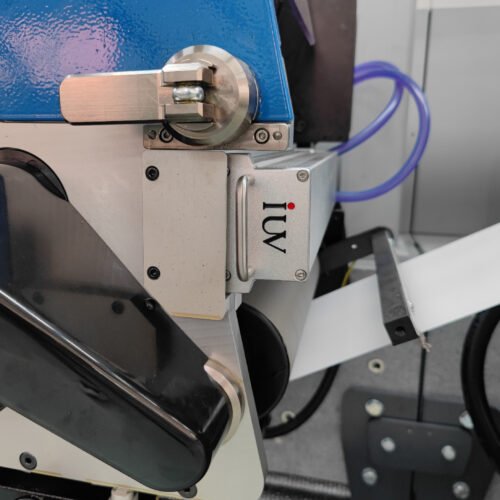
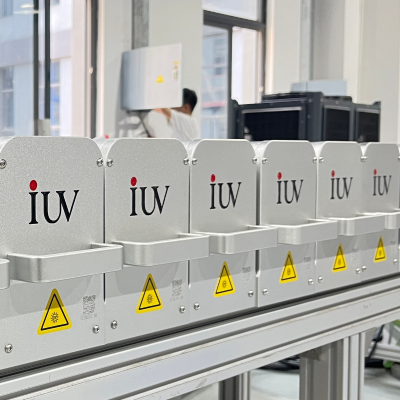
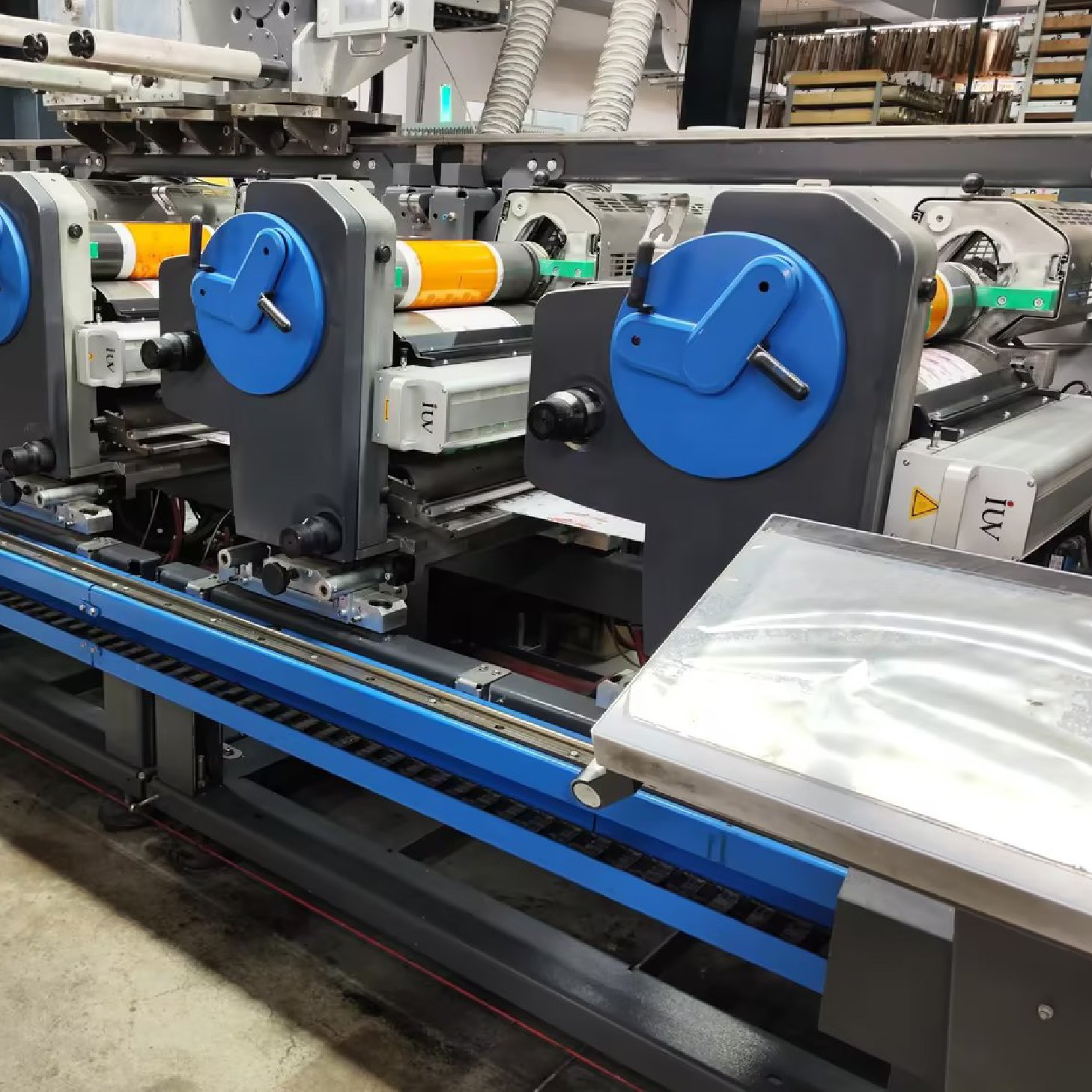
For companies operating modern flexographic presses from manufacturers such as Nilpeter, OMET, or Gallus, LED UV integration provides a practical method for improving curing performance without replacing complete printing platforms.
Curing Width and Optical Uniformity Considerations
The curing system must also be correctly sized according to printing width.
A system designed for narrow coverage may provide sufficient energy in the center area but insufficient curing near the edges of the web.
Uniform UV distribution depends on:
- LED arrangement
- optical lens design
- working distance
- cooling stability
- reflector structure
Uneven curing across the web width can create inconsistent gloss, adhesion differences, and finishing problems.
Industrial UV curing systems are therefore engineered to maintain stable irradiance across the entire printing area.
This factor becomes increasingly important as press widths increase and production tolerances become tighter.
Cooling Capacity and Long-Term Performance
Higher irradiance levels require effective thermal management.
Although LED UV systems produce less infrared radiation than mercury lamps, the LED modules themselves require temperature control to maintain stable performance.
Poor cooling can reduce LED efficiency and shorten component lifetime.
Industrial curing systems commonly use:
- closed-loop water cooling
- optimized airflow cooling
- temperature monitoring systems
Maintaining stable operating temperature ensures consistent irradiance output throughout long production periods.
For continuous label production, cooling performance directly influences curing reliability and production stability.
Practical Considerations When Upgrading Existing Presses
Many converters choose to upgrade curing systems on existing presses rather than replace complete machines.
A successful retrofit requires evaluation of:
- available installation space
- press configuration
- electrical supply
- cooling requirements
- production speed
- substrate range
- ink compatibility
A properly sized LED UV curing system can extend the useful life of existing equipment while improving production capability.
This approach is especially valuable for companies operating reliable mechanical presses that require improved curing performance to meet current market demands.
Process Monitoring and Verification
After selecting and installing a UV curing system, ongoing measurement is essential.
Regular monitoring should include:
- irradiance measurement
- energy density verification
- temperature checks
- adhesion testing
- surface performance evaluation
UV radiometers provide valuable information about actual curing output. They help identify reductions caused by optical contamination, cooling problems, or component aging.
Consistent monitoring ensures that the curing system continues to operate within the required production window.
Conclusion
Sizing a UV curing system for printing requires a complete understanding of the relationship between irradiance, press speed, energy density, ink chemistry, and substrate characteristics.
For label printing, flexographic printing, offset printing, and narrow web applications, selecting the correct curing capacity ensures reliable polymerization, consistent adhesion, and stable production quality.
Modern LED UV curing systems provide additional advantages through stable wavelength output, reduced thermal impact, and lower maintenance requirements. By evaluating production requirements carefully and matching curing performance with actual operating conditions, converters can achieve higher productivity while maintaining efficient and sustainable printing operations.
References
RadTech International North America. UV+EB Technology Publications and Technical Resources.
ASTM International. ASTM E387 Standard Test Method for Spectral Irradiance.
ISO 12647. Graphic Technology — Process Control for the Production of Half-Tone Colour Separations, Proof and Production Prints.
Kipphan, H. Handbook of Print Media: Technologies and Production Methods. Springer-Verlag.