The Role of UV Curing in Sustainable Packaging Printing
UV curing is widely used in packaging applications because it provides instant drying and strong film formation. Unlike conventional drying methods that rely on evaporation, UV curing uses photochemical reactions to convert liquid inks and coatings into solid materials.
During the curing process, ultraviolet energy activates photoinitiators inside UV inks. These photoinitiators generate reactive species that initiate polymerization. The efficiency of this reaction depends on several technical factors, including:
- UV wavelength selection
- irradiance intensity
- energy density
- exposure time
- ink formulation
- coating thickness
- substrate characteristics
In label printing and narrow web flexographic applications, curing stability directly influences production quality. Incomplete curing may lead to poor adhesion, surface defects, reduced chemical resistance, and finishing problems.
For sustainable packaging production, curing technology must achieve two objectives at the same time. It must provide reliable print performance while reducing unnecessary energy consumption and production waste.
Limitations of Conventional UV Curing Systems
Mercury UV lamp systems have been used in printing applications for decades. They remain capable of curing many UV inks and coatings, but their operating characteristics create several challenges for modern packaging production.
One major limitation is thermal output. Mercury lamps generate significant infrared radiation during operation. The additional heat can affect temperature-sensitive materials, including thin films and lightweight packaging substrates.
In narrow web label printing, excessive heat may contribute to:
- substrate deformation
- web tension variation
- registration instability
- material distortion
These issues become more noticeable when converters process unsupported films, flexible packaging materials, or heat-sensitive labels.
Another challenge is maintenance. Mercury lamps gradually lose output performance during their service life. Reflectors may become contaminated, lamp intensity may decrease, and replacement cycles are required to maintain acceptable curing results.
For companies operating high-speed production lines, these maintenance requirements can increase downtime and affect manufacturing efficiency.
LED UV Technology as an Upgrade Solution
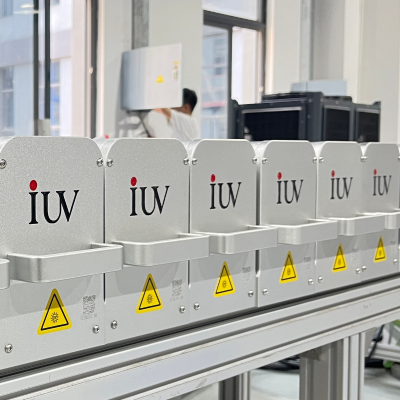
LED UV curing systems provide a different approach to ultraviolet energy generation. Instead of using gas discharge technology, LED systems use semiconductor devices to produce controlled ultraviolet output at specific wavelengths.
Common industrial UV LED wavelengths include 365 nm, 385 nm, and 395 nm. The correct wavelength selection depends on the ink chemistry and photoinitiator response.
Compared with conventional UV lamps, LED UV systems provide several technical advantages:
- stable spectral output
- lower thermal influence
- instant on/off operation
- reduced maintenance requirements
- improved process control
Stable wavelength output allows printers to maintain consistent curing conditions throughout production. This is particularly valuable for packaging applications where color accuracy, surface quality, and durability must remain consistent between different production runs.
According to RadTech technical publications, UV LED curing performance depends on matching the optical characteristics of the curing system with the chemical response of the ink or coating formulation.
Improving Energy Efficiency in Packaging Production
Energy consumption has become a major factor in printing equipment investment decisions. Packaging converters are increasingly evaluating technologies that reduce operating costs while supporting environmental goals.
Traditional UV systems often require continuous operation because mercury lamps need warm-up time and stable operating conditions. During production interruptions, lamps may remain active even when printing temporarily stops.
LED UV systems operate differently. The curing output can be activated immediately when required and switched off during downtime.
This operating method provides advantages during:
- job changeovers
- machine cleaning
- substrate replacement
- production adjustments
For narrow web label converters handling multiple short production runs, reducing unnecessary energy usage can significantly improve overall efficiency.
Energy savings are only one part of sustainability. Lower power consumption also reduces the environmental impact associated with long-term machine operation.
Thermal Management and Substrate Compatibility
Modern packaging production increasingly uses lightweight and recyclable materials. These substrates often require careful temperature control during printing.
Excessive curing heat can influence the physical properties of films and create production challenges. LED UV curing systems generate significantly less infrared energy, allowing converters to process sensitive materials with improved stability.
This advantage supports applications involving:
- pressure-sensitive labels
- unsupported PET films
- BOPP materials
- flexible packaging films
Lower thermal impact helps maintain dimensional accuracy and reduces the risk of substrate distortion.
For companies producing premium labels or complex packaging structures, better thermal management contributes to improved registration control and reduced material waste.
UV Curing Upgrades for Existing Printing Equipment
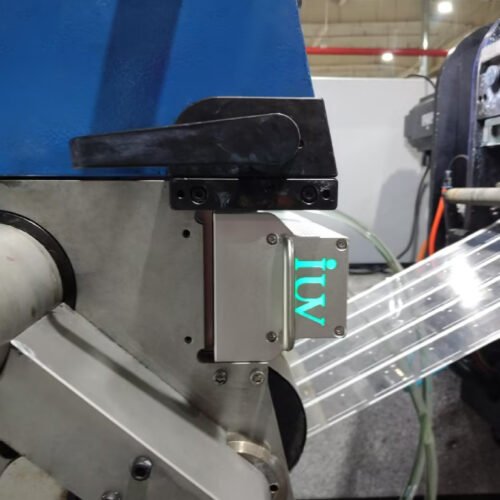
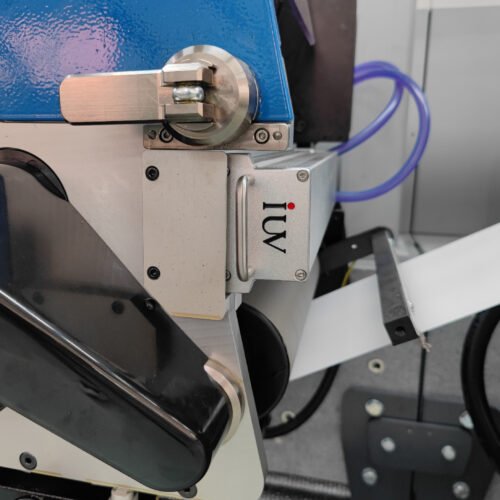
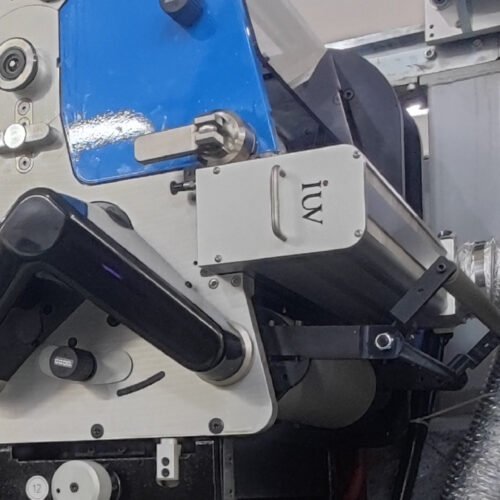
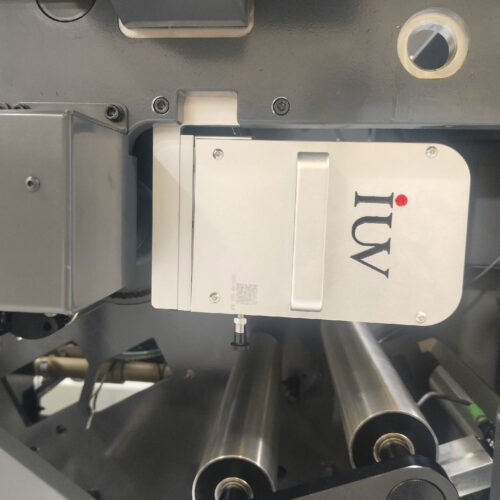
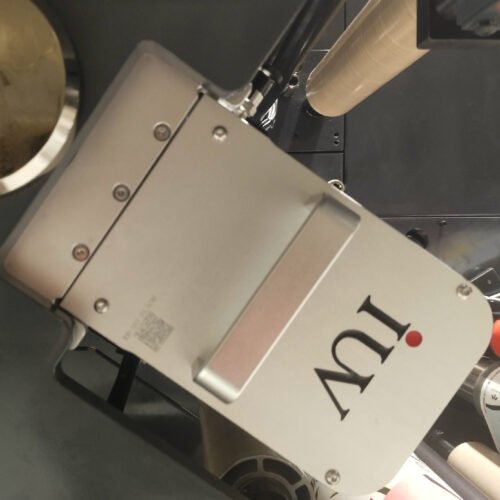
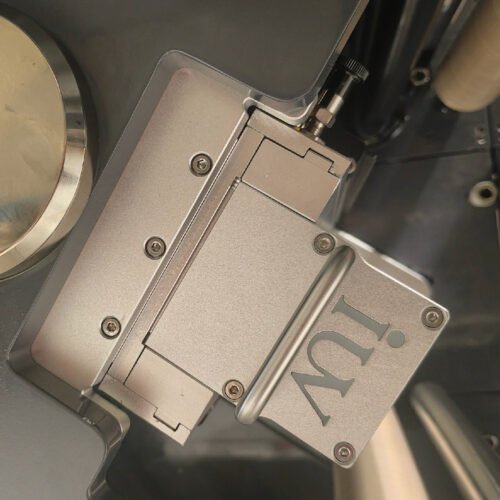
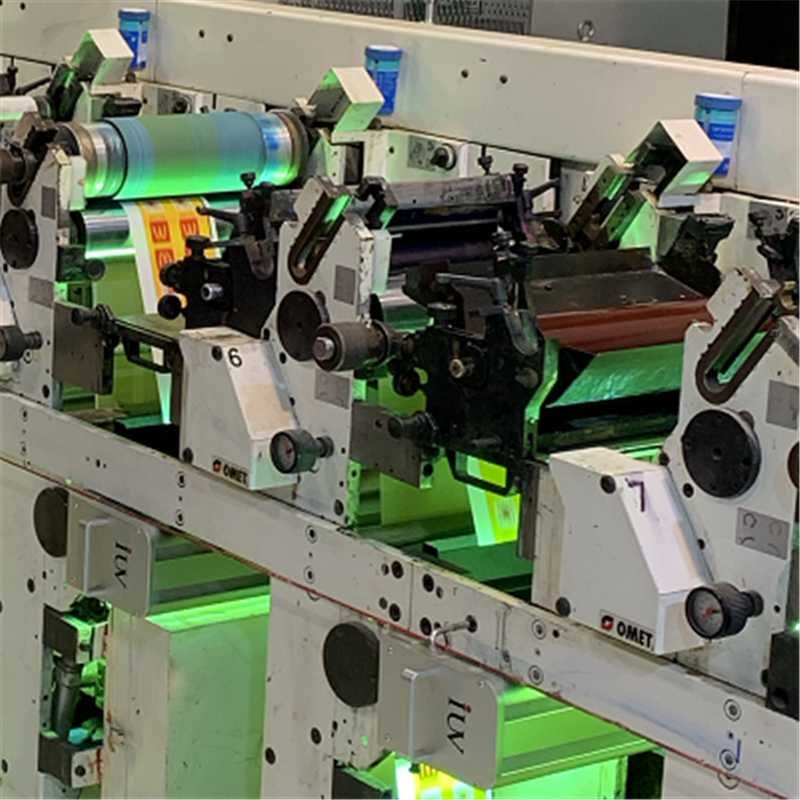
Many converters choose to upgrade curing systems rather than replace complete printing presses. A retrofit approach allows companies to maintain existing mechanical platforms while improving curing performance.
Before installation, engineers typically evaluate:
- available mounting space
- electrical requirements
- cooling capacity
- printing speed
- web width
- ink compatibility
- curing position
Printing equipment manufacturers such as Nilpeter, OMET, and Gallus provide platforms where curing technology integration can be an important factor in maintaining production competitiveness.
A properly designed LED UV retrofit can extend the useful life of existing equipment while improving sustainability performance.
This approach also reduces the environmental impact associated with replacing complete machines.
Improving Production Stability Through Process Control
Sustainable printing is not only about reducing energy consumption. It also requires reducing production waste.
Inconsistent curing can result in:
- rejected products
- repeated production runs
- additional material consumption
- unnecessary machine adjustments
Modern LED UV curing systems allow better control of curing parameters. Monitoring irradiance and energy density helps operators maintain stable production conditions.
Regular measurement using UV radiometers and process verification tools ensures that curing performance remains within the required range.
Industry standards and technical guidelines, including ASTM measurement practices and ISO process control principles, support the importance of accurate monitoring in maintaining consistent printing results.
Long-Term Maintenance and Operational Benefits
Maintenance reduction is another important reason why companies upgrade UV curing systems.
Mercury lamp systems require periodic replacement of consumable components. Operators must also maintain reflectors, cooling systems, and related hardware.
LED UV curing systems eliminate traditional lamp replacement cycles. Maintenance activities mainly involve:
- optical window cleaning
- cooling system inspection
- irradiance verification
Reduced maintenance requirements improve machine availability and allow production teams to focus on manufacturing rather than frequent curing system service.
For companies running continuous packaging production, improved equipment reliability creates significant operational value.
Future Development of Sustainable UV Printing Technology
The development of UV LED technology continues to influence the future of packaging printing. Advanced curing systems are increasingly incorporating intelligent monitoring, automated control, and data-based optimization.
Future solutions may include:
- real-time irradiance monitoring
- automatic power adjustment
- production data integration
- predictive maintenance functions
These developments will help converters achieve greater control over the printing process while reducing resource consumption.
As sustainability requirements continue to increase, efficient curing technology will remain an important part of modern packaging production strategies.
Conclusion
Upgrading UV curing systems has become an important engineering decision for companies focused on sustainable packaging printing production.
For label printing, flexographic printing, offset printing, and narrow web applications, LED UV technology provides advantages in energy efficiency, curing stability, thermal control, and maintenance reduction.
The transition from conventional UV lamp systems to LED UV curing is not simply a replacement of equipment. It represents an improvement in production management, process consistency, and long-term manufacturing efficiency.
By integrating advanced LED UV curing technology into existing printing platforms, companies can improve sustainability performance while maintaining the high-quality standards required by modern packaging markets.
References
RadTech International North America. UV+EB Technology Publications and Technical Resources.
ASTM International. ASTM E387 Standard Test Method for Spectral Irradiance.
ISO 12647. Graphic Technology — Process Control for the Production of Half-Tone Colour Separations, Proof and Production Prints.
Kipphan, H. Handbook of Print Media: Technologies and Production Methods. Springer-Verlag.