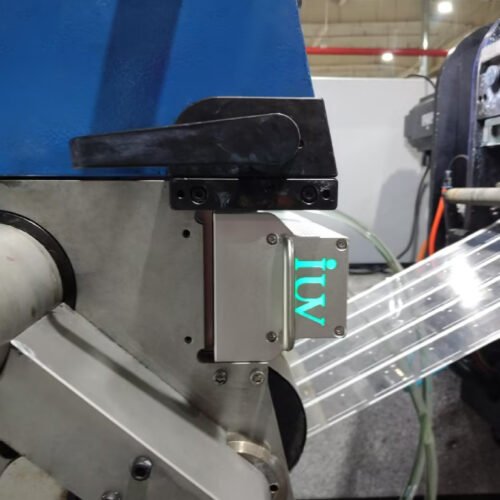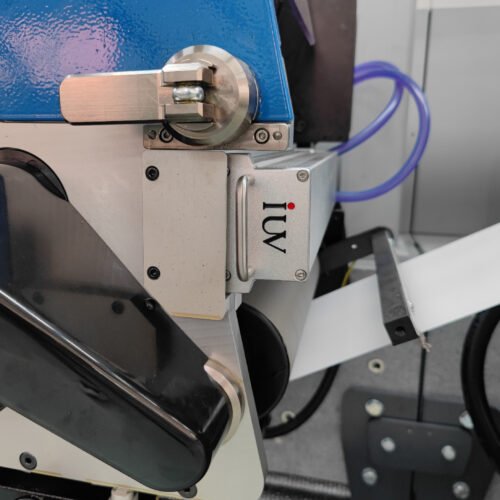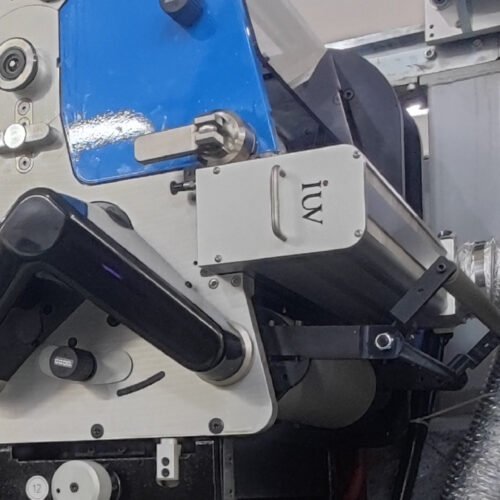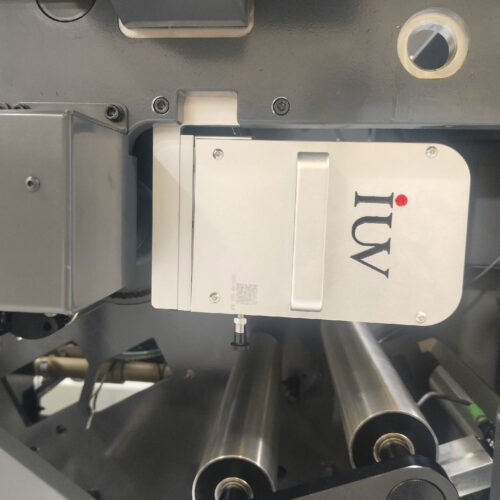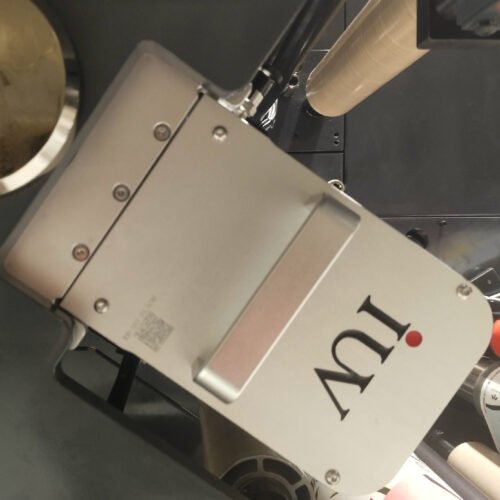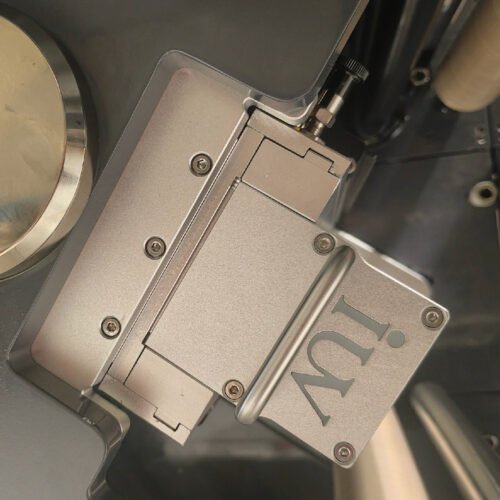
As narrow web label printing continues to evolve toward higher production speeds, lower operating costs, and improved print quality, UV LED curing technology has become one of the most significant developments in the industry. Many converters operating flexographic printing presses, hybrid presses, and packaging printing lines are replacing conventional mercury UV systems with UV LED curing systems. This shift has generated a common technical question among production managers and press operators: What Is UV LED Curing and How Does It Work in Narrow Web Label Printing Applications?
From an engineering perspective, UV LED curing is not simply a new light source. It is a different approach to energy delivery and photopolymerization that directly affects curing efficiency, ink adhesion, substrate compatibility, production stability, and overall print quality. Understanding how UV LED curing works requires examining both the chemistry of UV inks and the physical characteristics of LED-generated ultraviolet energy.
Understanding the Fundamentals of UV LED Curing
To answer the question What Is UV LED Curing and How Does It Work in Narrow Web Label Printing Applications?, it is important to start with UV curing technology itself. UV-curable inks contain oligomers, monomers, pigments, additives, and photoinitiators. The photoinitiators are responsible for absorbing ultraviolet energy and initiating a polymerization reaction.
When exposed to ultraviolet light, photoinitiators generate free radicals that rapidly convert liquid ink into a solid polymer film. Unlike solvent-based inks that require evaporation or water-based inks that require drying, UV inks cure almost instantly through a chemical reaction.
Traditional mercury UV systems produce a broad spectrum of ultraviolet energy together with visible light and infrared radiation. A significant portion of electrical power is converted into heat rather than useful curing energy. UV LED curing systems operate differently by emitting a narrow wavelength band, typically at 365 nm, 385 nm, 395 nm, or 405 nm. This concentrated wavelength output allows energy to be directed precisely toward the photoinitiators within the ink formulation.
As a result, UV LED curing systems achieve higher energy efficiency while reducing unwanted thermal effects during production.
The Importance of Wavelength Matching
One of the most critical aspects of understanding What Is UV LED Curing and How Does It Work in Narrow Web Label Printing Applications? is wavelength optimization.
Every photoinitiator has a specific absorption range. If the emitted wavelength does not correspond to the absorption characteristics of the photoinitiator package, curing performance decreases significantly. Even high-power curing units may struggle to achieve complete polymerization if the wavelength and ink chemistry are not properly matched.
In modern flexographic printing and label printing applications, 395 nm has become the most commonly used wavelength because it offers excellent compatibility with commercially available LED UV inks. However, specialty coatings, varnishes, and high-opacity white inks may require customized formulations to ensure proper curing performance.
The success of any UV LED curing system depends not only on lamp power but also on the relationship between wavelength, UV ink chemistry, and production speed.
UV Dose and Energy Transfer in High-Speed Printing
Another essential component of the question What Is UV LED Curing and How Does It Work in Narrow Web Label Printing Applications? involves UV dose management.
UV dose refers to the total amount of ultraviolet energy delivered to the printed surface. It is determined by irradiance and exposure time. In narrow web label printing applications operating at speeds above 100 meters per minute, exposure times are extremely short. Therefore, efficient energy transfer becomes critical.
If the UV dose is insufficient, the ink may appear cured on the surface while remaining partially uncured beneath the film. This condition can lead to poor scratch resistance, reduced chemical resistance, blocking during rewinding, and adhesion failures during downstream converting processes.
Modern UV LED curing systems provide stable irradiance output throughout the production cycle. Unlike conventional mercury lamps that gradually lose performance as they age, LED systems maintain consistent curing energy, helping ensure uniform polymerization across long production runs.
This consistency is especially valuable in label printing environments where color stability and repeatable curing quality are essential.
Temperature Control and Substrate Compatibility
A major advantage of UV LED technology is superior temperature control. Conventional mercury UV lamps generate substantial infrared heat that can increase web temperature during production. Excessive heat often creates challenges when printing on thin films, shrink sleeves, synthetic labels, and other temperature-sensitive materials.
Understanding What Is UV LED Curing and How Does It Work in Narrow Web Label Printing Applications? requires recognizing the impact of thermal management on production quality.
Because UV LED curing systems generate very little infrared radiation, substrate temperatures remain significantly lower. This allows converters to print on PET, BOPP, PE, polypropylene films, and heat-sensitive packaging materials with greater stability.
Lower operating temperatures also help maintain web tension consistency, improve print registration, and reduce material distortion. In high-speed narrow web production environments, these factors directly contribute to improved product quality and reduced waste.
Oxygen Inhibition and Surface Cure Performance
Oxygen inhibition is another important technical factor influencing UV curing performance.
During free-radical polymerization, oxygen molecules present in the surrounding air can react with active radicals before the curing reaction is completed. This interference reduces surface cure efficiency and may leave the ink film partially tacky.
When discussing What Is UV LED Curing and How Does It Work in Narrow Web Label Printing Applications?, oxygen inhibition is often associated with varnishes, coatings, and highly pigmented ink systems.
Modern LED UV ink formulations are specifically engineered to minimize oxygen inhibition effects. Optimized photoinitiator packages, improved resin systems, and carefully controlled UV dose levels allow converters to achieve excellent surface cure even under demanding production conditions.
When curing issues occur, troubleshooting should focus on wavelength compatibility, UV dose levels, ink formulation, and press speed rather than simply increasing lamp intensity.
UV Ink Adhesion and Long-Term Durability
The effectiveness of UV LED curing directly influences UV ink adhesion and long-term durability. Proper polymerization creates a dense cross-linked structure that improves resistance to scratching, abrasion, chemicals, and environmental exposure.
In narrow web label printing, inadequate curing frequently appears during die cutting, slitting, laminating, or rewinding operations. Labels may exhibit poor adhesion, surface marking, or reduced resistance to handling.
A properly configured UV LED curing system ensures that the ink film reaches its intended cure level, producing strong adhesion to both paper and film substrates. This is particularly important for beverage labels, cosmetic labels, pharmaceutical packaging, and industrial identification labels where durability requirements are often stringent.
Why UV LED Technology Is Becoming the Preferred Choice
The increasing adoption of UV LED technology is largely driven by its ability to provide stable curing performance under demanding production conditions. Instant on/off functionality eliminates warm-up periods and production delays. Consistent wavelength output improves curing reliability. Reduced heat generation enhances material compatibility. Lower maintenance requirements improve machine uptime.
For converters evaluating modern printing technologies, the answer to What Is UV LED Curing and How Does It Work in Narrow Web Label Printing Applications? extends beyond simple curing. UV LED technology provides a highly controlled method of delivering ultraviolet energy that improves production consistency, enhances print quality, supports high-speed manufacturing, and enables reliable curing across a wide range of label and packaging applications.
As narrow web printing continues moving toward greater automation and higher production efficiency, UV LED curing systems are increasingly becoming a core component of modern flexographic and label printing operations.