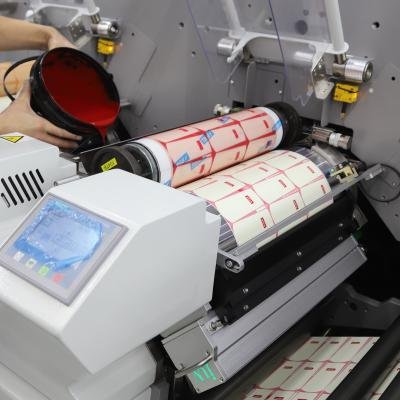
Ink adhesion is a fundamental performance parameter in modern label printing production that relies on LED UV curing technology. In narrow web printing environments using flexographic printing systems or hybrid offset presses, the ability of a cured ink film to maintain durable bonding with the substrate directly determines the reliability of the final printed product. Adhesion performance influences resistance to abrasion, chemical exposure, die cutting stress, and long-term product handling. When adhesion is insufficient, converters may experience ink delamination, flaking during slitting operations, or defects that appear during label application.
The evaluation of ink adhesion in LED UV cured label printing applications therefore requires a comprehensive engineering approach. Adhesion behavior is not determined by a single factor. Instead, it results from the interaction between curing stability, ink formulation, substrate characteristics, and the mechanical conditions of the printing press. Engineers responsible for maintaining stable label printing production must evaluate these relationships carefully to ensure that UV ink curing processes consistently achieve full polymerization and reliable substrate bonding.
Technical Definition of Ink Adhesion in UV Ink Curing Processes
Within LED UV curing systems used in flexographic printing and narrow web label printing production, ink adhesion can be defined as the ability of the polymerized ink film to maintain a stable interface with the substrate surface under mechanical and environmental stress. This interface is formed during the UV curing process when photoinitiators within the ink absorb radiation from the LED UV curing unit and initiate a polymerization reaction.
The polymerization process converts the liquid ink formulation into a crosslinked polymer structure. For strong adhesion to occur, this polymer network must develop uniformly throughout the ink layer while maintaining effective interaction with the substrate surface. If the curing process is incomplete, the ink film may appear dry but remain structurally weak. Such conditions often lead to delayed adhesion failures during converting operations such as die cutting, rewinding, or lamination.
Adhesion evaluation therefore requires engineers to consider both the chemical curing reaction and the mechanical interaction between the cured ink and the substrate surface.
Curing Stability and Its Impact on Adhesion Performance
Curing stability plays a central role in determining ink adhesion performance in LED UV cured label printing. In narrow web flexographic printing systems, multiple print stations deposit successive layers of ink onto the substrate. Each layer must undergo adequate polymerization before the web proceeds to subsequent stations. If curing conditions fluctuate during production, the degree of polymerization within the ink film may become inconsistent.
Uneven curing conditions can occur if the distribution of UV energy across the web width is not uniform or if the LED UV curing unit output varies over time. When certain areas of the web receive insufficient curing energy, the ink in those areas may remain partially polymerized. This condition weakens the internal structure of the ink film and reduces its ability to adhere effectively to the substrate.
In practical press environments, curing instability can be caused by factors such as contamination of optical components, mechanical misalignment of LED curing modules, or variations in the web path. Routine inspection and calibration of curing units are therefore necessary to maintain stable UV ink curing processes that support consistent adhesion performance.
Influence of Substrate Characteristics on Adhesion Behavior
The wide variety of substrates used in label printing production introduces additional complexity in evaluating adhesion performance. Narrow web printing operations frequently process coated paper stocks, polypropylene films, polyethylene materials, polyester substrates, and multilayer laminates used in packaging applications. Each substrate type exhibits different surface energy characteristics and surface structures.
Porous paper materials may allow a degree of ink penetration into the substrate surface, which contributes to mechanical anchoring of the cured ink film. In contrast, synthetic films typically rely on surface energy and chemical compatibility to support adhesion. If the surface energy of the substrate is insufficient, the liquid ink may not wet the surface effectively before curing occurs. Poor wetting reduces the contact area between the ink film and the substrate, which weakens adhesion even if polymerization is otherwise complete.
Surface treatment methods such as corona treatment are commonly used to increase the surface energy of polymer films before printing. However, these treatments can vary between material batches and may degrade during storage. As a result, converters often encounter adhesion variability even when printing on substrates that appear nominally identical.
Engineers responsible for label printing production must therefore evaluate substrate compatibility as part of the adhesion verification process.
Interaction Between Ink Chemistry and LED UV Curing Technology
Ink formulation is another key factor influencing adhesion performance in LED UV cured printing applications. UV inks designed for LED UV curing contain photoinitiator systems that respond to the spectral output of LED curing units. If the ink formulation is not optimized for LED activation, the curing reaction may not proceed efficiently throughout the ink film.
In such cases, the ink surface may appear cured while deeper layers remain partially polymerized. This condition reduces the structural integrity of the ink film and can lead to adhesion failures, particularly when printing on non-porous substrates. For this reason, converters typically use UV inks specifically formulated for LED UV curing when operating narrow web flexographic printing systems equipped with LED curing technology.
Ink properties such as pigment concentration, viscosity, and film thickness can also influence curing behavior. Thick ink layers may require more energy to achieve full polymerization, while certain pigments may reduce the penetration of UV radiation into the ink film. These variables must be considered when evaluating adhesion performance under production conditions.
Thermal Management and Its Influence on Process Stability
Although LED UV curing technology produces lower radiant heat directed toward the substrate compared with conventional arc lamp curing systems, thermal management remains an important engineering consideration. LED arrays generate heat during operation, and this heat must be dissipated effectively to maintain stable curing output.
Temperature variations within the curing module or press environment can influence the viscosity of UV inks and affect ink transfer characteristics in the flexographic printing system. Changes in ink viscosity may alter the thickness and uniformity of the deposited ink layer, which in turn influences the curing process and adhesion performance.
In addition, temperature changes can affect the dimensional stability of certain substrates, particularly thin polymer films used in label printing production. Maintaining consistent thermal conditions within the press helps ensure stable curing behavior and reliable adhesion results across long production runs.
Effective thermal management typically involves integrated cooling systems within the LED UV curing units combined with controlled airflow within the press enclosure.
Press Retrofitting and System Integration Challenges
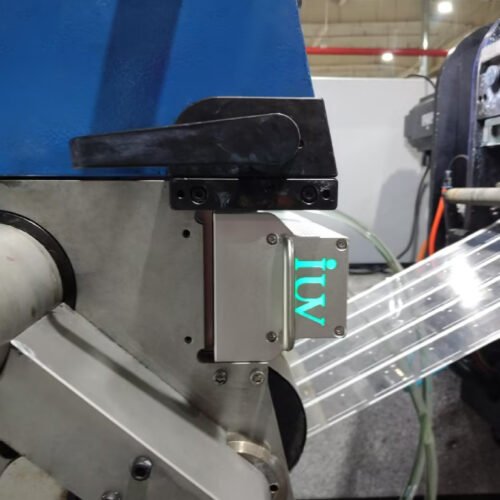
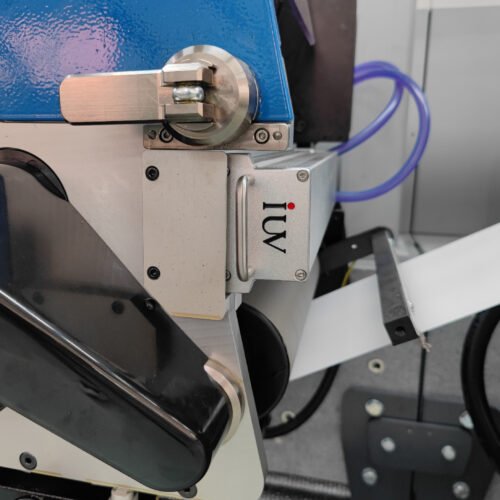
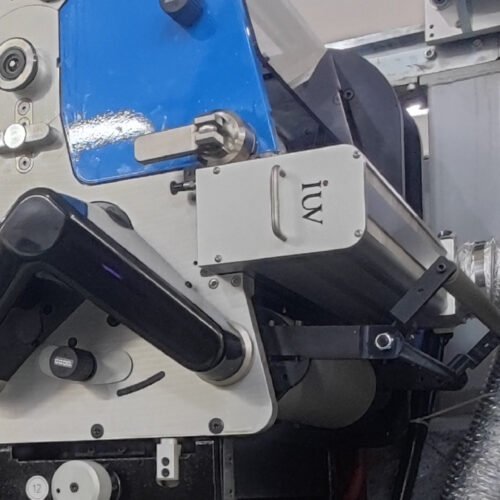
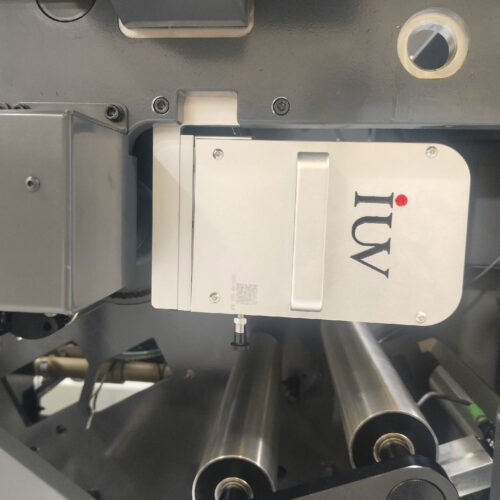
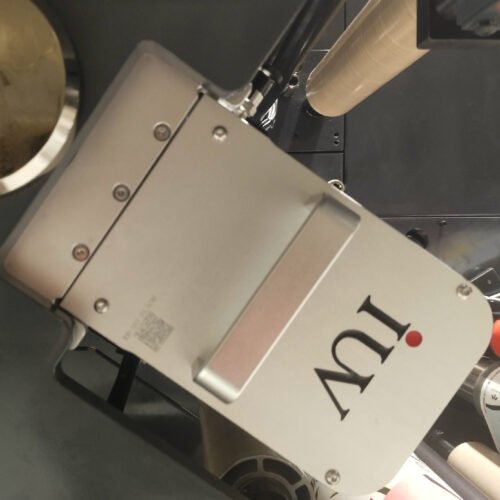
Many converters implement LED UV curing technology by retrofitting existing narrow web flexographic presses that were originally designed for conventional UV lamp systems. These presses may have been engineered around different optical configurations, cooling requirements, and lamp mounting structures.
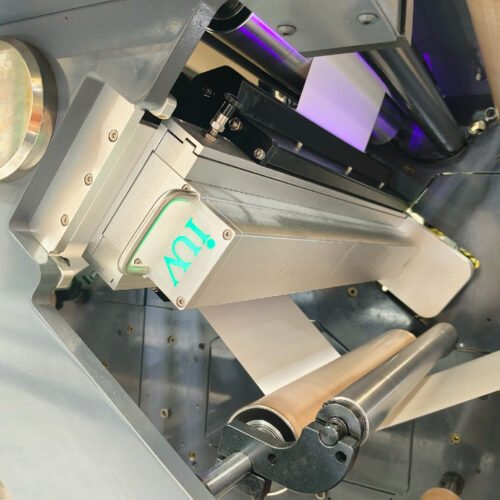
During LED retrofit installations, engineers must carefully evaluate the positioning of the curing units relative to the printed web. Lamp-to-substrate distance, shielding structures, and the mechanical stability of the mounting system all influence the distribution of UV energy across the web width. Improper integration can lead to uneven curing conditions and inconsistent adhesion performance.
Press mechanics also influence the curing process. Factors such as web tension stability, impression pressure, and anilox transfer characteristics determine the uniformity of the ink film prior to curing. If these mechanical variables fluctuate during production, variations in ink thickness may occur, which can affect the efficiency of the UV ink curing process.
Successful integration of LED UV curing systems therefore requires coordinated evaluation of both mechanical and optical aspects of the printing press.
Low Migration Validation in Packaging Applications
In many label printing applications associated with food packaging and pharmaceutical products, low migration performance is a critical regulatory requirement. Low migration UV ink systems are designed to minimize the presence of residual components that could potentially migrate from the printed label into the packaged product.
Achieving low migration performance requires complete polymerization of the UV ink film during curing. Adhesion performance is closely related to this requirement because incomplete curing often results in both weak adhesion and increased risk of residual components within the ink film.
Converters performing low migration validation typically evaluate adhesion alongside other curing indicators such as chemical resistance and surface durability. These tests are conducted under production conditions to confirm that the LED UV curing process provides consistent and reliable polymerization across the entire printed web.
Impact of Adhesion Reliability on Label Printing Production Efficiency
Ink adhesion performance has a direct influence on production efficiency within narrow web label printing operations. When adhesion stability is poor, defects such as ink flaking during slitting or die cutting can occur. These defects increase material waste and may require additional inspection procedures or reprinting of defective batches.
Stable adhesion performance, by contrast, allows converters to maintain consistent press operation and reduce the need for frequent process adjustments. When curing stability, substrate compatibility, and ink formulation are properly aligned, the UV ink curing process becomes predictable and supports efficient label printing production.
For engineers and production managers responsible for maintaining high-performance flexographic printing systems, adhesion reliability therefore represents both a quality metric and an operational stability indicator.
Conclusion
The technical evaluation of ink adhesion performance in LED UV cured label printing applications requires a comprehensive understanding of the entire UV ink curing process. Adhesion reliability is influenced by curing stability, ink chemistry, substrate characteristics, thermal management, and the integration of LED UV curing systems within narrow web printing equipment.
By analyzing these factors systematically and implementing stable process controls, engineers and production specialists can ensure consistent polymerization of UV inks and reliable bonding between the ink film and the substrate. This approach supports durable printed labels, efficient production workflows, and compliance with increasingly demanding packaging regulations.