In the high-precision world of narrow web and label printing, ink shrinkage remains a persistent technical hurdle. Whether you are running a flexographic press or a high-speed offset line, the transition of UV ink from a liquid state to a solid film involves complex chemical reactions. When this process goes unmanaged, the internal stresses within the ink film lead to shrinkage. This causes substrate curling, poor adhesion, and loss of dimensional accuracy.
Effective UV curing management is the only way to stabilize your output. By understanding the physics of polymerization and the thermal dynamics of LED UV versus traditional mercury systems, printers can eliminate these defects.
The Chemistry of UV Ink Shrinkage
UV inks cure through a process called free-radical polymerization. When UV light hits the photoinitiators in the ink, it triggers a chain reaction. The monomers and oligomers link together to form a solid polymer network. As these molecules bond, they move closer together. This physical tightening naturally reduces the volume of the ink.
In label printing, especially on thin films, this reduction in volume creates tension. If the ink shrinks more than the substrate can resist, the material curls. This is common in narrow web applications where heat-sensitive synthetic films are the standard. Controlling the speed and intensity of this reaction is the first step in preventing deformation.
Why Heat Management Dictates Print Quality
Traditional mercury vapor lamps emit a broad spectrum of light. This includes a significant amount of Infrared (IR) radiation. This IR energy translates directly into heat on the substrate. In flexo and offset printing, excess heat softens the plastic films used for labels.
When a softened substrate meets a shrinking ink film, the result is predictable: the label curls toward the ink side. Proper UV curing management focuses on decoupling the “curing energy” from the “thermal energy.” Modern Narrow web presses often utilize chill rollers to dissipate this heat. However, the most effective way to prevent heat-related shrinkage is to move toward LED UV technology.
The Role of LED UV in Reducing Internal Stress
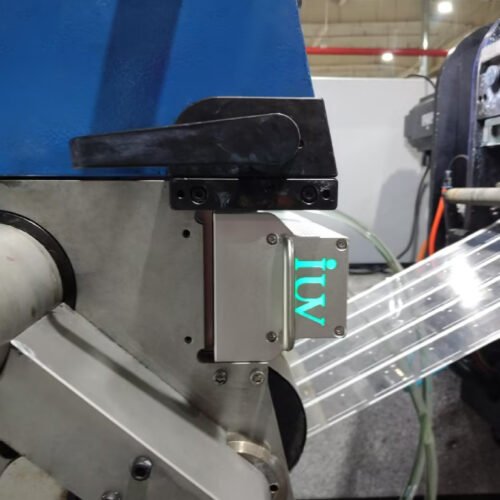
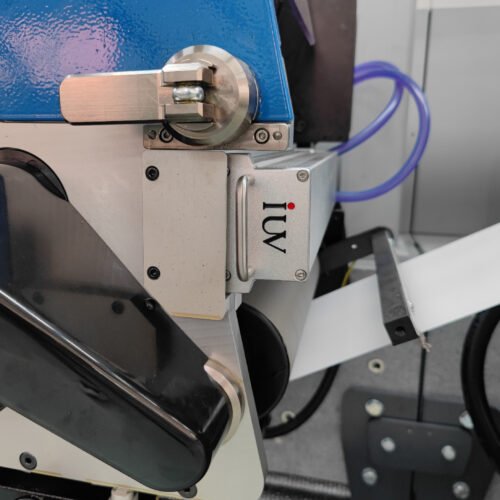
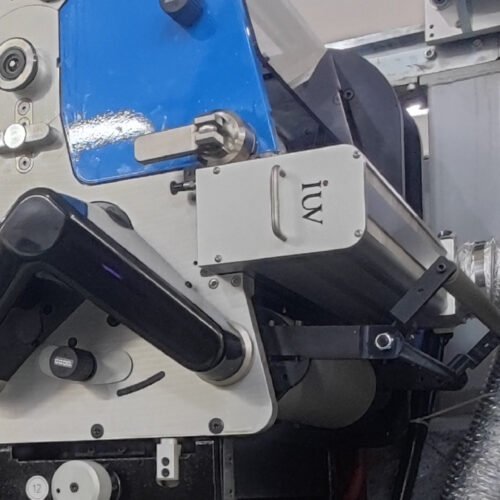
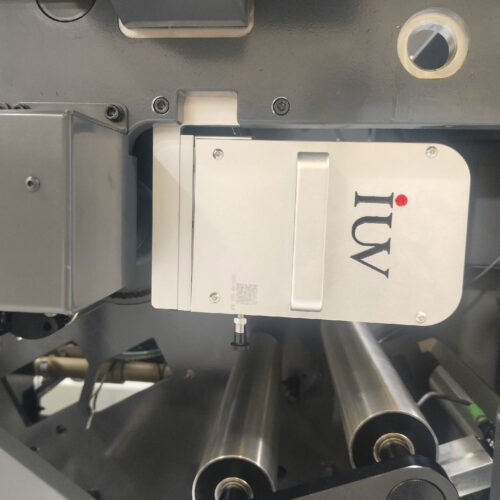
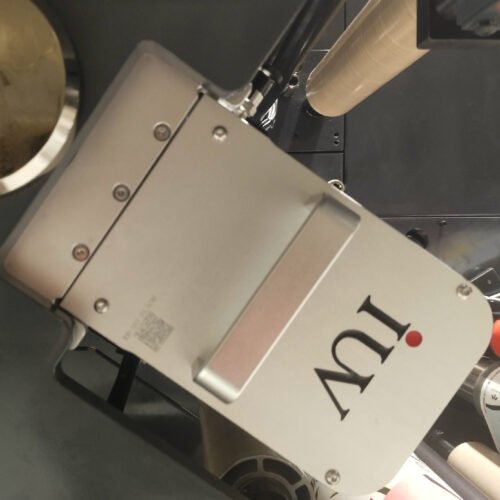
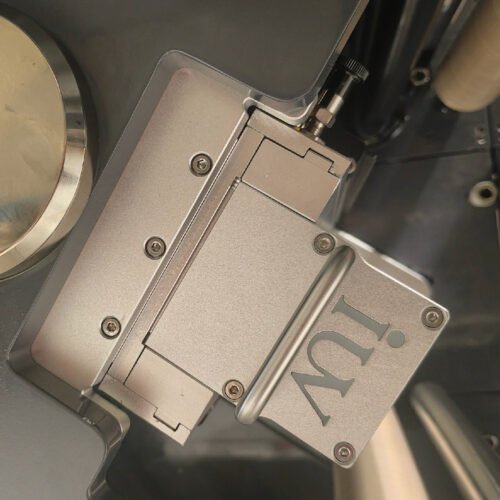
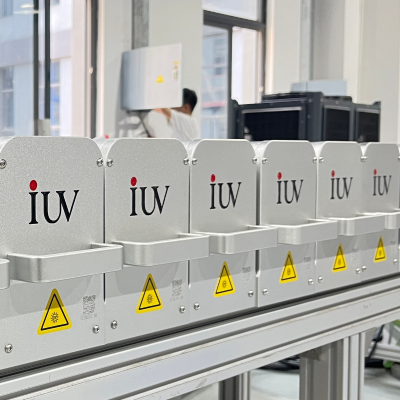
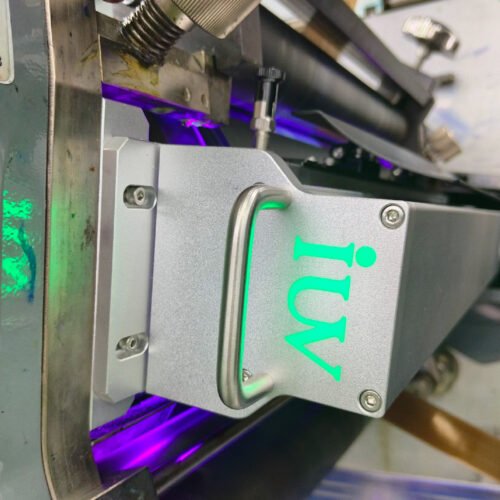
LED UV curing systems provide a monochromatic output, typically at 395nm or 365nm. Unlike mercury lamps, LEDs do not emit IR radiation. This allows the substrate to remain cool during the entire curing process.
For narrow web printers, this is a game-changer. Cold curing means the film retains its structural integrity. When the substrate remains rigid, it can better resist the microscopic shrinkage occurring within the ink layer. Furthermore, LED systems provide instant on/off capabilities. This ensures that the substrate is never exposed to unnecessary energy during press stops or slow-downs.
Balancing Intensity and Dose
To prevent shrinkage, engineers must distinguish between peak intensity (irradiance) and total energy (dose).
- Peak Intensity: This is the “brightness” of the UV light hitting the surface. High intensity is needed to penetrate thick ink layers in flexo printing.
- Dose (Energy Density): This is the total amount of UV energy the ink receives over time. It is determined by the press speed and the number of lamp banks.
If the intensity is too high, the surface of the ink cures too fast. This creates a “skinning” effect. The wet ink underneath then shrinks against a hard top layer, causing micro-crinkling or “orange peel” textures. By managing the balance between intensity and dose, you ensure a linear, even cure throughout the entire ink deposit.
Substrate Selection and Surface Tension
Not all substrates react to UV curing in the same way. In label printing, BOPP, PE, and PET films have different thermal thresholds. Ink shrinkage becomes more apparent on thinner gauges.
Surface tension also plays a role. If the substrate surface energy is too low, the ink does not wet out properly. When the UV light triggers polymerization, the ink “pulls back” from the edges. This is often mistaken for shrinkage, but it is actually a failure of mechanical bonding. Maintaining a dyne level of at least 38-42 is vital for ensuring the ink stays anchored during the curing contraction.
Oxygen Inhibition in Narrow Web Flexo
One of the biggest challenges in UV curing management is oxygen inhibition. Oxygen in the air can interfere with the free radicals at the surface of the ink. This prevents the top layer from curing fully, while the bottom layers shrink. This differential curing rate leads to surface wrinkles.
In narrow web flexo, printers often use nitrogen inertion to solve this. By replacing oxygen with nitrogen in the curing zone, the ink cures more efficiently at lower power levels. Lower power means less heat, which directly reduces the risk of substrate shrinkage and curling.
Technical Maintenance of Curing Systems
You cannot manage what you do not measure. A common cause of ink shrinkage is “over-curing” to compensate for aging lamps. As mercury bulbs degrade, their output shifts. Operators often slow down the press or turn up the power to ensure the ink is dry. This floods the substrate with IR heat.
Regularly monitoring your UV output with a radiometer is essential. You must track the Joules and Watts per square centimeter. If your readings show a drop in intensity, replace the bulbs or clean the reflectors. In LED systems, ensure the water-cooling or air-cooling units are functioning. If an LED array overheats, its wavelength can shift, leading to incomplete polymerization and subsequent shrinkage issues.
Optimizing Ink Formulation for Low Shrinkage
Work closely with your ink supplier to select “low-shrinkage” formulas. Some UV inks are designed with specific oligomers that have a lower cross-link density. These formulas are more flexible. They are particularly useful in offset and narrow web applications where the print must withstand post-press processes like die-cutting or folding.
If you are transitioning from mercury to LED, ensure your inks are “LED-compatible.” These inks contain photoinitiators tuned specifically to the 395nm wavelength. Using a standard UV ink under an LED lamp often results in a “tacky” surface and internal stress, as the light cannot trigger the deep-layer cure required for stability.
Impact of Ink Film Thickness in Offset and Flexo
Ink film thickness is a primary driver of shrinkage. In offset printing, the ink film is very thin, which generally minimizes shrinkage issues. However, in flexo printing, the anilox roll volume dictates the ink deposit.
A high-volume anilox delivers more ink, which contains more monomers. More monomers mean more potential for volume reduction during curing. If you experience curling on a specific job, consider switching to a higher line-screen anilox with a lower BCM (billion cubic microns). A thinner, more pigment-dense ink layer will always cure more predictably than a thick, translucent one.
Conclusion: The Path to Stable UV Printing
Preventing ink shrinkage is a multi-dimensional task. It requires a synergy between the mechanical settings of the press, the chemistry of the ink, and the precision of the UV curing system.
By prioritizing LED UV technology, you remove the thermal variables that plague traditional narrow web printing. Consistently measuring UV output and maintaining proper surface tension ensures that the ink bonds before it has a chance to pull. When you master the management of UV energy, you produce flatter, more stable labels that perform perfectly in the hands of the end-user.
Focus on the balance of heat, light, and chemistry. This technical rigor is what separates high-quality printing houses from the rest of the market. Proper curing management is not just about drying ink; it is about protecting the structural integrity of every meter of material that passes through your press.