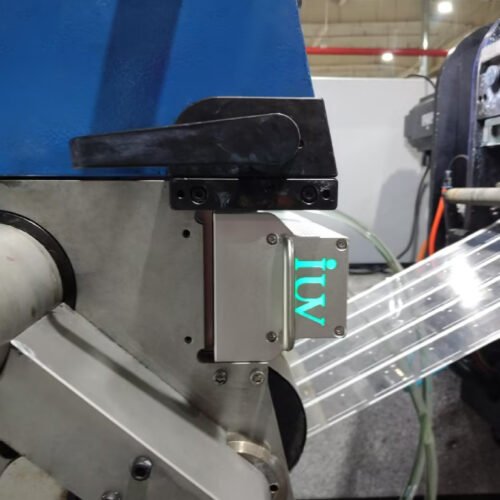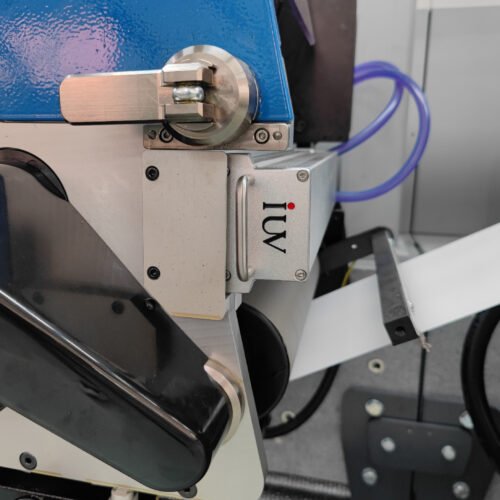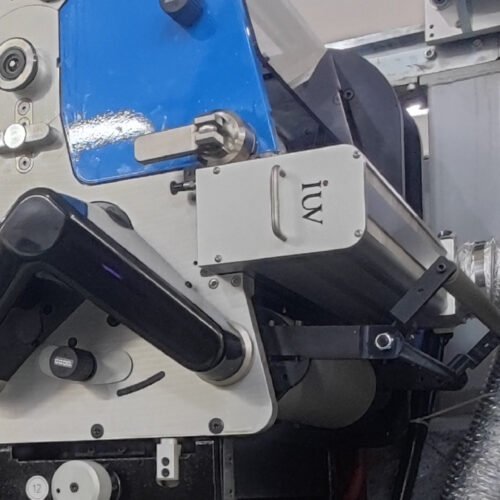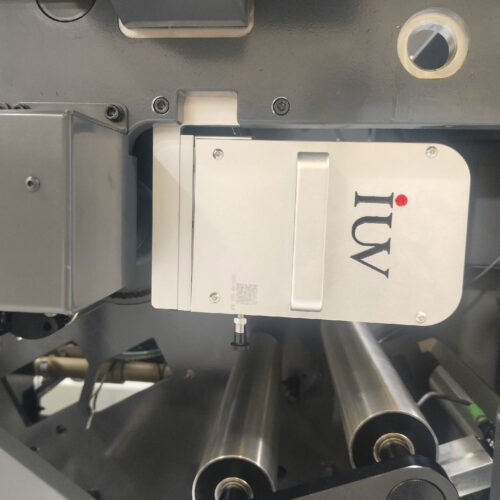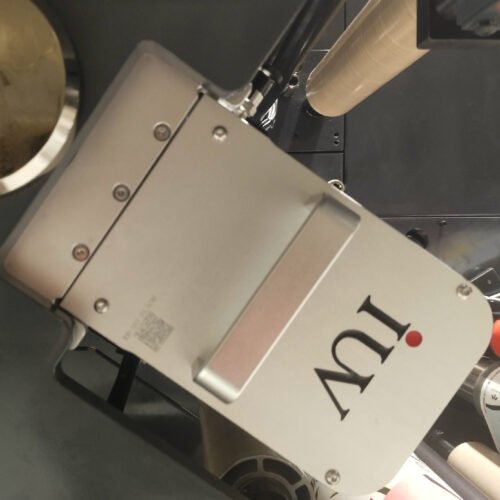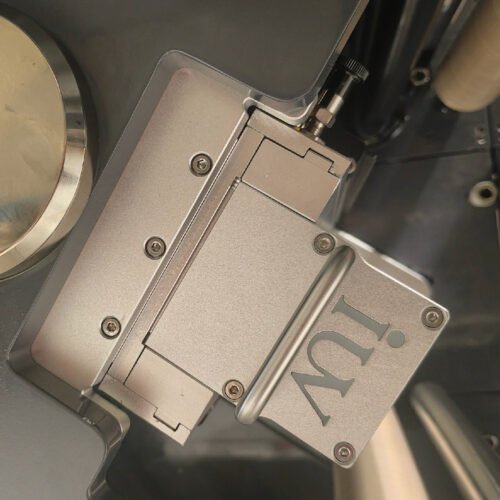
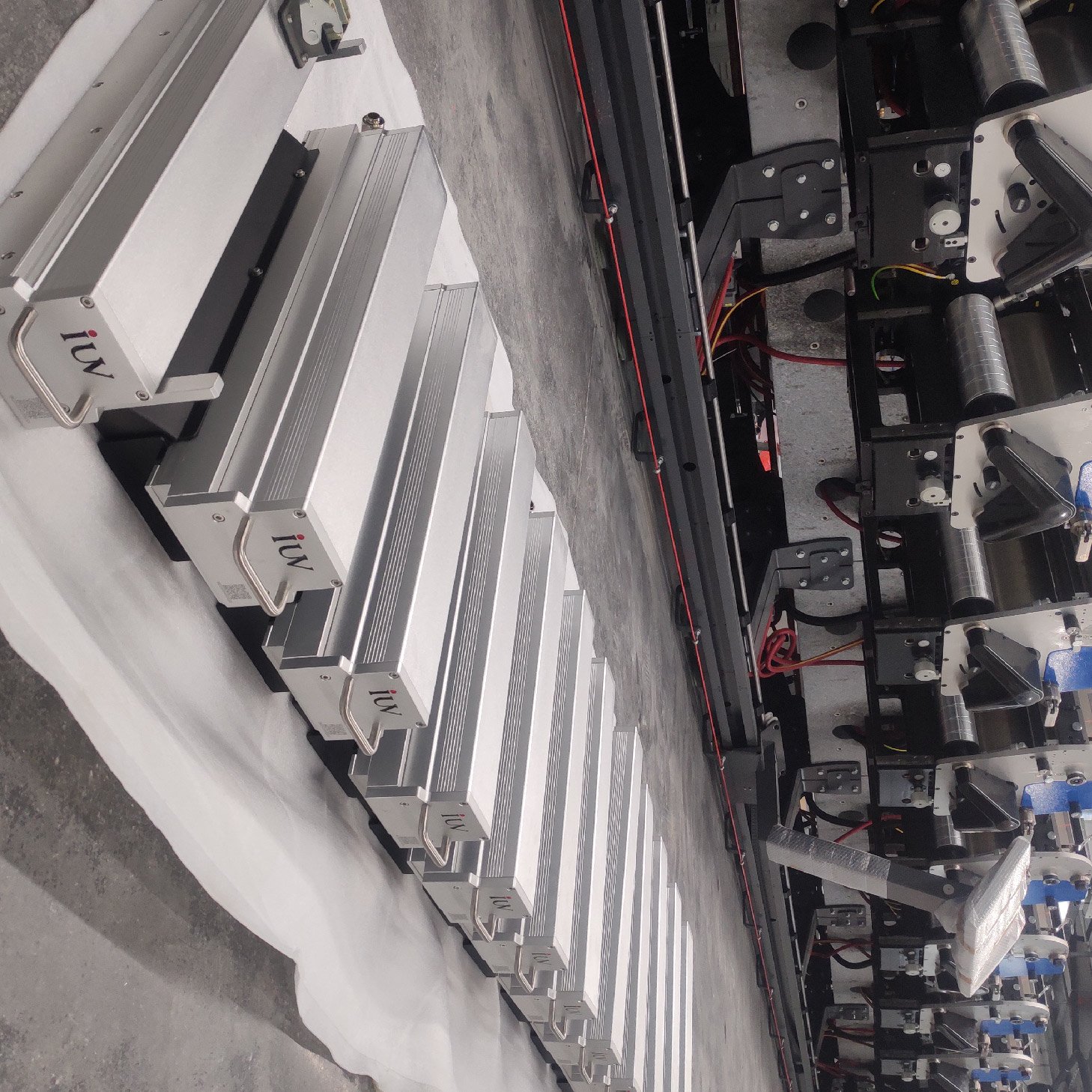
In the dynamic world of label and flexible packaging printing, achieving superior ink adhesion is paramount. It’s the foundation of durability, visual appeal, and overall product integrity. For decades, UV curing has been a cornerstone technology, offering rapid drying and robust finishes. However, the evolution of curing technology, particularly the advent of high-intensity LED UV systems, is revolutionizing flexographic printing, pushing the boundaries of what’s possible in terms of ink adhesion.
Flexography, with its inherent flexibility and suitability for a wide range of substrates, relies heavily on the effective interaction between ink, substrate, and curing process. When inks don’t bond properly, common issues arise: scuffing, scratching, delamination, and poor chemical resistance. These defects can lead to costly reprints, product recalls, and damage to brand reputation. Understanding the science behind ink adhesion and how curing technology influences it is therefore critical for any printer aiming for excellence.
The Science of Ink Adhesion in Flexography
Ink adhesion is essentially the force that holds the ink film to the surface of the substrate. It’s a complex interplay of physical and chemical interactions. On a microscopic level, adhesion involves factors such as:
- Wetting: The ability of the ink to spread evenly across the substrate surface. Good wetting is crucial for intimate contact.
- Mechanical Interlocking: For porous substrates, ink can penetrate and create physical anchors.
- Chemical Bonding: This is where the curing process plays a vital role. UV-curable inks contain monomers and oligomers that polymerize when exposed to specific wavelengths of UV light. This polymerization forms a solid, cross-linked polymer network that is chemically bonded to the substrate and to itself.
- Surface Energy: Substrates have varying surface energies. Low surface energy materials, like many plastics used in packaging, are more challenging to achieve good adhesion on.
In flexographic printing, inks are typically formulated with photoinitiators that absorb UV energy. When this energy is absorbed, the photoinitiators generate free radicals or cations. These reactive species then initiate the polymerization process of the acrylate or other reactive components in the ink.
Traditional Mercury Lamp Curing: Limitations and Challenges
For years, mercury vapor lamps have been the workhorse of UV curing in the printing industry. These lamps emit UV light across a broad spectrum, including UVA, UVB, and UVC, as well as significant heat. While effective for many applications, they present several drawbacks, especially concerning optimal ink adhesion:
- Broad Spectrum Emission: Mercury lamps emit a wide range of wavelengths, some of which might not be efficiently used by the photoinitiators in certain inks, leading to incomplete curing.
- Heat Generation: The significant heat output can cause substrate distortion, particularly with thin films or heat-sensitive materials. This can indirectly affect adhesion by altering the substrate’s surface properties or the ink’s behavior during curing.
- Inconsistent Output: Lamp output can degrade over time and is susceptible to voltage fluctuations, leading to inconsistent curing and variable adhesion performance.
- Environmental Concerns: Mercury lamps contain hazardous materials and have a shorter lifespan, requiring frequent replacement and disposal.
- Energy Consumption: They are less energy-efficient compared to newer technologies.
The uneven curing profile sometimes achieved with mercury lamps can result in a weaker polymer network. If the ink isn’t fully cross-linked at the surface or within its depth, the bonds formed with the substrate will be inherently weaker. This is a significant factor contributing to poor ink adhesion.
The Rise of High-Intensity LED UV Curing
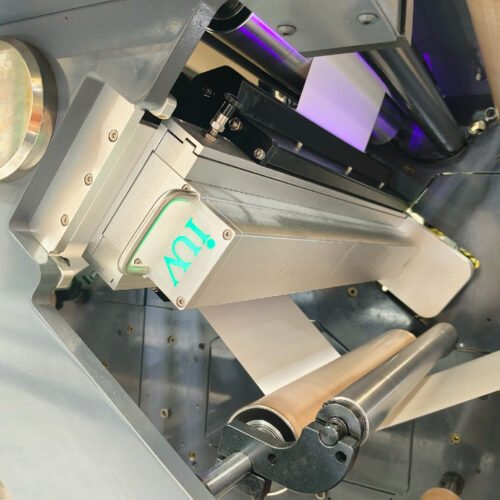
High-intensity LED UV curing systems represent a paradigm shift. Instead of broad-spectrum mercury lamps, LEDs emit UV light within very narrow, specific wavelength bands. The most common bands used in printing are 365nm, 385nm, 395nm, and 405nm, chosen because they align perfectly with the absorption peaks of commonly used photoinitiators in UV-curable inks and coatings.
The benefits of this targeted approach are numerous and directly impact ink adhesion:
- Precise Wavelength Emission: LEDs are designed to emit light at wavelengths that are highly efficient for photoinitiator activation. This means more of the emitted energy is directly converted into initiating polymerization, leading to a more complete and robust cure.
- High Irradiance and Uniformity: Modern high-intensity LED systems can deliver exceptionally high levels of UV irradiance (power density) across the print width. This high power ensures rapid and thorough curing, even for challenging inks and substrates. Furthermore, LED arrays can be engineered for remarkable uniformity, ensuring consistent curing from edge to edge, which is vital for uniform adhesion.
- Instant On/Off and Controllable Output: LEDs can be switched on and off instantaneously, and their output can be precisely controlled in real-time. This allows for dynamic adjustments based on press speed and ink formulation, optimizing the curing energy delivered. This precision prevents over-curing (which can sometimes make inks brittle and prone to cracking) and under-curing, both of which compromise adhesion.
- Minimal Heat Emission: Compared to mercury lamps, LEDs produce very little heat. This is a game-changer for printing on thin films, shrink sleeves, and other heat-sensitive materials often used in narrow-web flexographic printing for labels and packaging. Reduced heat means less substrate distortion, maintaining dimensional stability and ensuring the ink cures onto a stable surface, thereby improving adhesion.
- Longer Lifespan and Stability: LED lamps have a significantly longer operational life (tens of thousands of hours) and their output remains stable throughout their lifespan, unlike mercury lamps which degrade. This reliability ensures consistent curing performance and adhesion over time without frequent calibration or replacement.
How High-Intensity LED Curing Specifically Improves Flexographic Ink Adhesion
Let’s drill down into how these advantages translate into better ink adhesion on the press floor in flexographic printing:
- Enhanced Polymerization Depth and Cross-linking: The high irradiance and specific wavelengths of LED systems ensure that photoinitiators are activated efficiently throughout the ink layer. This leads to deeper and more thorough cross-linking of the ink’s polymer network. A more complete cross-link density means a stronger, more cohesive ink film that is less prone to delamination from the substrate. This is crucial for applications requiring excellent resistance to abrasion, chemicals, and flexing.
- Optimized Curing on Challenging Substrates: Many flexible packaging and label applications utilize low-surface-energy plastic films (like PE, PP, PET). Achieving strong adhesion on these materials is notoriously difficult. Traditional UV curing might struggle to fully cure inks on these non-porous, smooth surfaces. High-intensity LEDs, with their ability to deliver precise and powerful UV energy, can drive the polymerization reaction more effectively, forming a more robust chemical bond with the substrate surface, even when surface energy is low.
- Improved Adhesion Under Dynamic Press Conditions: Narrow-web flexographic presses operate at high speeds. Maintaining consistent ink adhesion across a run is vital. The instant on/off capability and precise output control of LEDs allow printers to match the curing energy to the exact dwell time and press speed. This prevents the common issue of “shock curing” or insufficient curing that can occur with fluctuating press speeds when using traditional lamps. Consistent curing translates directly to consistent adhesion.
- Reduced Ink-Substrate Stress: The minimal heat generated by LED systems prevents thermal stress on the substrate. When substrates warp or shrink due to excessive heat, it can create internal stresses within the ink film or at the ink-substrate interface. These stresses can compromise adhesion over time. By minimizing heat, LEDs help maintain a stable substrate surface, allowing for a more uniform and durable bond.
- Better Performance with Pigmented and Opaque Inks: Highly pigmented or opaque inks can be challenging to cure because pigments can absorb or scatter UV light, shielding the photoinitiators deeper within the ink layer. High-intensity LED systems, with their focused wavelengths and powerful output, are often more effective at penetrating these challenging ink formulations, ensuring complete curing and, consequently, better adhesion. This is particularly relevant for vibrant process colors and opaque whites common in label printing.
- Compatibility with Modern Ink Formulations: As ink manufacturers develop new formulations designed for enhanced performance, they are increasingly optimizing these for LED curing. The specific spectral output of LED lamps allows ink chemists to tailor photoinitiator packages for maximum efficiency, leading to inks that cure faster and stronger, directly benefiting adhesion.
Applications and Considerations for Flexographic Printers
For printers in the narrow-web flexographic sector, investing in high-intensity LED UV curing systems offers a significant competitive advantage. This technology is particularly beneficial for:
- Food and Beverage Labels: Requiring high durability, resistance to moisture, oils, and scuffing.
- Personal Care and Health Labels: Where aesthetic appeal and resistance to lotions and sanitizers are key.
- Shrink Sleeves and Flexible Packaging: Demanding adhesion on challenging plastic substrates and resistance to dynamic flexing and stretching.
- Durable Labels: For industrial applications needing long-term resistance to harsh environments.
When selecting an LED curing system, printers should consider:
- Wavelength: Ensure the LEDs match the spectral requirements of the inks and coatings being used.
- Irradiance: The power density (mW/cm²) needed for efficient curing at the press’s operating speed.
- Uniformity: A consistent irradiance profile across the web is essential for uniform adhesion.
- Integration: Compatibility with existing flexographic presses and workflow.
- Ink/Coating Supplier Recommendations: Consult with ink manufacturers for optimal LED curing parameters.
Conclusion
The transition from traditional mercury lamp curing to high-intensity LED UV systems in flexographic printing is not merely an upgrade; it’s a technological leap that directly addresses the critical need for superior ink adhesion. By providing precise wavelengths, high irradiance, controlled output, and minimal heat, LED curing systems enable deeper, more robust ink polymerization. This results in enhanced durability, improved resistance to environmental factors, and consistent, reliable adhesion across a wide array of substrates. For flexographic printers striving for print excellence and product integrity, embracing high-intensity LED curing is a strategic imperative for achieving unmatched ink adhesion and staying ahead in a competitive market.