Migration refers to the movement of substances from the packaging material into the food product. In printed packaging, this can involve components from inks, coatings, and adhesives. For food-safe printing, it’s critical to minimize or eliminate the migration of any potentially harmful compounds. Traditional curing methods sometimes struggle to achieve the complete polymerization of inks, leaving behind unreacted monomers or photoinitiators that can migrate.
Understanding LED UV Curing Technology
UV curing is a photochemical process where ultraviolet light is used to instantly dry or “cure” inks, coatings, and adhesives. The process relies on photoinitiators within the formulation, which absorb UV light and initiate a chain reaction leading to polymerization. This rapid solidification creates a durable, cross-linked film.
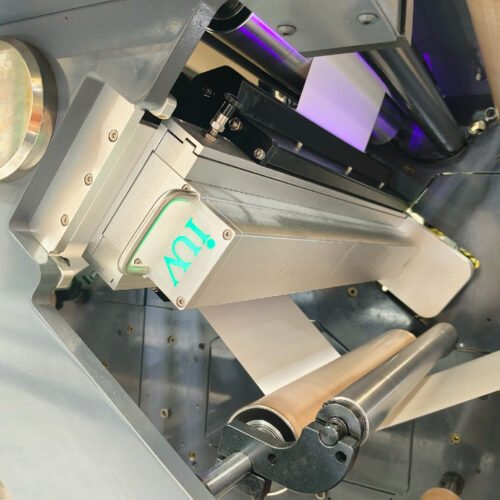
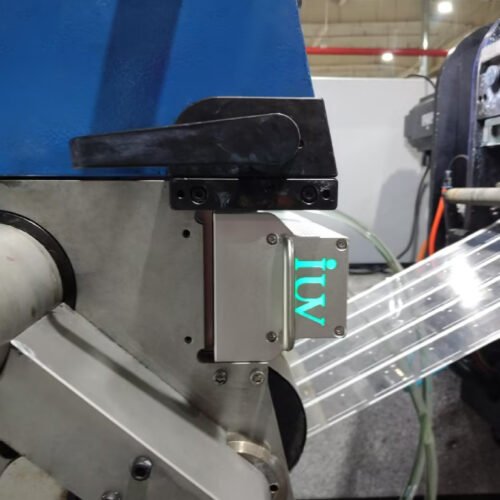
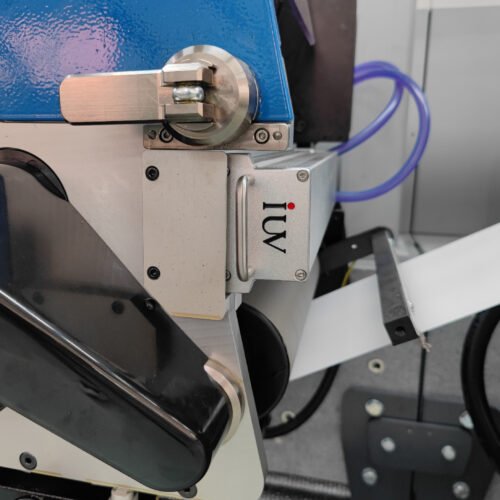
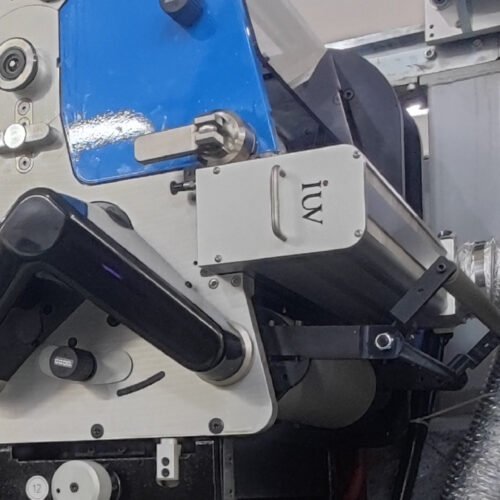
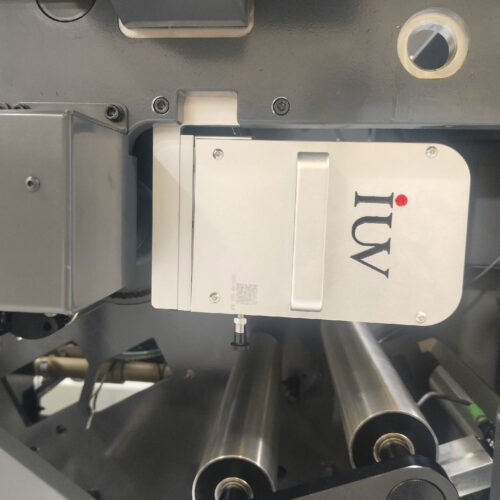
LED UV curing systems represent a significant advancement over traditional mercury vapor lamps. They use light-emitting diodes (LEDs) to produce UV light. This technology offers several advantages, including:
- Energy Efficiency: LEDs consume significantly less power than mercury lamps.
- Longer Lifespan: LEDs have a much longer operational life, reducing maintenance and replacement costs.
- Instant On/Off: LEDs offer immediate full power, eliminating warm-up and cool-down periods.
- Specific Wavelengths: LEDs can be precisely tuned to emit specific UV wavelengths, optimizing curing for different ink formulations.
- Lower Heat Output: This is crucial for sensitive substrates and helps prevent migration issues caused by thermal degradation.
The Link Between LED UV and Low Migration
Low migration is paramount in food packaging. It means that very few, if any, substances from the printed layer can transfer to the food. LED UV curing systems contribute to low migration in several key ways:
1. Efficient and Complete Polymerization
The precise wavelengths emitted by LEDs allow for highly efficient curing. This means inks and coatings polymerize more completely, converting most of the reactive components into inert solid material. Incomplete curing is a primary source of migratable substances. By ensuring a thorough cure, LED UV systems minimize the presence of unreacted monomers and oligomers.
2. Reduced Thermal Load
Traditional UV lamps generate substantial heat. This heat can sometimes cause degradation of the ink or substrate, potentially creating by-products that can migrate. LED UV systems produce very little heat. This cooler curing process helps maintain the integrity of the ink layer and the substrate, further reducing the risk of migration.
3. Formulated for Low Migration
Many ink and coating manufacturers have developed specific formulations designed for LED UV curing and low migration requirements. These formulations often feature:
- Low-migration photoinitiators: These are chosen for their efficiency under LED wavelengths and their low potential to migrate after curing.
- Reduced monomer content: Formulations are designed to use monomers that are less prone to migration.
- Higher molecular weight components: These are inherently less mobile and therefore less likely to migrate.
When these carefully formulated inks are cured with precise LED UV systems, the result is an exceptionally stable printed layer.
Applications in Label and Narrow Web Printing
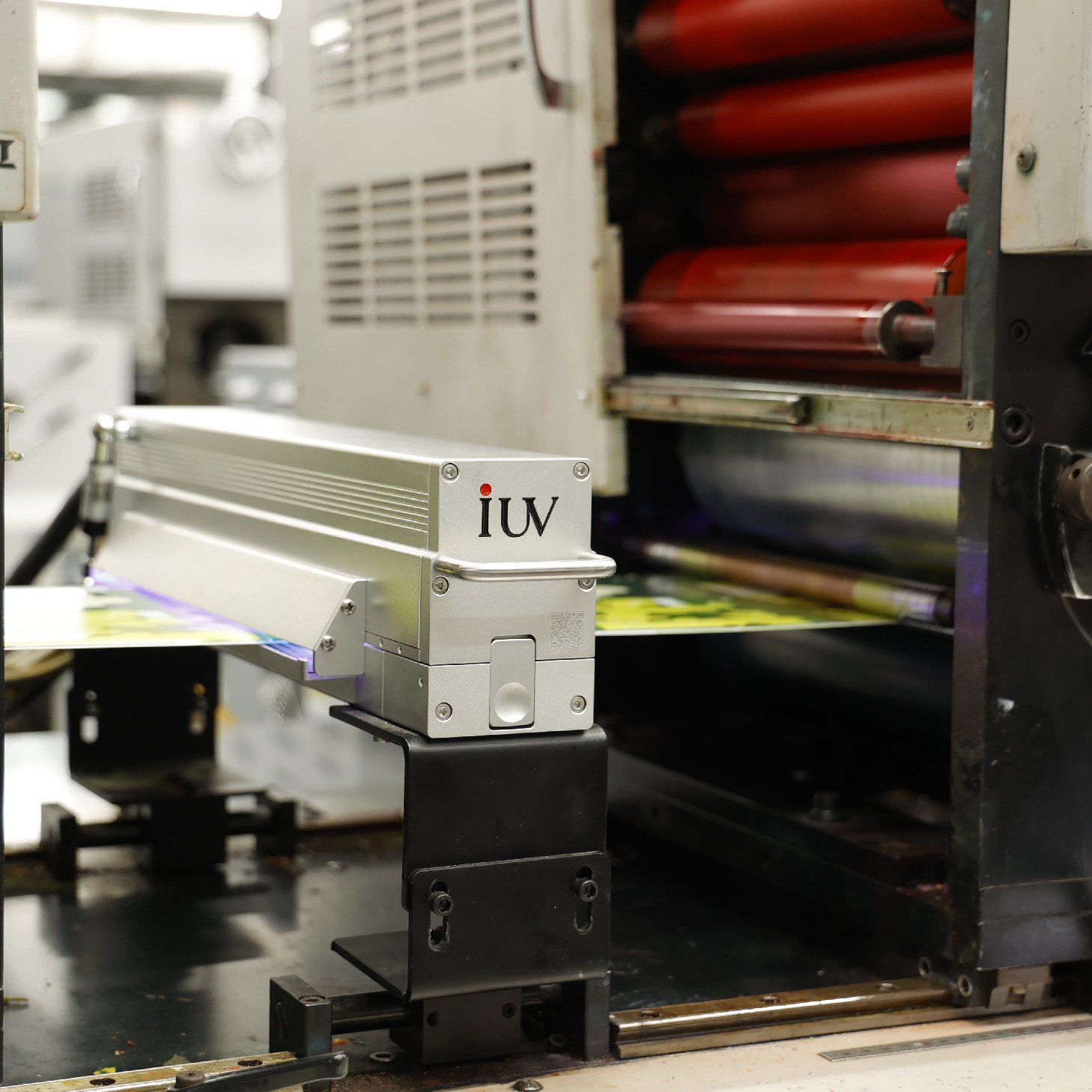
Narrow web printing, often utilizing flexographic and offset (or lithographic) technologies, is a major area where LED UV curing is transforming food-safe printing. Labels for food products, whether for jars, bottles, or pouches, are subject to stringent regulations.
Flexographic Printing
Flexography is widely used for label and flexible packaging printing due to its versatility and speed. In flexo, specialized LED UV-curable inks are applied via raised plates. The rapid curing with LED systems ensures that the ink solidifies almost instantly as it passes under the UV lamps, preventing smudging and allowing for faster press speeds. This efficiency, combined with the low-migration characteristics of the inks, makes flexo with LED UV an excellent choice for food labels.
Offset Printing (Narrow Web)
Offset printing on narrow web presses is also benefiting from LED UV. This method offers excellent print quality, especially for detailed graphics and fine text. LED UV curing enables offset printers to achieve fast drying speeds without the heat issues associated with conventional methods. This is crucial for multi-color jobs where ink layers need to be dried before the next color is applied, and for sensitive substrates that cannot tolerate high temperatures. The low-migration properties are critical for ensuring the safety of the final printed product.
Advantages for Food-Safe Printing
Implementing LED UV curing systems for food-safe printing offers tangible benefits:
- Regulatory Compliance: Meets increasingly strict global regulations for food contact materials.
- Enhanced Product Safety: Minimizes the risk of harmful substances leaching into food.
- Superior Print Quality: Achieves sharp images and vibrant colors with durable finishes.
- Increased Productivity: Faster curing speeds allow for higher press speeds and quicker turnaround times.
- Sustainability: Energy efficiency and reduced waste contribute to greener printing operations.
- Substrate Versatility: The low heat output allows printing on a wider range of materials, including thin films and heat-sensitive plastics.
Future Trends and Considerations
The development of LED UV curing technology is ongoing. Research continues into new photoinitiator systems, ink formulations, and more efficient LED arrays. As regulations evolve and consumer expectations rise, the role of LED UV in ensuring food-safe and low-migration printing will only become more pronounced.
Printers looking to enter or enhance their capabilities in food packaging must carefully select their LED UV systems and collaborate closely with ink and coating suppliers. Understanding the specific wavelength output of the LEDs, the spectral sensitivity of the inks, and the migration testing protocols for food contact materials is essential.
In conclusion, LED UV curing systems are not just an evolutionary step in printing technology; they are a fundamental enabler of modern, safe, and efficient food packaging. Their ability to provide complete, low-heat curing directly addresses the critical challenges of migration, ensuring that printed materials are as safe as they are visually appealing.