Boost Your Printing’s Bottom Line with Efficient UV Curing
In today’s competitive printing market, every edge counts. Businesses are constantly seeking ways to reduce operational costs while maintaining high-quality output. One area ripe for optimization is energy consumption, particularly within the curing process. Traditional drying methods can be energy-intensive. However, the adoption of UV curing systems, especially advanced LED UV technology, offers a compelling solution for enhancing energy efficiency across a range of printing applications, from narrow web labels to wider format printing.
Understanding UV Curing in Printing
UV curing is a photochemical process. It uses ultraviolet light to initiate a rapid polymerization reaction. This reaction transforms inks, coatings, and adhesives from a liquid to a solid state almost instantaneously. Unlike thermal drying, which relies on heat to evaporate solvents, UV curing is a “100% solids” process. This means there are no volatile organic compounds (VOCs) to manage, contributing to a healthier work environment and reduced environmental impact.
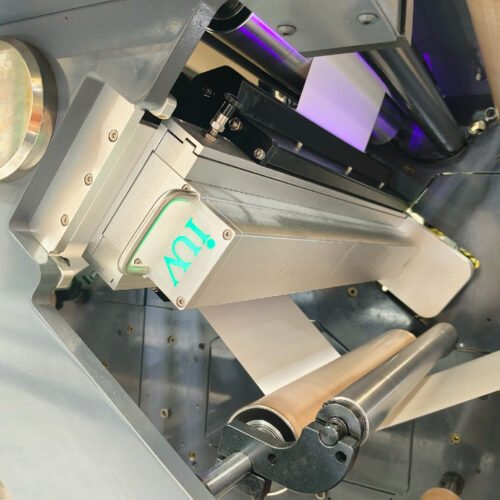
The core of a UV curing system involves UV lamps that emit specific wavelengths of light. These wavelengths interact with photoinitiators present in the UV-curable formulations. Upon exposure, the photoinitiators generate free radicals or cations, which then initiate a chain reaction, cross-linking the monomers and oligomers into a durable, solid film.
The Rise of LED UV Curing Technology
While traditional mercury vapor lamps have long been the standard for UV curing, the advent of LED UV technology has revolutionized the field. Light Emitting Diodes (LEDs) offer significant advantages, particularly in terms of energy efficiency and operational longevity.
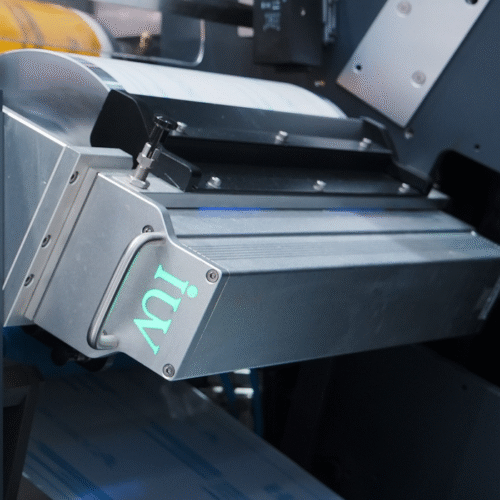
LED UV systems emit UV light within a narrow spectral band. This targeted emission means more of the energy produced is utilized for curing, leading to less wasted heat. Traditional lamps, on the other hand, emit a broader spectrum of light, including infrared radiation, which contributes to significant heat buildup and energy loss.
Furthermore, LED lamps have a much longer lifespan than mercury lamps, often lasting tens of thousands of hours. They also offer instant on/off capabilities, meaning energy is only consumed when printing is actually occurring, unlike mercury lamps that require a warm-up period and often run continuously. This translates to substantial energy savings over time.
Energy Efficiency in Narrow Web Label Printing
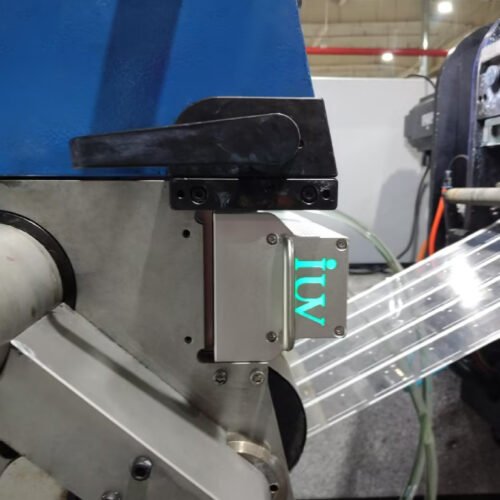
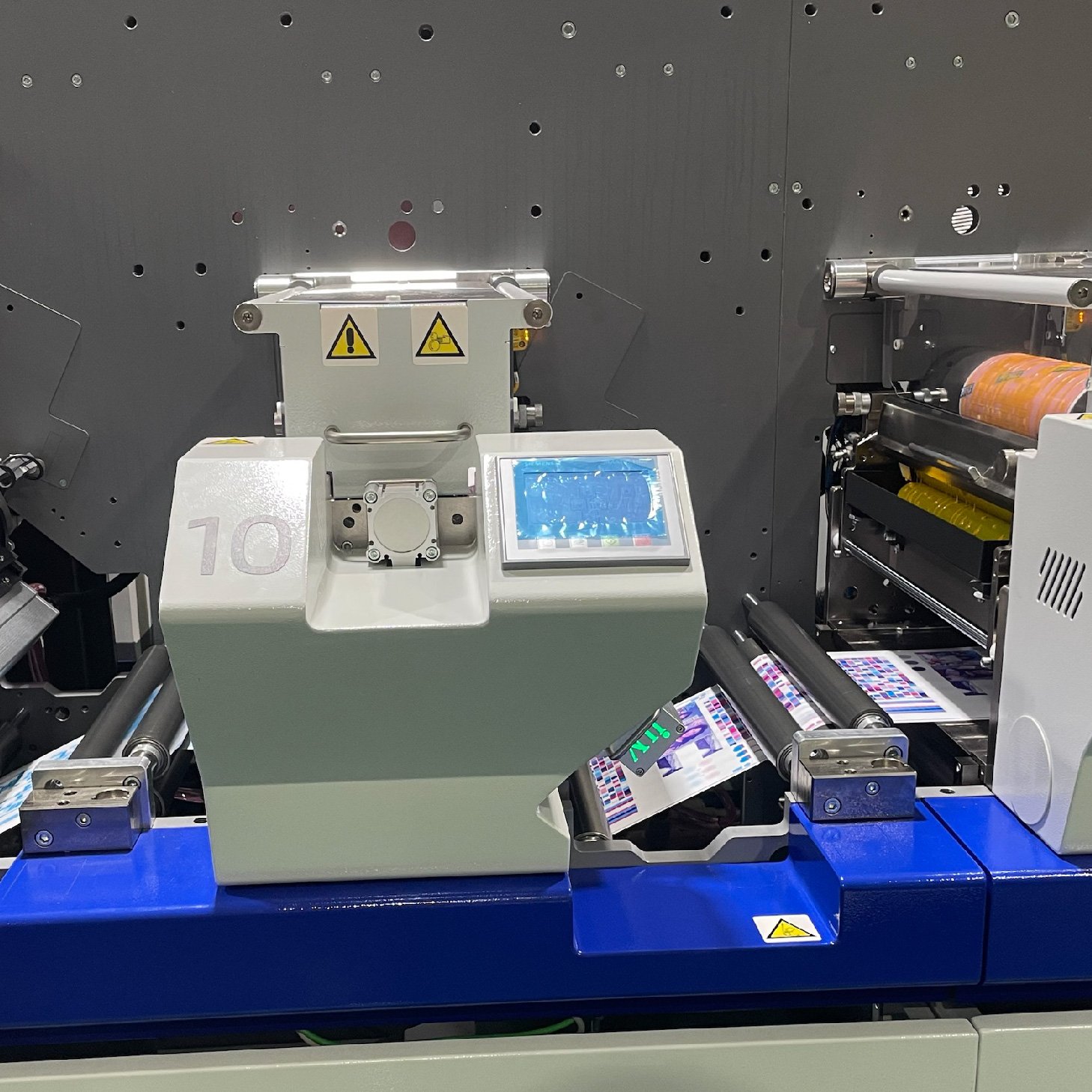
Narrow web label printing is a sector where efficiency is paramount. Printers often handle high volumes of short runs, requiring quick job changes and minimal downtime. UV curing systems, particularly LED UV, are ideally suited for this environment.
In label printing, UV-curable inks and coatings provide excellent adhesion to a variety of substrates, including papers, films, and foils. The rapid curing speed of UV technology allows for faster press speeds. This means more labels can be produced in the same amount of time, directly impacting throughput and, by extension, energy use per unit printed.
The energy savings with LED UV in narrow web applications are particularly noticeable. Because LED lamps are highly focused and generate less heat, they require less power to operate compared to traditional UV lamps. This can lead to reduced electricity bills and a smaller carbon footprint. Additionally, the reduced heat output means less demand on the pressroom’s cooling systems, further contributing to overall energy efficiency.
Optimizing Energy in Flexographic Printing (Flexo)
Flexographic printing, or flexo, is widely used for packaging, labels, and other flexible materials. It utilizes flexible relief plates to transfer ink to the substrate. UV curing is a popular choice for flexo presses due to its ability to cure thick ink layers quickly and its compatibility with a wide range of substrates.
Integrating LED UV curing into flexo operations brings significant energy benefits. The ability of LED UV to cure at lower temperatures is a major advantage, especially when printing on heat-sensitive materials like thin films. This prevents substrate deformation or damage, ensuring print quality and reducing waste.
The precise wavelength control of LED UV systems also means that the energy is delivered exactly where it’s needed for efficient ink polymerization. This reduces the overall energy input required to achieve a full cure, leading to noticeable cost reductions. For flexo printers looking to streamline operations and cut energy expenses, upgrading to LED UV is a smart investment.
Improving Energy Use in Offset Printing (Sheetfed and Web)
Offset printing, both sheetfed and web, is known for its high print quality and versatility. UV curing is increasingly being adopted in offset printing for its ability to provide instant drying and enhance the durability of prints.
In sheetfed offset, UV curing allows for immediate stacking of printed sheets. This eliminates the need for anti-set-off powders, which can interfere with post-press operations and create additional waste. The energy efficiency of LED UV here translates to faster job turnaround and reduced operational costs.
For web offset printing, particularly in commercial applications, LED UV curing enables faster press speeds and the ability to print on a wider array of substrates. The energy savings from LED technology are significant. Printers can achieve the same or better cure results with substantially less power consumption compared to conventional UV or even infrared drying systems. The reduced heat from LED UV also means less stress on the paper web, minimizing the risk of web breaks and further enhancing efficiency.
Benefits Beyond Energy Savings
While energy efficiency is a primary driver for adopting UV curing systems, the advantages extend much further:
- Faster Curing Speeds: This leads to higher press speeds and increased productivity.
- Improved Print Quality: UV-cured inks and coatings offer superior scratch resistance, chemical resistance, and color vibrancy.
- Wider Substrate Compatibility: UV curable inks can be printed on a vast range of materials, including plastics, metals, and even glass.
- Reduced Environmental Impact: The absence of VOCs contributes to cleaner air and a more sustainable printing process.
- Lower Heat Input: LED UV systems generate significantly less heat, protecting sensitive substrates and reducing the need for extensive cooling.
- Longer Lamp Lifespan: LED lamps last considerably longer, reducing maintenance and replacement costs.
Making the Switch to Smarter Curing
For printers looking to enhance their operational efficiency, reduce costs, and improve their environmental footprint, the transition to UV curing, especially with LED technology, is a strategic move. Whether you are in narrow web label printing, flexography, or offset, the benefits are clear. Investing in modern UV curing systems means investing in a more productive, cost-effective, and sustainable future for your printing business. By understanding the technology and its applications, printing companies can unlock significant energy savings and gain a competitive advantage in a demanding industry.