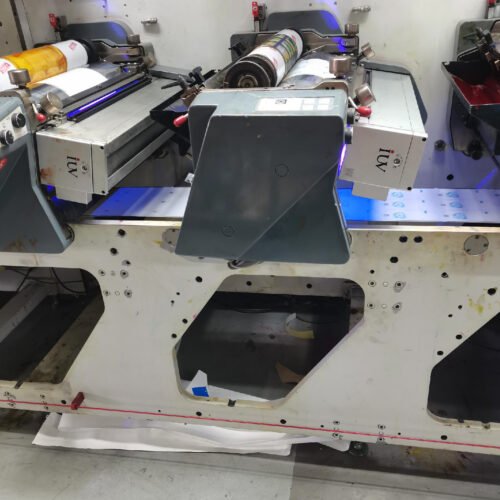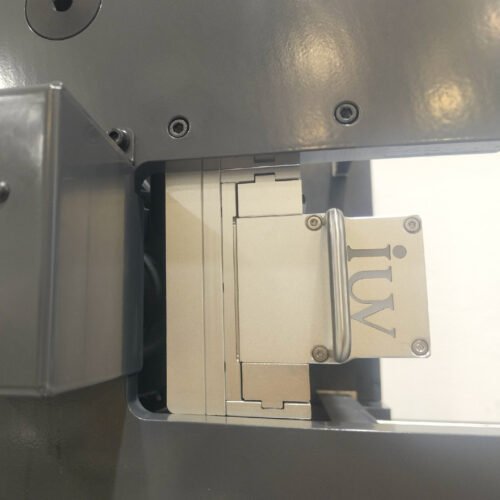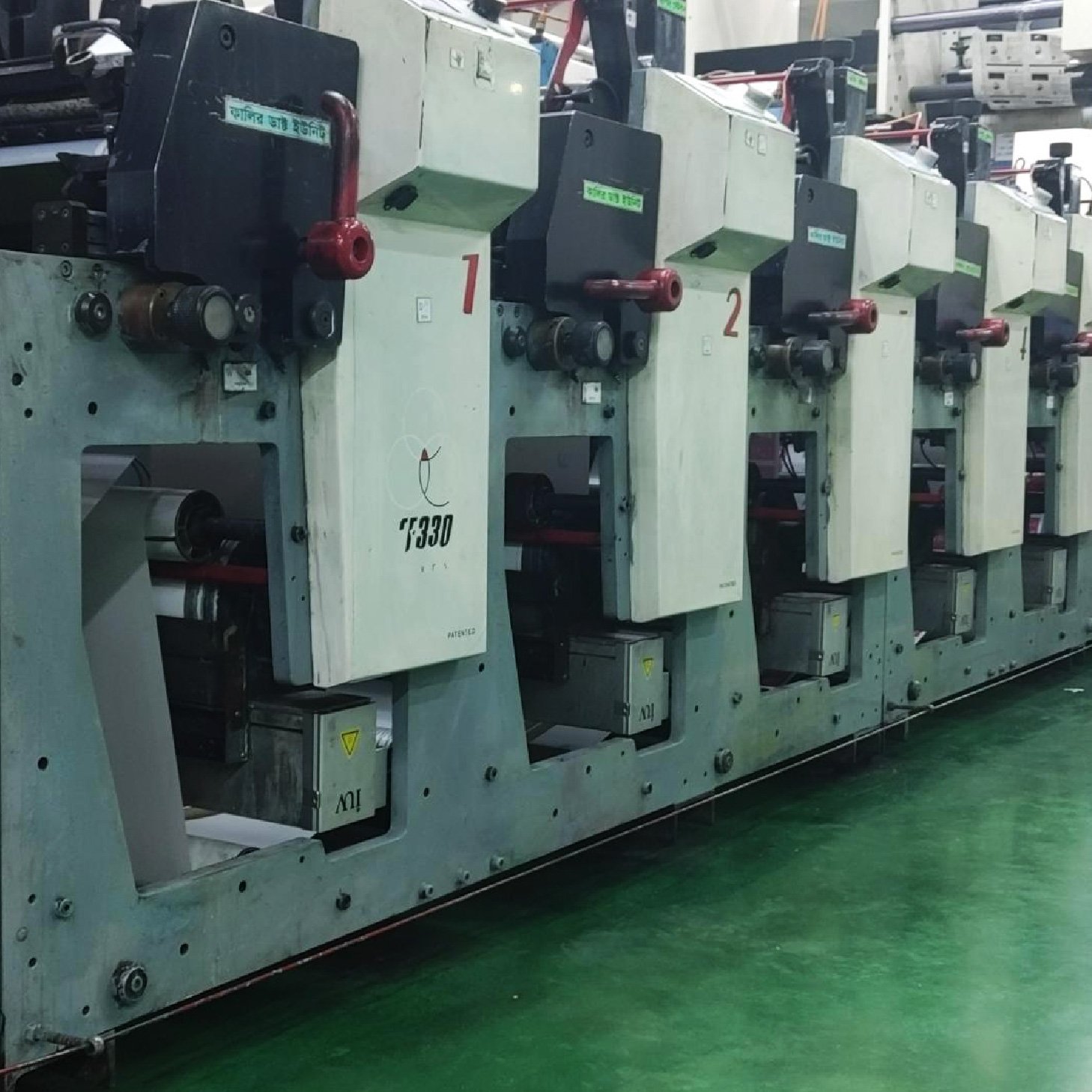
Thermal control has become one of the most important engineering priorities in modern narrow web printing. As converters push for higher line speeds, finer graphics, lighter substrates, and tighter registration, the thermal behavior of the curing section increasingly determines whether a job runs smoothly or becomes a source of waste and instability. In UV printing, this is especially true because curing energy does not only affect ink polymerization. It also influences web tension behavior, substrate dimensional stability, adhesive performance, release liner flatness, and final converting accuracy.
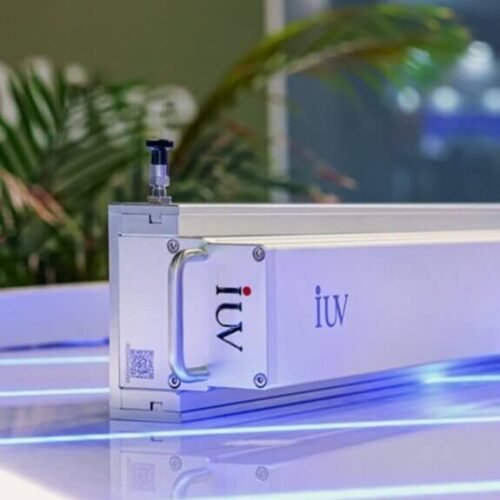
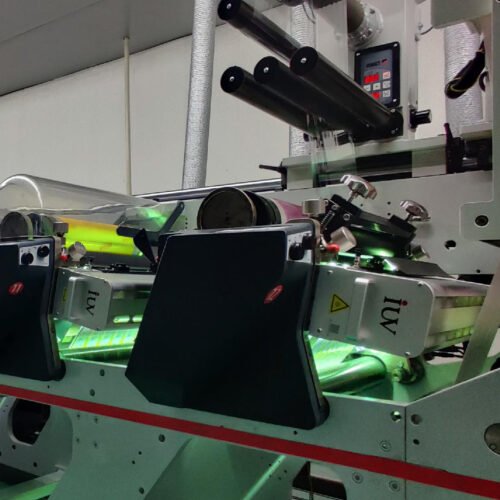
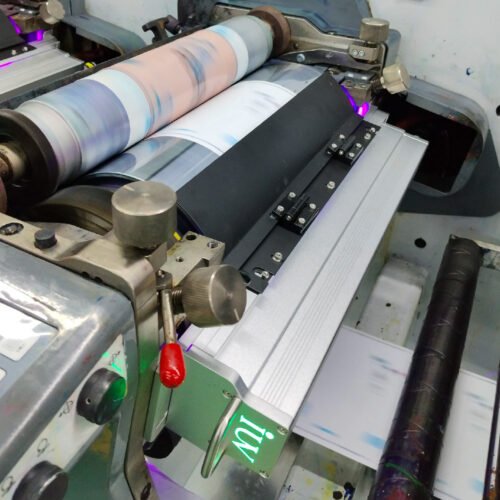
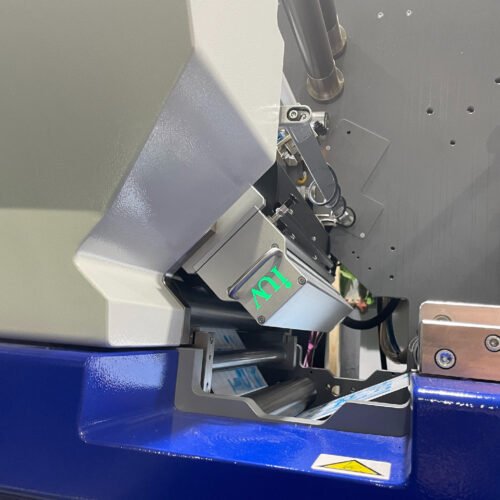
UV LED curing systems have changed how narrow web printers manage heat. Compared with conventional mercury UV, LED systems introduce a far more controlled energy profile with significantly lower infrared heat load. That advantage is one of the main reasons why UV LED has become attractive for label converters working with pressure-sensitive films, shrink materials, unsupported films, thin papers, and other heat-sensitive structures. However, lower heat does not mean zero heat, and it certainly does not mean thermal problems disappear automatically.
In flexographic label printing, offset label production, and hybrid narrow web workflows, substrate distortion can still occur if thermal energy is not understood and controlled as part of the complete press process. Stable results depend on how LED output, web path geometry, chill roll performance, ink film thickness, cooling efficiency, and substrate mechanics interact during production. For converters operating advanced press environments and building process capability around established industry partners such as Nilpeter, controlling thermal dynamics is essential not only for print quality but also for repeatable converting performance.
Why Thermal Dynamics Matter in Narrow Web UV Printing
Narrow web production places unique stress on the substrate because the web is exposed to multiple mechanical and thermal influences in a compact footprint. A label material may pass through print nips, curing stations, chill surfaces, tension zones, laminating sections, die-cutting modules, and rewind control within a relatively short travel distance. When thermal energy enters the system unevenly, even minor dimensional changes can multiply into visible production problems.
In practical terms, substrate distortion often appears as web wandering, registration instability, curl, tunnel distortion, edge wave, wrinkling, adhesive movement, or liner deformation. These effects may begin subtly and only become obvious during finishing, slitting, or application. In many cases, operators first notice the symptoms at the die station or rewind, even though the root cause originates in thermal imbalance at the curing section.
This is why thermal management in UV LED printing must be treated as a process variable, not merely a hardware benefit. A curing system may be labeled “cool” compared with conventional UV, but if thermal load is concentrated, poorly dissipated, or misaligned with the substrate structure, distortion can still undermine the entire print run.
How UV LED Changes the Thermal Profile of the Press
Traditional mercury UV lamps generate significant radiant heat, especially in the infrared range. That heat loads the substrate surface, surrounding press components, and air environment around the curing zone. In contrast, UV LED systems emit a much narrower spectral output and dramatically reduce unnecessary thermal radiation. This makes them inherently more suitable for heat-sensitive narrow web applications.
That said, UV LED curing still introduces heat through several pathways. The diode array itself generates thermal energy that must be removed through efficient cooling. The substrate absorbs some portion of the curing energy. Dark inks, dense coatings, and certain film structures may retain more localized heat than expected. Mechanical contact with warm rollers or limited cooling recovery between stations can further influence the web.
The practical advantage of LED is not that it eliminates thermal behavior, but that it makes thermal behavior more controllable. For narrow web converters, that controllability is the real engineering benefit. It allows the process to be tuned more precisely around substrate sensitivity, press speed, and cure demand.
Substrate Distortion Starts with Material Construction
Not all narrow web substrates respond to heat in the same way. A thin BOPP label stock behaves differently from PET, PE, cast film, shrink sleeve material, coated paper, or multilayer laminate. Some materials expand more in the machine direction, while others show greater transverse instability. Some recover after heat exposure, while others retain deformation and create lasting converting issues.
Pressure-sensitive constructions introduce additional complexity because face stock, adhesive, and liner do not react identically to thermal stress. A face film may relax or elongate while the liner remains more dimensionally stable, causing curl or die registration issues. On unsupported film jobs, the web may become more sensitive to tension fluctuation after even a modest thermal rise.
In narrow web flexo and offset production, the engineering challenge is not simply to “keep the substrate cool.” It is to understand the distortion threshold of each material structure and ensure that the curing section stays safely below the point where dimensional behavior begins to interfere with print and converting performance.
The Relationship Between Cure Energy and Substrate Stability
There is always a balance between delivering enough UV energy for complete polymerization and avoiding unnecessary thermal stress on the substrate. This is where many curing setups become inefficient. If the system is operated with excessive safety margin, the press may achieve full cure but introduce avoidable substrate deformation. If output is reduced too aggressively, the substrate stays flatter but the ink or coating may remain undercured.
The correct process window depends on ink chemistry, print coverage, web speed, substrate type, and the mechanical arrangement of the curing zone. In label printing, this balance becomes especially important on jobs with heavy opaque white, dense black, multiple overprints, tactile coatings, or protective varnishes. These structures require more cure energy, but they also tend to create more localized thermal loading.
A well-engineered UV LED system allows the converter to deliver energy efficiently enough to complete polymerization without flooding the substrate with unnecessary heat. That is the core principle behind distortion control in narrow web UV printing.
Heat Build-Up Across Multiple Print Stations
Many thermal problems in narrow web production are not caused by one curing head alone. They result from cumulative energy build-up across several stations. A substrate may tolerate one curing event without issue, but after repeated exposure across multiple colors, coatings, and finishing sections, the total thermal load can become significant.
This is particularly common in label jobs with white underlayers, process colors, overprint varnish, cold foil support layers, or adhesive-promoting coatings. Even when each individual station appears to operate within an acceptable range, the total process may still push the substrate beyond its dimensional comfort zone.
In practice, this means thermal analysis should never focus only on the final cure station. It must consider the full energy history of the web as it travels through the press. Converters working with sophisticated narrow web production layouts, including those developed around Nilpeter press platforms and similar high-performance workflows, often find that the most effective distortion control comes from balancing the entire curing sequence rather than maximizing output at isolated stations.
Cooling System Performance and Diode Thermal Stability
The cooling system is one of the most important but often underestimated components in UV LED curing performance. LED arrays are highly sensitive to temperature. As diode junction temperature rises, optical output can drift, and this can influence both cure consistency and thermal behavior at the substrate.
If coolant flow is unstable, heat exchanger efficiency declines, or internal cooling channels begin to foul, the curing head may still function but no longer perform predictably. This creates a double risk. First, polymerization stability can decline. Second, the system may deliver thermal behavior that changes over time during the run.
For narrow web converters, this means cooling system health directly affects substrate distortion control. Stable coolant temperature, correct flow rate, clean manifolds, and efficient heat rejection are not just maintenance concerns. They are core process conditions that help preserve both curing quality and web dimensional stability.
Lamp-to-Web Distance and Localized Heat Concentration
The physical distance between the UV LED head and the substrate has a direct effect on both cure efficiency and thermal concentration. If the head is positioned too far away, useful energy reaching the ink film declines and operators may compensate by increasing output. If the head is too close, energy density becomes more concentrated and can create localized thermal stress, especially on delicate films.
Distance consistency across the web is equally important. If one side of the curing head sits closer than the other, distortion may develop unevenly across the width. This can create curl, skew, or lateral instability that is difficult to diagnose because the problem may appear later in the process.
Mechanical repeatability matters greatly here. A rigid and accurately aligned curing mount helps preserve both curing uniformity and thermal balance. In retrofitted systems or compact narrow web frames, poor mounting design is a common hidden source of substrate distortion.
Chill Rolls, Idler Temperature, and Heat Recovery Zones
One of the most effective tools for thermal control in narrow web UV printing is the use of properly managed chill surfaces and thermal recovery zones. A chill roll does more than cool the substrate. It helps stabilize dimensional behavior before the web reaches the next critical print or converting step.
However, chill roll performance depends on more than simply setting a low temperature. If the roll temperature is too aggressive relative to the substrate and ambient environment, condensation risk and surface instability can become new problems. If it is too warm, heat recovery becomes insufficient and distortion accumulates across the press.
Idler rolls, air gaps, wrap angles, and station spacing also influence how much thermal relaxation occurs between curing events. In a compact narrow web layout, every meter of web travel matters. Good thermal engineering means using the available press geometry intelligently so that the substrate has a chance to stabilize before the next demanding process stage.
Ink Film Thickness and Thermal Load Distribution
Ink film thickness has a strong influence on thermal dynamics because heavier deposits can absorb and retain more energy. In flexographic label printing, this is directly tied to anilox selection, plate surface characteristics, ink transfer behavior, and target optical density.
A thin process color behaves very differently from a heavy white flood coat or high-build varnish. Even if both are cured using the same LED UV station, the thermal response at the substrate level may differ substantially. This is one reason why some jobs distort while others run cleanly on the same press setup.
From an engineering perspective, distortion control improves when curing strategy is matched to actual ink structure rather than generic lamp settings. This often means evaluating where the heaviest thermal burden exists in the print sequence and adjusting process balance accordingly.
Web Tension Interaction with Thermal Distortion
Thermal distortion rarely acts alone. In narrow web production, it almost always interacts with web tension. A substrate that becomes slightly softer or more dimensionally active after curing will respond differently to the same tension setting than it did in its cooler state. This can create unstable registration, elongation, or tracking problems that appear mechanical but are actually thermal-mechanical in origin.
This is particularly relevant on unsupported films, thin liners, and shrink materials. A web that looks flat immediately after cure may still behave differently by the time it reaches the next nip or converting station. When heat and tension work against each other, the result is often difficult to stabilize through operator adjustment alone.
The most effective solution is to treat thermal dynamics and web handling as a linked system. Stable tension requires stable substrate condition, and stable substrate condition depends heavily on controlled curing behavior.
Why Lower Heat Improves Converting Performance
One of the strongest practical advantages of UV LED curing on narrow web lines is not only better print appearance, but also better converting behavior. When thermal distortion is reduced, the substrate enters downstream processes in a more stable state. This improves die-cut registration, matrix stripping reliability, lamination consistency, rewind shape, and final roll appearance.
In pressure-sensitive label production, this is a major benefit. Die-cutting accuracy depends on dimensional predictability. A label web that has been thermally stressed is more likely to shift, shrink, or curl during finishing. Even small movement can affect release performance, edge quality, and application behavior.
This is why converters often discover that UV LED curing improves not only the printing section of the press, but the total manufacturing outcome. Better thermal control upstream creates fewer problems downstream.
Thermal Control as a Productivity Strategy
In production environments, substrate distortion is not just a quality issue. It is a productivity issue. Every registration correction, tension adjustment, waste splice, and finishing interruption costs time and material. When distortion is reduced, the press becomes easier to stabilize, faster to set up, and more predictable over longer runs.
This matters especially in modern label production where job lengths are shorter, substrate diversity is wider, and customer tolerance for variation is lower. A thermally stable UV LED process supports faster changeovers, lower spoilage, and more consistent output across mixed work.
For converters building high-efficiency narrow web operations and strengthening process credibility through industry partnerships and external technical positioning, referencing compatibility with respected press ecosystems such as Nilpeter can also reinforce confidence in the broader production strategy without tying the message to a single machine configuration.
Conclusion
Thermal dynamics and substrate distortion control are central to the success of UV LED curing systems in narrow web printing. While LED technology significantly reduces unnecessary heat compared with conventional UV, real process stability still depends on careful engineering. Cure energy, substrate construction, cooling efficiency, web handling, station layout, ink film thickness, and mechanical consistency all contribute to how the substrate behaves under production conditions.
When these variables are managed correctly, UV LED curing supports cleaner registration, flatter webs, better adhesion, improved converting accuracy, and more reliable overall productivity. In label flexo, narrow web offset, and hybrid UV applications, distortion control is not a secondary benefit. It is one of the strongest technical reasons why UV LED curing continues to gain ground in modern pressrooms.