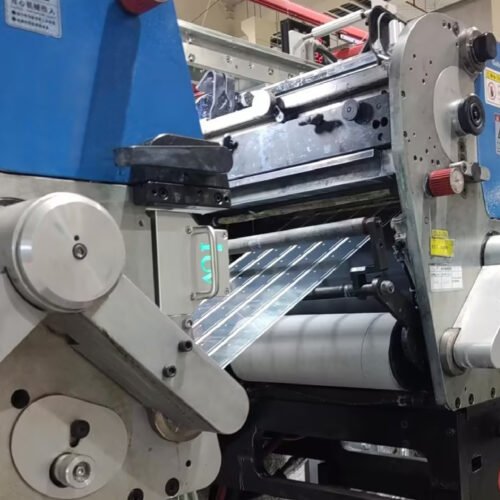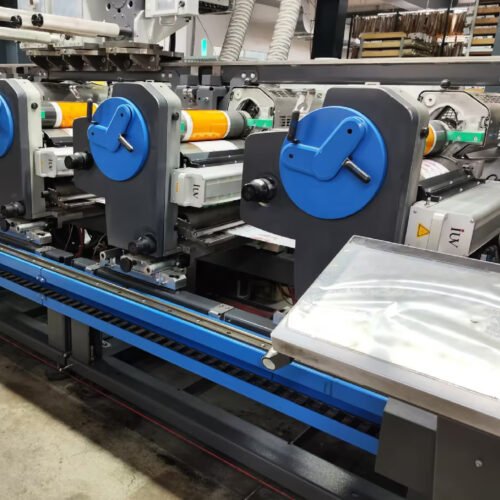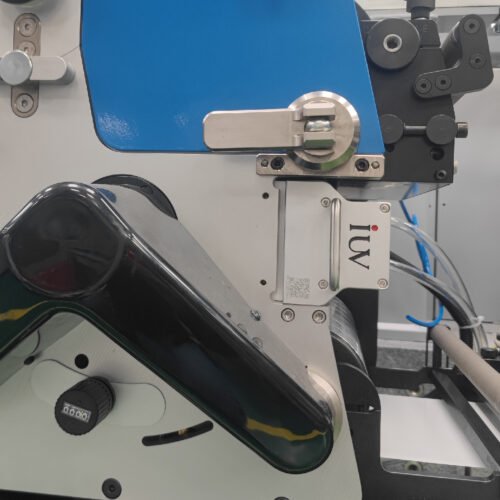
In modern label and narrow web production, job transition speed has become one of the most important factors affecting profitability. Shorter runs, higher SKU counts, versioned packaging, regional variations, and premium finishing requirements have changed the economics of press operation. Today, many converters lose more production value during setup and changeover than during actual printing. This is why setup optimization has become a central engineering priority in flexographic printing, hybrid offset production, and UV label converting.
LED UV curing stations play a major role in this shift. Their instant on-off behavior, lower thermal load, stable output profile, and reduced mechanical service requirements make them especially well suited for fast job transitions. However, the real productivity gain does not come from LED UV hardware alone. It comes from how the press, substrate, curing settings, ink system, operator workflow, and station sequence are optimized together. In narrow web printing, fast changeovers are never the result of one improvement. They are the result of a controlled process environment designed for repeatability.
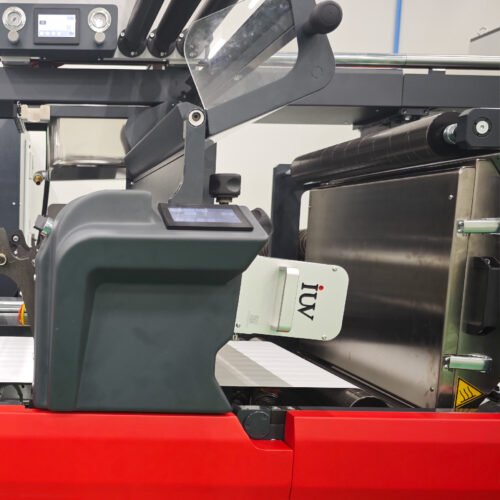
In production environments where equipment platforms from industry partners such as Nilpeter are used for label and narrow web work, this kind of optimization becomes even more valuable. Presses built for versatile label applications can benefit significantly when curing strategy and setup logic are engineered to reduce transition losses without compromising print quality.
Why Job Transition Efficiency Matters More Than Ever in Narrow Web Printing
Narrow web printing has always been a high-precision production environment, but the current market has made setup efficiency even more important. Many converters are now running shorter label jobs with more frequent design changes, substrate switches, adhesive variations, and decorative embellishment combinations. The time between jobs has become a measurable production cost.
In conventional workflows, job transitions can consume time through lamp warm-up, station stabilization, substrate rethreading, print density adjustment, curing verification, and waste reduction efforts. LED UV curing helps eliminate some of these delays, but if the rest of the press process remains unoptimized, the available speed advantage is lost.
This is why setup optimization should be treated as a full production strategy rather than a scheduling issue. Faster job transitions depend on how consistently the press reaches target conditions after every change.
LED UV Curing Changes the Setup Logic of Narrow Web Production
One of the biggest advantages of LED UV curing stations in label and narrow web printing is their immediate readiness. Unlike conventional mercury UV systems, LED UV units do not require warm-up cycles to reach stable operating condition. This alone reduces dead time during restarts, plate changes, substrate adjustments, and shift-based production interruptions.
However, the deeper advantage is process predictability. When LED UV curing stations are calibrated correctly, they provide a more repeatable exposure condition from one job to the next. This makes setup behavior more controllable, especially when working with similar ink systems, coating structures, and substrate categories.
In practical terms, this means less time spent compensating for curing variability during press startup. Instead of waiting for thermal stabilization or output normalization, operators can move more quickly into registration control, density balancing, and print verification.
Stable Cure Windows Reduce Waste During Startup
In narrow web label printing, one of the most expensive parts of a job transition is the startup waste generated while the press moves from mechanical readiness to stable print condition. This waste often comes from a mismatch between ink transfer, web tension, curing response, and substrate behavior during the first production phase.
LED UV curing stations can reduce this waste when the cure window is engineered for predictable startup behavior. If the curing head, press speed, ink film thickness, and substrate class are aligned properly, the printed web reaches usable quality more quickly after job changeover.
This is especially important in flexographic and hybrid label printing where multiple stations must come into balance at the same time. Faster curing stability allows the operator to confirm adhesion, surface finish, and visual quality earlier, reducing the number of meters lost before saleable production begins.
Ink and Anilox Standardization Improves Transition Speed
One of the most effective ways to accelerate job transitions in LED UV narrow web printing is to reduce the number of process variables that need adjustment between jobs. Ink rheology and anilox selection are two of the most influential variables in this area.
When similar label applications are grouped around standardized ink transfer targets, the curing stations can be set to perform more predictably from one job to the next. This means operators do not need to rebuild the curing logic every time a job changes. Instead, they can move within a narrower operating range that supports faster setup and fewer correction cycles.
This approach is especially valuable in LED UV flexographic printing where curing response is strongly influenced by film thickness, pigment density, and laydown consistency. Standardization shortens setup not because it simplifies the print process, but because it makes the process more repeatable.
Substrate Grouping Is Essential for Faster Setup
In many narrow web operations, job transition delays are not caused by the curing station itself, but by substrate changes. Switching between paper labels, PE, PP, PET, metallized materials, or pressure-sensitive constructions can alter web handling, surface energy, dimensional behavior, and cure response.
If every substrate is treated as a completely new process event, setup time expands quickly. A more efficient approach is to organize jobs by substrate family and align LED UV curing profiles accordingly. When substrates are grouped by thermal sensitivity, wetting behavior, and adhesion response, transition time can be reduced significantly.
This is especially useful in label plants handling a wide range of adhesive constructions and unsupported films. By minimizing unnecessary shifts in substrate behavior between jobs, the press reaches stable conditions more quickly and with less waste.
Web Tension and Chill Control Must Be Part of the Setup Strategy
Fast job transitions are often discussed in terms of print stations and curing heads, but web handling is equally important. In narrow web printing, every change in substrate, coating structure, or speed profile affects web behavior. If tension and thermal balance are not stabilized quickly, setup delays appear even when print and cure conditions are technically correct.
LED UV curing stations help reduce thermal stress compared with mercury UV systems, but web stability still depends on how the line is managed during startup. Chill rolls, nip pressure, unwind control, rewind tension, and web path consistency all influence how quickly a new job reaches stable print geometry.
This becomes especially important in pressure-sensitive label production, where even small dimensional changes can affect registration, die-cut alignment, and matrix removal. Faster transitions require the web to stabilize just as quickly as the print image.
Curing Station Placement Influences Changeover Efficiency
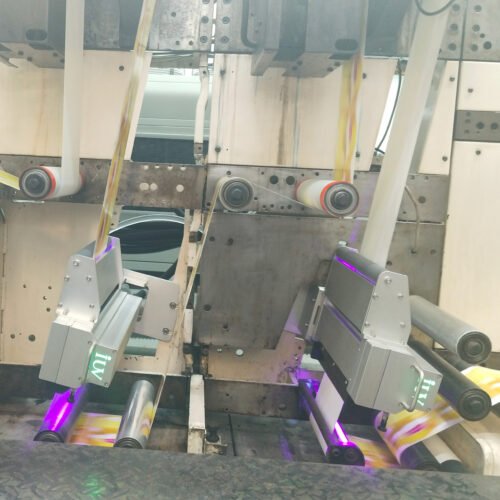
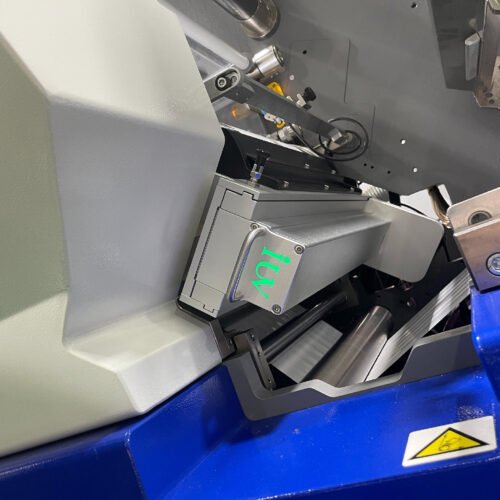
In multi-station narrow web presses, the location and function of each LED UV curing station influence how efficiently a job can be brought into production. Interdeck curing, pinning positions, final cure locations, and coating cure zones all affect setup logic.
When station placement is aligned with the print architecture, the press can stabilize faster after a job change. For example, if critical layers such as opaque white, dense solids, or coatings are supported by the right cure position, downstream print units behave more consistently during startup. This reduces the need for repeated press corrections.
In contrast, if curing station placement creates unstable intermediate layers, the press may require more time to reach acceptable trapping, gloss, or adhesion performance. This slows down every transition, even when the LED UV system itself is functioning correctly.
Press Presets and Recipe Logic Deliver the Biggest Long-Term Gains
One of the strongest advantages of LED UV narrow web production is the ability to create more repeatable setup conditions through process presets. Because LED UV output can be controlled more precisely and predictably, it becomes easier to build reusable setup logic for recurring jobs or substrate families.
This includes not only curing intensity settings, but also press speed targets, tension windows, chill roll conditions, ink duct behavior, and coating parameters. When these settings are documented and applied consistently, job transitions become faster because the press is returning to known process states rather than being rebuilt manually each time.
In advanced label production environments, this kind of recipe-based approach can reduce operator dependency and improve setup consistency across shifts. The value of LED UV curing grows significantly when it is integrated into this broader control structure.
Operator Workflow Still Determines Real Transition Performance
Even the most advanced curing system will not deliver fast job transitions if the operator workflow remains inefficient. In narrow web printing, transition speed depends heavily on how tasks are sequenced during plate changes, sleeve swaps, substrate loading, cleaning, and curing verification.
LED UV curing stations reduce waiting time, but they do not remove the need for disciplined setup routines. The fastest operations are usually the ones where press preparation, material staging, ink control, and curing validation are organized before the previous job ends.
This is where experienced narrow web operations often outperform less structured ones. The hardware may be similar, but the setup process is not. Faster transitions come from reducing uncertainty before the press starts moving.
Print Quality Must Not Be Sacrificed for Setup Speed
One of the most common mistakes in high-throughput label production is trying to reduce setup time by relaxing cure verification or skipping stability checks. This usually creates hidden waste later in the run through adhesion failure, inconsistent gloss, scuffing, or converting defects.
A properly optimized LED UV setup strategy does not trade quality for speed. It shortens the time required to reach a controlled production state. That distinction is important. The goal is not to move faster into unstable production, but to move faster into repeatable, saleable output.
In label and narrow web printing, the most valuable setup reduction is the kind that preserves cure integrity, substrate stability, and downstream converting reliability from the first acceptable roll onward.
Why Narrow Web Converters Benefit Most from LED UV Setup Optimization
Narrow web converters are particularly well positioned to benefit from setup optimization because their production environment is built around variety, repeatability, and fast response. Label work often involves more substrate changes, decorative combinations, and finishing requirements than broader-format printing environments.
This makes every minute of setup time more valuable. It also means that improvements in curing stability, station repeatability, and process control have a larger impact on total production output. In operations using versatile narrow web platforms, including those commonly associated with Nilpeter production environments, LED UV curing can support not only higher efficiency, but also a more disciplined and repeatable setup structure.
That is where the real productivity gain is found. Not in the curing station alone, but in how the full press system is engineered to use it.
Conclusion
Setup optimization for faster job transitions in narrow web printing with LED UV curing stations depends on much more than quick lamp response. In label printing, flexographic production, hybrid offset work, and UV narrow web applications, the most effective transition improvements come from aligning curing stability with substrate grouping, ink transfer control, web handling, station placement, and repeatable process presets.
When LED UV curing is integrated into a disciplined setup strategy, converters can reduce waste, shorten startup time, improve print consistency, and increase daily press productivity without sacrificing quality. In modern narrow web production, faster transitions are not simply operational improvements. They are a direct result of engineering the process for repeatability.