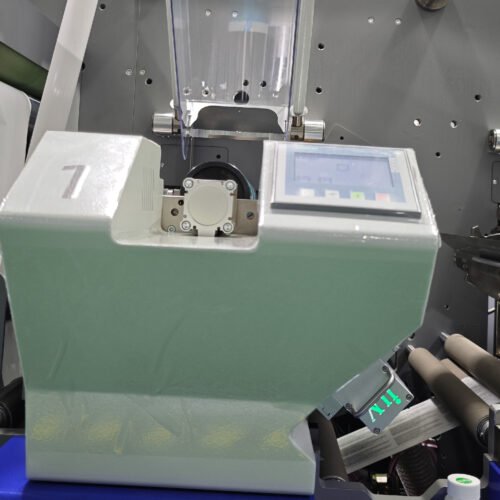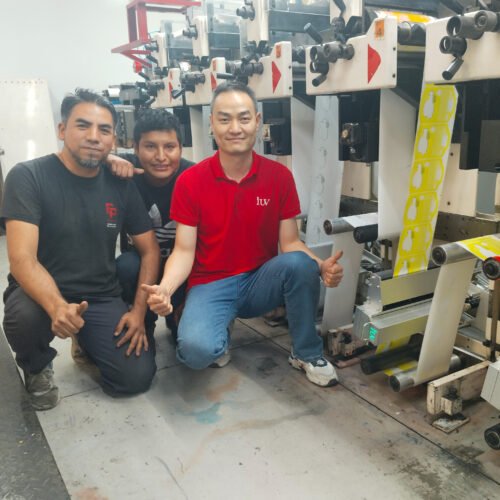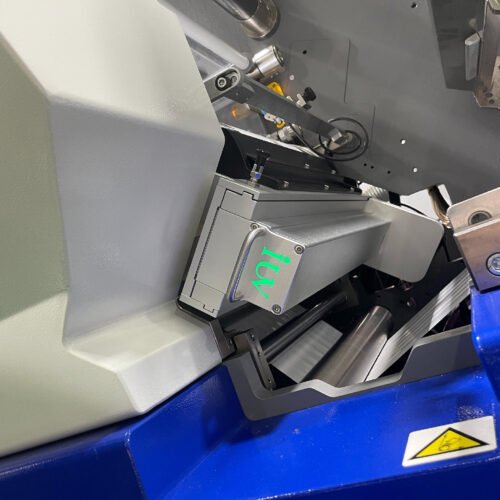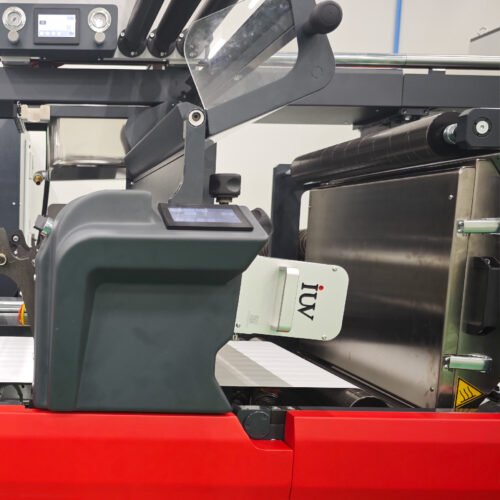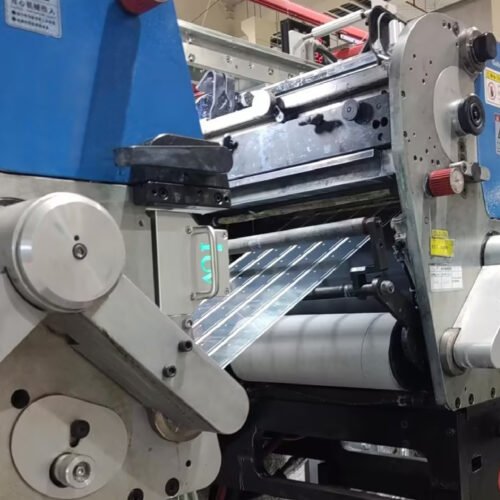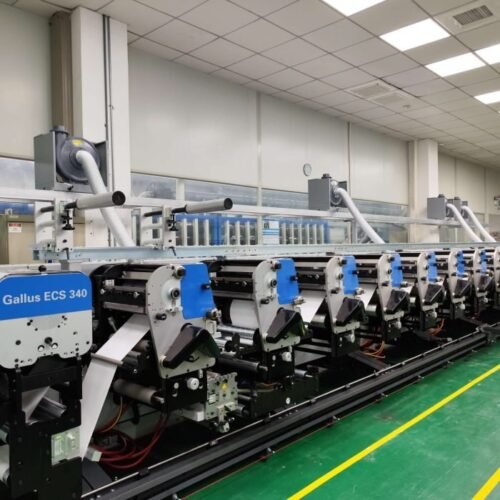
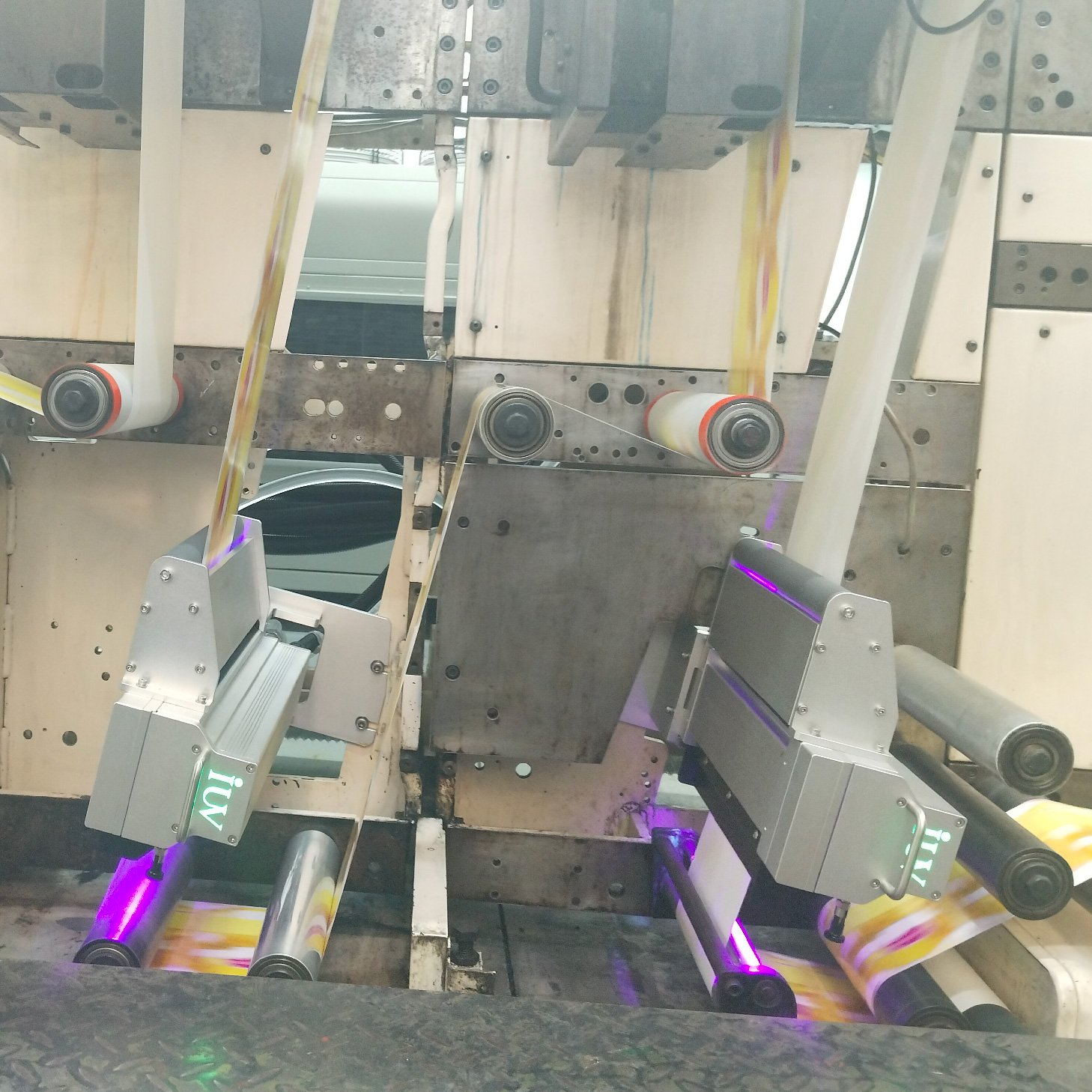
In label printing, flexographic production, narrow web converting, and hybrid offset applications, the shift from mercury UV to LED UV is no longer viewed as a simple equipment upgrade. It is now an engineering decision that directly affects curing stability, substrate handling, energy efficiency, press reliability, and long-term production flexibility. For converters running existing production lines, the challenge is not only choosing an LED UV curing system, but integrating it correctly into a machine platform that was originally designed around mercury lamp technology.
A successful retrofit depends on understanding how the original press architecture interacts with the different thermal, electrical, optical, and process characteristics of LED UV curing. Replacing one curing source with another without evaluating the entire production line often leads to incomplete cure, inconsistent adhesion, registration instability, poor web handling, or reduced operating flexibility. In label and narrow web printing, where multiple stations, sensitive substrates, and high-speed production are common, retrofit engineering must be approached as a full process redesign rather than a lamp replacement project.
Why Mercury UV and LED UV Cannot Be Treated as Directly Interchangeable
Mercury UV systems and LED UV systems both initiate polymerization, but they do so under very different operating conditions. Conventional mercury lamps generate broad-spectrum UV output along with significant infrared heat and ozone-related process considerations. LED UV systems deliver a narrower wavelength band, lower radiant heat load, faster start-stop behavior, and more targeted energy transfer.
Because of these differences, the surrounding press environment changes when a retrofit is performed. Ink response, substrate temperature, dwell behavior, curing window, chill management, ventilation balance, and even print sequence logic may need adjustment. In flexographic and narrow web production, where wet-on-wet color builds and interstation curing control are critical, these differences become even more important.
This is why many retrofit problems do not originate in the LED curing head itself. They originate in the assumption that the old mercury UV process conditions can remain unchanged after conversion.
Mechanical Integration Is the First Retrofit Engineering Barrier
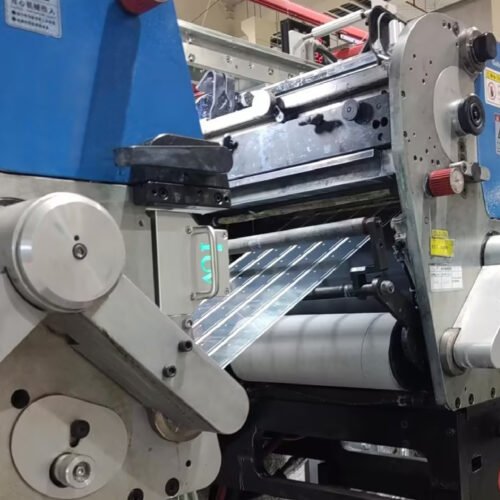
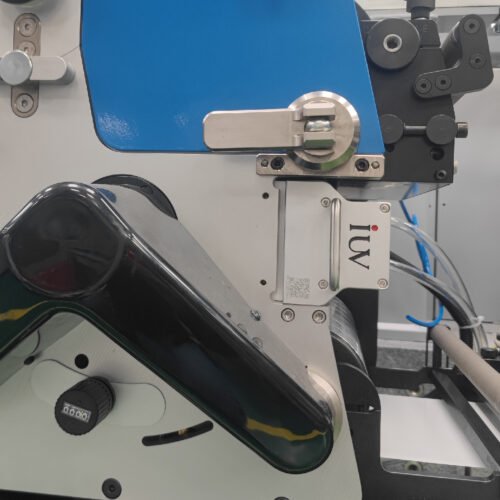
One of the first practical challenges in replacing mercury UV with LED UV is mechanical fit within the existing press layout. Older label and narrow web presses were often designed around the physical size, mounting geometry, shielding arrangement, and service clearance of mercury lamp assemblies. LED UV systems are more compact, but that does not automatically make installation simple.
The curing head must be positioned correctly relative to the web path, print station geometry, impression zone, chill roll configuration, and available access for maintenance. If the retrofit is forced into an unsuitable mechanical position, the result may be poor irradiance angle, inconsistent cure across the web, shadowing effects, or excessive exposure to adjacent components.
Mechanical integration also influences serviceability. A retrofit that technically fits but cannot be cleaned, inspected, or adjusted efficiently will eventually create production inefficiencies. For long-term reliability, retrofit engineering must account for real maintenance access, not only initial installation feasibility.
Electrical and Control System Compatibility Must Be Verified Early
Electrical compatibility is one of the most underestimated aspects of replacing mercury UV with LED UV. Mercury systems often operate with different power architecture, switching logic, interlocks, and control sequencing than modern LED systems. If these interfaces are not properly re-engineered, even a high-quality curing system can become unstable within the production environment.
In existing production lines, the LED UV power system must integrate cleanly with the press PLC, HMI logic, station activation sequence, line speed feedback, emergency stop structure, and thermal protection systems. In some cases, the retrofit is limited not by the curing hardware, but by the machine’s original electrical design.
This becomes especially important in narrow web and hybrid label presses where multiple curing stations may be triggered dynamically during complex job setups. A retrofit that lacks stable control integration can lead to cure inconsistency between stations, incorrect exposure timing, or operational errors during changeover and restart conditions.
Spectral Matching Is Central to Retrofit Success
One of the most critical engineering differences between mercury UV and LED UV is spectral output. Mercury lamps emit a broad wavelength range, which allows them to activate a wider range of photoinitiators. LED UV systems operate at specific wavelengths such as 365nm, 385nm, 395nm, or 405nm, depending on the curing design.
When replacing mercury UV with LED UV, the press retrofit cannot be separated from ink, coating, and adhesive compatibility. If the chemistry running on the line was formulated around broad-spectrum mercury exposure, it may not respond efficiently to the LED wavelength profile without reformulation or process adjustment.
This is especially important in label printing where converters often run dense whites, high-opacity colors, coatings, tactile varnishes, and specialty adhesive constructions. These structures can have different cure depth requirements and surface cure behavior. Retrofit engineering must therefore include spectral compatibility evaluation, not only mechanical installation.
Thermal Dynamics Change Even When Heat Load Drops
A major advantage of LED UV curing in label and narrow web production is reduced substrate heat exposure. This is particularly beneficial for unsupported films, shrink materials, pressure-sensitive constructions, and heat-sensitive laminates. However, a lower thermal profile does not mean thermal engineering becomes irrelevant.
When mercury UV is removed from a press, the machine’s original heat balance changes. Chill roll load, ambient station temperature, web conditioning, and downstream tension behavior may all shift. Some presses rely on predictable thermal expansion patterns or heat-assisted material behavior that change after LED conversion.
This means retrofit engineering must evaluate not only whether the new system runs cooler, but also how the press behaves under a different thermal equilibrium. In hybrid offset and narrow web flexo applications, this can influence ink transfer, trapping behavior, register stability, and substrate tracking over long runs.
Existing Ventilation and Exhaust Systems Often Need Reassessment
Mercury UV systems typically require more aggressive ventilation and exhaust management due to lamp heat, ozone, and enclosure temperature control. LED UV systems reduce or eliminate some of these requirements, but that does not mean the original airflow system should be ignored after retrofit.
In many existing production lines, the original exhaust arrangement influences local press temperature, air turbulence, contamination control, and curing head cleanliness. If the retrofit removes mercury lamps without reassessing airflow behavior, unintended process issues can appear. Dust migration, coating contamination, temperature imbalance, and optical fouling may become more visible after the conversion.
Proper retrofit engineering includes reviewing whether the original airflow architecture is still appropriate for the new curing environment. In some cases, reduced airflow improves process stability. In others, strategic airflow remains essential for clean and repeatable operation.
Print Process Conditions Must Be Re-Optimized After Conversion
A common retrofit mistake is assuming the press should run exactly as it did before. In reality, replacing mercury UV with LED UV often requires recalibration of key print variables. This includes anilox selection, ink film weight, impression settings, press speed, cure positioning, coating thickness, and station sequencing.
In flexographic label printing, for example, a mercury-based process may have tolerated heavier ink laydown or less controlled film thickness because of broader-spectrum cure behavior. After LED conversion, the same print setup may require tighter control to achieve consistent polymerization and adhesion.
In offset and hybrid narrow web production, the same principle applies to fountain balance, ink train temperature, and coating interaction. The retrofit becomes fully successful only when the process window is re-established around the new curing profile.
Multi-Station Presses Need Zone-by-Zone Engineering Logic
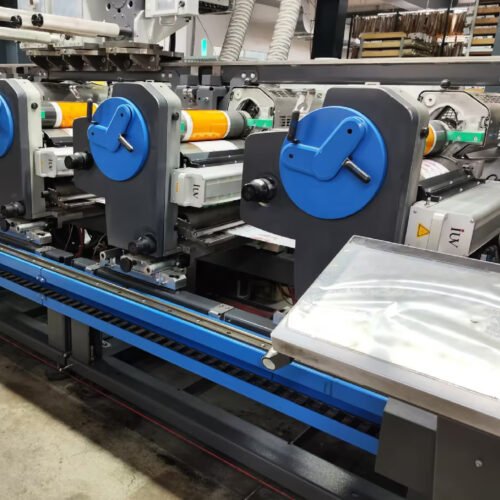
Existing label and narrow web production lines often include several curing positions rather than a single end-of-line curing point. These may include interdeck, topcoat, adhesive, and final cure stations. In mercury-based systems, each position may have evolved over time according to practical production habits rather than a unified engineering strategy.
When retrofitting to LED UV, each curing position should be re-evaluated according to its actual process role. Some stations may need high peak irradiance for pinning or surface stabilization, while others require deeper cure development or lower thermal influence for sensitive materials.
Treating all stations identically is rarely the best engineering solution. Retrofit success improves when each station is assigned a curing function based on print structure, chemistry, substrate behavior, and web speed rather than simple hardware uniformity.
Substrate Compatibility Often Determines the Real Retrofit Window
In existing production lines, the most important retrofit limitation is often not the press, but the substrate portfolio. A line that processes paper labels, PE, PP, PET, metallized films, shrink sleeves, and specialty laminates must be evaluated across its full material range before LED conversion can be considered stable.
Different substrates react differently to LED UV energy, curing temperature, surface tension, and mechanical stress. A retrofit that performs well on coated paper may behave very differently on unsupported film or low-surface-energy materials. In label production, this matters not only for cure quality but also for die-cutting, matrix stripping, rewinding, and label dispensing performance.
A retrofit project should therefore be validated against the real job mix, not only against one or two successful trial materials.
Reliability and Maintenance Strategy Must Be Part of the Engineering Plan
One of the strongest reasons for replacing mercury UV with LED UV is reduced maintenance burden. LED systems eliminate bulb replacement, reduce warm-up time, and simplify certain service routines. However, retrofit engineering should not assume maintenance becomes irrelevant.
LED UV systems still depend on optical cleanliness, cooling stability, power consistency, and correct control calibration. If the retrofit is installed without clear maintenance access, contamination control strategy, and inspection planning, long-term performance will decline.
This is especially important in label and narrow web production environments where paper dust, adhesive contamination, coating mist, and airborne particles can gradually reduce curing efficiency. Retrofit engineering should therefore include maintenance logic from the beginning rather than adding it later as an operational correction.
Production Downtime Is Reduced Only When Retrofit Planning Is Detailed
Many converters pursue LED UV retrofit projects in order to improve efficiency without losing production capacity. However, downtime is minimized only when the engineering work is done before installation rather than during installation. Press measurement, control mapping, chemistry review, airflow assessment, and process simulation should all happen before the line is opened for retrofit.
In practice, the smoothest retrofit projects are the ones that treat installation as the final step of preparation, not the beginning of troubleshooting. This is particularly important in existing production lines where machine history, wear condition, and legacy modifications may create hidden integration variables.
A properly engineered retrofit shortens startup time, reduces waste, and allows operators to stabilize production more quickly after conversion.
Conclusion
Replacing mercury UV with LED UV in existing production lines requires far more than changing the curing source. In label printing, flexographic printing, narrow web production, and hybrid offset applications, retrofit success depends on the interaction between press mechanics, electrical controls, spectral compatibility, thermal dynamics, substrate behavior, and print process optimization.
When retrofit engineering is handled systematically, LED UV conversion can improve efficiency, reduce heat load, simplify maintenance, and expand process control across a wide range of label and packaging applications. The most reliable results come from treating the retrofit as a complete press engineering project rather than a component swap.