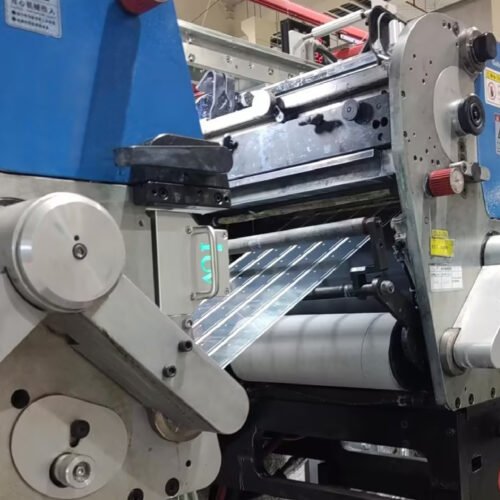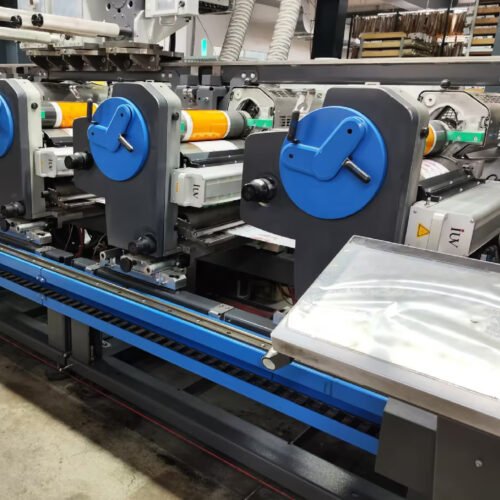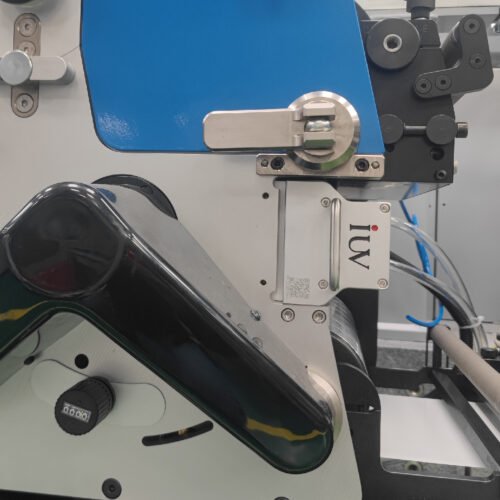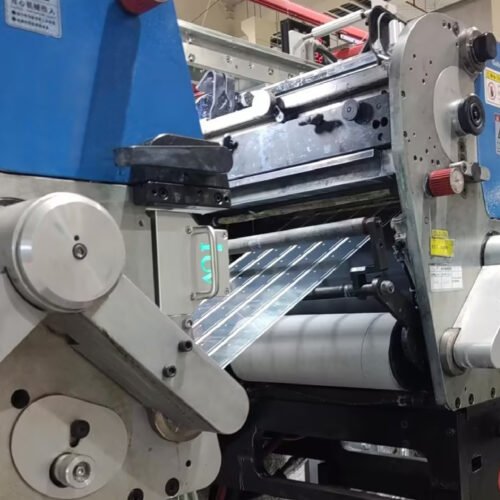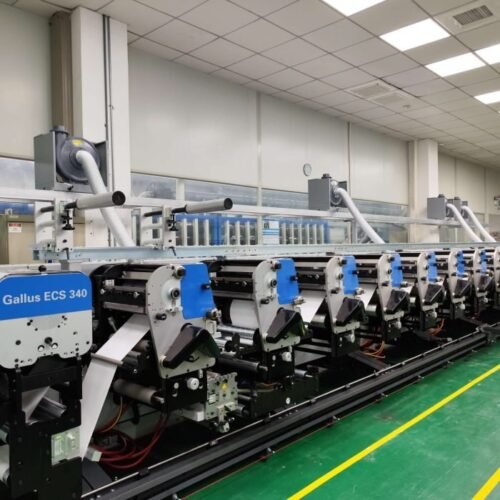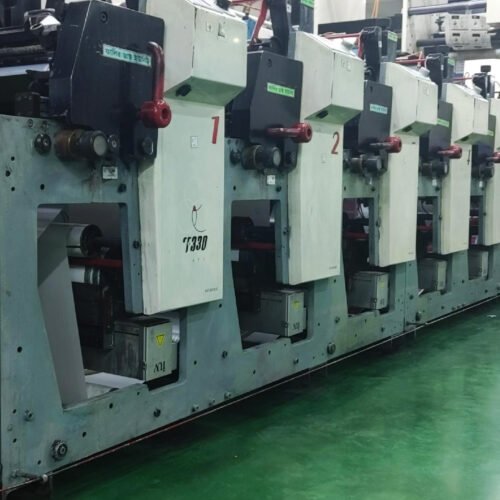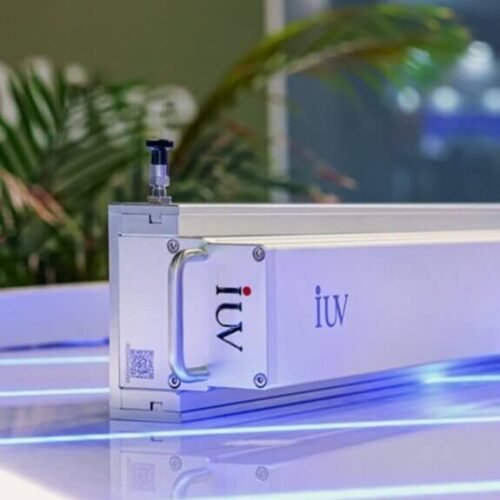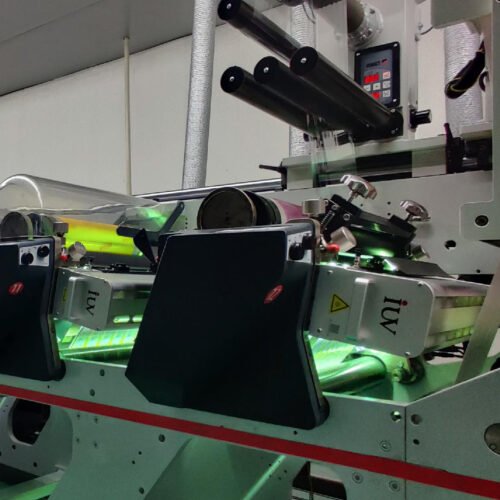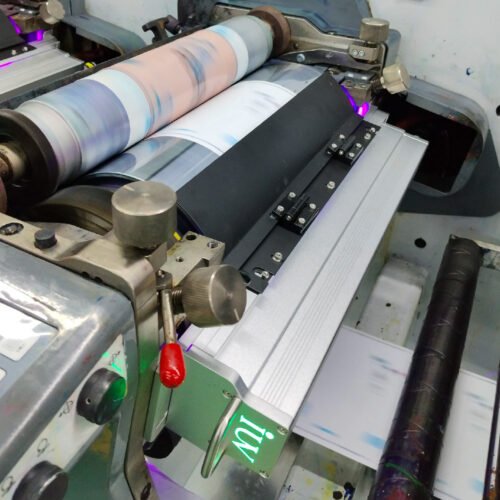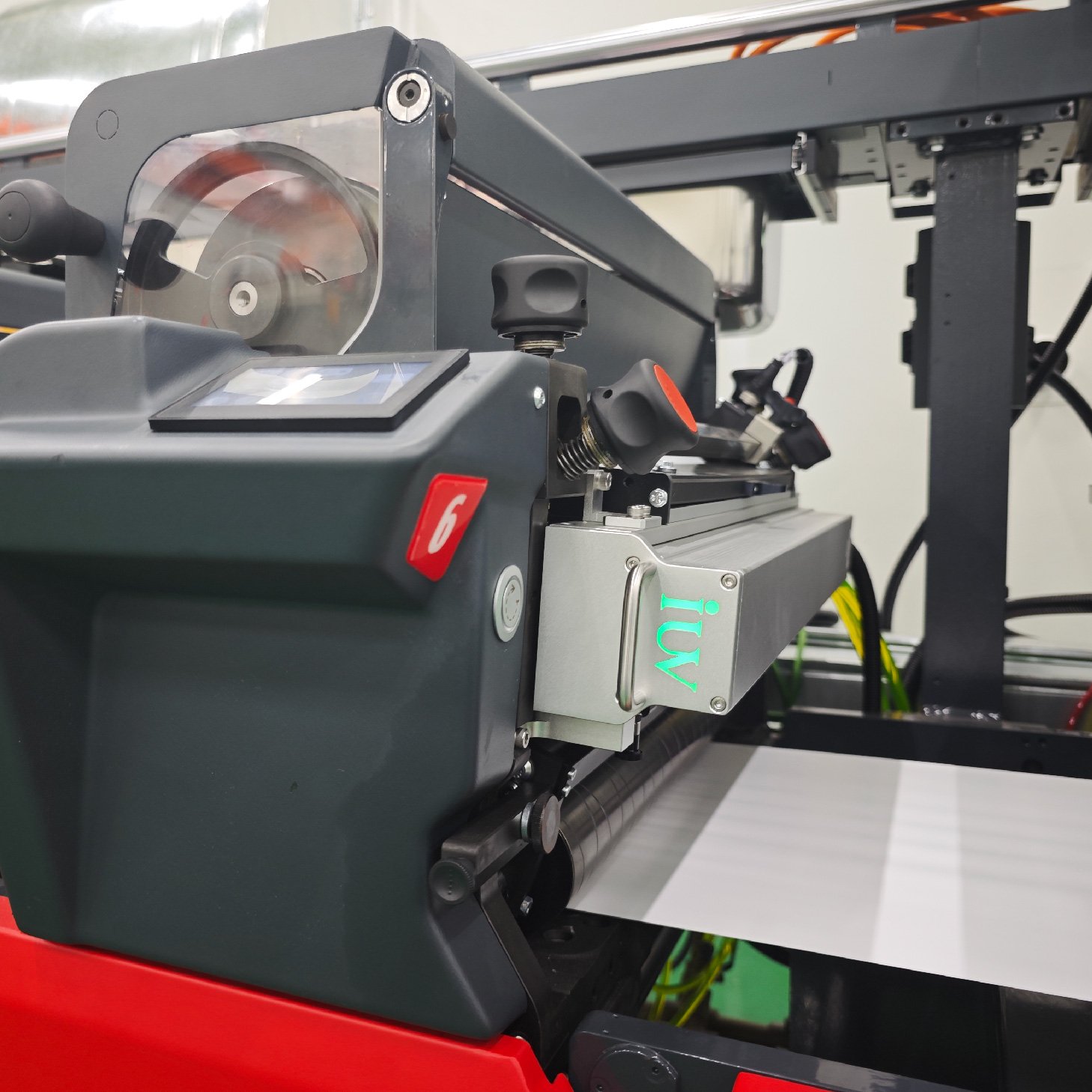
Stable ink curing is a fundamental requirement in LED UV flexographic label printing, where production conditions demand consistent print quality across long runs and frequent substrate changes. In narrow web label production, the curing process must ensure complete polymerization of UV inks while maintaining reliable adhesion and surface durability. Instability in curing performance can lead to defects such as poor ink adhesion, surface tackiness, inconsistent gloss, and difficulties during downstream converting processes. Achieving stable curing therefore requires coordinated engineering control across the curing system, press configuration, ink chemistry, and substrate behavior.
The interaction between LED UV emission characteristics and ink photoinitiator systems is one of the primary determinants of curing stability. UV inks formulated for LED curing must contain photoinitiators that respond efficiently to the spectral output of LED modules. If the photochemical response is not properly matched, surface curing may appear adequate while deeper layers of the ink film remain partially polymerized. In production environments this condition often manifests as inconsistent adhesion on certain substrates or delayed failure during finishing operations such as die cutting, rewinding, or lamination. Engineers responsible for press setup typically validate ink compatibility through controlled curing trials before introducing new ink systems into full production.
Uniform energy distribution across the web width is another critical factor affecting curing stability. LED UV curing modules rely on optical components such as lenses and reflectors to distribute energy evenly across the substrate surface. Misalignment of lamp modules, contamination of optical elements, or mechanical variations in lamp positioning can create uneven irradiance profiles. In multi-station flexographic presses, where each print unit deposits additional ink layers, these variations can accumulate and produce localized under-curing. Regular maintenance of optical surfaces and careful calibration of lamp positioning are therefore essential practices in maintaining consistent curing performance.
Substrate diversity within label printing introduces additional challenges. Label converters frequently run coated papers, synthetic films, and multilayer laminates within the same production shift. Each material interacts differently with UV energy and heat generated during curing. Non-porous films may reflect a portion of incident radiation, while coated papers can absorb energy unevenly depending on coating structure and moisture content. These factors influence the depth and uniformity of ink polymerization. When substrate characteristics change, adjustments to curing conditions or press configuration may be necessary to maintain stable adhesion and surface durability.
Thermal management also plays an important role in the stability of LED UV curing systems. Although LED curing generates less radiant heat toward the substrate compared with conventional arc lamps, heat accumulation within the lamp modules and surrounding press components can affect curing performance. Elevated temperatures may alter ink viscosity on the press, influence web tension stability, or affect the output consistency of the LED arrays themselves. Effective heat dissipation through heat sinks, airflow management, and continuous temperature monitoring helps maintain consistent lamp performance and stable curing conditions during extended production runs.
The integration of LED UV systems into existing flexographic presses requires careful mechanical and electrical coordination. Presses originally designed for conventional UV lamps often have different exposure geometries and thermal environments. During system retrofitting, engineers must evaluate lamp-to-substrate distance, shielding structures, and web path configuration to ensure that LED modules operate within their optimal exposure range. Mechanical factors such as impression pressure, anilox ink transfer, and web tension stability can also influence the thickness and uniformity of the ink film, which in turn affects curing performance.
Stable curing conditions are particularly important in applications involving low migration inks used for packaging that may come into contact with sensitive products. In these cases, incomplete polymerization may lead to residual components remaining within the ink film. Validation procedures therefore require consistent curing conditions across different substrates and production speeds. Process engineers typically evaluate adhesion performance, surface hardness, and migration compliance under representative press conditions before approving a curing configuration for routine production.
From a production efficiency perspective, unstable curing often leads to reduced press speeds, increased inspection requirements, and higher levels of material waste. When curing conditions are stable, operators can maintain predictable press performance across longer runs and reduce the frequency of adjustments during substrate changes. Consistent curing also improves downstream converting reliability by ensuring that printed labels maintain sufficient durability during die cutting, slitting, and rewinding.
Achieving stable ink curing in LED UV flexographic label printing requires a systematic engineering approach that considers the interaction between ink chemistry, LED optical design, substrate properties, thermal management, and press mechanics. By addressing these interrelated factors during system design, installation, and ongoing process control, converters can maintain reliable curing performance while meeting the demanding quality and regulatory requirements of modern label production.