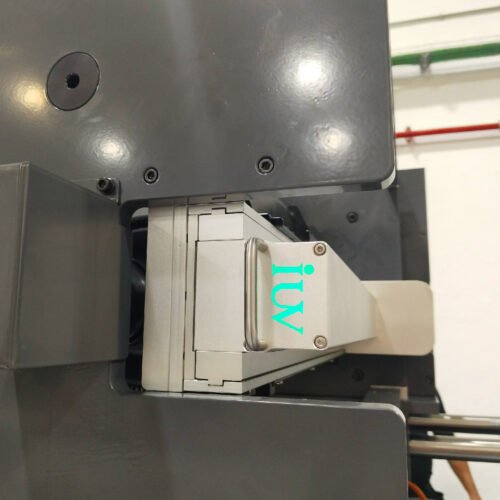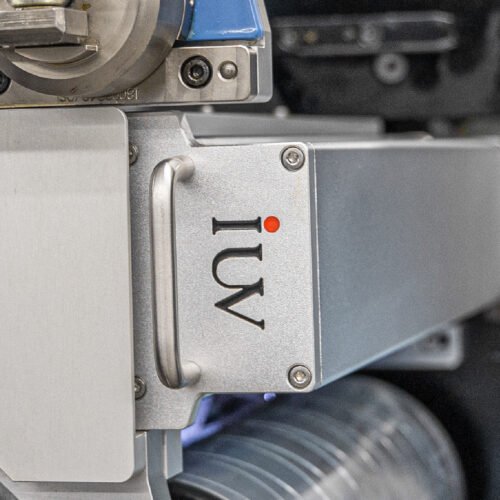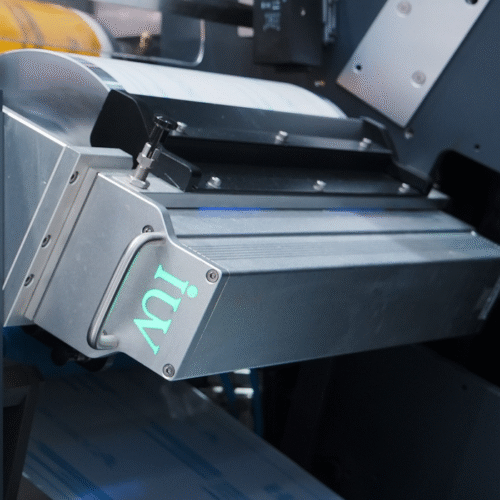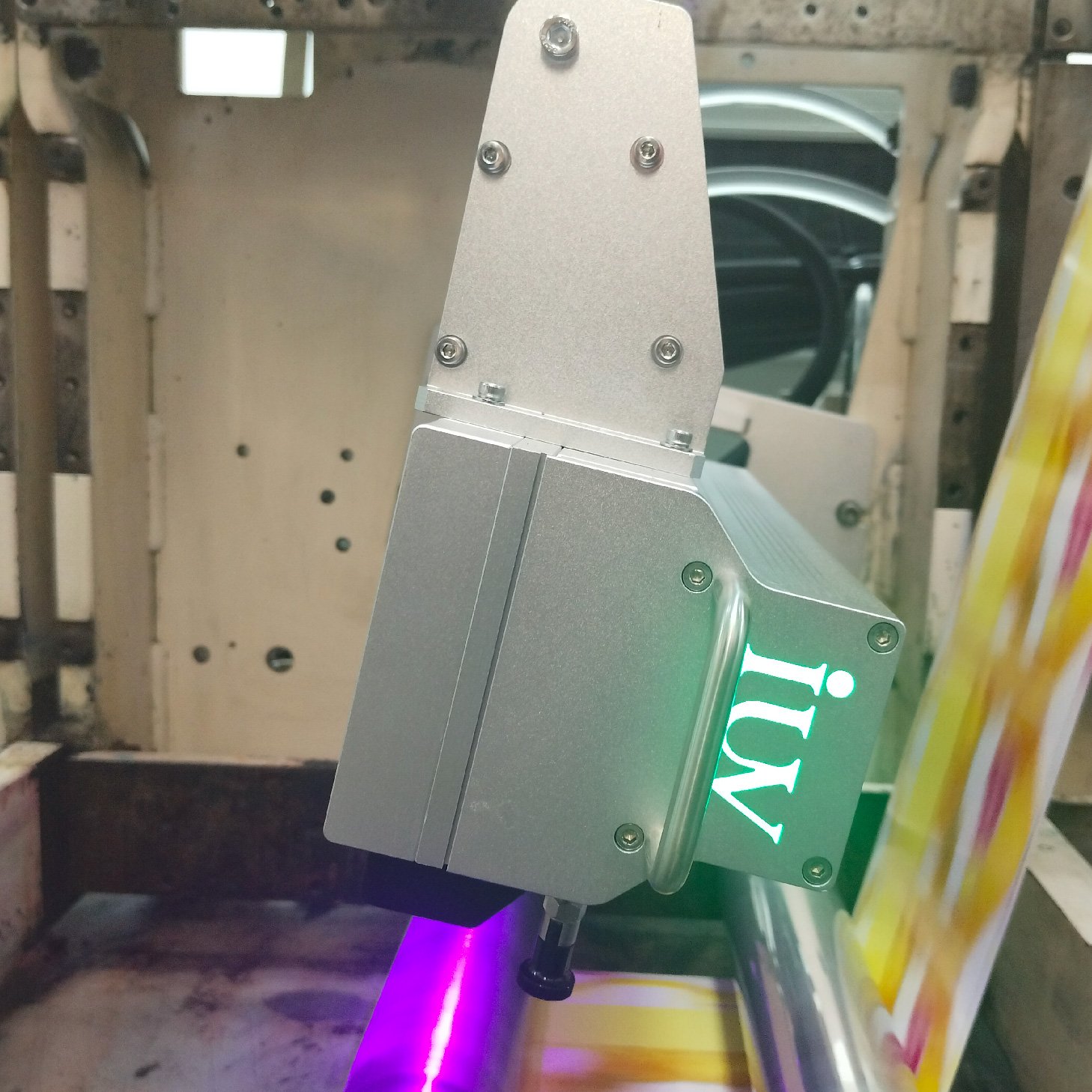
The integration of LED UV curing technology into hybrid offset and flexographic printing systems has become an important development in modern label printing production. Hybrid press configurations combine the high image quality of offset printing with the substrate versatility and productivity of flexographic printing. Within this environment, LED UV curing systems must operate reliably across multiple printing units, different ink chemistries, and varying substrate conditions. Achieving stable curing performance requires careful engineering evaluation of the interaction between the curing system, the press architecture, the ink formulation, and the physical characteristics of the printed substrate.
In practical production environments, curing stability is rarely determined by the curing unit alone. Instead, it is the result of a balanced process in which UV ink curing processes, mechanical press dynamics, thermal behavior, and substrate surface properties interact continuously. Engineers responsible for integrating LED UV curing into hybrid offset and flexo press configurations must therefore consider not only the optical characteristics of the curing system but also the overall process compatibility with the printing line.
Process Characteristics of LED UV Curing in Hybrid Printing Lines
Hybrid offset and flexographic printing systems typically involve multiple print technologies operating within a single press architecture. Offset units may be used for high-resolution graphics and fine text, while flexographic stations are often used for spot colors, coatings, or specialty varnishes. When LED UV curing is implemented in this configuration, the curing system must accommodate the curing behavior of both offset UV inks and flexographic UV inks.
Offset inks generally form thinner ink films and depend on consistent photopolymerization across fine image structures. Flexographic inks, on the other hand, often produce thicker ink deposits and may include pigments or additives that influence light penetration. As a result, curing conditions that appear adequate for offset images may not fully polymerize thicker flexographic layers. This difference in ink film structure requires careful evaluation of curing exposure conditions and press configuration.
Another factor that influences curing stability in hybrid printing is the sequence of curing units along the press line. In many hybrid presses, intermediate curing stations are positioned after specific printing units to stabilize the printed image before the substrate enters subsequent stations. Engineers must evaluate whether these curing points provide sufficient crosslinking of the ink layer while avoiding excessive curing that may affect interlayer adhesion between offset and flexographic inks.
Ink Adhesion Behavior on Label Substrates
Ink adhesion performance is a critical parameter in LED UV cured label printing applications. Label materials frequently include a wide range of substrates such as paper, polypropylene, polyethylene, and other films used in pressure-sensitive label constructions. Each substrate type presents different surface energy characteristics that influence how UV inks anchor to the surface during polymerization.
When LED UV curing is applied, the curing reaction occurs rapidly, which can sometimes limit the time available for the ink to properly wet the substrate surface. If the ink film begins to polymerize before adequate surface wetting occurs, the resulting ink layer may demonstrate poor mechanical adhesion. This phenomenon is particularly relevant in hybrid press configurations where the ink film may encounter multiple curing stages within a short transport distance.
Surface treatments such as corona or plasma activation are often used in label printing production to increase substrate surface energy. However, engineers must verify that these treatments remain effective under the thermal conditions created by the curing system. Even though LED UV curing produces significantly less radiant heat compared with traditional mercury-based systems, localized heating can still influence substrate surface properties and adhesive layer behavior in pressure-sensitive label constructions.
Thermal Management and Press Stability
Thermal management remains an important engineering consideration when integrating LED UV curing into hybrid offset and flexo presses. While LED UV curing systems are widely recognized for their lower heat output compared with conventional arc lamps, the thermal energy generated by high-intensity LED arrays can still accumulate in confined press environments.
Hybrid presses often contain multiple curing units placed in close proximity to printing cylinders, impression rollers, and substrate transport systems. If thermal dissipation is not managed properly, localized heat buildup can influence substrate dimensional stability. Thin film label materials may expand or distort under elevated temperatures, which can lead to register variation between offset and flexographic units.
Cooling system design therefore plays an essential role in maintaining process stability. Efficient heat transfer through water-cooled or air-cooled structures helps stabilize the operating temperature of the curing unit and prevents thermal stress on surrounding mechanical components. Engineers must also consider the airflow patterns within the press enclosure to ensure that heat does not accumulate near sensitive components such as impression cylinders or plate sleeves.
Press Retrofitting and Mechanical Integration
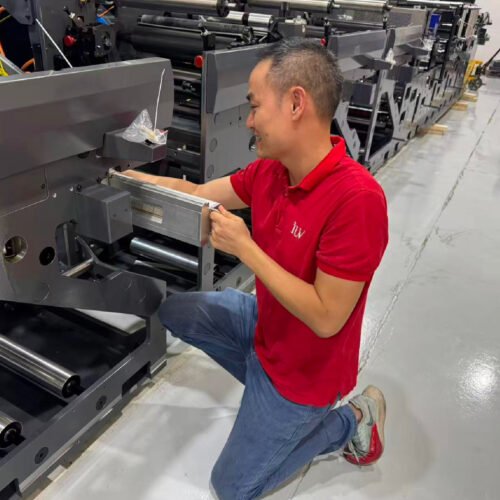
Many hybrid printing lines currently in operation were originally designed for conventional UV curing systems. Retrofitting these presses with LED UV curing units requires careful mechanical and electrical integration to ensure compatibility with existing press architecture.
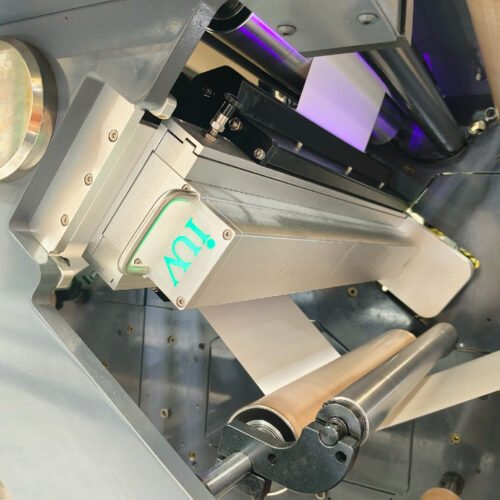
Space constraints often represent one of the first challenges encountered during retrofitting projects. LED UV curing units must fit within the available installation envelope while maintaining the correct curing distance relative to the substrate surface. In hybrid press configurations, where multiple printing technologies share the same transport path, the positioning of curing units must not interfere with ink transfer systems, anilox rollers, or offset blanket cylinders.
Electrical integration is another important factor. LED UV curing systems typically require stable power supply conditions and precise control interfaces that communicate with the press control system. Integration engineers must ensure that curing intensity adjustments synchronize with press speed changes and printing unit activation. Without proper synchronization, curing exposure may vary during production, which can lead to inconsistent ink curing results across the print run.
Substrate Compatibility and Production Efficiency
Label printing production environments frequently involve short job runs and frequent substrate changes. Hybrid offset and flexographic presses are designed to provide flexibility in handling different label materials, but this flexibility also creates challenges for curing system configuration.
Different substrates interact with LED UV curing systems in different ways. Paper materials generally allow some degree of light penetration into the ink layer, which can support deeper curing. In contrast, certain polymer films may reflect or absorb portions of the curing energy, potentially influencing the curing depth of the ink layer. Engineers must evaluate how substrate optical properties influence the curing process when multiple printing layers are applied.
Production efficiency also depends on maintaining consistent curing performance during press acceleration and deceleration phases. During job changes or speed adjustments, the curing system must respond dynamically to maintain adequate curing conditions without overheating the substrate. Intelligent control systems that adjust curing output based on press speed feedback are often used to maintain process consistency.
Low Migration Considerations in Hybrid Label Printing
Low migration printing has become increasingly important in label applications related to food packaging and consumer products. In hybrid offset and flexographic printing systems, ensuring low migration performance requires coordinated control of ink formulation, curing efficiency, and process conditions.
Incomplete curing can leave residual photoinitiators or monomers within the ink layer, which may migrate into packaged products. For this reason, curing validation procedures are often implemented as part of the press setup process. These procedures evaluate whether the LED UV curing system achieves consistent polymerization across different ink layers and substrates.
Hybrid press configurations add complexity to this validation process because multiple ink systems may be used within a single print job. Offset UV inks and flexographic UV inks may contain different photoinitiator systems and pigment concentrations. Engineers must verify that the curing conditions support adequate polymerization for each ink type while maintaining compatibility between layers.
Operational Reliability and Long-Term Process Stability
From a production perspective, the reliability of LED UV curing systems is closely linked to overall press uptime. In hybrid printing environments, curing failures can affect both offset and flexographic units simultaneously, leading to significant production interruptions.
Operational stability depends on maintaining consistent optical output from the curing system, proper cooling performance, and stable electrical supply conditions. Preventive maintenance practices often include monitoring optical window cleanliness, verifying cooling system efficiency, and checking control system synchronization with press operation.
Over long production cycles, even small variations in curing conditions can influence print durability, abrasion resistance, and adhesion performance. For label converters operating hybrid offset and flexographic presses, maintaining consistent LED UV curing performance is therefore essential not only for print quality but also for downstream converting processes such as die cutting, lamination, and slitting.
Conclusion
The implementation of LED UV curing technology in hybrid offset and flexographic press configurations requires comprehensive engineering evaluation that extends beyond the curing unit itself. Successful integration depends on understanding the complex relationships between ink chemistry, substrate behavior, press mechanics, and curing system performance.
In practical label printing production, curing stability is achieved through careful alignment of curing exposure conditions, thermal management strategies, substrate preparation methods, and press control systems. Engineers and production managers responsible for hybrid press operations must evaluate these factors as part of a coordinated process design approach.
As hybrid printing technologies continue to evolve, LED UV curing systems will remain a critical component in achieving reliable, efficient, and compliant label printing production. The long-term success of these systems will depend on continued collaboration between equipment manufacturers, ink formulators, and printing engineers to ensure that curing technology remains aligned with the operational realities of modern narrow web printing environments.