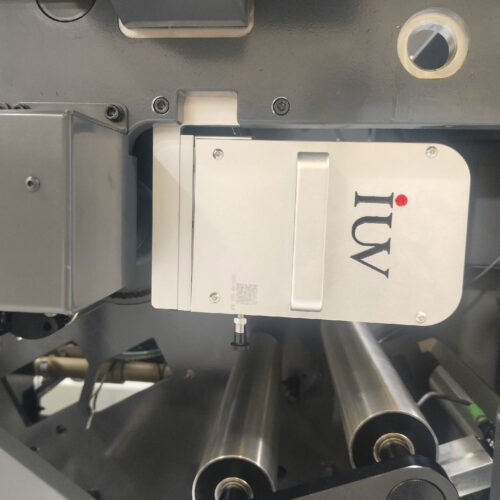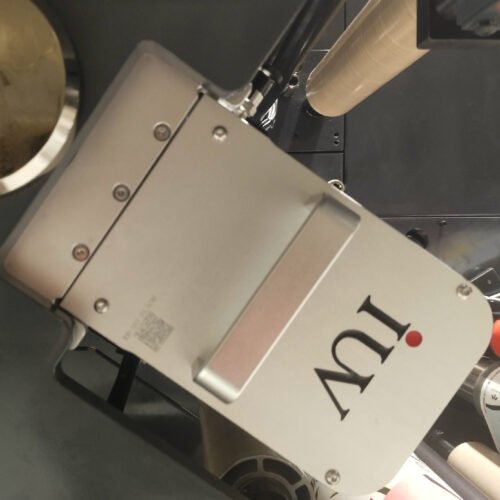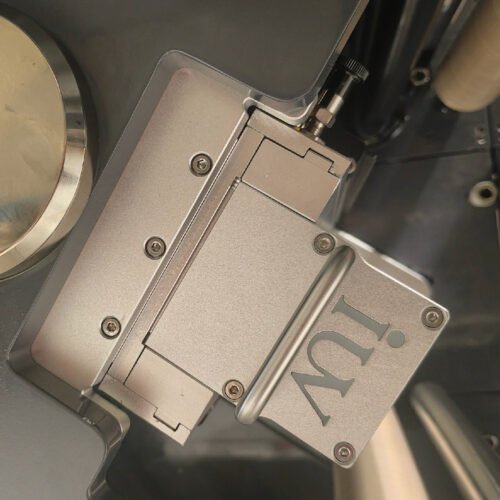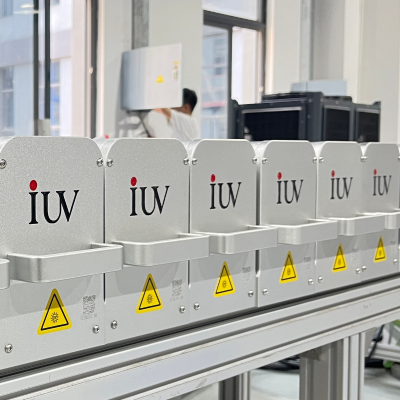

As narrow web label presses continue to push higher speeds, finer image detail, and broader substrate ranges, LED UV curing performance is increasingly defined by optics rather than raw electrical power. While LED chips determine wavelength and potential output, it is the optical system that controls how usable UV energy reaches the ink, coating, or adhesive. Lens efficiency and beam profile optimization have become decisive factors in achieving stable curing results in high-speed flexo and narrow web offset label production.
This article examines how advanced optical design in narrow web LED UV systems directly influences curing uniformity, print quality, and production efficiency. It focuses on practical engineering considerations for label printing environments where beam control is critical.
Why Optics Matter More Than Power in Narrow Web LED UV
In many label printing operations, curing problems are mistakenly addressed by increasing lamp power. This approach often masks underlying optical inefficiencies rather than solving them. In LED UV systems, a significant portion of generated UV energy can be lost or misdirected if lens design and beam shaping are not optimized for the press geometry.
Narrow web presses require precise energy delivery across a limited web width, often with minimal lamp-to-substrate distance. Poor beam control leads to hot spots, edge falloff, and uneven curing across the web. These effects become more pronounced as press speed increases, making optics a primary determinant of curing reliability.
Understanding Lens Efficiency in LED UV Systems
Lens efficiency refers to how effectively an optical system transmits and directs UV energy from the LED emitter to the curing surface. Losses occur through absorption, reflection, and scattering within the lens material and at each optical interface.
In label printing applications, high-efficiency lenses are designed using UV-grade materials with minimal absorption at the operating wavelength. Surface coatings further reduce reflective losses. Even small efficiency gains translate into measurable curing improvements, especially in high-speed narrow web environments where exposure time is limited.
Beam Profile and Its Impact on Curing Uniformity
Beam profile describes how UV irradiance is distributed across the curing width and along the direction of web travel. An ideal beam profile delivers uniform irradiance across the entire printed area, ensuring consistent polymerization regardless of image placement.
In flexo label printing, non-uniform beam profiles often cause partial curing at the edges of the web or inconsistent gloss levels in coatings. At high speeds, these inconsistencies lead to adhesion failures, ink scuffing, or downstream converting problems. Optimized beam profiles eliminate these risks by maintaining stable irradiance across all zones.
Optical Design Challenges in Narrow Web Press Geometry
Narrow web presses present unique optical challenges due to compact layouts and limited installation space. LED UV systems must fit between print stations, often at fixed distances from the substrate. This constraint places high demands on lens design to focus and shape the beam precisely within a short working distance.
Advanced optical systems address this by combining primary lenses at the LED chip level with secondary optics that homogenize and direct the beam. This multi-stage approach improves energy utilization while maintaining a controlled irradiance footprint tailored to narrow web applications.
Collimated vs. Focused Beam Strategies
Two primary beam strategies are used in LED UV curing for labels: collimated beams and focused beams. Collimated beams deliver parallel light rays that maintain intensity over distance, while focused beams concentrate energy into a defined area.
In narrow web label production, a controlled collimated beam is often preferred for uniform curing across varying substrate heights and minor web flutter. Focused beams may deliver higher peak intensity but can be sensitive to distance changes, leading to curing variability at high speeds. Optical optimization balances these approaches to suit specific press conditions.
Lens Geometry and Its Effect on High-Speed Performance
Lens geometry determines how light exits the LED module and interacts with the substrate. Wide-angle lenses spread energy across a broader area but reduce peak irradiance. Narrow-angle lenses increase intensity but limit coverage.
For high-speed label presses, lens geometry must deliver sufficient irradiance to complete curing within milliseconds while maintaining coverage across the full web width. Advanced designs achieve this balance by shaping the beam into a uniform rectangular profile that matches the printed area precisely.
Managing Edge Losses in Narrow Web Curing
Edge loss is a common problem in narrow web LED UV curing, where irradiance drops near the edges of the beam. This issue often results from inadequate optical blending between adjacent LED emitters or improper lens overlap.
Advanced optical systems address edge loss through overlapping beam patterns and precision alignment. This ensures that energy distribution remains consistent from edge to edge, reducing the risk of undercured ink or coatings at the web margins.
Optical Stability and Long-Term Consistency
Lens performance must remain stable over time to ensure consistent curing. Exposure to heat, UV radiation, and environmental contaminants can degrade optical materials if they are not properly specified for industrial use.
In label printing environments, high-quality optics maintain transmission efficiency and beam shape over extended operating hours. This stability reduces the need for frequent recalibration and supports repeatable curing performance across long production runs.
Interaction Between Optics and Wavelength Selection
Optical efficiency is wavelength-dependent. Lens materials and coatings must be matched to the LED wavelength used in the curing system. A lens optimized for 395 nm may perform poorly at 365 nm, leading to unexpected losses.
In narrow web label production, where different inks and adhesives may require different wavelengths, optical compatibility becomes critical. Advanced LED UV systems are designed with wavelength-specific optics to ensure maximum energy transfer for the selected curing chemistry.
Supporting Ink and Adhesive Performance Through Beam Control
Proper beam profile optimization improves more than just cure completeness. Stable irradiance distribution supports consistent ink density, controlled dot gain, and reliable adhesion. In flexographic label printing, this translates into sharper images and predictable trapping behavior.
For UV adhesives used in lamination or cold foil applications, uniform beam delivery ensures consistent bond strength across the web. Optical optimization reduces weak zones that can lead to delamination during finishing.
Thermal Benefits of Efficient Optical Design
Efficient optics reduce wasted energy, which directly lowers heat generation at the substrate. In narrow web label production, this thermal advantage protects heat-sensitive films and minimizes web distortion.
Lower thermal load also improves registration stability and reduces stress on press components. This benefit becomes increasingly important as production speeds and duty cycles increase.
Optimizing Optics for High-Speed Web Throughput
As press speeds rise, the margin for curing error narrows. Optical efficiency and beam control determine how much usable energy reaches the ink within the available exposure time. Advanced optics enable higher throughput without increasing electrical load or compromising print quality.
This optimization supports shorter curing windows, faster job changeovers, and improved overall equipment effectiveness in label converting operations.
Conclusion
Advanced optical design has become a defining factor in narrow web LED UV curing performance. Lens efficiency and beam profile optimization determine how effectively UV energy is delivered to inks, coatings, and adhesives at high press speeds. In flexographic and narrow web offset label production, well-engineered optics ensure uniform curing, stable adhesion, and consistent print quality across the web.
By focusing on optical performance rather than raw power, label converters can achieve higher productivity, reduced waste, and long-term process stability in demanding high-speed environments.