Achieving captivating specialty effects like matte, gloss, and texture in printed materials is a key differentiator in today’s competitive market. For label printers, especially those utilizing narrow web, flexographic, and offset printing technologies, the performance of UV inks under LED UV curing is paramount. Understanding how to optimize these inks unlocks a world of creative possibilities, enhancing visual appeal and tactile experiences.
The Science Behind UV Ink and LED Curing
UV inks are formulated with photoinitiators that react rapidly when exposed to ultraviolet (UV) light. This process, known as UV curing, instantly solidifies the ink, transforming it from a liquid to a solid film. LED UV curing, a more recent advancement, offers significant advantages over traditional mercury lamp systems. LEDs emit light at specific wavelengths, leading to more efficient and targeted curing. This precision is crucial for achieving consistent and predictable specialty effects.
The chemistry of UV inks is complex, involving monomers, oligomers, pigments, and additives. For effects like gloss, the ink formulation will often contain higher concentrations of specific resins and fewer matting agents. Matte effects, conversely, rely on the inclusion of fine particles, typically silica or wax, which disrupt the ink surface’s light reflection, creating a non-reflective finish. Texture effects often involve thicker ink layers or specialized rheology modifiers that allow the ink to hold its shape during curing.
Achieving High-Gloss Finishes with UV Inks
A high-gloss finish provides a vibrant, eye-catching appearance, making colors pop and images appear richer. In narrow web flexographic and offset printing, achieving a consistent, mirror-like gloss involves several factors.
First, the ink formulation is critical. High-gloss UV varnishes and inks are designed with specific resin systems that flow smoothly and level out to create an unbroken surface upon curing. The absence or minimal use of matting agents is essential here.
Second, the application method plays a significant role. For flexo and offset printing, ensuring consistent ink transfer is key. Anilox rolls with appropriate cell volumes and line screens in flexo, and properly calibrated ink drums and plates in offset, are vital. Over-application or uneven ink laydown will invariably lead to a compromised gloss level.
Third, the curing process must be optimized. LED UV curing for gloss effects requires sufficient UV intensity at the correct wavelengths to ensure complete polymerization of the resin system. Insufficient curing can result in a slightly tacky surface, which diminishes the gloss. The distance between the LED lamps and the substrate, as well as the speed of the printing press, must be carefully controlled to ensure adequate UV exposure time.
Crafting Sophisticated Matte Effects
Matte finishes offer a sophisticated, understated elegance, reducing glare and providing a soft, velvety feel. Achieving a uniform matte effect in label printing demands a slightly different approach compared to gloss.
The primary mechanism for matte finishes is the inclusion of matting agents within the ink or varnish formulation. These fine particles create microscopic irregularities on the ink surface. These irregularities scatter light rather than reflecting it uniformly, resulting in the matte appearance. The type and size of these matting agents, along with their concentration, directly influence the degree of matteness.
For flexographic and offset printing, maintaining an even distribution of these matting agents across the entire printed area is crucial. If the matting agents settle during the printing process or are not transferred consistently, patchiness or variations in the matte finish can occur.
LED UV curing for matte effects needs to ensure complete ink solidification without causing the matting agents to burn out or migrate. The specific spectral output of the LEDs should be compatible with the photoinitiators and the resin system to achieve full cure. Over-curing, particularly with certain types of matting agents, could potentially lead to a slight sheen developing, undermining the desired matte effect.
Creating Tactile Textures with UV Inks
Texture effects add a tangible dimension to printed materials, engaging the sense of touch and enhancing the perceived value of the product. This is where the versatility of UV inks and LED curing truly shines in narrow web printing.
Building texture typically involves applying thicker layers of UV ink or varnish. This can be achieved through various methods, including specialized screen printing inks, thicker ink laydowns in flexo or offset with specific anilox or plate engraving, or by using specialized high-build UV varnishes.
For flexo and offset printing, achieving repeatable texture often relies on a combination of formulation and careful process control. The rheology of the ink or varnish is critical – it must be viscous enough to hold its shape and build height during printing and curing, yet fluid enough to transfer effectively.
LED UV curing for textured effects requires precise control over UV intensity and curing speed. The UV lamps must deliver enough energy to cure the thicker ink film thoroughly, from the surface down to the substrate, without causing the surface to cure too quickly, trapping uncured ink underneath. This can lead to cracking or poor adhesion. The dwell time under the LED lamps is a critical parameter that needs to be carefully balanced with the press speed.
Integrating Specialty Effects in Narrow Web Printing Workflows
For label printers working with narrow web flexographic and offset presses, integrating these specialty effects requires careful planning and execution.
Ink Management: Consistent batch-to-batch ink quality is vital. Suppliers must provide inks and varnishes with tight tolerances for color, viscosity, and photoinitiator content. For specialty effects, maintaining ink stability in the print unit is also important, especially for thicker applications.
Substrate Choice: The interaction between the UV ink and the substrate is significant. Porous or highly absorbent substrates can affect ink flow and curing, especially for high-gloss or textured finishes. Choosing the right substrate that is compatible with UV inks and the desired effect is a foundational step.
Press Setup: In flexography, the selection of anilox rolls (cell volume, cell count, cell engraving) and printing plates (thickness, durometer) directly impacts ink transfer and build. For offset, precise control over ink keys, roller settings, and plate preparation is essential.
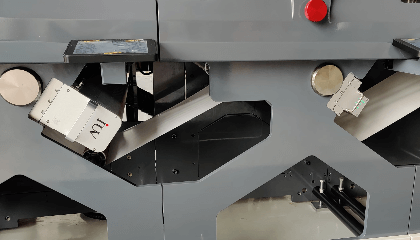
Curing Parameters: With LED UV curing, understanding the spectral output of the lamps and their intensity is crucial. Each specialty effect may require fine-tuning of the lamp intensity and the press speed to achieve optimal cure and desired aesthetic. Cross-linking efficiency is key; incomplete cure can lead to adhesion issues, rub resistance problems, and a compromised visual finish.
The Role of LED UV Technology in Effect Optimization
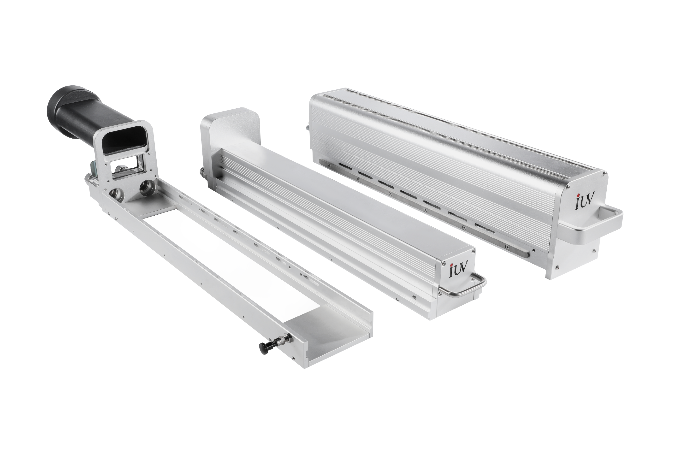
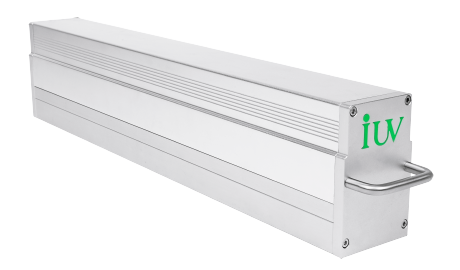
LED UV curing technology offers distinct advantages for achieving precise specialty effects. Its focused UV output at specific wavelengths allows for more predictable and repeatable ink reactions. Unlike traditional mercury lamps that emit a broad spectrum of UV light, LEDs can be tailored to the specific absorption characteristics of the photoinitiators in the UV ink.
This specificity translates into several benefits:
- Energy Efficiency: LEDs consume less power and generate less heat, which can be beneficial for heat-sensitive substrates and for maintaining stable ink temperatures.
- Instant On/Off: LEDs can be switched on and off instantly, reducing energy waste and preventing unnecessary heat buildup when the press is not running.
- Uniformity: Modern LED curing systems offer highly uniform UV output across the web width, critical for consistent gloss, matte, and texture effects across the entire label.
- Longevity: LED lamps have a much longer operational lifespan than mercury lamps, reducing maintenance and replacement costs.
When optimizing for specialty effects using LED UV, it’s important to match the LED emitter’s wavelength with the UV ink’s photoinitiator package. For example, inks formulated with specific types of photoinitiators might perform best under UV-A or UV-B light ranges, and LED systems can be configured to deliver these precisely. This targeted curing ensures efficient polymerization, leading to better film properties, enhanced durability, and the perfect rendition of the intended visual and tactile effect.
By understanding the intricate relationship between UV ink formulation, printing process parameters, substrate selection, and the capabilities of LED UV curing technology, printers can consistently deliver high-quality labels with impactful specialty effects, setting their products apart in a visually driven marketplace.