<!-- Meta Pixel Code --> <!-- 结束元像素代码 -->

Understanding UV Curing Challenges in Hybrid Flexo and Offset Printing Lines

Understanding UV Curing Challenges in Hybrid Flexo and Offset Printing Lines

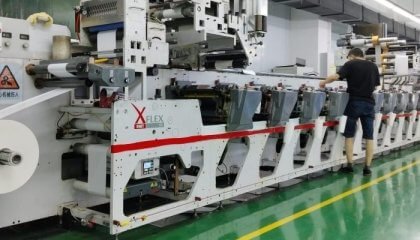
Hybrid printing lines, combining flexographic and offset technologies, offer immense versatility for label printing. These advanced systems allow printers to leverage the strengths of both methods within a single production run. However, successfully integrating UV curing into these hybrid setups presents unique challenges. Understanding these complexities is key to achieving optimal print quality, efficiency, and cost-effectiveness.

The Rise of Hybrid Printing in Narrow Web

Narrow web printing, particularly for labels and packaging, has seen a significant shift towards hybrid solutions. This trend is driven by the demand for shorter runs, faster turnaround times, and the ability to produce complex, high-value labels. Flexographic printing excels at solid ink coverage and printing on a wide range of substrates, including films and foils. Offset printing, on the other hand, offers superior fine detail, smooth tonal gradations, and excellent ink laydown, especially for graphics-intensive designs.

By merging these two printing processes, hybrid lines allow printers to achieve a best-of-both-worlds scenario. For instance, a printer might use flexo for brand colors and varnishes, then switch to offset for intricate photographic images or special effects. This flexibility is invaluable in today’s competitive market.

The Role of UV Curing in Hybrid Systems

Ultraviolet (UV) curing has become the dominant drying technology in modern narrow web printing. Unlike traditional heat-set or solvent-based inks, UV inks cure almost instantaneously when exposed to UV light. This rapid curing offers several advantages:

  • Speed: Eliminates drying time between print stations, allowing for faster press speeds.
  • Substrate Versatility: Enables printing on non-absorbent materials like plastic films and foils.
  • Durability: Produces prints with excellent scratch, chemical, and fade resistance.
  • Environmental Benefits: UV inks are typically low in VOCs (Volatile Organic Compounds), contributing to a safer working environment and reduced environmental impact.

In hybrid lines, UV curing is critical. Each print station, whether flexo or offset, is typically equipped with UV lamps. This ensures that inks and coatings applied at each stage are fully cured before the web moves to the next section or is wound up.

Key UV Curing Challenges in Hybrid Lines

Despite its advantages, UV curing in hybrid printing environments is not without its hurdles. These challenges often stem from the interplay between different printing technologies, ink formulations, and curing equipment.

1. Ink Compatibility and Interplay

One of the primary concerns is ensuring that inks from different print stations (flexo and offset) and any overprint varnishes are fully compatible.

  • Offset Inks: Offset inks are typically oil-based or paste-like. They are formulated to transfer from a plate to a roller, then to the substrate. UV offset inks are designed to cure rapidly under UV light.
  • Flexo Inks: Flexo inks are generally lower in viscosity and designed to transfer from a raised image carrier to the substrate. UV flexo inks also cure quickly under UV light.

The challenge arises when these inks come into contact or are layered. If an underlying ink is not fully cured before a subsequent ink or coating is applied, it can lead to inter-coat adhesion problems. This can manifest as:

  • Delamination: Layers of ink or coating peeling apart.
  • Poor Scratch Resistance: The print is easily damaged.
  • Ink Transfer: Ink from one layer inadvertently transfers to another.

Careful selection of UV inks and coatings is paramount. Manufacturers often offer ink systems designed to work seamlessly together, even across different printing methods.

2. Curing Efficiency and Lamp Placement

Achieving complete and consistent UV curing across the entire web width is essential. This involves optimizing the UV lamps and their placement.

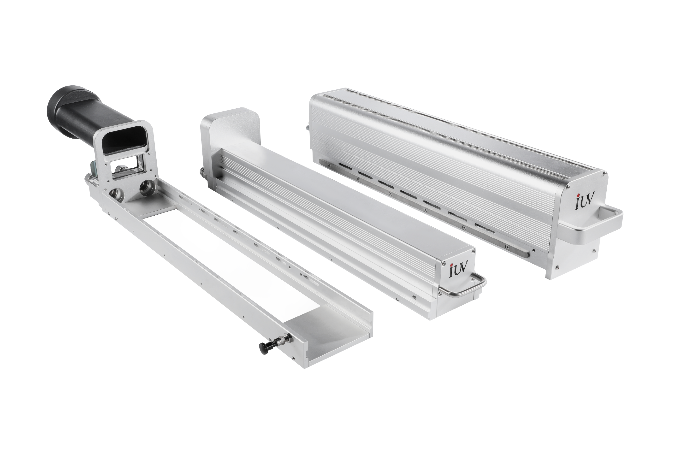
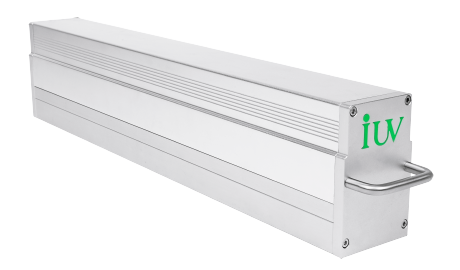
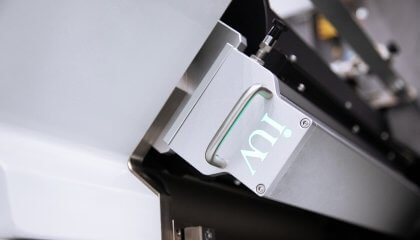
  • UV Lamp Types: Traditional mercury vapor lamps are powerful but generate significant heat and have a limited lifespan. LED UV curing technology is increasingly popular due to its energy efficiency, longer lifespan, and focused spectrum output.
  • Spectrum Matching: Different UV inks and coatings are formulated to cure with specific wavelengths of UV light. Mercury lamps emit a broad spectrum, while LEDs emit in narrow bands (e.g., 365nm, 395nm). It is vital to match the LED lamp’s spectrum to the UV ink’s photoinitiators for effective curing.
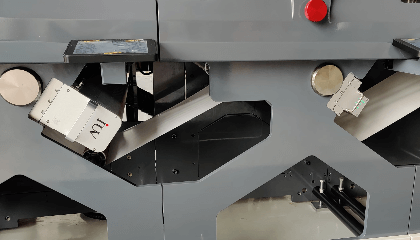
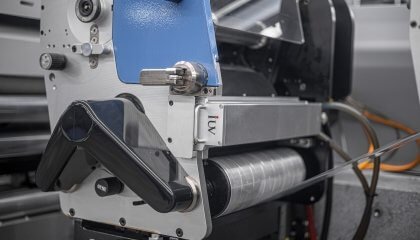
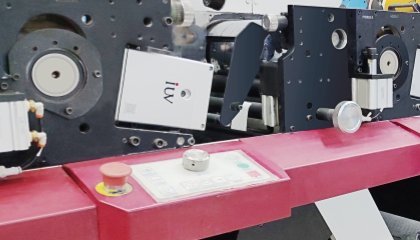
  • Lamp Placement: In hybrid lines, the limited space between print units can make optimal UV lamp placement difficult. Lamps must be positioned close enough to the substrate to deliver the required UV energy (irradiance) without causing damage or heat buildup. Sufficient overlap between lamp outputs is also needed to ensure full cure across the entire web.
  • Energy Requirements: Each print station requires a certain UV energy dose (measured in Joules per square centimeter, J/cm²) for full cure. This dose is a function of irradiance (power density) and exposure time. Achieving the correct dose for every ink layer, especially in a high-speed hybrid line, requires precise control over lamp output and web speed.

3. Substrate Considerations

The type of substrate used in narrow web printing can significantly impact UV curing performance.

  • Heat Sensitivity: Some substrates, particularly certain films, can be sensitive to the heat generated by traditional mercury UV lamps. LED UV curing generates much less heat, making it a preferred option for these materials.
  • Surface Properties: The surface energy and color of the substrate can affect UV light reflection and absorption. Dark or highly reflective surfaces may require higher UV doses or specialized ink formulations.
  • Substrate Thickness: Thicker substrates may require longer exposure times or higher irradiance to ensure that UV light penetrates and cures the ink adequately, especially for thicker ink films.

4. Color Management and Ink Laydown

Achieving consistent color across different printing methods within a hybrid line is a significant undertaking. UV curing adds another layer of complexity.

  • Ink Film Thickness: The amount of ink laid down by flexo and offset units can vary. Thicker ink films require more UV energy to cure completely. Inconsistent ink laydown can lead to partial curing in thinner areas or over-curing in thicker areas.
  • Dot Gain and Trapping: Achieving consistent dot gain and trapping (how one ink color sits on top of another) between flexo and offset units is challenging. This directly impacts color reproduction and can be exacerbated if curing is inconsistent.
  • White Ink Opacity: When printing opaque white inks (often done with flexo), ensuring complete cure without compromising the opacity or causing yellowing is crucial. The photoinitiators in white inks must be effectively activated.

5. LED UV Curing Specific Challenges

While LED UV curing offers many advantages, it also introduces its own set of considerations for hybrid lines.

  • Spectrum Control: As mentioned, matching the LED spectrum to the ink is vital. If the ink requires a wavelength not emitted by the LED lamp, it simply won’t cure, regardless of the energy output.
  • Lamp Output Degradation: LED lamps degrade over time, and their output can decrease. Regular monitoring and maintenance are necessary to ensure consistent curing performance throughout the lamp’s lifespan.
  • Cost of Investment: While operating costs are lower, the initial investment in LED UV curing systems can be substantial compared to traditional mercury lamps.

Strategies for Overcoming UV Curing Challenges

Addressing these challenges requires a holistic approach that involves careful planning, material selection, and equipment management.

1. Collaborative Ink and Equipment Selection

  • Partner with Suppliers: Work closely with ink manufacturers and equipment suppliers. They can provide guidance on ink formulations that are compatible with both flexo and offset processes and are optimized for specific UV curing technologies (mercury or LED).
  • Test Thoroughly: Conduct rigorous testing of ink systems on your specific hybrid press with your chosen substrates. Verify adhesion, scratch resistance, and cure depth under realistic production conditions.

2. Optimizing UV Curing Systems

  • Invest in Quality Lamps: Choose high-quality UV lamps, whether mercury or LED, from reputable manufacturers. Ensure they provide consistent output and the correct spectral distribution for your inks.
  • Consider LED for Heat-Sensitive Substrates: If you frequently print on heat-sensitive films, LED UV curing is often the superior choice due to its low heat output.
  • Monitor Curing Performance: Utilize UV measurement devices (radiometers) to regularly check the UV energy output of your lamps. This helps in identifying any degradation or inconsistencies and allows for timely adjustment or replacement of lamps.
  • Strategic Lamp Placement: Work with press manufacturers or integrators to ensure optimal placement of UV lamps between print units, allowing for sufficient exposure and overlap.

3. Substrate and Ink Film Thickness Management

  • Understand Substrate Properties: Be aware of how your chosen substrates will interact with UV light and heat. Consult substrate manufacturers for recommendations regarding UV curing.
  • Control Ink Laydown: Precisely control anilox rolls, ink viscosity, and printing pressures in flexo, and ink viscosity and transfer in offset, to ensure consistent ink film thickness across all units. This promotes uniform curing.

4. Advanced Color Management

  • Profile Presses Independently: Develop separate color profiles for the flexo and offset units within the hybrid line.
  • Integrate Color Data: Use color management software that can account for the unique characteristics of each printing process and the impact of UV curing on color density and appearance.

5. Embracing LED Technology

  • Understand Spectrum Needs: If moving to LED, ensure that the chosen LED lamps emit wavelengths that effectively cure the specific photoinitiators in your inks and coatings.
  • Plan for Lamp Lifespan: Factor in the lifespan of LED lamps and establish a proactive replacement schedule to maintain consistent curing performance.

The Future of UV Curing in Hybrid Printing

As hybrid printing lines continue to evolve, so too will UV curing technology. Advances in LED technology, such as wider spectral outputs and higher power densities, will further enhance efficiency and performance. Ink formulations will become even more sophisticated, offering better compatibility and faster curing capabilities.

For label printers utilizing hybrid flexo and offset lines, mastering UV curing challenges is not just about troubleshooting; it’s about unlocking the full potential of these versatile machines. By understanding the intricate balance of ink, substrate, and curing technology, printers can consistently produce high-quality, durable labels that meet the demanding expectations of the market. The journey requires diligence, collaboration, and a commitment to staying abreast of technological advancements in both printing and UV curing.

Contact IUV Curing Experts

滚动至顶部