<!-- Meta Pixel Code --> <!-- 结束元像素代码 -->

Understanding the Role of UV Curing in Shrink Sleeve and Wrap-Around Labels

Understanding the Role of UV Curing in Shrink Sleeve and Wrap-Around Labels

The evolution of the packaging industry has pushed label decoration to its limits. Among the most popular formats today are shrink sleeves and wrap-around labels. These formats provide 360-degree branding and fit complex container shapes. However, achieving high-quality results on these specific applications requires more than just a good printing press. It demands a sophisticated understanding of UV curing technology.

For narrow-web converters, the choice of curing system dictates production speed, substrate integrity, and final product durability. Whether utilizing flexographic or offset printing, the integration of UV and LED UV technology has become the standard for modern label production.

The Technical Demands of Shrink Sleeve Production

Shrink sleeves are typically printed on heat-sensitive films like PETG, PVC, or OPS. These materials are designed to shrink when exposed to heat in a shrink tunnel. This creates a significant challenge during the printing process. Traditional drying methods that rely on high heat can cause the film to distort or shrink prematurely on the press.

UV curing solves this by using photochemical reactions instead of heat to dry the ink. When UV light hits the specially formulated inks, photoinitiators trigger a polymerization process. This turns liquid ink into a solid film almost instantly. Because this process happens at the molecular level, it provides a level of adhesion and flexibility that is necessary for the subsequent shrinking process.

Flexographic Printing and UV Integration

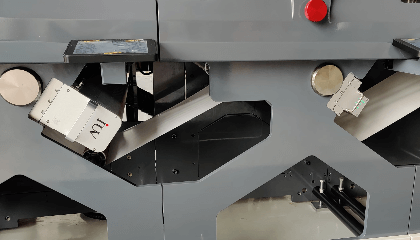
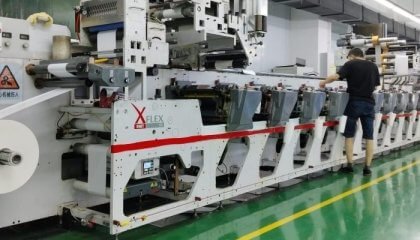
Flexography remains the dominant process for high-volume shrink sleeve production. Modern narrow-web flexo presses are designed for high speeds and quick changeovers. In this environment, UV curing systems must be powerful enough to cure ink at speeds exceeding 150 meters per minute.

The chemistry of UV flexo inks is tailored for high pigment loading. This ensures vibrant colors even on transparent films. However, thick ink layers require high-intensity UV output to ensure full “through-curing.” If the ink cures only on the surface, the “trapped” liquid ink underneath can cause delamination or ink flaking when the sleeve undergoes shrinking.

The Role of Offset Printing in High-End Labels

While flexo handles the bulk of the market, offset printing is preferred for labels requiring photographic quality and fine vignettes. Narrow-web offset presses often use UV curing to manage the complex ink-water balance. In wrap-around label production, where the substrate might be a thin BOPP (Biaxially Oriented Polypropylene), UV offset provides a very thin, high-resolution ink layer.

The challenge with offset is the thinness of the ink film. UV systems must be precisely calibrated to avoid “over-curing,” which can make the ink film brittle. Brittle ink will crack when a wrap-around label is applied to a bottle or when a shrink sleeve conforms to a tight radius.

Transitioning from Mercury Lamps to LED UV

The most significant shift in the industry is the move from traditional mercury vapor lamps to LED UV curing. This transition is particularly beneficial for shrink sleeve converters.

Mercury lamps emit a broad spectrum of light, which includes a significant amount of infrared (IR) radiation. This IR translates to heat. On a narrow-web press, this heat can cause “web growth” or PETG film distortion. To combat this, printers often use chilled rollers, which adds complexity and energy costs.

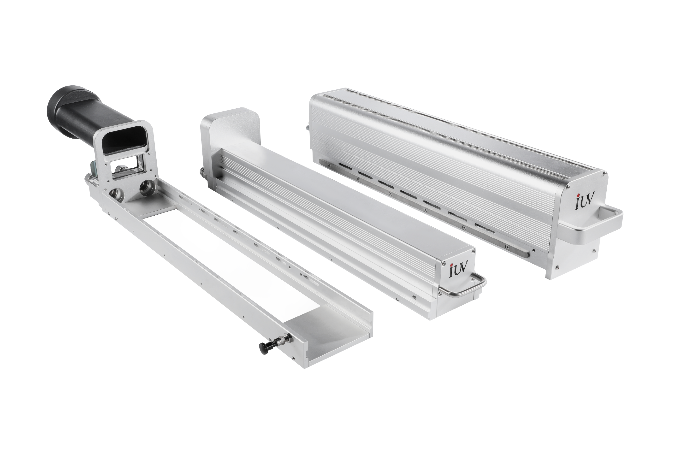
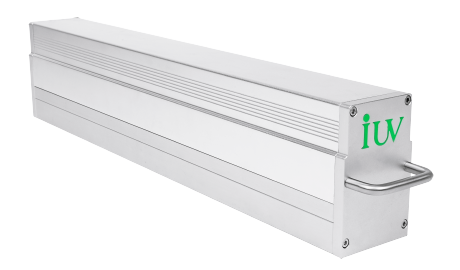
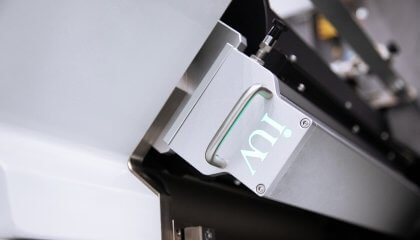
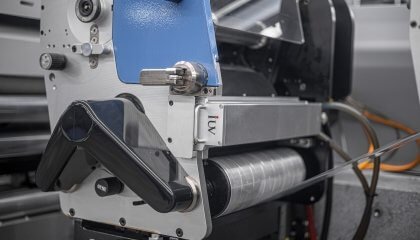
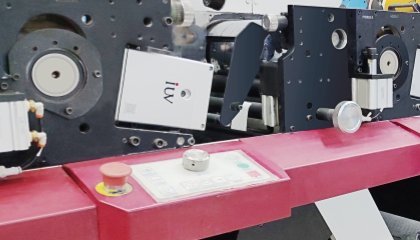
LED UV systems emit light in a narrow wavelength, typically 385nm or 395nm. They produce almost no IR radiation. This “cold” curing process allows printers to use thinner, more sustainable films without the risk of heat damage. Furthermore, LED lamps offer instant on/off capabilities and consistent output over their 20,000-hour lifespan, whereas mercury bulbs degrade significantly after 1,000 hours.

Managing Oxygen Inhibition in Narrow-Web Curing

A technical hurdle in UV curing, especially with thin ink films used in label printing, is oxygen inhibition. Atmospheric oxygen can interfere with the polymerization process at the ink surface, leading to a “tacky” finish.

In shrink sleeve applications, a tacky surface is disastrous. It can cause the labels to stick to themselves when wound on a roll (blocking). To solve this, high-performance UV systems use optimized reflectors or nitrogen inertion. Nitrogen inertion replaces the oxygen at the curing point with nitrogen gas. This allows for a much faster and more complete cure, especially for low-migration inks used in food packaging.

Ink Adhesion and Coefficient of Friction (COF)

For wrap-around labels, the Coefficient of Friction (COF) is a critical specification. These labels are applied using high-speed labeling machines. If the UV-cured surface is too slick or too rough, the labeling machine will jam.

UV curing must be consistent across the entire web width to maintain a stable COF. Incomplete curing leaves residual monomers that change the surface energy of the label. Professional engineers must monitor the “dose” (total energy) and “irradiance” (peak power) of the UV system to ensure every square millimeter of the label performs correctly on the bottling line.

Shrinkability and Ink Film Flexibility

The defining characteristic of a shrink sleeve is its ability to reduce in size by up to 70% without the ink cracking or peeling. This requires a highly flexible UV ink matrix.

Traditional UV inks can sometimes become too rigid. Specialized “shrink-able” UV inks are formulated with monomers that maintain elasticity after polymerization. The curing system plays a role here too. Over-curing with excessive UV exposure can lead to secondary cross-linking, which reduces flexibility. Achieving the “sweet spot” of curing requires precise control over the press speed and lamp power.

Operational Efficiency and Maintenance

From an engineering perspective, the reliability of the UV system directly impacts the OEE (Overall Equipment Effectiveness) of the print shop. Mercury systems require shutters, blowers, and ducting to manage ozone and heat. These mechanical parts are prone to failure.

LED UV systems are solid-state. They eliminate the need for ozone extraction and reduce the maintenance burden significantly. For narrow-web printers, this means less downtime and lower energy consumption. The energy savings alone often justify the capital investment of switching to LED within 18 to 24 months.

Quality Control in UV Curing

To ensure every roll of labels meets specifications, printers must implement rigorous testing. The “thumb test” is a basic field check, but professional labs use more advanced methods.

  1. Tape Test: Checking for ink delamination from the PETG or BOPP substrate.
  2. MEK Rub Test: Measuring the chemical resistance of the cured ink.
  3. Spectrophotometry: Ensuring that the UV curing process hasn’t caused a color shift.
  4. Shrink Testing: Placing a sample in a hot water bath to observe ink behavior during actual shrinkage.

The Future of UV Curing in Labeling

The industry is moving toward “Low Migration” requirements, particularly for labels used on food and beverage containers. UV curing must be nearly 100% complete to ensure that no unreacted components migrate through the substrate into the product.

As regulatory pressures increase, the precision of LED UV will become even more vital. The ability to track and log the UV dose for every roll provides a “digital birth certificate” for the packaging, ensuring safety and compliance.

Conclusion of Technical Integration

The synergy between UV curing technology and narrow-web printing determines the success of shrink sleeve and wrap-around label production. By understanding the physics of light and the chemistry of the ink, converters can push the boundaries of what is possible in packaging. Whether it is managing the heat-sensitive nature of PETG or ensuring the high-speed application of BOPP wrap-around labels, UV curing remains the indispensable core of the process. Switching to advanced LED UV systems is no longer just an option for the sustainability-minded; it is a technical necessity for those looking to compete in the high-precision world of modern labeling.

Contact IUV Curing Experts

滚动至顶部