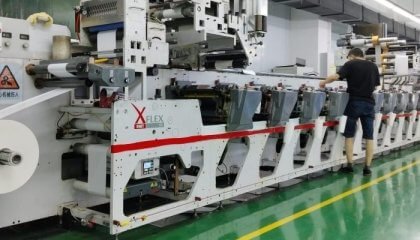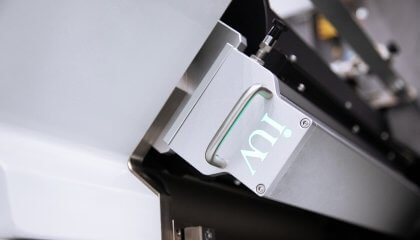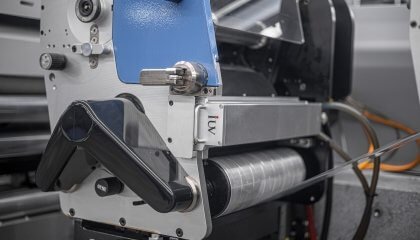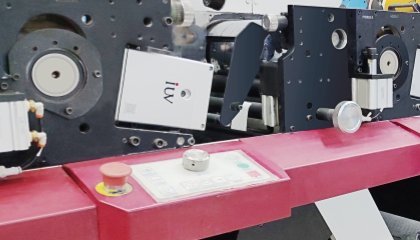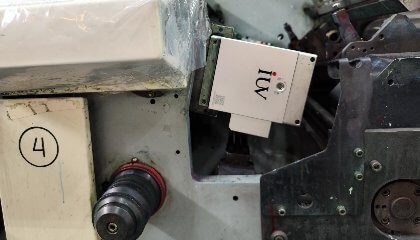
In the demanding world of label printing, flexography, offset, and narrow-web applications, achieving uniform and consistent ink curing is paramount. It directly impacts print quality, durability, and the overall efficiency of the production process. While LED UV curing systems have revolutionized the industry with their speed, energy efficiency, and lower heat output, their true potential for uniform results hinges on a deep understanding of the underlying technical principles. This article delves into the critical factors that ensure every millimeter of your printed substrate receives the precise dose of UV light needed for optimal curing.
Understanding the Fundamentals of LED UV Curing
At its core, LED UV curing relies on specific wavelengths of ultraviolet light to initiate a photochemical reaction within UV-curable inks and coatings. This reaction causes rapid polymerization, transforming liquid ink into a solid, durable film. Unlike traditional mercury vapor lamps, LEDs emit a narrower band of wavelengths, typically in the UVA spectrum (365nm, 385nm, 395nm, 405nm), which are highly efficient for initiating this curing process. The key to uniformity lies in delivering this light energy consistently across the entire web.
The Critical Role of Wavelength and Irradiance
The effectiveness of UV curing is intrinsically linked to two primary parameters: wavelength and irradiance.
- Wavelength Specificity: Different UV inks and coatings are formulated to cure most effectively at specific wavelengths. For instance, some inks might be optimized for 365nm, while others perform best at 395nm. Using an LED system that matches the ink’s spectral sensitivity is fundamental. A mismatch can lead to incomplete curing, poor adhesion, or surface tackiness. In a multi-station printing press, ensuring each LED unit is configured with the correct wavelength for the ink used on that station is crucial for consistent results across the entire print.
- Irradiance: The Power of Light: Irradiance, measured in Watts per square centimeter (W/cm²), quantifies the intensity of the UV light reaching the substrate. Achieving uniform irradiance across the entire width of the print area is perhaps the most significant technical challenge. Variations in irradiance lead to uneven curing: areas receiving higher intensity cure faster and more completely, while areas with lower intensity may remain under-cured. This can manifest as print defects like ghosting, poor rub resistance, or inconsistent color density.
Engineering for Uniform Irradiance: Key Design Considerations
Ensuring uniform irradiance is a multi-faceted engineering challenge. Several design elements within an LED UV curing system contribute directly to this uniformity.
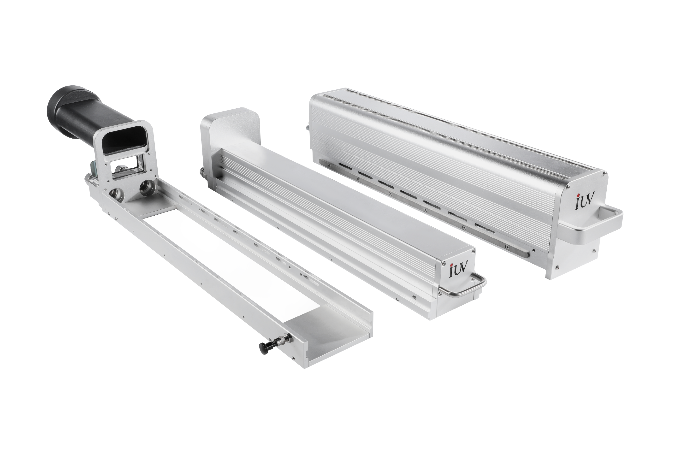
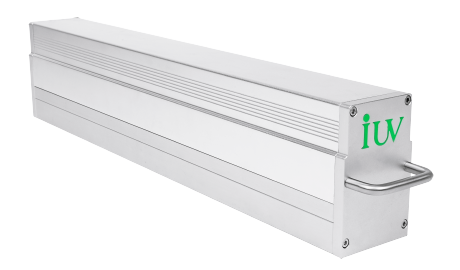
- LED Array Configuration: The way individual LEDs are arranged within a lamp head is critical. A well-designed array will feature closely spaced LEDs with optimized optical paths. This ensures that the light emitted from each diode overlaps effectively, creating a continuous and even light field rather than a series of discrete “hot spots.” In narrow-web and label printing, where web widths can vary, the lamp head must be designed to cover the full width consistently.
- Optics and Reflector Design: The integration of specialized optics, such as lenses and reflectors, plays a vital role. These components are engineered to collimate and direct the light emitted by the LEDs, focusing it onto the substrate with minimal divergence. Advanced reflector designs minimize light loss and ensure that the irradiance remains consistent from the center to the edges of the illuminated area. For flexographic and offset printing applications, the precise focus and uniformity of the light beam are essential for sharp details and solid ink coverage.
- Cooling Systems: The Unsung Hero: LEDs, while generating less heat than traditional lamps, still produce thermal energy. This heat can cause the LEDs themselves to degrade in performance and lifespan, and more importantly, it can lead to thermal lensing effects. Uneven cooling can cause LEDs to operate at different temperatures, affecting their light output and spectral characteristics. Robust and uniform cooling systems are therefore essential for maintaining consistent LED performance and, consequently, uniform irradiance across the lamp. Many systems employ advanced liquid cooling or specially designed airflow to ensure even temperature distribution.
Substrate and Ink Interaction: Beyond the Lamp
While the LED UV curing system is the primary driver of light delivery, interactions with the substrate and the ink formulation also significantly influence curing uniformity.
- Substrate Reflectivity and Absorption: Different substrates (paper, film, foil) possess varying degrees of reflectivity and absorption characteristics. Highly reflective substrates can bounce UV light away, reducing the effective dose reaching the ink. Conversely, some substrates may absorb UV light, diminishing the energy available for curing. Understanding these properties helps in selecting the appropriate lamp power and exposure time. For label applications, particularly those involving transparent films or metallic foils, optimizing the LED output is crucial.
- Ink Formulation and Pigmentation: The formulation of UV-curable inks is paramount. Pigment types and concentrations, as well as the photoinitiator package, all influence how readily the ink cures under UV light. Highly pigmented inks, especially those with opaque pigments like titanium dioxide, can block UV light from penetrating to the lower layers of the ink film. This can lead to surface cure while the underlying ink remains uncured. Formulators work closely with press manufacturers to develop inks that are both vibrant and easily curable with LED systems. In flexographic and offset printing, ensuring adequate photoinitiator concentration and optimizing pigment dispersion are key to achieving through-cure.
Maintaining Uniformity in Production: Practical Considerations
Beyond the initial design and engineering, maintaining uniform curing performance in a production environment requires diligent practices.
- Lamp Cleaning and Maintenance: Dust, ink residues, and other contaminants on the LED emitters or optical surfaces can scatter light, reduce output, and create non-uniform illumination. Regular cleaning according to manufacturer recommendations is vital.
- Consistent Web Speed: The speed at which the substrate travels through the curing zone directly affects the exposure dose. Maintaining a stable and consistent web speed is non-negotiable for uniform curing. Fluctuations in speed can lead to under-curing or over-curing in different sections of the print.
- Monitoring and Measurement: Implementing systems for monitoring irradiance levels and, if possible, integrating inline measurement tools can provide real-time feedback on curing performance. This allows for immediate adjustments to lamp power or web speed if deviations are detected.
The Future of Uniform LED UV Curing
The ongoing evolution of LED technology, coupled with advancements in optical engineering and ink formulations, continues to push the boundaries of uniform curing. Newer LED arrays offer even tighter wavelength control and higher power densities. Sophisticated optical designs are further refining light distribution. For printers in the label, flexographic, offset, and narrow-web sectors, embracing these technical advancements and understanding the core principles behind uniform LED UV curing is key to unlocking unparalleled print quality, efficiency, and consistency. The pursuit of perfect uniformity is a continuous journey, driven by innovation and a deep appreciation for the science of light and chemistry.