<!-- Meta Pixel Code --> <!-- 结束元像素代码 -->

The Impact of UV Curing Systems on Flexo Printing Ink Adhesion

The Impact of UV Curing Systems on Flexo Printing Ink Adhesion

Flexographic printing, often called flexo, is a versatile printing method. It uses flexible relief plates to transfer ink to a substrate. Flexo is common for printing on packaging, labels, and newspapers. The quality of the print depends heavily on ink adhesion. This means how well the ink sticks to the surface it’s printed on. Poor adhesion can lead to smudging, fading, and overall product failure.

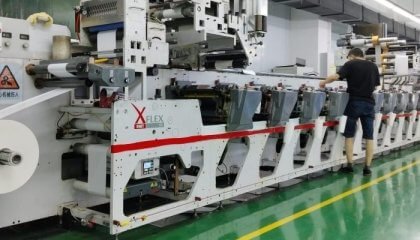
Traditional drying methods for flexo inks often involve heat or evaporation. However, these methods can be slow and may not always provide optimal adhesion. This is where UV curing systems come into play. UV curing uses ultraviolet light to instantly dry, or cure, inks. This process has revolutionized many aspects of printing, especially for narrow-web applications like label printing.

Understanding UV Curing Technology

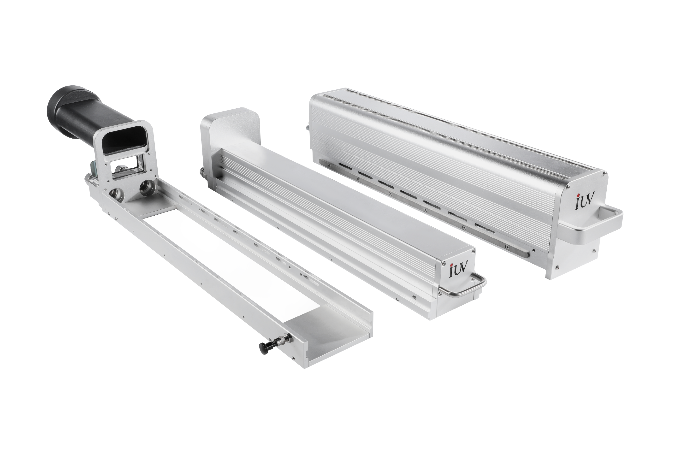
UV curing is a photochemical process. When UV light hits specially formulated inks, it initiates a rapid chemical reaction. This reaction causes the ink to polymerize, forming a solid, durable film. The key components are UV lamps (traditional mercury lamps or modern LED UV systems), UV-curable inks, and the substrate.

There are two main types of UV curing systems: traditional mercury vapor lamps and LED UV systems. Mercury lamps emit UV light across a broad spectrum. They are powerful and have been the industry standard for a long time. However, they consume a lot of energy, generate significant heat, and have a shorter lifespan.

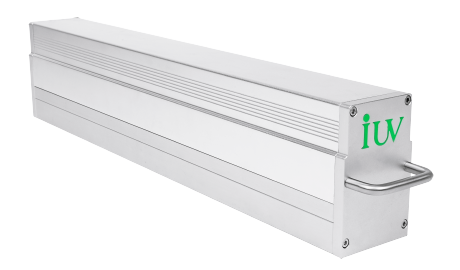
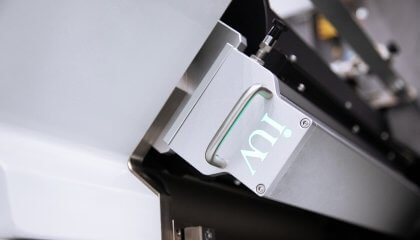
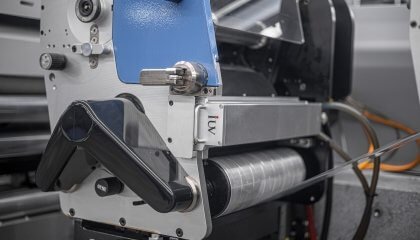
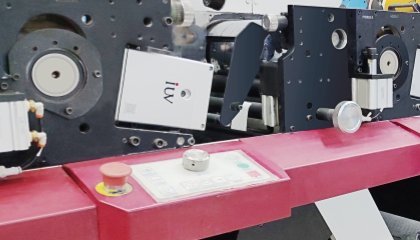
LED UV systems, on the other hand, use light-emitting diodes to produce UV light. They emit light at specific wavelengths, which can be tailored to match the photoinitiators in the ink. LED UV offers several advantages: lower energy consumption, significantly less heat output, longer lifespan, and instant on/off capabilities. This last point is particularly beneficial for preventing premature curing and reducing energy waste.

The Impact on Ink Adhesion

The way UV curing affects ink adhesion is multifaceted. Firstly, the rapid polymerization process creates a strong, cross-linked ink film. This chemical bonding to the substrate is often stronger than what can be achieved with solvent-based inks that rely on evaporation.

For flexographic printing, especially in narrow-web label applications, achieving excellent adhesion is paramount. Labels are often exposed to harsh environments, including abrasion, chemicals, and varying temperatures. UV-cured inks provide a robust solution to these challenges. The immediate solidification of the ink prevents it from being absorbed too deeply into porous substrates, allowing the ink to form a more cohesive layer on the surface.

Challenges and Considerations in Flexo Printing

Achieving optimal adhesion with UV inks in flexo printing isn’t automatic. Several factors need careful consideration:

  • Ink Formulation: UV-curable inks contain monomers, oligomers, photoinitiators, pigments, and additives. The choice of these components directly influences adhesion. For difficult-to-print substrates, such as certain plastics used in packaging, specialized ink formulations are required. These often contain adhesion promoters.
  • Substrate Surface Energy: Adhesion is fundamentally about how well the ink wets the substrate. This is related to surface energy. Low surface energy substrates (like polyethylene and polypropylene films) are more challenging. Primers or corona treatment can increase the surface energy, making it more receptive to ink. UV curing systems, particularly when paired with the right ink, can overcome some of these challenges.
  • Curing Dose and Wavelength: The amount of UV energy delivered (dose) and the specific wavelengths used are critical. Insufficient UV energy will result in under-curing, leading to poor adhesion and rub resistance. Over-curing can sometimes make the ink brittle, potentially affecting adhesion over time or under stress. LED UV systems offer precise control over wavelength and intensity, allowing for optimized curing for specific ink chemistries and substrates. This precision is a significant advantage for consistent adhesion.
  • Print Speed: In high-speed flexo printing, the ink needs to cure almost instantaneously. The efficiency of the UV curing system directly impacts the achievable print speed while maintaining good adhesion. Faster curing means faster production, but it must not compromise the ink’s ability to bond effectively.
  • Pressroom Environment: Factors like temperature and humidity can influence ink performance and curing. While UV curing is less affected by humidity than some other technologies, maintaining a stable environment is always beneficial for consistent results.

The Advantages of LED UV in Narrow-Web Flexo

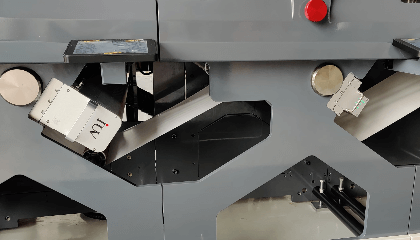
Narrow-web printing, the domain of label and flexible packaging production, has greatly benefited from LED UV technology. Here’s why:

  • Reduced Heat: Conventional UV lamps generate a lot of heat. This can cause heat-sensitive substrates, like thin plastic films common in labels, to shrink or deform. LED UV systems emit much less heat, preserving substrate integrity and enabling printing on a wider range of materials. This, in turn, supports better adhesion by maintaining the substrate’s properties.
  • Energy Efficiency: LED UV systems are significantly more energy-efficient than mercury lamps. This translates to lower operating costs, which is a major consideration for label printers.
  • Instant On/Off: Unlike mercury lamps that require warm-up and cool-down periods, LEDs turn on and off instantly. This means no wasted energy when the press is stopped or when running at lower speeds. It also reduces the risk of premature ink curing on the anilox roll or plate, which can negatively impact ink transfer and subsequent adhesion.
  • Consistent Output: LEDs provide a stable UV output throughout their lifespan, unlike mercury lamps which degrade over time. This consistency is crucial for reliable ink curing and predictable adhesion performance.
  • Environmental Benefits: With no mercury content and lower energy consumption, LED UV systems are a more environmentally friendly choice.

Improving Adhesion with Modern UV Systems

For label printers using flexo, integrating modern UV curing systems, especially LED UV, is a strategic move. It’s not just about faster drying; it’s about achieving superior print quality and durability.

When selecting UV-curable inks and systems for flexo, it is important to work with ink manufacturers who understand the substrate and the intended application. They can recommend inks with specific adhesion promoters. The choice of anilox rolls and anilox engraving also plays a role in ink transfer, which indirectly affects how the ink lays down and adheres.

The advanced control offered by LED UV curing systems allows for fine-tuning the UV dose. This precision helps to ensure that the ink is fully cured, leading to the strongest possible bond with the substrate. This is particularly vital for products that will undergo significant post-press processing or face demanding end-use conditions.

In conclusion, UV curing systems have a profound positive impact on flexo printing ink adhesion. They enable the creation of durable, high-quality prints on a wide variety of substrates. The ongoing advancements in LED UV technology continue to push the boundaries of what’s possible in narrow-web flexographic printing, offering printers enhanced control, efficiency, and superior adhesion performance.

Contact IUV Curing Experts

滚动至顶部