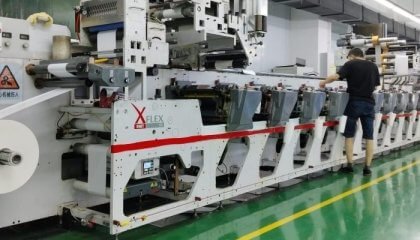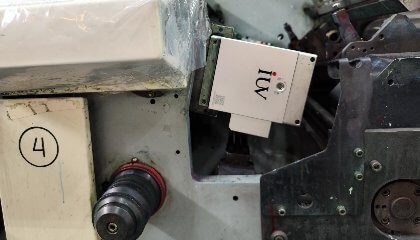
The modern label conversion landscape demands unprecedented versatility. Converters no longer specialize in just one material. A single production floor might handle pressure-sensitive paper, heat-sensitive shrink sleeves, and metallic foils within the same shift. This diversity places a massive burden on the curing stage of the printing press. Whether utilizing narrow-web flexography or high-end offset processes, the choice of UV curing technology dictates the final product’s durability, adhesion, and aesthetic quality.
The Shift Toward Multi-Substrate Flexibility
Label printing has evolved beyond simple identification. Today, labels function as functional components of packaging. Narrow-web converters face a complex matrix of substrates including PE, PP, PET, and various metallized films. Each material reacts differently to thermal loads and UV radiation.
Traditional mercury arc lamps served the industry for decades. However, the rise of thin-film substrates has exposed their primary weakness: infrared heat. Excessive heat causes thin films to stretch, warp, or lose register. This is where modern UV curing systems, specifically UV LED, have transformed the technical capabilities of the press room.
Technical Mechanics of UV Curing in Label Printing
UV curing is a photochemical process rather than a drying process. When UV ink is exposed to specific wavelengths, photoinitiators within the ink absorb energy and trigger a chain reaction. This polymerization converts liquid ink into a solid film almost instantaneously.
In narrow-web applications, the efficiency of this reaction depends on two factors: irradiance (intensity) and energy density (dose). Irradiance refers to the peak power arriving at the surface. Energy density represents the total energy accumulated during the exposure time. For multi-substrate jobs, balancing these two factors is essential for ensuring surface cure and deep-layer adhesion.
UV LED vs. Conventional Mercury Arc Systems
Thermal Management
Mercury lamps emit a broad spectrum of light, including a significant amount of infrared (IR) radiation. This IR energy translates directly into heat on the substrate. For paper labels, this is manageable. For 20-micron shrink films, it is catastrophic.
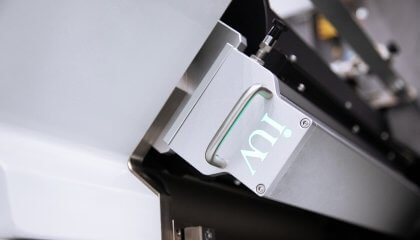
UV LED systems emit a narrow band of UV light, typically at 365nm, 385nm, or 395nm. Because they lack the IR component, the “cold cure” of LED allows converters to run thinner, cheaper films without the risk of melting or distortion.
Wavelength Consistency
Mercury lamps degrade over time. Their spectral output shifts as the bulb ages, leading to inconsistent curing results. UV LED systems maintain a consistent output for over 20,000 hours of operation. For high-end offset printing, where ink film thickness is minimal and precision is paramount, this stability ensures color consistency across long runs.
Instant On/Off Capabilities
Production downtime is a profit killer. Mercury lamps require warm-up and cool-down periods. Shutter systems are necessary to protect the web during press stops. UV LEDs provide instant-on/off functionality. This reduces energy consumption and eliminates the risk of burning the web during an emergency stop.
Flexographic Printing Requirements
Flexography remains the workhorse of the label industry. UV flexo inks are characterized by high pigment loading. Curing these inks requires high-intensity UV output to penetrate the ink layer and reach the substrate interface.
When running multi-substrate jobs on a flexo press, oxygen inhibition is a common technical hurdle. Oxygen can interfere with the polymerization process at the very surface of the ink, leaving a “tacky” finish. Advanced UV systems address this by increasing the irradiance or using nitrogen inertion. For most label applications, high-power LED arrays provide enough energy to overcome inhibition without extra gases.
Narrow-Web Offset Integration
Narrow-web offset printing is often chosen for high-end wine and cosmetic labels. The ink film in offset is significantly thinner than in flexo. This makes the ink more susceptible to surface curing issues but easier to penetrate.
The challenge in offset curing for multi-substrate jobs is the ink-water balance. Traditional UV lamps can heat the chemistry on the plate, leading to emulsification. UV LED systems keep the entire press environment cooler. This stability allows for sharper dots and better tonal reproduction on non-porous synthetic substrates.
Substrate-Specific Curing Challenges
Synthetic Films (PE and PP)
Non-porous films have low surface energy. Adhesion is the primary concern here. A UV system must provide enough energy to “anchor” the ink. If the cure is too fast and too intense, the ink film can become brittle and flake off when the label is flexed. If it is too slow, the ink may remain mobile, leading to set-off in the rewind roll.
Metallic Foils and Laminates
Reflective surfaces change the physics of the curing chamber. UV light bounces off the foil, potentially doubling the exposure of the ink. While this sounds beneficial, it can lead to “over-curing.” Over-cured ink loses its flexibility and may crack during the die-cutting process. Modern UV systems allow for precise dimming (0-100%) to match the specific reflective properties of the substrate.
Thermal Paper
Direct thermal labels are sensitive to heat. Standard UV curing often triggers the thermal chemistry, turning the label black. LED UV is the only viable solution for high-speed printing on direct thermal stocks without compromising the substrate’s integrity.
Measuring and Monitoring Cure Quality
“Dry to the touch” is not a technical measurement. Professional engineers utilize several methods to verify cure integrity on multi-substrate jobs:
- Tape Test: Assessing the mechanical bond between ink and substrate.
- Thumb Twist: Checking for deep-layer polymerization.
- Radiometers: Measuring actual millijoules (mJ/cm²) hitting the web.
- Chemical Resistance: Using MEK or alcohol rubs to test the cross-linking density of the cured ink.
Consistent monitoring is vital. As press speeds increase, the time the ink spends under the UV lamp decreases. The system must automatically scale its power output relative to the press speed to maintain a constant energy dose.
Operational ROI and Future-Proofing
The transition to advanced UV curing is an economic decision as much as a technical one. LED systems reduce power consumption by up to 50% to 70% compared to mercury lamps. Furthermore, the elimination of ozone extraction systems simplifies press installation and reduces HVAC costs.
For a converter handling multi-substrate jobs, the ability to switch from a 60-micron paper job to a 25-micron film job without changing lamp settings or worrying about heat distortion is a massive competitive advantage. It reduces setup waste and increases the range of jobs a single press can handle.
Hybrid Systems: The Transitional Step
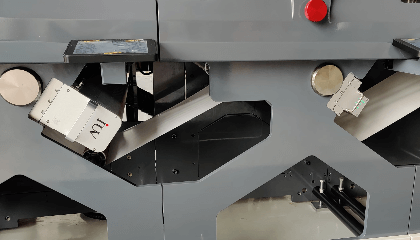
Some converters opt for hybrid curing systems. These setups allow the use of both mercury arc and LED cassettes in the same print station. This flexibility is useful when transitioning an entire ink inventory from mercury-compatible to LED-compatible formulations. However, the industry trend is moving decisively toward dedicated LED solutions due to the simplified maintenance and superior performance on films.
Engineering the Perfect Cure
Selecting a UV curing system requires looking at the entire print process. You must consider the ink chemistry, the press speed, and the most sensitive substrate in your portfolio. A system that works for paper might fail on shrink sleeve PETG.
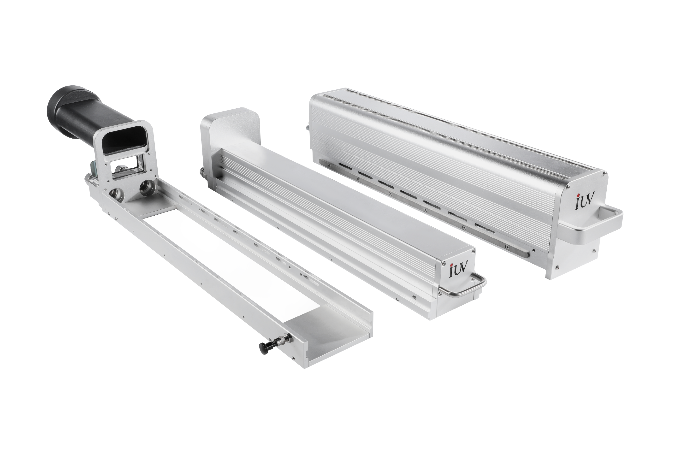
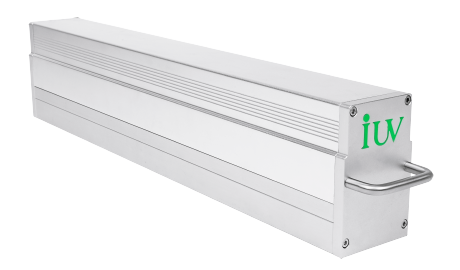
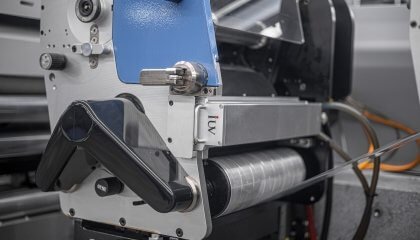
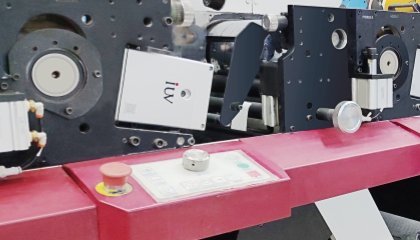
A successful technical setup involves high-peak irradiance for surface cure and a calculated energy dose for adhesion. For narrow-web applications, the integration of compact, water-cooled LED arrays has proven to be the most reliable method for achieving this balance. These systems provide the thermal stability needed for multi-substrate versatility while maintaining the high speeds required for modern production targets.
The evolution of UV technology has removed the “heat barrier” in label printing. Converters can now focus on pushing the boundaries of label design and material science, confident that their curing systems can keep up with the demands of a multi-substrate market. In the high-stakes world of narrow-web printing, the curing system is no longer just a component; it is the heart of the production line.