<!-- Meta Pixel Code --> <!-- 结束元像素代码 -->

Technical Review of UV Curing Solutions for Specialty Label Materials

Technical Review of UV Curing Solutions for Specialty Label Materials

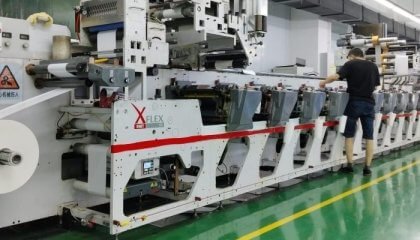
The label printing industry faces a continuous shift toward complex, high-functional substrates. Brand owners now demand specialty materials like thin-gauge films, metallic foils, and clear-on-clear stocks to enhance shelf appeal. For the printer, these materials introduce significant challenges regarding ink adhesion, thermal stability, and curing speeds. Achieving a high-quality finish on a narrow-web press requires more than just high-speed printing; it demands a sophisticated UV curing strategy.

This technical review explores the mechanics of UV and LED curing systems within flexographic and offset environments. We will examine how these technologies interact with specialty substrates and the parameters required for optimal polymerization.

The Physics of UV Polymerization in Narrow-Web Printing

UV curing is a photochemical process rather than a thermal drying mechanism. In specialty label printing, UV-curable inks consist of monomers, oligomers, and photoinitiators. When exposed to specific wavelengths of ultraviolet light, the photoinitiators absorb energy and release free radicals. These radicals trigger a chain reaction, transforming the liquid ink into a solid polymer film almost instantaneously.

In narrow-web applications, the speed of this reaction is critical. Modern presses often run at speeds exceeding 150 meters per minute. If the curing system fails to provide sufficient energy, the ink remains tacky, leading to set-off or smearing during rewinding. Conversely, excessive energy can cause the substrate to become brittle or yellow. Finding the “curing window” is the primary goal for any process engineer working with specialty materials.

Mercury Vapor vs. UV LED: A Comparative Analysis

For decades, medium-pressure mercury vapor lamps were the industry standard. These lamps emit a broad spectrum of UV light, ranging from UVC (200-280nm) to UVA (315-400nm). This broad spectrum is effective because UVC handles surface cure (tack-free finish), while UVA penetrates deeper into the ink layer to ensure adhesion to the substrate.

However, mercury lamps generate significant infrared (IR) heat. For specialty materials like PE (polyethylene) or heat-sensitive shrink sleeves, this heat is a major liability. Excessive IR can cause the film to stretch or warp, leading to registration issues.

UV LED technology has redefined this landscape. LED units emit a narrow band of UV light, typically centered around 385nm or 395nm. Because LEDs do not emit IR radiation, the substrate remains cool. This allows printers to use thinner, cheaper films without the risk of thermal deformation. Furthermore, LEDs offer instant on-off capabilities and consistent output over a 20,000-hour lifespan, whereas mercury bulbs degrade significantly after 1,000 hours.

Challenges with Specialty Label Substrates

Specialty materials present unique surface energy profiles. Materials like BOPP (Biaxially Oriented Polypropylene) or PET (Polyethylene Terephthalate) are non-porous and often chemically inert. Without proper curing and surface treatment, ink adhesion is difficult to maintain.

Heat-Sensitive Films

Thin films used in the beverage industry are prone to shrinking. When using traditional UV lamps, water-cooled chill rolls are necessary to dissipate heat. UV LED systems often eliminate the need for heavy-duty chilling, simplifying the press configuration.

Metallic Foils and Reflective Stocks

Printing on metallic foils creates a “shadowing” effect. The reflective surface can bounce UV light back toward the print head, potentially curing ink on the plate or in the anilox cells. Specialized shielding and precise lamp positioning are required to prevent this while ensuring the ink on the foil receives a full dose of UV energy.

Clear-on-Clear Labels

These labels require high transparency and no “silvering.” Any micro-bubbles or incomplete curing within the adhesive or ink layers will be visible. The curing system must provide a very uniform intensity across the entire web width to ensure visual consistency.

UV Curing in Flexographic Applications

Flexography remains the dominant process for narrow-web labels. The ink film thickness in flexo is relatively consistent, determined by the anilox roll volume. However, specialty inks—such as high-opacity whites or tactile varnishes—require intense UV energy.

High-opacity whites contain high concentrations of TiO2 (Titanium Dioxide). This pigment absorbs UV light, making it difficult for the light to reach the bottom of the ink layer. Engineers must use high-irradiance LED systems or “boosted” mercury lamps to ensure through-curing. If the base layer is not cured properly, the subsequent CMYK layers will suffer from poor inter-coat adhesion.

Offset Printing and UV Integration

Offset printing is often chosen for specialty labels requiring photographic quality and fine vignettes. The ink film in offset is much thinner than in flexo, but the chemistry is more complex. UV offset inks are highly viscous and sensitive to the balance between fountain solution and ink.

In a narrow-web offset press, the curing stations are usually positioned after each print unit. Because offset inks have lower photoinitiator concentrations compared to flexo inks, they require a precise wavelength match. Many specialty labels printed via offset use UV LED to prevent the high-tack inks from picking the surface of the delicate substrate. The lack of heat from the LED also helps maintain the delicate ink-water balance, which is temperature-dependent.

Technical Parameters: Irradiance vs. Dose

Understanding the difference between irradiance and dose is fundamental for SEO-focused technical documentation and practical shop-floor application.

  1. Irradiance (Intensity): Measured in W/cm², this is the peak power of the UV light hitting the surface. High irradiance is necessary to initiate the polymerization reaction and overcome oxygen inhibition.
  2. Dose (Energy Density): Measured in J/cm², this represents the total energy delivered over time. It is a function of the lamp’s power and the press speed.

For specialty films, the goal is to maximize irradiance while controlling the dose. High-intensity LED chips allow for rapid initiation at the surface, while the speed of the press ensures the total heat (dose) remains within the substrate’s tolerance.

Oxygen Inhibition and Surface Cure

A common problem in UV curing is oxygen inhibition. Atmospheric oxygen reacts with the free radicals in the ink faster than the monomers can. This often leaves a “greasy” or tacky layer on the surface of the label, even if the ink underneath is solid.

UVC light from mercury lamps traditionally solved this because shorter wavelengths are more effective at overcoming oxygen inhibition. Since LEDs lack UVC, ink manufacturers have reformulated specialty inks with specific photoinitiator blends that react more efficiently at 395nm. In some high-end applications, nitrogen inerting is used. By flooding the curing zone with nitrogen, oxygen is displaced, allowing for a perfect surface cure at lower power levels.

Maintenance and Process Control

To maintain quality on specialty materials, the curing system must be monitored constantly. UV sensors should be used to verify that the output hasn’t dropped due to aged bulbs or dirty LED windows. For mercury systems, reflectors must be cleaned or replaced regularly. A dull reflector can lose up to 50% of its curing efficiency, leading to catastrophic adhesion failure on filmic stocks.

For LED systems, the cooling manifold is the heart of the unit. Whether water-cooled or air-cooled, any fluctuation in the LED chip temperature will shift the wavelength output and reduce intensity. Modern “smart” curing systems now integrate directly with the press PLC, automatically adjusting power based on the web speed to ensure a consistent dose.

Operational Benefits of Transitioning to LED

The shift toward UV LED for specialty label materials is driven by more than just substrate compatibility. From a mechanical engineering perspective, the reliability of the system is a major factor.

  • No Warm-up Time: LEDs reach full power instantly. This reduces waste during press startups, which is vital when running expensive specialty foils.
  • Reduced Energy Consumption: LED systems typically use 50% to 70% less electricity than mercury systems.
  • Environmental Compliance: LEDs are ozone-free and contain no mercury, aligning with the sustainability goals of many global brands.

Conclusion of Technical Factors

Specialty label materials require a rigorous approach to UV curing. Whether utilizing flexo or offset processes, the engineer must balance the chemical requirements of the ink with the physical limitations of the substrate. The transition toward LED curing solutions offers a path to higher speeds and lower waste, particularly on heat-sensitive films. By focusing on the relationship between wavelength, irradiance, and substrate surface energy, printers can achieve the high-performance results demanded by today’s market. Consistency in the curing process ensures that the final product meets both aesthetic and functional specifications, providing a reliable solution for the most challenging label applications.

Contact IUV Curing Experts

滚动至顶部