<!-- Meta Pixel Code --> <!-- 结束元像素代码 -->

Review of High-Power LED UV Curing for Dense Ink Coverage Applications

Review of High-Power LED UV Curing for Dense Ink Coverage Applications

The printing industry faces constant pressure to increase production speeds while maintaining flawless print quality. One of the most significant technical hurdles in this pursuit is achieving complete polymerization in dense ink coverage applications. Whether printing deep blacks, opaque whites, or high-build varnishes, the ability to cure through the entire ink film thickness is vital. High-power LED UV curing systems have emerged as the definitive solution for these challenges in label printing, flexography, and narrow-web offset applications.

The Challenge of Dense Ink Coverage

Dense ink coverage refers to high pigment loading or high-viscosity coatings that present a physical barrier to UV light. In traditional printing, heavy ink layers often suffer from “surface dry but bottom wet” syndrome. This occurs when the top layer of the ink absorbs most of the UV energy, leaving the ink near the substrate interface uncured.

Uncured ink leads to several production failures. Adhesion loss, picking, and ink migration are common issues. In food packaging, uncured monomers pose a significant risk of contamination. High-power LED UV systems address this by delivering concentrated irradiance that penetrates deeper into the ink film than conventional mercury arc lamps.

Physics of LED UV Penetration

The effectiveness of LED UV in dense applications stems from its monochromatic output. Most industrial LED curing systems operate at a peak wavelength of 385nm or 395nm. These longer UVA wavelengths have a distinct advantage over the broad-spectrum output of mercury lamps.

Shorter UVC wavelengths (200-280nm) are excellent for surface cure but are easily absorbed or scattered by pigments. In contrast, the 395nm wavelength from a high-power LED array penetrates through the pigment particles to reach the bottom of the ink layer. This ensures a uniform cure from the substrate up, creating a stronger mechanical bond and better overall film integrity.

High Irradiance vs. Total Energy Density

In the context of dense ink coverage, we must distinguish between irradiance (W/cm²) and energy density (J/cm²). Irradiance is the “brightness” or intensity of the UV light at the surface. Energy density, or dose, is the total amount of energy delivered over time.

For high-speed narrow-web flexo or label printing, high irradiance is the critical factor. You need enough “punch” to initiate the chemical reaction instantaneously as the web passes the lamp. High-power LED systems now regularly exceed 20W/cm². This intensity allows the photons to drive deep into the ink matrix, overcoming the optical density of heavy blacks or metallic inks that would otherwise shield the photoinitiators.

Optimization in Flexographic and Label Printing

Flexo printing relies on anilox rollers to deliver precise ink volumes. When jobs require high-density solids, printers often use anilox rolls with higher cell volumes. This results in a thicker wet ink film.

LED UV systems provide a stable, consistent output that does not degrade over thousands of hours. This consistency is a game-changer for label converters. Unlike mercury lamps, which lose intensity as they age, LED arrays maintain their peak irradiance. This means the curing parameters set at the beginning of a long run remain effective until the end.

In label printing on heat-sensitive films like PE or BOPP, high-power LEDs offer another advantage. They emit very little infrared radiation. This prevents the substrate from stretching or distorting, allowing for better registration in multi-color dense coverage jobs.

Precision in Offset and Narrow-Web Applications

Narrow-web offset printing often involves complex ink formulations and multi-process lines. When printing high-density images on non-porous substrates, the curing window is narrow. LED UV curing provides the high peak power necessary to cure offset inks which are generally more viscous and highly pigmented than flexo inks.

The instant on/off capability of LED systems is particularly beneficial in offset workflows. There is no warm-up time required. Printers can stop and start the press without worrying about “shutter” issues or heat build-up on the plates. For dense coverage applications, this means consistent curing even during ramp-up and ramp-down speeds, reducing waste significantly.

Overcoming Oxygen Inhibition

A common concern with UV curing is oxygen inhibition, where atmospheric oxygen reacts with the radicals in the ink, preventing the surface from hardening. This is particularly problematic with thin, dense ink layers.

Modern high-power LED systems compensate for this through sheer intensity. By flooding the ink surface with a massive amount of photons in a fraction of a second, the polymerization rate outpaces the rate of oxygen diffusion. This results in a “dry-to-touch” surface finish even at high production speeds. Some advanced setups also use nitrogen inerting, but for most standard label and narrow-web applications, high-power LED irradiance alone is sufficient.

Chemistry and Photoinitiator Matching

The transition to high-power LED curing requires a shift in ink chemistry. Traditional UV inks are designed for the multi-peak spectrum of mercury lamps. LED-optimized inks contain photoinitiators specifically tuned to the 395nm range.

When dealing with dense coverage, the synergy between the ink and the LED source is paramount. High-power LEDs allow for the use of “deep-cure” photoinitiators that are highly reactive to UVA light. This combination ensures that even at high speeds, the polymerization is complete throughout the entire cross-section of the ink film.

Operational Efficiency and ROI

Beyond the technical curing advantages, high-power LED systems offer substantial economic benefits. The energy consumption of an LED system is typically 50% to 70% lower than that of a mercury lamp setup. For a narrow-web printer running 24/7, these savings are immense.

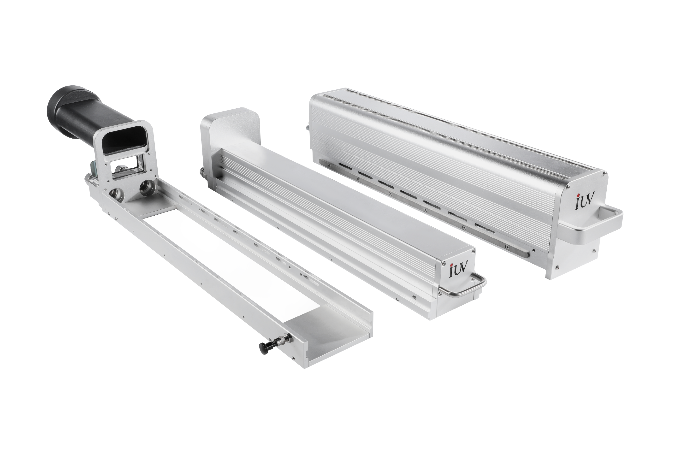
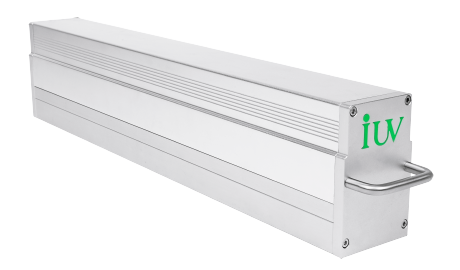
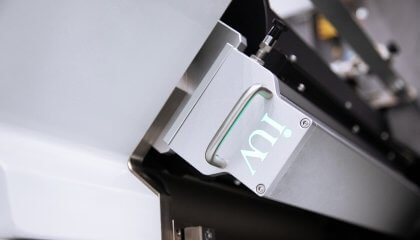
Maintenance is also simplified. LED chips have a lifespan often exceeding 20,000 hours. There are no bulbs to change, no reflectors to polish, and no ozone extraction systems to maintain. For dense coverage applications that previously required multiple mercury lamps to achieve a full cure, a single high-power LED bar can often do the job, reducing the footprint of the curing station.

Managing Heat and Substrate Stability

While LEDs are “cold” light sources in terms of IR radiation, the LED chips themselves generate heat that must be managed. High-power systems use either water-cooling or advanced air-cooling to maintain the junction temperature of the LEDs.

In dense ink applications, keeping the substrate cool is a major advantage. Excessive heat from mercury lamps can cause the ink to “boil” or the substrate to curl, leading to poor stackability or finishing issues. LED systems provide the energy needed for curing without the thermal baggage, ensuring that the finished product lies flat and the dimensions remain stable.

Integrating LED UV into Existing Lines

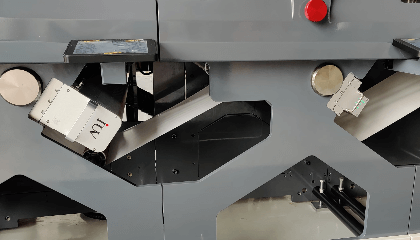
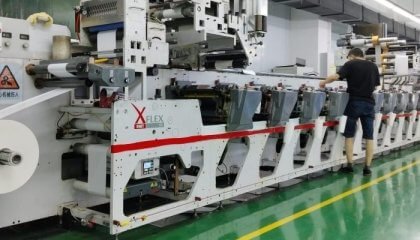
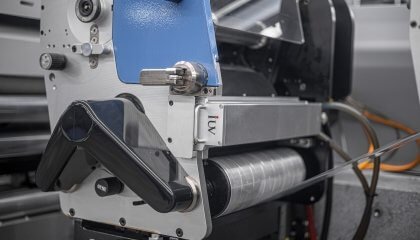
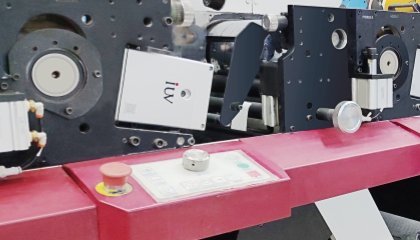
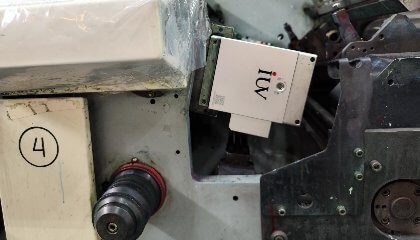
Retrofitting older narrow-web or flexo presses with high-power LED UV is a common strategy for improving performance on dense coverage jobs. The compact size of LED heads allows them to fit into tight spaces where bulky mercury lamp housings could not.

When upgrading, it is vital to match the cooling capacity and power supply to the requirements of the high-power LED array. An underpowered LED system will fail to cure dense blacks at high speeds, negating the benefits of the technology. However, a correctly specified high-power system will immediately allow for faster press speeds and improved scratch resistance on difficult substrates.

Future Trends in High-Power Curing

The development of “hybrid” systems that can toggle between different wavelengths or combine UV and LED is an area of growth. However, for the majority of dense ink coverage applications in the label and packaging sectors, the 395nm high-power LED remains the industry standard.

As LED efficiency continues to improve, we can expect even higher irradiance levels. This will push the boundaries of what is possible in narrow-web printing, allowing for even thicker coatings and faster production cycles. The move toward sustainable, mercury-free printing is no longer just an environmental choice; it is a technical necessity for high-performance print shops.

Summary of Benefits for Dense Ink Coverage

High-power LED UV curing has redefined the benchmarks for quality in dense ink applications. By providing deep-reaching UVA energy, it eliminates the risks associated with under-curing. Printers gain the ability to run darker, richer colors and thicker coatings on a wider variety of substrates.

The combination of energy efficiency, long-term stability, and superior penetration makes LED UV the logical choice for modern flexo, label, and narrow-web offset operations. As ink chemistry and LED hardware continue to evolve in tandem, the challenges of dense ink coverage will become increasingly manageable, leading to higher throughput and lower operational costs across the board.

Contact IUV Curing Experts

滚动至顶部