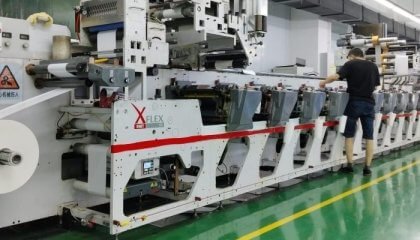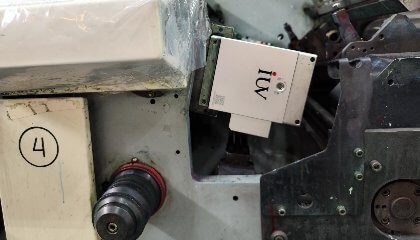
In narrow web flexographic printing, maintaining print quality across multi-color jobs can be challenging. One common issue that many printers face is inter-deck ink bleed, which occurs when inks from different printing decks mix or transfer undesirably onto each other, leading to color contamination, poor print definition, and overall poor quality. This is especially problematic in multi-color jobs where precision and consistency are essential.
A key contributing factor to inter-deck ink bleed is the inability to properly manage heat dissipation and the wavelength consistency of the curing system, especially in UV LED curing units. Understanding the relationship between heat management, UV LED curing, and ink behavior is crucial in preventing ink bleed and ensuring that prints meet the high standards of narrow web label printing.
This article will provide a comprehensive approach to preventing inter-deck ink bleed by focusing on managing heat dissipation and ensuring UV LED wavelength consistency in multi-color narrow web presses.
What Causes Inter-deck Ink Bleed?
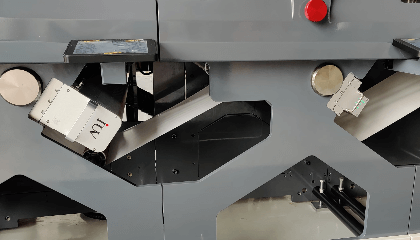
Inter-deck ink bleed typically occurs when the ink printed on one deck is not fully cured before passing through the next deck. In narrow web printing, where presses run at high speeds, insufficient curing can result in a tacky ink surface, leading to ink transfer from one color deck to another. This issue is particularly prominent in multi-color jobs, such as full-color labels, where precise registration and color accuracy are critical.
Several factors contribute to this problem:
- Inadequate Curing Between Decks
Each flexo press deck requires adequate time and curing energy to ensure the ink is fully polymerized. If curing does not occur at the right intensity, the ink remains soft and tacky, making it prone to smudging and inter-deck bleeding. - Overheating of Substrate
Excessive heat generated by UV curing lamps, particularly arc lamps, can cause substrates to warp, shrink, or deform. This can lead to inconsistent print quality, misregistration, and color contamination between decks. - Inconsistent Wavelengths from UV LED Lamps
In multi-color jobs, each ink color requires a specific curing wavelength to achieve optimal polymerization. If the UV LED curing system does not provide consistent wavelengths across all decks, inks may not cure properly, leading to inter-deck ink bleed.
Managing Heat Dissipation: Key to Preventing Ink Bleed
Heat dissipation is one of the most critical aspects of preventing inter-deck ink bleed. Both traditional mercury arc lamps and UV LED systems emit heat, but the impact on print quality is much more pronounced with traditional arc lamps due to their higher thermal output. The excessive heat from arc lamps can cause issues such as:
- Substrate Deformation: Overheating can cause thin substrates to shrink or curl, misaligning the print and leading to register issues.
- Ink Drying Time: Excessive heat can dry the ink too quickly or unevenly, leading to incomplete curing and increased tackiness.
- Inconsistent Curing Depth: Overheating the substrate can result in uneven ink curing, affecting print quality and leading to problems with adhesion.
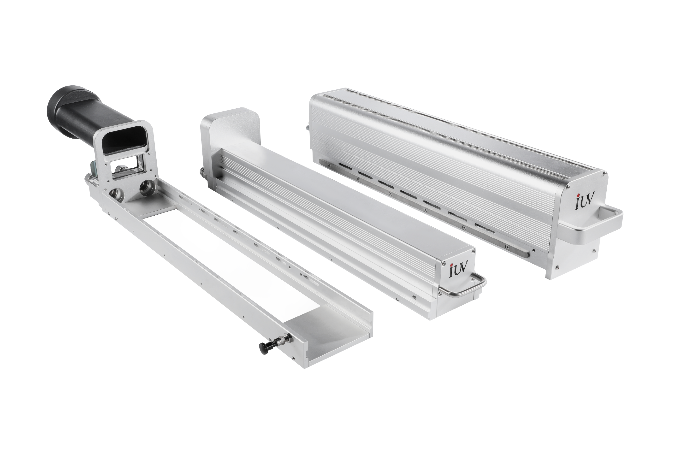
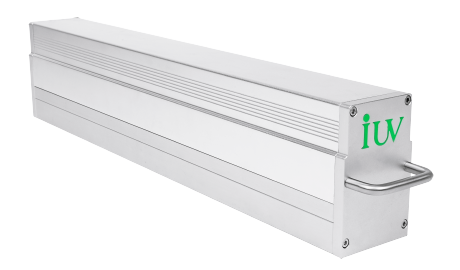
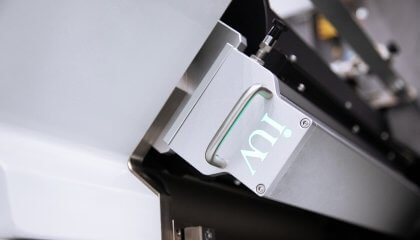
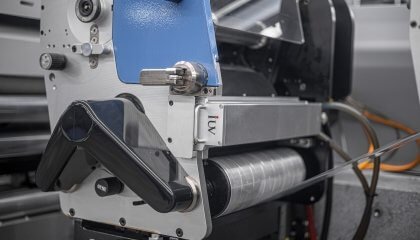
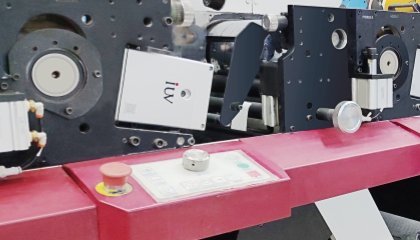
To manage heat dissipation effectively, modern narrow web presses are increasingly adopting UV LED curing systems. UV LEDs produce significantly less heat than traditional arc lamps, reducing the risk of substrate warping or distortion. This lower heat output also ensures that inks remain within the proper curing window, preventing both over- and under-curing.
UV LED Wavelength Consistency and Its Role in Ink Curing
In multi-color flexographic printing, one of the most critical elements of preventing ink bleed is ensuring consistent UV LED wavelengths across all decks. Each ink color requires a specific wavelength to cure properly. If the UV LEDs in different press decks emit inconsistent wavelengths or energy levels, inks will cure unevenly, leading to various printing issues, including inter-deck ink bleed.
- Wavelength Specificity for Ink Types
Different UV inks are formulated to cure at specific wavelengths. Standard LED systems often emit a range of wavelengths, but not all may be ideal for the ink being used. For example, a specific ink may require a wavelength of 395 nm for optimal curing. If the UV LEDs in the press emit a different wavelength, the ink may not fully cure, remaining tacky and prone to smearing. - Wavelength Drift in UV LED Lamps
Over time, the performance of UV LED lamps can degrade, leading to a drift in wavelength output. In multi-deck presses, this can result in uneven curing from one deck to the next, making it difficult to achieve uniform ink curing. The best UV LED systems for narrow web presses should feature consistent wavelength output across all decks, ensuring uniform curing at each stage of the printing process. - The Role of Gallium-Doped LEDs
Gallium-doped LED lamps, commonly used in higher-end flexo presses, provide more consistent and stable wavelengths. These lamps offer increased curing efficiency and better consistency, reducing the risk of wavelength-related curing problems. Gallium-doped LEDs are ideal for high-speed, multi-color printing, where maintaining ink consistency and preventing bleed is essential.
Best Practices for Preventing Inter-deck Ink Bleed
To prevent inter-deck ink bleed, there are several best practices that printers can implement:
1. Optimize Curing Energy Levels
The key to preventing ink bleed is ensuring that each ink layer is fully cured before the next layer is printed. Adjusting the UV LED intensity and exposure time is essential. For UV LED systems, operators should fine-tune the curing parameters to ensure that each deck provides sufficient energy for proper curing.
2. Monitor Ink Characteristics
The type of ink being used plays a significant role in curing performance. Ensure that the ink chemistry matches the UV LED system’s emission spectrum. Using LED-optimized inks will help achieve proper curing and reduce the risk of inter-deck ink bleed.
3. Ensure Substrate Compatibility
The choice of substrate can affect both curing and print quality. Ensure that the substrate is compatible with the UV LED curing system and can handle the curing energy without deforming. Thin films or heat-sensitive materials may require reduced UV LED intensity or additional cooling to maintain print quality.
4. Implement Proper Web Tension Control
Proper web tension throughout the printing press ensures that substrates remain aligned and do not shift between decks. This reduces the risk of misregistration, which can lead to ink bleeding and poor-quality prints.
5. Use Temperature Management Solutions
To prevent overheating, incorporate cooling systems into the press design. These systems can help manage the temperature of both the substrate and the ink during the curing process. Using UV LED lamps with lower thermal output can also minimize the risk of heat-related issues.
Conclusion: Mastering Ink Curing for Optimal Print Quality
Preventing inter-deck ink bleed is crucial for maintaining high-quality prints in narrow web flexographic printing. By carefully managing heat dissipation and ensuring consistent UV LED wavelength output across all decks, printers can prevent ink bleed, improve color fidelity, and achieve optimal curing.
Gallium-doped UV LED lamps offer a significant advantage in this process, providing more efficient curing with minimal heat output and consistent wavelength performance. By integrating these technologies and following best practices for curing energy levels, ink chemistry, and substrate management, printers can achieve superior print quality and enhance the efficiency of their multi-color narrow web presses.