<!-- Meta Pixel Code --> <!-- 结束元像素代码 -->

Overcoming Print Defects Using LED UV Curing Systems: A Technical Breakdown

Overcoming Print Defects Using LED UV Curing Systems A Technical Breakdown

Print defects can be a persistent headache for label printers. From sticky ink to poor adhesion, these issues can derail production, increase waste, and impact the final product’s quality. Fortunately, advancements in curing technology offer powerful solutions. LED UV curing systems, in particular, are revolutionizing how printers combat these common problems. This article explores how LED UV technology addresses prevalent print defects in label, flexographic, and offset printing applications.

Understanding Common Print Defects

Before diving into solutions, let’s identify the typical culprits that plague print shops. In narrow web label printing, flexography, and offset lithography, several defects frequently arise:

  • Blocking: This occurs when printed sheets or rolls stick together. It’s often caused by uncured ink or a coating that remains too soft. This is a major concern in stacking or rewinding operations.
  • Poor Adhesion: When ink or coatings don’t bond properly to the substrate, they can easily scratch or rub off. This is critical for label durability and brand integrity.
  • Set-off: Uncured ink from one surface transfers to the back of the next sheet or the surface of the next layer in a roll. This is a visual defect that can ruin prints.
  • Orange Peel/Cratering: These are surface imperfections where the ink or coating appears uneven, with small dimples or raised areas. They can result from poor ink flow or improper curing.
  • Washing Out/Color Fading: Colors can appear dull or faded, especially in areas that require vibrant hues. This can be linked to incomplete curing and pigment degradation.
  • Scuffing and Scratching: The printed image is easily damaged by abrasion. This is a direct indicator of insufficient curing, leaving the ink vulnerable.
  • Ink Migration: In food packaging, uncured ink components can migrate into the product. This is a significant food safety and regulatory issue.
  • Delamination: In multi-layer constructions, the layers separate. This can be due to poor adhesion between layers, often exacerbated by inadequate curing of intermediate coatings or inks.

The Mechanics of UV Curing

Traditional UV curing uses mercury vapor lamps. These lamps emit a broad spectrum of UV light, including heat-generating infrared radiation. While effective, they come with drawbacks: high energy consumption, short lamp life, ozone generation, and a warm-up period.

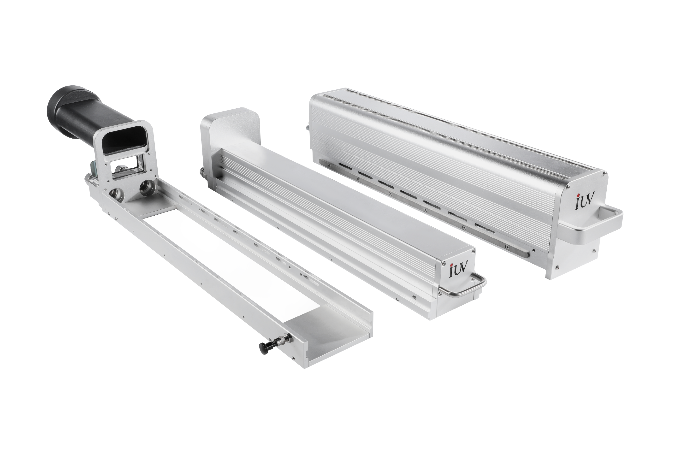
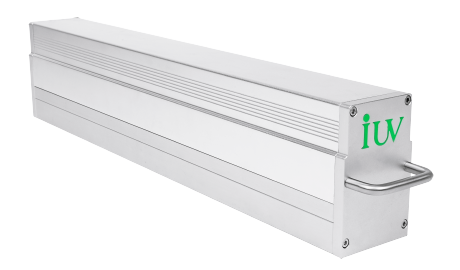
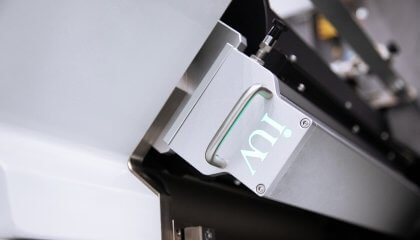
LED UV curing, on the other hand, utilizes light-emitting diodes. These diodes emit UV light at very specific wavelengths. This focused emission offers several advantages:

  • Energy Efficiency: LEDs consume significantly less power than mercury lamps.
  • Longer Lifespan: LED lamps can last for tens of thousands of hours, drastically reducing replacement costs.
  • Instant On/Off: No warm-up or cool-down period is needed, improving workflow and reducing energy waste.
  • Low Heat Emission: LEDs generate minimal heat, which is crucial for heat-sensitive substrates commonly used in label printing.
  • Specific Wavelengths: LEDs can be tuned to emit light at precise wavelengths that match the absorption peaks of UV-curable inks and coatings. This leads to more efficient and thorough curing.

How LED UV Curing Solves Print Defects

The precise nature of LED UV curing directly addresses many common print defects, particularly in demanding applications like narrow web flexo and offset printing for labels.

Combating Blocking and Set-off

Blocking and set-off are fundamentally issues of incomplete ink polymerization. When UV-curable inks and coatings are exposed to the correct UV light, photoinitiators within the formulation absorb the energy. This triggers a rapid chemical reaction that cross-links the monomers and oligomers, transforming the liquid ink into a solid, durable film.

LED UV systems excel here because they can deliver high-intensity UV light at wavelengths perfectly matched to the photoinitiators in modern UV inks. This ensures that the ink cures quickly and completely, even at high press speeds typical in narrow web flexo and offset printing. The focused energy minimizes heat buildup, preventing the ink from becoming tacky due to thermal effects. A fully cured ink film eliminates the tackiness that causes blocking and prevents ink transfer, thereby stopping set-off.

Enhancing Adhesion and Durability

Poor adhesion often stems from incomplete cross-linking or insufficient surface energy on the substrate. LED UV curing provides the consistent, high-intensity energy needed for thorough polymerization of the ink and coating. This creates a robust molecular network that bonds strongly to the substrate.

Furthermore, the low heat generated by LEDs is a significant advantage for sensitive substrates. Many label materials, like certain films and papers, can deform or lose their inherent adhesion properties when exposed to the high heat of mercury lamps. LED UV curing cures effectively without compromising the substrate’s integrity, leading to superior adhesion. This improved cure also directly translates to better scratch and scuff resistance, as the entire ink film is thoroughly polymerized.

Eliminating Orange Peel and Cratering

These surface defects can be linked to ink rheology, substrate interaction, and curing efficiency. While LED UV curing isn’t a direct fix for ink formulation issues, it plays a crucial role in ensuring the ink or coating cures properly and uniformly.

A consistent and intense LED UV light source promotes even polymerization across the entire printed surface. This helps to “lock in” the ink’s structure, preventing the formation of surface irregularities like orange peel or craters. For coatings applied over inks, proper curing of the ink layer is essential for the coating to lay down smoothly and cure evenly, which LED UV systems facilitate.

Restoring Color Vibrancy and Preventing Wash-out

Washing out and faded colors are often a symptom of an incomplete cure, where pigments are not fully encapsulated or bound within the cured polymer matrix. This can make the printed image more susceptible to abrasion and chemical attack, leading to a loss of color intensity over time.

The precise wavelengths and high intensity delivered by LED UV systems ensure that the photoinitiators are activated efficiently, leading to a complete cure. This fully encapsulates the pigments, protecting them and preserving the vibrancy and richness of the colors. The result is a print that maintains its intended appearance far longer.

Preventing Ink Migration and Delamination

For food packaging, ink migration is a critical concern. Uncured ink components can leach into food products, posing health risks. LED UV curing offers a powerful solution. The rapid and thorough curing process ensures that the ink is converted into an inert, stable polymer film. This significantly reduces the potential for migration. Regulatory compliance for food packaging often mandates specific testing for migration, and a well-executed LED UV cure is fundamental to passing these tests.

Delamination in multi-layer constructions is often an adhesion failure between layers. If an intermediate ink or coating layer is not fully cured, it can act as a weak point. LED UV curing provides the necessary energy for complete cure of each layer, ensuring strong inter-coat adhesion and preventing premature delamination. This is especially important for labels and packaging requiring barrier properties or complex laminations.

Considerations for Implementing LED UV Curing

Successfully integrating LED UV curing into your printing process requires careful planning:

  • Ink and Coating Formulation: Ensure your inks and coatings are specifically formulated for LED UV curing, matching the wavelengths of your chosen LED system.
  • Wavelength Selection: Different LED systems emit light at various wavelengths (e.g., 365nm, 395nm, 405nm). The choice depends on the photoinitiators in your consumables.
  • UV Irradiance: The intensity of UV light (measured in W/cm²) is critical. Higher irradiance typically leads to faster curing and more thorough polymerization.
  • Substrate Compatibility: While LEDs generate less heat, always confirm compatibility with your specific substrates, especially heat-sensitive materials.
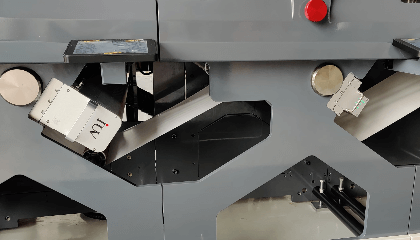
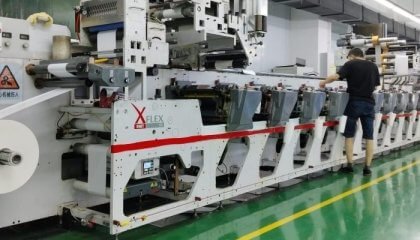
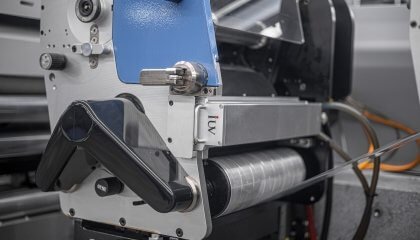
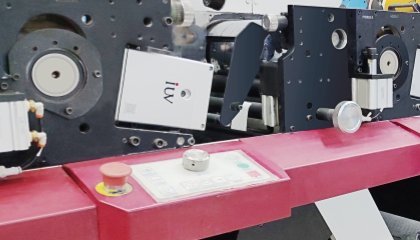
  • Press Integration: Proper placement and integration of LED UV units on your flexo or offset press are essential for optimal exposure.
  • Maintenance: While LED systems are low maintenance, regular cleaning of the emitters and monitoring of their performance are still recommended.

The Future of Print Quality

LED UV curing technology represents a significant leap forward in print defect mitigation. Its efficiency, consistency, and ability to deliver precise UV energy make it an indispensable tool for label printers, flexographic operations, and offset lithographers seeking to produce high-quality, durable, and compliant printed products. By understanding the principles of LED UV curing and its direct impact on common print defects, you can effectively enhance your production quality, reduce waste, and meet the evolving demands of the market.

Contact IUV Curing Experts

滚动至顶部