<!-- Meta Pixel Code --> <!-- 结束元像素代码 -->

Optimizing Label Printing with Advanced UV LED Curing Solutions

Optimizing Label Printing with Advanced UV LED Curing Solutions

Label printing is a dynamic and competitive field. Businesses constantly seek ways to improve quality, increase efficiency, and reduce operational costs. In this pursuit, advanced curing technologies play a pivotal role. Specifically, UV LED curing solutions are revolutionizing how labels are printed, offering a host of benefits over traditional methods. This article delves into how optimizing label printing with advanced UV LED curing solutions can elevate your production.

The Evolution of Curing in Label Printing

Historically, label printing relied on thermal curing or longer wavelength UV lamps. Thermal curing involves ovens that use heat to dry inks and coatings. While effective, this process is energy-intensive and can lead to substrate distortion, especially with heat-sensitive materials. Traditional UV lamps, often mercury-based, emit a broad spectrum of UV light. They require significant warm-up times, generate considerable heat, and contain hazardous materials.

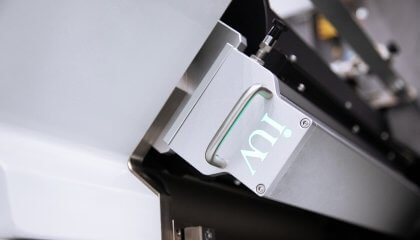
The advent of UV LED (Light Emitting Diode) technology marked a significant leap forward. Unlike mercury lamps, UV LEDs emit light within a very narrow, specific wavelength band, precisely matched to the photoinitiators in UV inks and coatings. This precise control offers unparalleled efficiency and performance.

What is UV LED Curing?

UV LED curing is a process that uses ultraviolet light emitted by LEDs to rapidly polymerize or “cure” inks, coatings, and adhesives. When UV light of the correct wavelength strikes the photoinitiators within the formulation, it triggers a chemical reaction that cross-links the molecules. This transforms the liquid ink or coating into a solid, durable layer almost instantaneously.

The key advantage of UV LED is its targeted energy delivery. This means less wasted energy and heat, leading to more efficient curing. The specific wavelengths emitted by LEDs can be tailored to optimize the curing speed and performance of different ink formulations.

Advantages of UV LED Curing in Label Printing

The adoption of UV LED curing in label printing offers a multitude of advantages that directly impact operational efficiency, product quality, and environmental sustainability.

1. Energy Efficiency: UV LEDs consume significantly less power compared to traditional mercury vapor lamps. They reach full intensity immediately, eliminating warm-up and cool-down periods. This reduction in energy consumption translates directly into lower operating costs.

2. Faster Curing Speeds: The precise and high-intensity light output of UV LEDs enables extremely rapid curing. This allows for higher printing speeds on presses, increasing overall throughput and productivity. Jobs can be completed faster, meeting demanding deadlines.

3. Reduced Heat Transfer: UV LEDs emit very little infrared radiation, meaning they transfer minimal heat to the substrate. This is crucial for printing on sensitive materials like thin films, plastics, and even some papers that could be damaged or warped by the heat from conventional curing methods.

4. Instant On/Off Capability: Unlike mercury lamps that require warm-up and cool-down cycles, UV LEDs can be switched on and off instantly. This is particularly beneficial for intermittent printing applications or when the press is stopped, saving energy and preventing unnecessary exposure.

5. Longer Lifespan and Reduced Maintenance: UV LED lamps have a significantly longer operational lifespan, often exceeding 20,000 hours. This drastically reduces the frequency of lamp replacements, lowering maintenance costs and minimizing production downtime associated with lamp changes.

6. Environmental Benefits: The absence of mercury in UV LED systems makes them more environmentally friendly. Furthermore, their energy efficiency contributes to a smaller carbon footprint. The rapid curing often allows for the use of lower VOC (Volatile Organic Compound) inks and coatings.

7. Enhanced Print Quality and Durability: Precise wavelength control ensures efficient and complete curing of inks and coatings. This results in sharper dot definition, better color vibrancy, and superior scratch, chemical, and abrasion resistance for the finished labels.

Applications in Different Printing Processes

UV LED curing technology is versatile and has found successful integration across various label printing methods, including flexography, offset (lithography), and digital printing.

Flexographic (Flexo) Label Printing

Flexography is a dominant printing process for labels due to its speed and cost-effectiveness for long runs. Integrating UV LED curing into flexo presses offers substantial benefits:

  • Higher Press Speeds: The rapid cure allows flexo presses to run at their maximum mechanical speeds without compromising ink adhesion or finish.
  • Improved Ink Transfer: Faster curing helps prevent ink trapping issues and ensures crisp, well-defined graphics and text.
  • Substrate Versatility: Printing on a wider range of substrates, including films and foils, becomes more feasible due to reduced heat transfer. This opens up new product possibilities.
  • Reduced Anilox Wear: Some UV LED systems operate at lower temperatures, which can potentially reduce wear on anilox rolls over time.

Offset (Lithographic) Label Printing

Offset printing is known for its excellent print quality and is often used for high-end labels. UV LED curing enhances its capabilities:

  • Brilliant Color Reproduction: Achieving vibrant colors and sharp details is easier with controlled curing that prevents ink spread.
  • Faster Turnaround Times: The immediate curing allows for immediate post-processing, such as die-cutting or rewinding, without smudging.
  • Extended Ink Handling: Printers can manage ink on the press for longer periods without premature drying, especially beneficial for complex jobs.
  • Reduced Ghosting: Efficient curing helps mitigate ghosting effects, where faint images from previous impressions appear on subsequent ones.

Narrow Web Printing

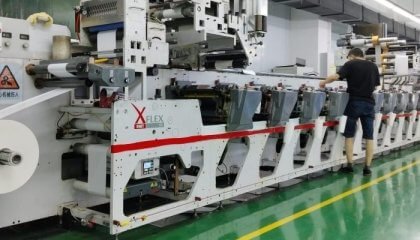
The narrow web printing sector, which predominantly focuses on labels and flexible packaging, has been an early adopter of UV LED technology. The inherent advantages of UV LED align perfectly with the demands of this market:

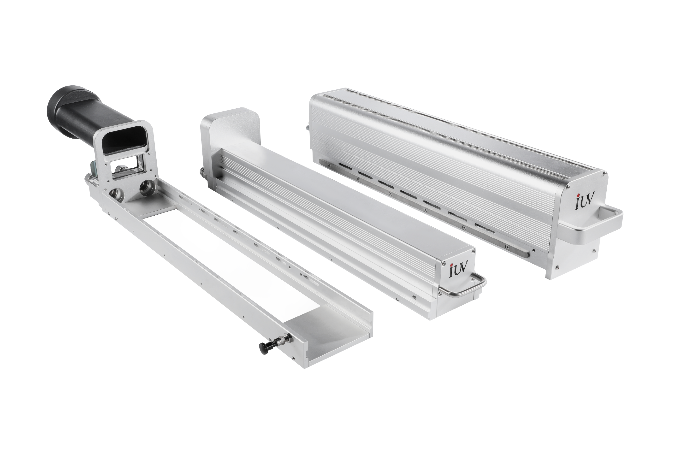
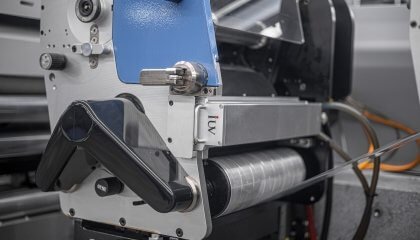
  • Space Saving: UV LED systems are often more compact than traditional UV lamp arrays, which is critical on space-constrained narrow web presses.
  • Increased Productivity: The ability to print and cure at high speeds directly translates to higher output and better utilization of press time.
  • Lower Operating Temperatures: Essential for printing on thin films and delicate materials commonly used in narrow web applications.
  • Reduced Waste: Faster setup times and immediate cure reduce waste from initial setup runs and potential smudging during handling.

Key Considerations for Implementing UV LED Curing

Migrating to UV LED curing requires careful planning and consideration to maximize its benefits.

  • Ink and Coating Formulation: Not all traditional UV inks and coatings are optimized for UV LED curing. It’s crucial to select formulations specifically designed for the target LED wavelengths (e.g., 365nm, 385nm, 395nm, 405nm). Consult with your ink supplier for appropriate product recommendations.
  • Substrate Compatibility: While UV LED reduces heat, always test compatibility with your chosen substrates. Ensure the substrate can withstand the curing process and the intended application’s environmental conditions.
  • Wavelength Selection: Different applications may benefit from different LED wavelengths. Longer wavelengths (e.g., 405nm) can cure thicker layers and through colored inks more effectively, while shorter wavelengths (e.g., 365nm) offer higher energy output.
  • Power Density and Exposure: The power density of the LED lamps and the exposure time are critical for achieving optimal cure. These parameters need to be matched with the ink formulation and press speed.
  • Ventilation and Safety: Although UV LED systems produce less ozone than mercury lamps, proper ventilation is still recommended. Always follow safety guidelines regarding exposure to UV light.
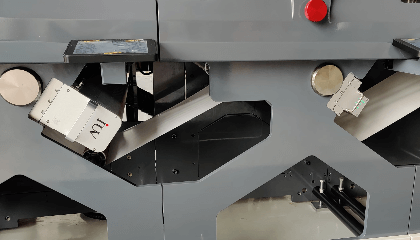
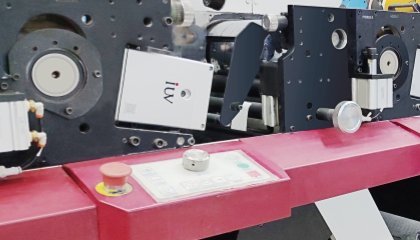
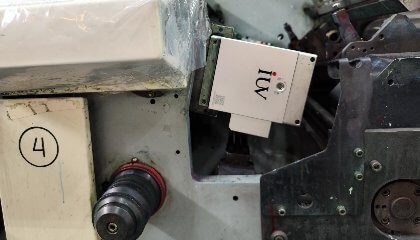
  • Integration with Existing Equipment: Ensure that the chosen UV LED curing system can be seamlessly integrated into your existing printing presses, whether it’s a retrofitting project or a new press purchase.

The Future of Label Printing with UV LED

The trend towards sustainability, efficiency, and higher quality in the printing industry strongly favors advanced technologies like UV LED curing. As LED technology continues to evolve, we can expect even greater energy efficiency, higher power outputs, and more versatile wavelength options.

The ability of UV LED to enable faster printing speeds, accommodate a wider range of substrates, and deliver superior print durability makes it an indispensable tool for label printers looking to stay competitive. By investing in and optimizing UV LED curing solutions, businesses can enhance their production capabilities, reduce operational costs, and deliver exceptional value to their customers.

Optimizing label printing with advanced UV LED curing solutions is not just an upgrade; it’s a strategic move towards a more efficient, sustainable, and high-quality future for your printing business.

Contact IUV Curing Experts

滚动至顶部