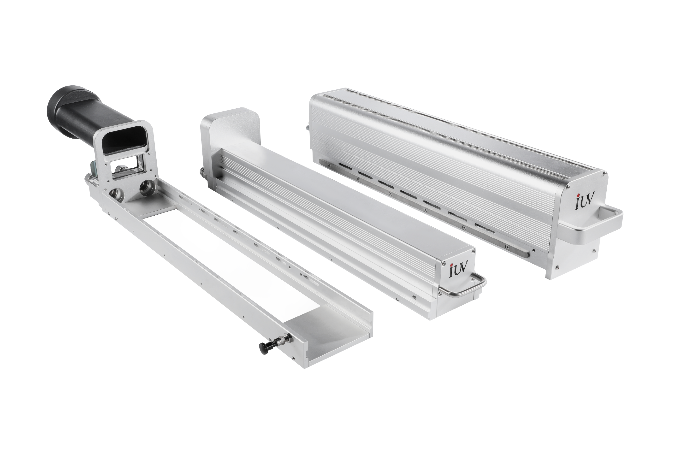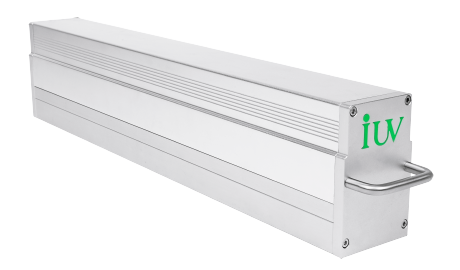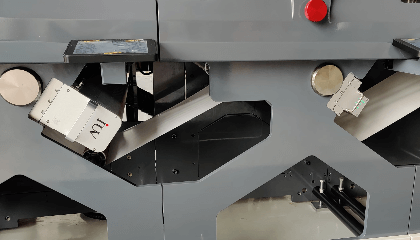
In the world of narrow web label printing, curing technology is critical to achieving high-quality prints with excellent density and color consistency. Among the various options available, LED UV lamps have become increasingly popular due to their efficiency, reduced heat output, and fast curing speeds. However, within the category of LED UV lamps, there exists a key differentiation: gallium-doped LEDs versus standard LEDs. While both options serve similar functions, they perform differently when it comes to curing depth and achieving optimal color density in flexographic printing.
This article takes a technical deep dive into the advantages of gallium-doped LED UV lamps over standard LED UV lamps. By examining their impact on full-color flexo print density and curing depth, we will explore how the right choice of lamp can enhance print quality, improve process control, and reduce material waste.
What Are Gallium-Doped LED UV Lamps?
Gallium-doped LED UV lamps are a specialized type of UV lamp that incorporates gallium into the semiconductor structure. Gallium, often combined with other elements like nitrogen or indium, increases the efficiency and output of the LED, particularly in the UV-C and UV-B ranges. These wavelengths are crucial for effectively curing UV inks in narrow web printing, especially on flexible substrates such as films, foils, and papers.
The primary difference between gallium-doped LEDs and andard LEDs lies in their ability to produce higher-intensity UV light, which leads to faster curing and deeper ink penetration into substrates. The doped structure allows these lamps to maintain stable performance over time, even under the high-speed demands of modern flexographic printing presses.
Standard LED UV Lamps: Efficiency and Versatility
Standard LED UV lamps are widely used in the printing industry for their energy efficiency, long lifespan, and low heat emission. These lamps typically operate within the UV-A wavelength range, which is effective for curing most UV inks. They are popular in high-speed printing applications, where fast curing times are necessary to maintain production speeds while preventing smudging or smearing of inks.
However, while standard LEDs are versatile and offer lower operational costs, they sometimes fall short in applications where deep ink curing and high-density color reproduction are essential. This is especially true for full-color flexo printing, where achieving consistent ink coverage, deep blacks, and rich hues are critical for visual quality.
Gallium-Doped LEDs: Achieving Deeper Curing and Improved Print Density
Gallium-doped LEDs offer distinct advantages over their standard counterparts, especially in terms of curing depth and print density. The ability to emit UV light at more specific wavelengths, including higher-intensity UV-C, allows for a more effective cure on a wider range of substrates. In full-color flexo printing, this translates into several benefits:
- Deeper Ink Penetration
Gallium-doped LEDs cure inks more thoroughly, which results in better adhesion and a deeper cure, ensuring that ink is fully polymerized across the entire ink film. This is especially important for flexible substrates, where standard LEDs may struggle to penetrate and cure the ink uniformly. - Improved Color Density
The increased curing depth provided by gallium-doped LEDs allows for more intense and vibrant ink colors. In full-color flexo printing, the ability to achieve higher ink density without overcooking or burning the ink film results in more accurate and stable color reproduction. This makes gallium-doped LEDs ideal for high-end label printing, where precise color matching is paramount. - Faster Curing Times
Gallium-doped LEDs offer faster curing times compared to standard LEDs. This results in quicker turnarounds for high-speed printing operations, reducing downtime between job changes. In today’s competitive print market, time is a critical factor, and faster curing helps to maximize productivity.
UV Ink Curing and Its Effect on Print Quality
When it comes to flexographic printing, ink curing is one of the most critical steps in ensuring print quality. A proper cure ensures that the ink is bonded securely to the substrate, providing durability and resistance to fading, abrasion, and environmental factors.
Gallium-doped LED UV lamps are particularly well-suited for applications that require deep, even curing, which directly affects the print’s longevity and performance. Since gallium-doped LEDs produce higher-intensity UV light with more precise spectral characteristics, they can cure UV inks more effectively. This results in improved resistance to cracking, scratching, and smearing, all of which contribute to the print’s overall quality.
In contrast, standard LED UV lamps may not penetrate deeply enough into thicker ink layers, which can lead to surface-level curing only. While surface curing is acceptable for some substrates and print applications, it can cause issues when dealing with thicker ink layers required for specific color densities or when printing on more absorbent materials.
Narrow Web Flexo Printing and Its Demands on UV Curing
Narrow web flexo printing is often used for labels and packaging, and it requires high precision to maintain the quality and appearance of the prints. For narrow web presses, where speed, consistency, and minimal waste are paramount, gallium-doped LED UV lamps are a natural fit. Their ability to maintain high curing speeds and depth while ensuring minimal heat generation allows for tighter control over the printing process, resulting in higher-quality output.
Narrow web printing is often used for pressure-sensitive labels, shrink sleeves, and flexible packaging, all of which benefit from the superior curing power of gallium-doped LEDs. These substrates are often more prone to distortion and heat-related issues, so the cooler curing profile of gallium-doped LEDs helps to maintain registration accuracy, prevent substrate warping, and ensure consistent ink transfer.
Cost Considerations: Gallium-Doped vs. Standard LED UV
While gallium-doped LED UV lamps offer superior curing capabilities, they tend to come at a higher initial investment compared to standard LED UV lamps. However, the increased efficiency, faster curing speeds, and superior print quality they provide can offset this initial cost. Reduced waste, improved production times, and lower energy consumption also contribute to long-term cost savings.
For high-end printing jobs that demand maximum color consistency, durability, and print density, the benefits of gallium-doped LEDs far outweigh the costs. In contrast, for general-purpose applications that prioritize speed and cost over curing depth and print quality, standard LED UV lamps may be more suitable.
Conclusion: Optimizing Your Curing Process with the Right Lamp Choice
The choice between gallium-doped and standard LED UV lamps is a critical decision that should be based on the specific needs of your print operation. For applications where full-color flexo print density, deep curing, and vibrant, accurate color reproduction are essential, gallium-doped LEDs provide clear advantages. Their ability to cure inks more thoroughly and efficiently ensures higher-quality prints with superior adhesion and durability.
On the other hand, for general printing applications where cost and speed are the primary drivers, standard LED UV lamps remain an effective and versatile solution. Understanding the differences between these two types of lamps and aligning them with your production goals will help you achieve the best results for your printing needs.
By choosing the right LED UV lamp for your flexo printing press, you can optimize print quality, reduce waste, and improve your overall printing efficiency.