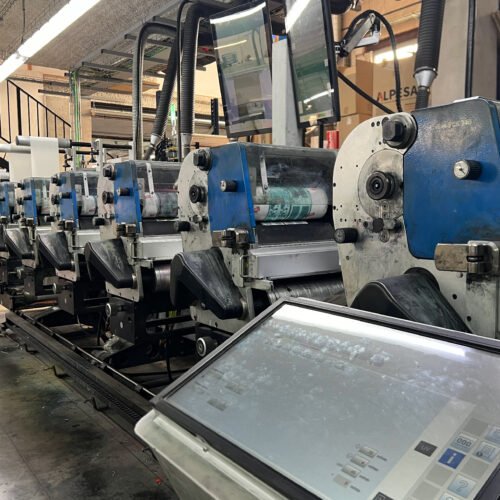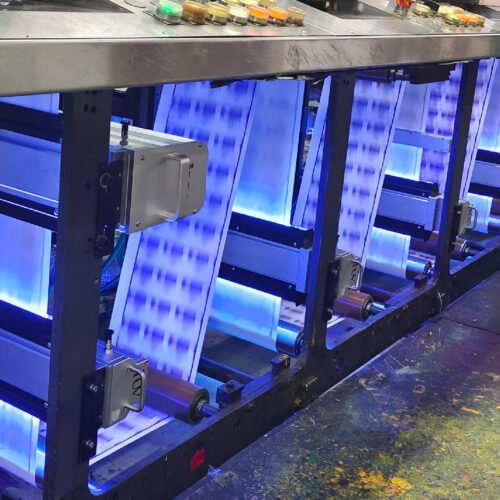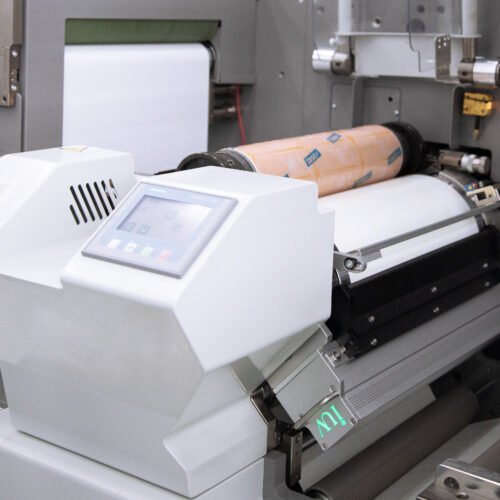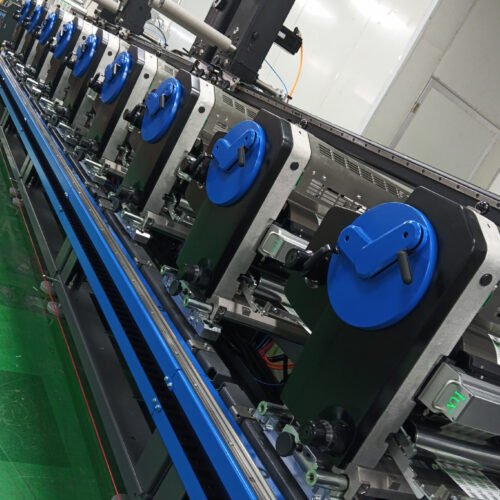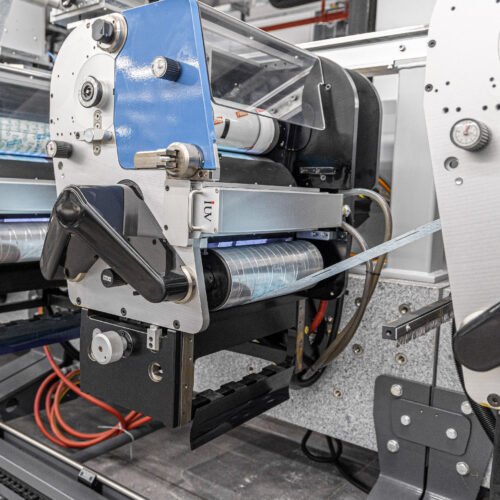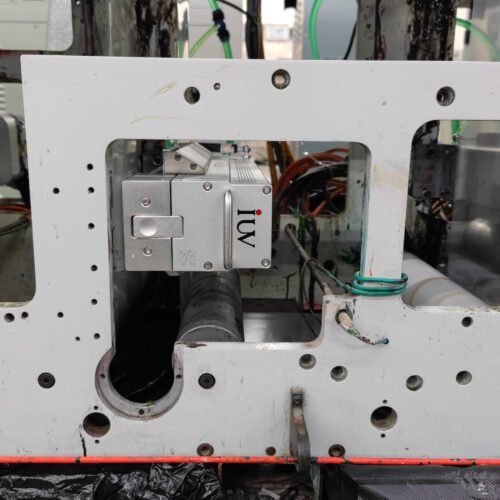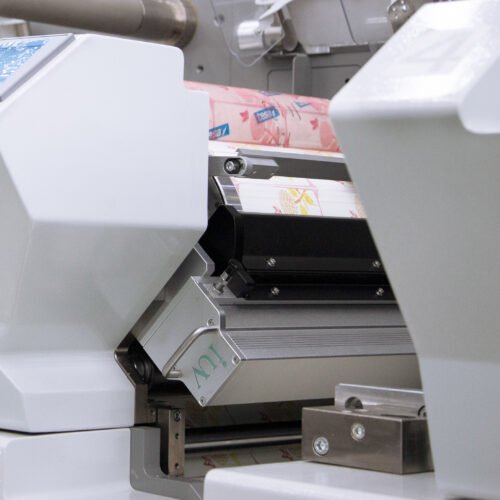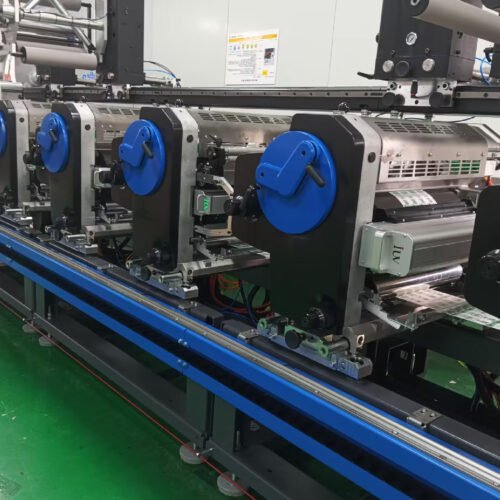
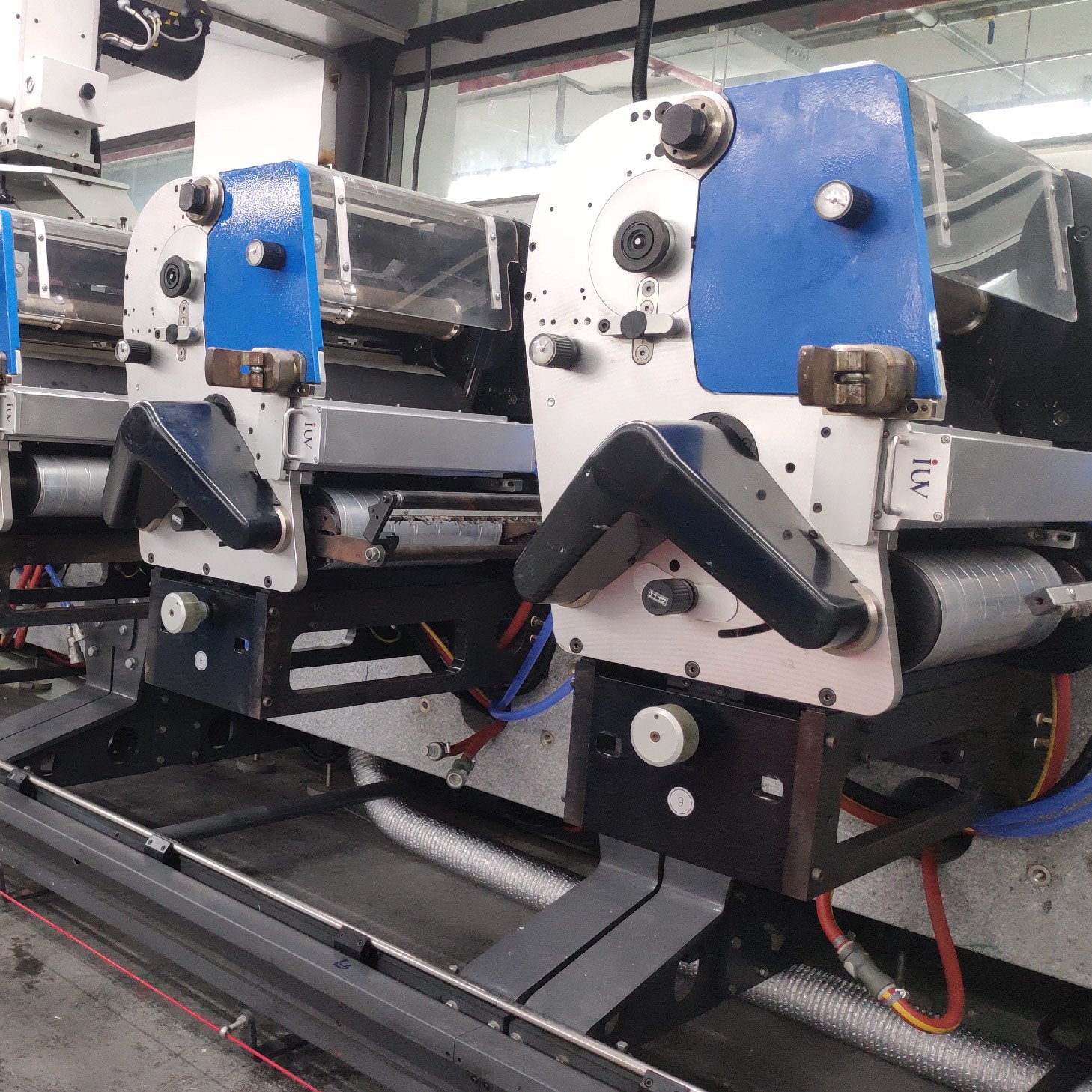
In narrow web label printing, adhesion failures rarely originate from a single visible defect. Poor ink anchorage, weak UV adhesive bonding, or delamination after die cutting often trace back to one underlying issue: inconsistent UV energy delivery. As LED UV curing systems become standard in flexographic and narrow web offset presses, measuring spectral irradiance accurately has become essential for maintaining stable adhesion across inks, coatings, and laminating adhesives.
This technical tutorial explains how radiometers are used to measure spectral irradiance and how those measurements support precise calibration of LED UV systems in label printing. The focus is on practical application in flexographic, offset, and hybrid narrow web environments where adhesion consistency is critical.
Why Spectral Irradiance Matters in UV-Cured Label Adhesion
UV curing performance depends not only on total energy but also on how that energy is distributed across wavelengths. UV inks and adhesives contain photoinitiators designed to absorb specific spectral bands. If irradiance at those wavelengths is insufficient or unstable, polymerization remains incomplete even when total dose appears adequate.
In label printing, incomplete curing often shows up as edge lift, adhesive failure during lamination, or ink pickup during rewinding. These issues are common when curing systems are calibrated using power settings alone, without verifying spectral output. Measuring spectral irradiance provides direct insight into how effectively the LED UV system activates the chemistry used in the process.
Understanding Spectral Irradiance in LED UV Systems
Spectral irradiance describes the radiant power delivered per unit area at specific wavelengths. Unlike traditional mercury lamps, LED UV systems emit narrow spectral bands, typically centered around 365 nm, 385 nm, 395 nm, or 405 nm. Each band interacts differently with inks, varnishes, and UV adhesives.
In narrow web presses, spectral mismatch can occur when an LED module ages, when optics become contaminated, or when a curing system is repurposed for a different ink or adhesive formulation. Measuring spectral irradiance ensures that the emitted wavelength aligns with the absorption profile of the materials being cured.
Radiometers as Calibration Tools in Narrow Web Printing
Radiometers are instruments designed to measure UV energy. For LED UV systems, modern radiometers often include multiple sensors or filters that isolate specific wavelength ranges. This allows printers to evaluate not only overall intensity but also spectral balance.
In label production, radiometers are used both during initial installation and as part of routine process control. By placing the radiometer at substrate level, printers can measure the actual irradiance received by inks and adhesives under real press conditions. This measurement reflects optical losses, lamp distance, and reflector efficiency more accurately than system settings alone.
The Relationship Between Spectral Irradiance and Adhesion Performance
Adhesion in UV-cured labels depends on complete polymerization at the interface between ink or adhesive and the substrate. If spectral irradiance is too low at the activation wavelength of the photoinitiator, curing may appear acceptable on the surface while remaining weak at the interface.
This hidden undercure often leads to failures during finishing operations. Die cutting can cause ink chipping, while lamination can expose weak adhesive bonds. Radiometer measurements reveal whether sufficient energy reaches the interface zone, allowing corrective action before defects occur.
Preparing for Accurate Radiometer Measurements
Accurate measurement begins with consistent setup. The press should be operating at typical production speed, with normal web tension and lamp-to-substrate distance. Measuring at abnormal speeds or during press warm-up can produce misleading results.
The radiometer sensor must be positioned flat at the curing plane. In narrow web presses, this often means placing the sensor directly on the substrate path or using a carrier designed for web transport. Proper alignment ensures that measured irradiance reflects true process conditions.
Interpreting Radiometer Data for LED UV Calibration
Radiometer readings typically include peak irradiance values and, in some cases, integrated dose over time. For spectral radiometers, data may be separated by wavelength band. Interpreting these values requires understanding the curing requirements of the specific ink or adhesive system.
If adhesion issues are present, comparing measured spectral irradiance against supplier recommendations often reveals gaps. For example, a system emitting strong 395 nm energy may perform poorly with an adhesive formulated for 365 nm activation. Calibration in this case involves adjusting LED modules, optics, or lamp configuration rather than increasing power indiscriminately.
Adjusting LED UV Systems Based on Measurement Results
Once spectral deficiencies are identified, corrective actions can be targeted and efficient. Options include adjusting lamp output settings, modifying lamp-to-substrate distance, or changing LED modules to better match material chemistry.
In multi-station narrow web presses, it is common to find variation between curing units. Radiometer measurements allow each station to be calibrated individually, ensuring consistent adhesion across colors, coatings, and adhesive layers.
Maintaining Consistency Across Press Speed Variations
Press speed changes alter exposure time under the curing lamp. While LED UV systems can compensate by increasing irradiance, this compensation must preserve spectral balance. Radiometer measurements taken at different speeds confirm whether spectral irradiance remains within acceptable limits during acceleration or slowdown.
This verification is particularly important in short-run label production, where frequent speed changes occur. Without measurement, adhesion consistency can vary from roll to roll even within the same job.
Radiometer Use in Troubleshooting Adhesion Failures
When adhesion problems appear unexpectedly, radiometers provide a fast diagnostic tool. Measuring spectral irradiance immediately identifies whether curing energy has drifted due to LED aging, optical contamination, or control system faults.
This approach avoids unnecessary changes to ink or adhesive formulations. In many cases, restoring proper spectral output resolves adhesion issues without altering materials or press settings.
Supporting Process Documentation and Quality Control
Radiometer data also supports process documentation and quality assurance. By recording spectral irradiance values for approved jobs, converters establish reference standards for future runs. Deviations from these values can be detected early, preventing waste and rework.
In regulated or brand-sensitive label applications, this documentation provides evidence of controlled curing conditions, supporting consistent product performance in the field.
The Role of Spectral Measurement in LED UV System Longevity
Regular spectral measurement extends the useful life of LED UV systems. Gradual output changes are detected before they impact adhesion, allowing planned maintenance rather than emergency intervention. This proactive approach stabilizes production and protects investment in curing equipment.
It also ensures that LED advantages such as low heat and stable output are fully realized throughout the system’s service life.
Conclusion
Measuring spectral irradiance with radiometers has become a core practice in modern narrow web label printing. For LED UV curing systems, it provides the clarity needed to calibrate energy delivery precisely to ink and adhesive chemistry. By focusing on wavelength-specific performance rather than nominal power settings, converters achieve consistent adhesion, reduced defects, and predictable production results.
In flexographic and offset label printing, where adhesion failures can disrupt entire workflows, radiometer-based calibration offers a practical and reliable path to curing stability and long-term process control.