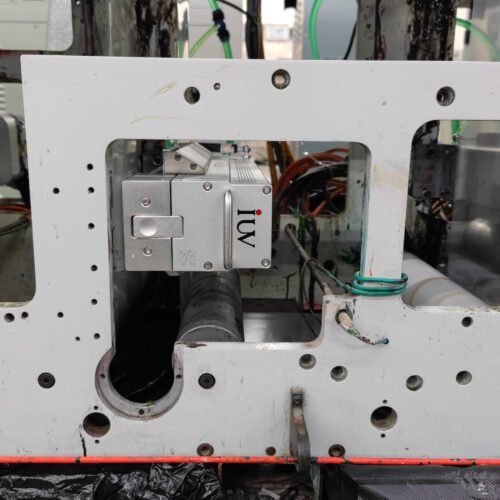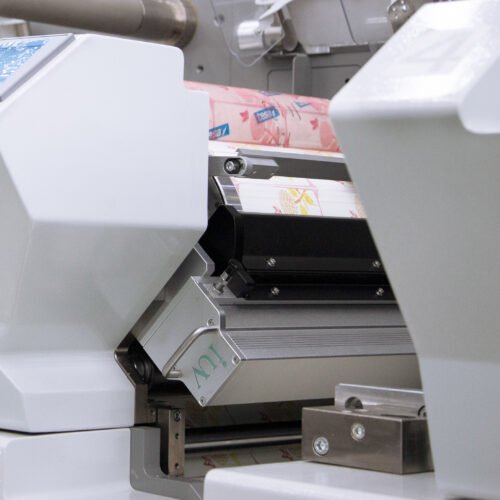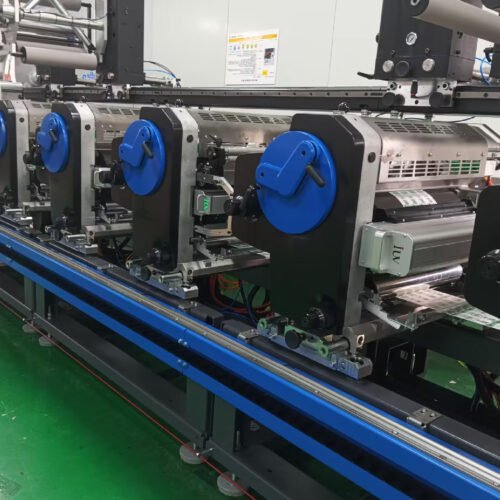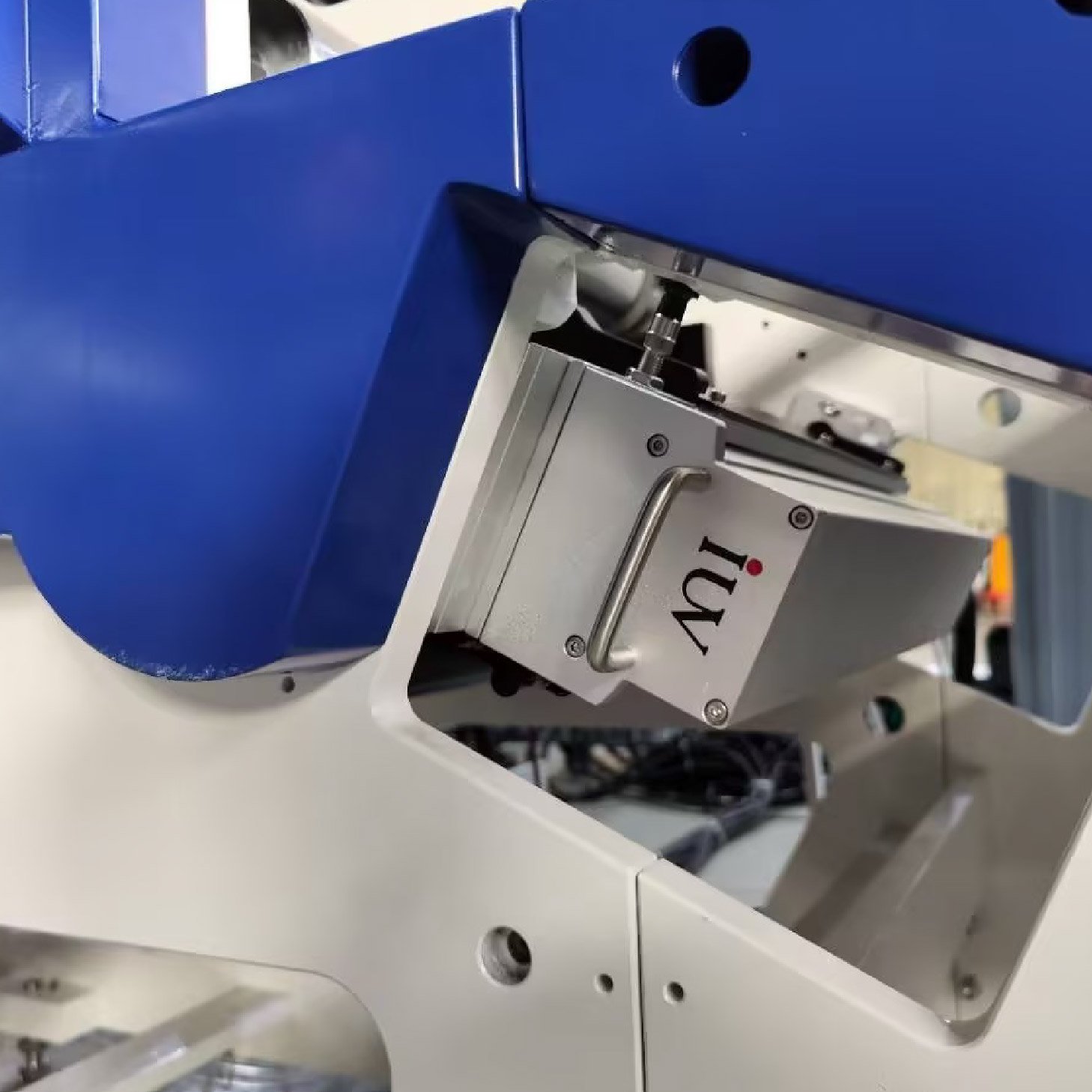
In narrow web flexographic label production, throughput is no longer defined only by press mechanics or ink transfer efficiency. As LED UV curing replaces traditional mercury systems, the interaction between curing electronics and press speed has become a critical factor in overall productivity. When LED UV pulse frequency is not properly synchronized with variable press speeds, printers often experience incomplete curing, surface defects, or unnecessary energy consumption. Understanding and controlling this relationship is essential for stable, high-speed narrow web operations.
This article provides a practical troubleshooting perspective on synchronizing LED UV pulse frequency with changing press speeds, focusing on label printing, flexographic and offset narrow web processes, UV inks, varnishes, and UV-curable adhesives.
The Relationship Between Press Speed and LED UV Curing
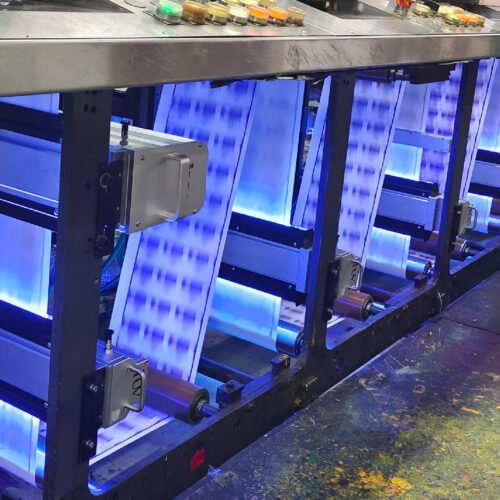
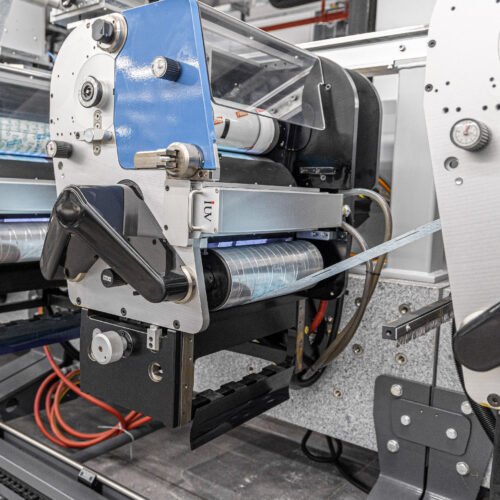
In narrow web printing, press speed directly affects the exposure time of inks and coatings under the LED UV lamp. As web speed increases, dwell time under the curing window decreases. LED UV systems compensate for this by adjusting irradiance, dose, or pulse frequency. Unlike arc lamps that emit continuous radiation, many LED UV systems operate in pulsed modes to optimize efficiency and thermal control.
If pulse frequency does not scale correctly with press speed, the delivered UV dose becomes inconsistent. At low speeds, excessive exposure can lead to overcuring, embrittlement, or odor issues. At high speeds, insufficient exposure results in poor polymerization, tacky surfaces, and adhesion failures during die-cutting or lamination.
Understanding LED UV Pulse Frequency in Flexo Presses
Pulse frequency refers to how often the LED modules emit UV energy per second. In pulsed systems, energy is delivered in controlled bursts rather than a constant output. This approach allows precise control of dose while maintaining low heat generation, which is critical for thin label stocks and heat-sensitive films.
In flexographic narrow web presses, pulse frequency must align with press speed, lamp power, and curing window length. When these parameters are balanced, curing remains consistent across speed changes. When they are not, curing stability becomes unpredictable, especially during acceleration, deceleration, or short-run production.
Common Symptoms of Poor Pulse-to-Speed Synchronization
One of the first signs of synchronization issues is inconsistent surface cure across a production run. Labels printed at startup may feel harder than those produced at top speed. Varnishes may appear glossy at low speed but become matte or streaked as speed increases.
Another common symptom is variation in adhesive performance after UV lamination. Incomplete curing caused by insufficient pulse frequency at high speeds can lead to weak bonds, edge lifting, or delamination during finishing. In extreme cases, converters may slow down the press unnecessarily, sacrificing throughput to maintain acceptable quality.
The Impact on UV Inks and Varnishes
UV inks used in narrow web flexo and offset printing rely on a specific energy dose to achieve full polymerization. Pulse frequency influences how evenly this energy is distributed across the printed surface. If pulses are too widely spaced at higher speeds, photoinitiators may not receive sufficient activation, resulting in undercured ink films.
UV varnishes are even more sensitive, especially in full flood or tactile applications. These coatings require consistent surface exposure to prevent oxygen inhibition and ensure proper hardness. Synchronization errors often appear as surface tack or blocking during rewinding, even when total lamp power seems adequate.
Troubleshooting Variable Speed Operations
Variable speed operation is common in narrow web printing, particularly during job changeovers, inspection, and die-cutting adjustments. LED UV systems must respond dynamically to these changes. A common troubleshooting step is to verify whether the curing system receives real-time speed feedback from the press.
If pulse frequency is fixed while press speed varies, curing consistency will suffer. Modern systems should use encoder-based feedback to adjust pulse frequency automatically. When this feedback is delayed or improperly calibrated, curing may lag behind speed changes, especially during rapid acceleration.
Matching Pulse Frequency to Web Speed
Effective synchronization requires aligning pulse frequency with linear web speed rather than press motor speed alone. The goal is to maintain a constant UV dose per unit area of printed material. As speed increases, pulse frequency or pulse intensity must increase proportionally.
In narrow web flexo operations, this balance is often achieved through preset curing recipes linked to speed ranges. When troubleshooting, it is important to confirm that these presets match real production conditions, including substrate type, ink coverage, and coating thickness.
Challenges in High-Speed Narrow Web Label Production
At higher press speeds, the margin for curing error becomes smaller. Shorter exposure times demand faster system response and more precise pulse control. Any delay in frequency adjustment can result in partial curing, especially at the edges of the web where energy distribution is less uniform.
High-speed label printing also increases the risk of heat buildup if pulse parameters are not optimized. Excessive pulse intensity combined with high frequency can negate the thermal advantages of LED UV, leading to film distortion or registration issues.
Integration with Flexo and Offset Press Controls
Successful synchronization depends on communication between the LED UV controller and the press control system. In hybrid flexo-offset narrow web presses, this integration is even more critical due to differing ink film characteristics and curing demands.
Press operators should verify that speed signals, start-stop commands, and emergency slowdowns are correctly interpreted by the curing system. Misalignment at this level often causes curing instability that cannot be resolved by lamp power adjustments alone.
Improving Throughput Without Sacrificing Quality
One of the key advantages of properly synchronized LED UV systems is the ability to increase throughput without compromising print quality. When pulse frequency scales accurately with speed, converters can run faster while maintaining consistent curing results.
This stability reduces waste during ramp-up, minimizes rework, and improves confidence in downstream processes such as die-cutting, slitting, and lamination. Over time, these gains translate into measurable productivity improvements and lower operating costs.
Process Stability and Long-Term Performance
Consistent pulse-to-speed synchronization also contributes to long-term process stability. Uniform curing reduces mechanical stress on printed films and coatings, improving durability and resistance properties. This is especially important for labels exposed to chemicals, abrasion, or temperature changes.
From a maintenance perspective, optimized pulse control extends LED module life by avoiding unnecessary peak loads. This supports predictable performance and reduces the risk of unexpected downtime in high-volume narrow web operations.
Conclusion
Maximizing throughput in narrow web flexographic and offset label printing requires more than increasing press speed. Synchronizing LED UV pulse frequency with variable press speeds is a fundamental requirement for consistent curing performance. When pulse control aligns with real-time web speed, UV inks, varnishes, and laminating adhesives cure reliably across all production conditions.
By understanding the interaction between press mechanics and LED UV electronics, converters can troubleshoot curing issues more effectively and unlock the full productivity potential of modern narrow web presses.