<!-- Meta Pixel Code --> <!-- 结束元像素代码 -->

Leveraging UV Automation to Optimize Flexo Ink Transfer and Dot Reproduction

Leveraging UV Automation to Optimize Flexo Ink Transfer and Dot Reproduction

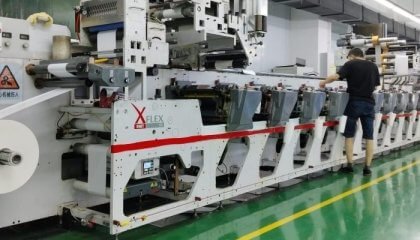
In the competitive world of narrow web printing, achieving consistent, high-quality results is paramount. For flexographic printers, this often means mastering the delicate balance of ink transfer and dot reproduction. When you add the demands of UV-curable inks and the drive for automated processes, the challenge intensifies. This is where leveraging UV automation emerges as a powerful strategy to significantly optimize your flexo ink transfer and dot reproduction capabilities.

The Fundamentals of Ink Transfer in Flexography

Flexographic printing relies on an anilox roll to transfer ink to the printing plate. The cell volume and engraving of the anilox roll, along with the viscosity and surface tension of the ink, dictate how much ink is transferred. Inconsistent ink transfer can lead to variations in color density, trapping issues, and ultimately, a loss of fine detail. For dot reproduction, precision is even more critical. Small dots need to be laid down cleanly and consistently, without spreading or filling in.

Traditional methods of controlling these variables often involve manual adjustments. Press operators rely on experience and a keen eye to dial in settings. While valuable, this approach can be time-consuming and prone to human error, especially under production pressures. Variations in ambient temperature, ink temperature, and substrate properties can further complicate manual control.

The Role of UV Curing in Flexo Printing

UV-curable inks have revolutionized many aspects of label printing. They offer fast drying times, excellent durability, and the ability to print on a wide range of substrates, including non-porous materials. The curing process itself involves exposing the wet ink to high-intensity ultraviolet light. This light initiates a photochemical reaction, causing the ink to polymerize and solidify almost instantaneously.

However, the UV curing process introduces its own set of variables. The intensity of the UV lamps, the exposure time, and the spectral output all play a role in achieving a complete cure. Incomplete cure can lead to ink rub-off, poor adhesion, and potential migration issues. Over-curing can degrade the substrate or ink, leading to brittleness or color shifts.

Introducing UV Automation for Enhanced Control

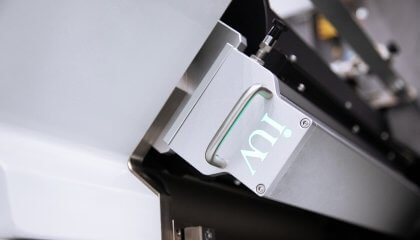
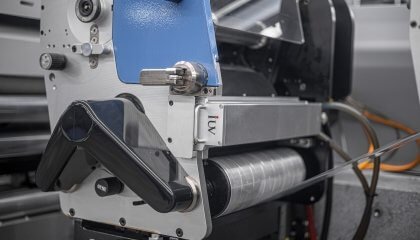
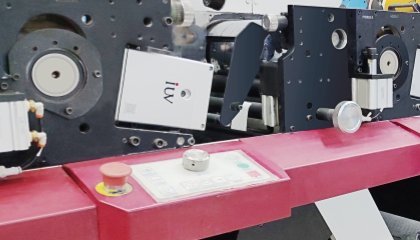
This is where automation, specifically tied to UV curing systems, becomes indispensable. UV automation refers to the integration of intelligent systems that monitor and control various aspects of the UV curing process, often in conjunction with ink delivery and press parameters. These systems can provide real-time feedback and make automatic adjustments, leading to greater consistency and improved print quality.

Automated UV systems can monitor parameters like lamp intensity, bulb temperature, and exhaust airflow. They can also be linked to sensors that measure ink transfer and dot gain on the fly. This interconnectedness allows for a more holistic approach to print optimization.

Optimizing Ink Transfer Through UV Automation Integration

While UV automation primarily focuses on the curing stage, its impact on ink transfer is significant and often overlooked. Consider these points:

  • Consistent Ink Rheology: UV-curable inks have specific rheological properties that are sensitive to temperature. Automated systems can help maintain a stable ink temperature by integrating with chiller units or heaters. Consistent ink temperature ensures a more predictable ink viscosity, leading to more uniform ink transfer from the anilox roll to the plate.
  • Controlled Anilox Roll Performance: Some advanced UV automation systems can communicate with anilox roll monitoring devices. These devices can track anilox cell health and ink flow. By understanding how the ink is behaving before it hits the plate, the automation system can alert the operator or even adjust ink levels to compensate for any anomalies, thereby ensuring more consistent ink transfer.
  • Substrate Interaction: The interaction between ink and substrate during the transfer process can be influenced by static electricity. UV curing units often incorporate static eliminators. When these are integrated into an automated system, they can be dynamically controlled based on real-time feedback, minimizing static that could otherwise disrupt smooth ink transfer and cause lifting or smearing.

Achieving Superior Dot Reproduction with UV Automation

The ability to reproduce fine dots accurately is a hallmark of high-quality flexographic printing. UV automation plays a crucial role here by ensuring that the ink is not only transferred correctly but also cured precisely.

  • Preventing Dot Gain: Excessive dot gain is a common problem. It occurs when ink spreads beyond its intended area, making dots appear larger than they should be. With UV inks, improper curing can exacerbate this. If the ink doesn’t cure quickly and fully, it can continue to spread slightly on the substrate before setting. Automated UV systems, by precisely controlling cure intensity and exposure time, ensure that the ink solidifies rapidly, minimizing this spreading effect and thus reducing dot gain.
  • Sharp Dot Edges: Clean, sharp dot edges are essential for fine detail and legibility, especially in small text and halftones. UV automation helps achieve this by ensuring that the photochemical reaction happens exactly where and when it’s supposed to. This rapid, localized curing locks the ink in place, preventing bleed and maintaining the integrity of the dot shape.
  • Color Consistency and Nuance: Accurate dot reproduction is directly linked to color consistency. When dots are reproduced faithfully, the intended color values are achieved. UV automation contributes by ensuring that each dot receives the exact same curing energy. This consistency across the entire print run, from the first impression to the last, means that colors remain stable, and subtle tonal gradations are rendered accurately. This is particularly important in applications requiring precise color matching, such as packaging and branded goods.

Integration with Other Press Technologies

The true power of UV automation is realized when it’s integrated with other press systems.

  • Closed-Loop Ink Control: Advanced flexo presses often feature closed-loop ink control systems that monitor color density on the fly and adjust ink flow. When these systems are integrated with UV automation, the press can respond to inconsistencies not just in ink delivery but also in how that ink is behaving during and after curing. This synergistic approach creates a robust feedback loop for maintaining optimal print quality.
  • Automated Plate and Anilox Management: While not directly part of UV curing, systems that automate plate mounting or anilox roll cleaning and management contribute to overall consistency. When combined with UV automation, the press operates with a higher degree of predictability, allowing the UV system to fine-tune its performance for the best possible outcome.

Benefits of Implementing UV Automation in Narrow Web Printing

Adopting UV automation in your narrow web flexo operations can yield significant advantages:

  • Reduced Waste: Greater consistency means fewer make-ready sheets and less waste during the run.
  • Increased Throughput: Stable, predictable performance allows presses to run at higher speeds without compromising quality.
  • Enhanced Brand Representation: Consistent, high-fidelity reproduction ensures that brand colors and graphics are accurately represented, protecting brand integrity.
  • Operator Efficiency: Automation frees up operators from constant manual adjustments, allowing them to focus on higher-level quality control and monitoring.
  • Substrate Versatility: Optimized curing ensures reliable performance across a wider range of film and paper stocks.

The Future of Flexo Printing is Automated

As the printing industry continues to evolve, the demand for higher quality, faster turnaround times, and greater efficiency will only increase. Leveraging UV automation is no longer a luxury but a strategic imperative for flexographic printers looking to stay competitive. By precisely controlling the UV curing process and integrating it with other press functions, you can unlock new levels of performance in ink transfer and dot reproduction, ensuring your printed products meet and exceed customer expectations. Investing in these intelligent systems is an investment in the future of your business.

Contact IUV Curing Experts

滚动至顶部