<!-- Meta Pixel Code --> <!-- 结束元像素代码 -->

LED UV Curing Systems: Optimizing Ink Flow and Print Stability

LED UV Curing Systems Optimizing Ink Flow and Print Stability

Achieving consistent, high-quality prints in narrow web, flexographic, and offset printing relies heavily on precise ink control. When employing LED UV curing systems, optimizing ink flow and maintaining print stability become paramount. This technology offers numerous advantages, but its full potential is unlocked only when the nuances of ink behavior under UV light are thoroughly understood and managed.

The transition to LED UV curing brings about a shift in how inks interact with the printing process. Unlike traditional mercury lamps, LED UV systems emit light at specific wavelengths, directly targeting photoinitiators within the ink. This targeted energy transfer is efficient, but it also means that the viscosity and rheology of the ink play an even more critical role. Maintaining a stable ink film from the ink fountain to the substrate is the foundation of repeatable, vibrant results.

The Science of Ink Flow: Rheology in Focus

Ink is not simply a liquid; it’s a complex non-Newtonian fluid. Its flow characteristics, or rheology, are crucial for successful printing. In narrow web, flexo, and offset applications, inks need to have a specific viscosity to transfer cleanly from the anilox roll (in flexo) or the ink train (in offset) to the printing plate, and then to the substrate without excessive spreading or starving.

When we talk about LED UV inks, their formulation is designed to react rapidly to UV light. This means that their viscosity can change dynamically during the printing process. Factors like shear rate (how quickly the ink is being agitated or moved), temperature, and the presence of curing agents all influence how the ink flows. For instance, too low a viscosity might lead to ink squeezing out from under the plate, causing dot gain or poor definition. Too high, and you might get incomplete transfer, resulting in weak or broken images.

Engineers designing print processes with LED UV systems must consider these rheological properties. This involves careful selection of ink formulations that are compatible with the specific printing press and curing setup. It also means understanding how the shear forces within the printing system will affect the ink’s viscosity. In flexography, the interaction between the ink, the anilox roll cell volume and count, and the doctor blade pressure is a delicate balance. Any disruption here can lead to inconsistent ink laydown, directly impacting print stability.

LED UV Curing: The Mechanism of Stability

LED UV curing systems provide a precise and controlled method of initiating the polymerization reaction within the ink. Unlike broadband mercury lamps that emit a wide spectrum of UV light, LEDs emit at specific, narrow wavelengths. This focused energy means that the photoinitiators in the ink are activated efficiently, leading to rapid curing.

The stability of the LED UV light source itself is a key factor. High-quality LED arrays offer consistent output over their lifespan, reducing the variables that can affect curing speed and depth. This consistency translates directly to print stability. If the UV dose is too low, the ink may not cure properly, leading to smudging or poor adhesion. If it’s too high, it can cause premature drying in the ink train or on the plate, leading to a host of printing issues.

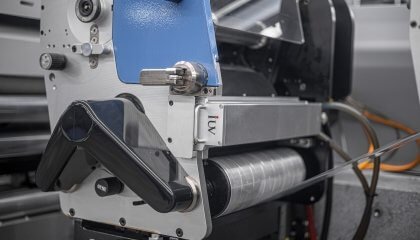
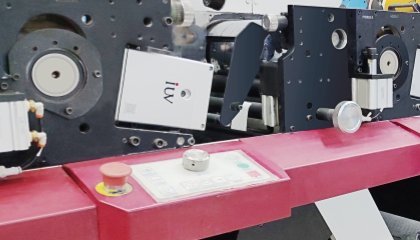
The positioning and intensity of the LED UV lamps are also critical. They need to be placed in close proximity to the printing unit to deliver the maximum effective dose to the ink film as it is transferred to the substrate. The intensity, measured in milliwatts per square centimeter (mW/cm²), must be calibrated to match the specific ink chemistry and the desired curing speed. For narrow web applications, where speeds can be very high, a powerful and well-aligned LED UV system is essential to ensure full cure before the web is wound or further processed.

Optimizing Ink Flow: Practical Strategies

Optimizing ink flow in an LED UV environment involves a multi-faceted approach, touching upon several critical areas of the printing process.

1. Ink Formulation and Selection: This is the first line of defense. Work closely with ink manufacturers who specialize in UV-curable inks for narrow web, flexo, and offset. Discuss your press speed, substrate type, and desired print characteristics. Look for inks with a stable viscosity profile that doesn’t degrade significantly under shear. The photoinitiator package within the ink must be optimized for the specific wavelengths emitted by your LED UV system.

2. Anilox Roll and Doctor Blade Management (Flexography): In flexographic printing, the anilox roll is the ink metering device. Its cell volume and engraving pattern dictate how much ink is transferred. When using LED UV inks, ensure the anilox engraving is appropriate for the ink’s viscosity and the desired film thickness. A well-maintained anilox roll, clean and free of dried ink, is vital. Similarly, the doctor blade setup – its angle, pressure, and material – must be precisely set to ensure a clean wipe and consistent ink metering without excessive shear.

3. Ink Temperature Control: While UV inks don’t “dry” in the same way as solvent-based inks, maintaining an optimal ink temperature is still important for viscosity. Excessive heat, whether from the environment or from the printing process itself, can lower ink viscosity, potentially leading to print defects. Conversely, very cold conditions can make inks too viscous and difficult to transfer. Implementing a temperature control system for the ink can help ensure a more stable rheology.

4. Press Speed and Curing Synchronization: The speed of the printing press must be perfectly synchronized with the output of the LED UV curing system. As press speeds increase, the dwell time of the ink under the UV lamps decreases. The LED system must be powerful enough to deliver the required UV dose within this shorter timeframe. This often means selecting higher-power LED modules or optimizing their placement for maximum effect.

5. Substrate Selection: The substrate’s surface energy and absorbency can influence ink laydown and curing. Porous substrates might require inks with different rheological properties compared to non-porous films. The interaction between the ink and the substrate surface is crucial for achieving sharp dots and solid areas. Ensure your LED UV ink is designed for the specific substrate you are printing on.

Ensuring Print Stability: The End Goal

Print stability, in the context of LED UV curing, means achieving consistent results from the first impression to the last, job after job. This encompasses:

  • Consistent Color Density: Variations in ink transfer or curing will lead to noticeable shifts in color.
  • Sharp Image Definition: Uncontrolled ink spread or poor transfer will result in fuzzy dots and lines.
  • Uniform Gloss Levels: Inconsistent curing can affect the final gloss of the printed ink.
  • Excellent Adhesion and Durability: Incomplete curing compromises the ink’s ability to bond to the substrate and withstand handling.

By meticulously addressing ink flow through rheology management, proper equipment setup, and intelligent use of LED UV technology, printers can achieve a level of print stability that enhances efficiency and elevates the quality of their output. This careful balance ensures that the advantages of LED UV curing – fast speeds, energy efficiency, and reduced VOCs – are fully realized without sacrificing the critical elements of visual appeal and performance. The investment in understanding and optimizing these interconnected factors is key to unlocking superior results in narrow web, flexo, and offset printing.

Contact IUV Curing Experts

滚动至顶部