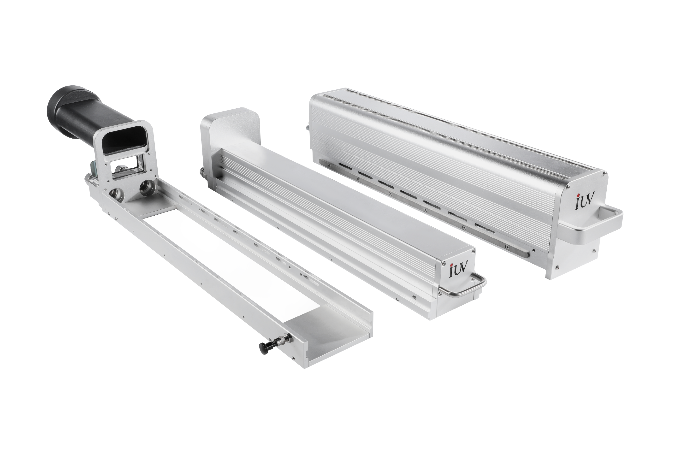
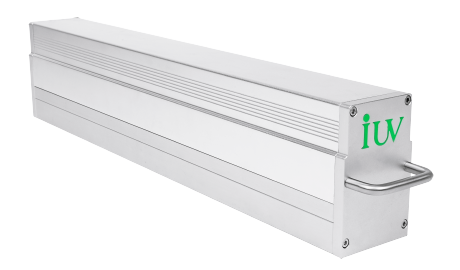
The transition from conventional mercury UV lamps to UV LED curing systems has become a strategic upgrade for narrow web rotary label presses. Label converters running flexographic, offset, or hybrid processes are under constant pressure to increase efficiency, reduce energy consumption, and improve process stability. UV LED technology delivers clear advantages, but successful implementation depends on correct system integration. Installing UV LED curing on an existing narrow web press is not a simple lamp replacement. It requires a structured approach that considers press mechanics, ink chemistry, optical geometry, electrical infrastructure, and process control.
Understanding the Mechanical Architecture of Narrow Web Rotary Presses
Narrow web rotary label presses are compact, modular systems with limited installation space between print units, die-cut stations, and rewind sections. Before installing a UV LED curing system, it is essential to evaluate the press layout in detail. Lamp mounting positions, available clearance, web path geometry, and access for maintenance all influence system selection. Unlike mercury lamps, UV LED heads are solid-state units with defined focal distances. The mechanical mounting must ensure a stable, vibration-free position that maintains a consistent distance to the substrate across the full web width.
Assessing Application Requirements Before Installation
Different label applications place different demands on the UV LED curing system. Standard UV flexo inks require less energy than thick rotary screen whites or tactile varnishes. Pressure-sensitive adhesives, cold foils, and overprint varnishes further complicate curing requirements. Before installation, the full range of materials, ink film thicknesses, and target press speeds must be defined. This assessment determines the required wavelength, irradiance level, and number of LED heads per station. Installing an underspecified system often leads to production bottlenecks and inconsistent cure quality.
Selecting the Appropriate LED UV Wavelength
UV LED curing systems operate at discrete wavelengths, commonly 365 nm, 385 nm, 395 nm, or 405 nm. The correct wavelength selection depends on ink and coating photoinitiator absorption. Most modern narrow web label inks are optimized for 385 nm or 395 nm, offering a balance between surface cure and depth of cure. For older formulations or specialty coatings, 365 nm may be required. During integration, wavelength compatibility must be confirmed with ink suppliers to avoid incomplete curing after installation.
Electrical and Control System Integration
UV LED systems require stable electrical power and precise control interfaces. Unlike mercury lamps, LED curing units use low-voltage DC power supplies with high current demand. The press electrical cabinet must have sufficient capacity and proper grounding. Integration with the press control system allows synchronized on-off switching, power adjustment, and fault monitoring. Modern installations often link LED output to press speed, enabling consistent energy delivery during acceleration, deceleration, and stop-start operation. This integration improves process stability and extends LED module lifetime.
Cooling and Thermal Management Considerations
Although UV LED systems generate less radiant heat than mercury lamps, effective thermal management remains critical. LED chips are sensitive to junction temperature, and insufficient cooling reduces output and lifespan. During installation, airflow paths or liquid cooling connections must be carefully planned. Cooling systems should operate independently of press speed to ensure constant thermal conditions. In narrow web presses, where space is limited, compact cooling designs are often required to avoid interference with adjacent stations.
Optical Alignment and Distance-to-Substrate Control
UV LED curing relies on precise optical geometry. Each LED head has an optimal working distance that delivers peak irradiance and uniform beam distribution. During installation, the lamp-to-substrate distance must be set according to manufacturer specifications and maintained across the full web width. Adjustable mounting brackets are recommended to compensate for substrate thickness variations and press tolerances. Incorrect distance settings reduce curing efficiency and increase sensitivity to web flutter or substrate unevenness.
Integrating UV LED Systems with Flexo Printing Units
In flexographic printing, UV LED curing is typically installed immediately after each print unit or in shared curing positions. The integration must account for anilox volume, ink laydown, and plate relief. Inter-station curing may require lower irradiance to pin the ink without full cure, while final curing stations deliver higher energy for complete polymerization. During installation, power zoning and independent lamp control enable fine tuning for different print stations and job requirements.
Integration Challenges in Offset and Hybrid Label Presses
Offset label presses and hybrid configurations introduce additional complexity. Offset inks are sensitive to oxygen inhibition and require precise curing windows. UV LED integration must ensure adequate nitrogen inerting if required by the ink system. In hybrid presses combining flexo, offset, and rotary screen units, curing stations must be strategically placed to avoid overcuring or undercuring intermediate layers. Proper planning during installation prevents compatibility issues between different printing processes.
Safety and Regulatory Compliance
Installing UV LED curing systems also involves safety considerations. While LED UV emits no ozone and minimal stray radiation, shielding and interlocks are still required. Protective housings, emergency stop integration, and operator safety labeling must comply with local regulations. Electrical safety standards and EMC compliance should be verified before commissioning. A properly integrated system enhances workplace safety while reducing regulatory burden compared to mercury-based UV technology.
Commissioning and Process Validation
After mechanical and electrical installation, commissioning is a critical phase. Initial testing should verify uniform irradiance across the web, stable output at different press speeds, and proper communication with the press control system. Radiometric measurements confirm delivered dose at the substrate level. Adhesion tests, solvent resistance, and post-processing evaluations validate curing performance under real production conditions. Adjustments made during commissioning establish a reliable baseline for ongoing operation.
Training and Long-Term Maintenance Strategy
A successful UV LED integration does not end with installation. Operators and maintenance staff must understand system operation, power adjustment, and basic diagnostics. Unlike mercury lamps, UV LED systems require minimal routine maintenance, but cooling systems and optical windows must be kept clean. Establishing maintenance protocols during integration ensures consistent performance and protects the long-term return on investment.
Common Installation Pitfalls and How to Avoid Them
Many integration issues stem from incomplete planning. Installing LED UV systems without confirming ink compatibility leads to curing failures. Ignoring cooling requirements reduces LED lifespan. Poor mechanical alignment causes uneven curing and print defects. These pitfalls are avoided by treating UV LED installation as a system upgrade rather than a component replacement. Collaboration between press manufacturers, UV LED suppliers, and ink partners is essential for success.
Conclusion: Building a Reliable UV LED Platform for Narrow Web Labels
Installing UV LED curing systems on narrow web rotary label presses is a strategic investment that delivers measurable gains in efficiency, consistency, and sustainability. A structured integration approach that addresses mechanical design, electrical infrastructure, optical alignment, and process validation ensures reliable results. When properly installed, UV LED curing becomes a stable platform that supports modern label printing demands across flexo, offset, and hybrid applications, enabling converters to operate at higher speeds with greater confidence and control.