<!-- Meta Pixel Code --> <!-- 结束元像素代码 -->

Improving Print Accuracy in Narrow Web Printing with High-Intensity LED Curing

Improving Print Accuracy in Narrow Web Printing with High-Intensity LED Curing

Precision is paramount in narrow web printing. The demand for high-quality labels and flexible packaging continues to grow, pushing converters to achieve ever-finer details and sharper images. Achieving this level of accuracy isn’t solely dependent on press mechanics or plate quality. The curing process plays a critical role, and the evolution of UV curing technology, specifically high-intensity LED systems, offers significant advantages for narrow web operations.

The Challenge of Accuracy in Narrow Web Printing

Narrow web printing, by its nature, operates with tight tolerances. Whether it’s flexography or offset lithography, the web speed, ink transfer, and registration all need to be meticulously controlled. Any inconsistency in the curing stage can directly impact the final output. In traditional UV curing, issues like uneven energy distribution, heat buildup, and the potential for over-curing or under-curing can lead to problems. These can manifest as:

  • Dot gain inconsistencies: Leading to fuzzy images and loss of fine detail.
  • Color shift: Affecting brand consistency and visual appeal.
  • Ink shrinkage or distortion: Compromising registration and overall print sharpness.
  • Adhesion issues: Reducing the durability and performance of the printed product.

These challenges become even more pronounced when dealing with demanding print jobs, such as those requiring fine text, intricate graphics, or metallic inks. The ability to precisely control the curing process is, therefore, not just a nice-to-have but a necessity for maintaining high standards of accuracy.

Understanding UV Curing Technologies

For decades, mercury vapor lamps have been the standard for UV curing in the printing industry. These lamps emit a broad spectrum of UV light. While effective, they come with inherent drawbacks. They generate significant heat, requiring substantial energy consumption and cooling systems. Their lifespan is limited, and they emit ozone, necessitating exhaust ventilation. Furthermore, mercury lamps can degrade over time, leading to inconsistent energy output and potential variations in cure quality.

This is where LED UV curing has emerged as a transformative technology. Light Emitting Diodes (LEDs) offer a highly focused and efficient way to deliver UV energy. Unlike mercury lamps, LEDs emit UV light at specific, narrow wavelengths. This targeted approach allows for greater control over the curing process.

High-Intensity LED Curing for Enhanced Accuracy

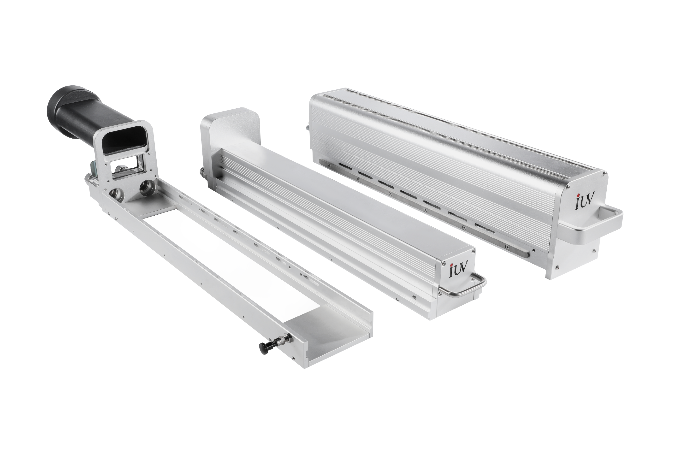
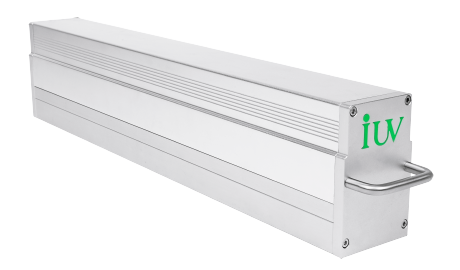
The “high-intensity” aspect of modern LED curing systems is key to their impact on print accuracy. These systems are designed to deliver a powerful, concentrated dose of UV energy precisely where and when it’s needed. This focused energy delivery translates into several benefits for narrow web printing:

1. Precise Wavelength Control

High-intensity LED systems can be configured to emit UV light at wavelengths that are optimally absorbed by specific UV-curable inks and coatings. This targeted absorption means that the curing reaction is initiated efficiently and completely. This precise control minimizes wasted energy and ensures that the ink cures uniformly across the printed surface, reducing the likelihood of incomplete curing or surface tack.

2. Minimized Heat Transfer

One of the most significant advantages of LED curing is its minimal heat output compared to mercury lamps. This is crucial for narrow web printing, where thin substrates like films and foils are often used. Excessive heat can cause these materials to distort, shrink, or become brittle, leading to registration problems and loss of dimensional stability. By using high-intensity LEDs, converters can cure inks rapidly without introducing damaging levels of heat into the substrate. This stability directly contributes to better registration and sharper print definition.

3. Consistent Energy Output

LEDs have a much longer operational lifespan than mercury lamps. More importantly, their energy output remains remarkably consistent throughout their life. This consistency eliminates the variability that can arise from aging mercury lamps, ensuring that each print run receives the same level of UV energy. This predictable curing process is fundamental to achieving repeatable accuracy and color consistency from job to job.

4. Faster Cure Speeds and Improved Throughput

The high intensity of LED systems allows for very rapid curing. This means inks can be cured almost instantaneously as they pass through the curing station. In narrow web printing, this fast curing capability enables presses to run at higher speeds without compromising ink adhesion or finish quality. Faster curing also means less time spent waiting for inks to dry or set, leading to increased productivity and faster turnaround times. This enhanced throughput, when managed correctly, can further contribute to maintaining accuracy by reducing the time a substrate is under tension or subject to potential movement.

5. Reduced Dot Gain and Sharper Images

The controlled and efficient curing provided by high-intensity LEDs helps to minimize excessive dot gain. When ink is exposed to UV energy, it polymerizes. If the curing is not precise, the ink can spread or deform, leading to dots appearing larger than intended. High-intensity LED curing, with its rapid and focused energy delivery, encourages a more precise polymerization of the ink, preserving the integrity of the dots. This results in sharper images, finer text, and improved tonal reproduction, which are critical for high-accuracy printing applications.

Applications in Flexography and Offset Lithography

Both flexographic and offset printing processes on narrow web presses can benefit significantly from high-intensity LED curing.

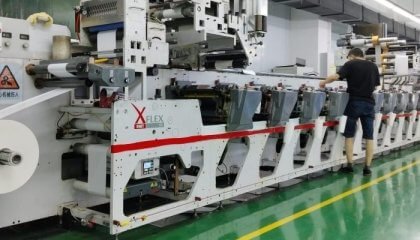
In flexography, where the printing plates are raised and transfer ink via an anilox roll, achieving fine details and solid ink coverage requires precise control. High-intensity LEDs ensure that the ink is cured quickly and uniformly onto the substrate, preventing smudging or incomplete cure that can plague fine lines and screen tints. This is especially important for label applications where detailed graphics and small text are common.

For offset lithography on narrow web presses, ink trapping and dot fidelity are paramount. The rapid and controlled curing from LED systems helps to maintain the integrity of the ink film and prevent undesirable ink spread. This ensures sharper dots and cleaner transitions, crucial for high-quality printed materials where visual fidelity is key.

Implementing High-Intensity LED Curing

Switching to or upgrading to high-intensity LED curing systems involves considerations for narrow web printers. It’s important to ensure:

  • Ink/Coating Compatibility: While many UV-curable inks and coatings are formulated for LED curing, it’s essential to verify compatibility with specific formulations, particularly those designed for mercury lamps. New formulations may be required for optimal performance.
  • Wavelength Selection: LED systems are available with different peak wavelengths. Choosing the correct wavelength to match the ink’s photoinitiator system is critical for efficient and complete curing.
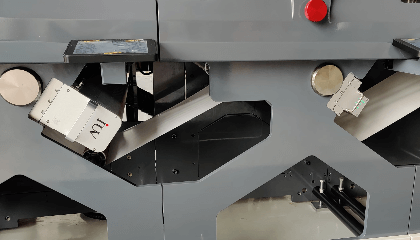
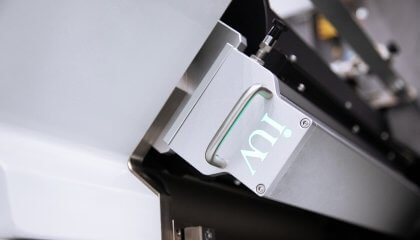
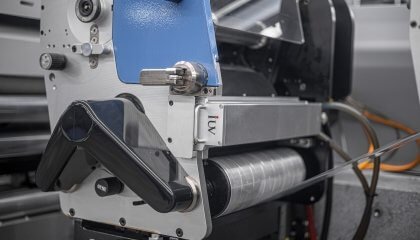
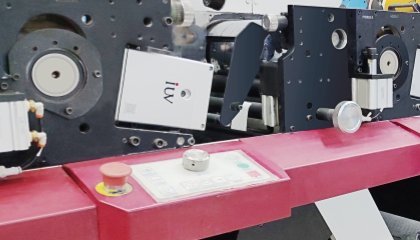
  • System Integration: Proper integration of the LED curing units into existing narrow web presses is necessary. This includes power requirements, cooling (though minimal compared to mercury), and physical placement to ensure optimal UV exposure.
  • Press Speed and Energy: Matching the press speed with the UV energy output of the LED system is vital. The goal is to deliver sufficient energy for a complete cure at the maximum operational speed.

The Future of Print Accuracy

The pursuit of enhanced print accuracy in narrow web printing is an ongoing journey. High-intensity LED curing represents a significant leap forward. By offering precise control over wavelength, minimizing heat, ensuring consistent energy output, and enabling faster cure speeds, these systems directly address many of the challenges that can compromise print quality. For converters focused on delivering labels and packaging with exceptional detail, vibrant color, and flawless registration, investing in advanced LED curing technology is a strategic move that pays dividends in both quality and efficiency. The ability to achieve superior print results, job after job, is increasingly linked to the sophistication of the curing process.

Contact IUV Curing Experts

滚动至顶部