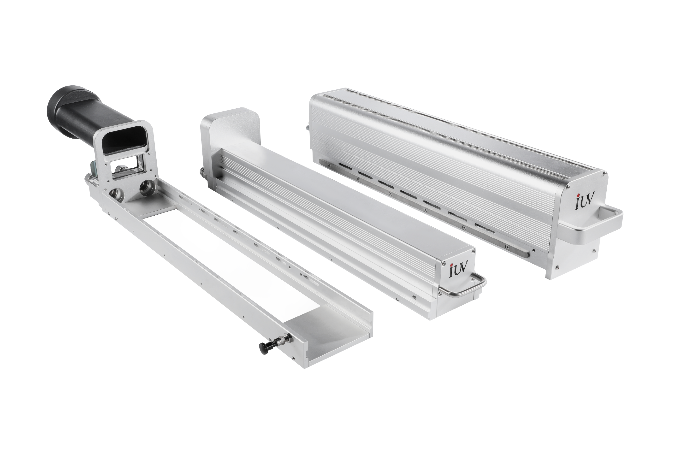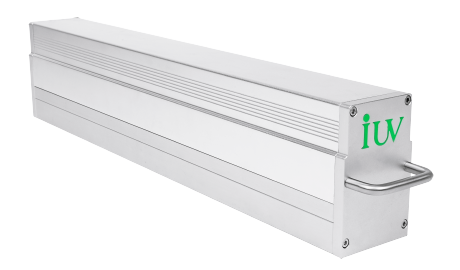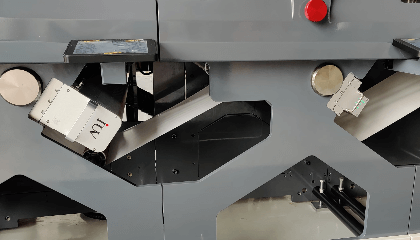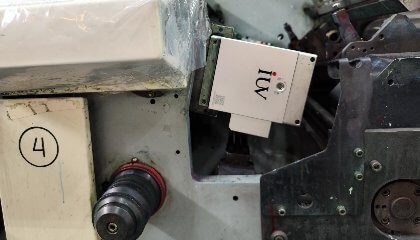
Achieving superior ink adhesion and long-lasting print durability is a constant pursuit in the printing industry. For label printers, in particular, this quest directly impacts product quality, brand perception, and the overall performance of the printed material in demanding environments. The advent of intelligent UV curing automation, especially utilizing LED UV technology, presents a significant leap forward, offering unprecedented control and consistency.
The Foundation: Understanding Ink Adhesion and Durability
Ink adhesion refers to how well the ink bonds to the substrate. Poor adhesion can lead to flaking, scratching, or complete removal of the ink, rendering the print useless. Durability encompasses a broader range of resistances, including abrasion, chemical exposure, and fading from light. In the label printing world, these qualities are non-negotiable. Imagine a label on a cleaning product that smudges with the first drop of liquid, or a wine label that fades on the shelf. These are failures directly attributable to inadequate ink adhesion and durability.
Several factors influence these critical properties:
- Substrate Material: Different materials (paper, films like BOPP, PET, PE) have varying surface energies and chemical compositions. Some are inherently more receptive to ink than others.
- Ink Formulation: The type of ink, its chemistry, and its interaction with the curing process are paramount. UV-curable inks rely on photoinitiators that trigger polymerization when exposed to UV light.
- Printing Process: The specific printing method—flexography, offset lithography, or gravure—can influence how ink is applied and prepared for curing.
- Curing Conditions: This is where UV curing automation truly shines. Precise control over UV intensity, wavelength, exposure time, and temperature dictates the extent of ink polymerization.
The Role of UV Curing in Print Enhancement
Traditional thermal curing relies on heat to evaporate solvents, leaving the ink binder and pigments behind. This process can be slow, energy-intensive, and may even damage heat-sensitive substrates. UV curing, on the other hand, utilizes ultraviolet light to initiate a rapid chemical reaction, transforming liquid ink into a solid, durable film.
This photochemical process offers several advantages:
- Speed: UV inks cure almost instantaneously, allowing for higher press speeds and increased throughput.
- Energy Efficiency: Compared to thermal drying, UV curing generally consumes less energy.
- Substrate Versatility: Many substrates that cannot withstand high heat can be successfully UV cured.
- Enhanced Properties: Properly cured UV inks exhibit excellent adhesion, scratch resistance, chemical resistance, and color vibrancy.
The Evolution: From Conventional UV to LED UV Curing
For years, mercury vapor lamps were the standard in UV curing. While effective, they have drawbacks:
- High Heat Output: Mercury lamps generate significant heat, which can affect substrate stability and require extensive cooling systems.
- Variable Output: Their UV output can degrade over time, leading to inconsistent curing and requiring frequent replacement.
- High Energy Consumption: They are less energy-efficient than newer technologies.
- Environmental Concerns: Mercury is a hazardous substance.
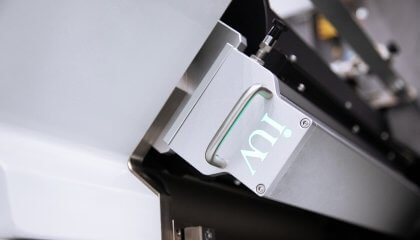
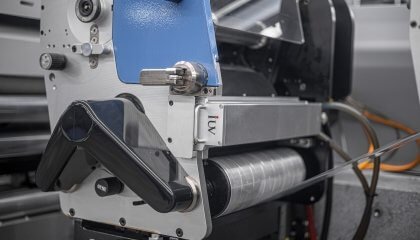
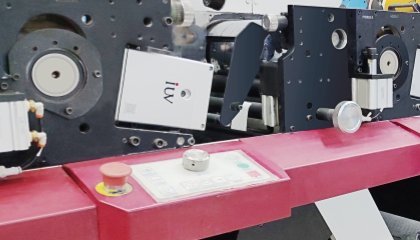
LED (Light Emitting Diode) UV curing represents a paradigm shift. LEDs emit UV light at specific wavelengths, offering unparalleled control and numerous benefits:
- Precise Wavelength Control: LEDs can be tuned to emit light within narrow wavelength bands (e.g., 365 nm, 395 nm), matching the absorption spectra of specific photoinitiators in the ink. This ensures efficient and complete polymerization.
- Instant On/Off: Unlike mercury lamps that require warm-up and cool-down periods, LEDs can be switched on and off instantly, saving energy and enabling on-demand curing.
- Low Heat Emission: LEDs produce very little heat, preserving substrate integrity and reducing the need for complex cooling.
- Long Lifespan and Stability: LEDs have a much longer operational life and maintain a stable UV output throughout their lifespan, ensuring consistent curing results.
- Energy Efficiency: LEDs are significantly more energy-efficient than mercury lamps.
The Intelligence Factor: Automation in UV Curing
The “intelligent” aspect of UV curing automation lies in its ability to precisely control and monitor the curing process in real-time. This moves beyond simply switching a lamp on and off. Modern systems incorporate sensors and sophisticated software to adapt to changing conditions.
Key components and functions of intelligent UV curing automation include:
- Sensor Integration: UV irradiance sensors continuously measure the amount of UV energy reaching the ink. Temperature sensors monitor substrate and lamp head temperatures. Spectrometers can even verify the emitted wavelength.
- Closed-Loop Feedback Systems: This is where intelligence truly emerges. The system receives data from sensors and automatically adjusts parameters like UV intensity or lamp power to maintain the target dose. If the press speed changes, or a substrate variation occurs, the system compensates instantly.
- Process Monitoring and Data Logging: Automation allows for comprehensive data logging of all curing parameters for every print job. This is invaluable for quality control, troubleshooting, and process optimization.
- Predictive Maintenance: By monitoring performance metrics, intelligent systems can predict when maintenance might be required, preventing unexpected downtime.
- Recipe Management: Operators can store and recall specific UV curing settings for different jobs, inks, and substrates, ensuring consistency across repeat orders.
Impact on Specific Printing Processes
1. Narrow Web Flexography:
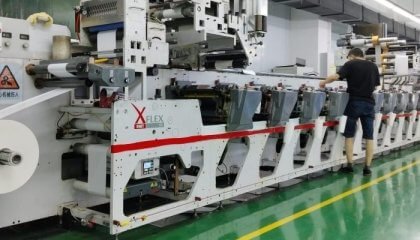
In narrow web label printing, flexography is dominant. The ability of LED UV curing to achieve instant cure allows for extremely high press speeds, crucial for competitive label production. Intelligent automation ensures that even with rapid changes in substrate tension or ink viscosity, the UV dose remains constant, guaranteeing adhesion on films like BOPP and PE, which can be challenging. This consistent cure prevents ink scuffing during rewinding or finishing.
2. Offset Lithography (Sheet-fed and Web-fed):
For offset printing, especially in commercial and packaging applications where labels might be part of a larger sheet, precise ink laydown is key. Intelligent UV curing ensures that the relatively thicker ink films used in offset cure completely and evenly. This prevents ink set-off (transferring ink to the back of the next sheet) and improves resistance to handling and chemicals, vital for product labels exposed to various environments.
3. Gravure Printing:
While less common for narrow web labels compared to flexo, gravure’s ability to lay down consistent ink volumes can benefit from controlled UV curing. Intelligent automation helps ensure deep, uniform curing of the ink film, enhancing the rich appearance and durability of high-quality labels.
Optimizing Adhesion and Durability with Intelligent UV
Intelligent UV curing automation directly addresses the core needs for enhanced adhesion and durability:
- Consistent Energy Delivery: By maintaining a precise UV dose, regardless of press speed or substrate variations, the photoinitiators in the ink are activated uniformly. This leads to thorough and complete polymerization of the ink binder, forming a strong chemical bond with the substrate.
- Optimized Wavelength Matching: With LED technology, printers can select UV emitters that precisely match the photoinitiator package in their inks. This targeted energy application ensures that the photoinitiator is efficiently stimulated, leading to a more complete and robust curing reaction, directly translating to better adhesion and resistance properties.
- Reduced Thermal Stress: The low heat output of LED UV curing minimizes stress on the substrate. This is particularly important for thin films or sensitive papers, preventing warping or degradation that could compromise the ink’s ability to adhere properly.
- Elimination of Incomplete Curing: Mercury lamps, with their degrading output, could lead to under-cured ink. Intelligent automation, especially with stable LED sources, eliminates this variability, ensuring that every print run achieves its full potential for adhesion and durability.
- Enhanced Chemical and Abrasion Resistance: A fully polymerized UV ink film is inherently more resistant to solvents, chemicals, and physical abrasion. Intelligent automation guarantees this full polymerization, making labels more resilient in their end-use applications, from industrial settings to consumer goods.
The Future is Automated and Intelligent
The integration of intelligent automation with LED UV curing technology is not just an upgrade; it’s a fundamental enhancement to the printing process. For label printers aiming for the highest standards of ink adhesion and durability, this technology offers a powerful solution. It provides the consistency, control, and efficiency needed to meet increasingly demanding market requirements, ensuring that every label produced is not only visually appealing but also built to last. The ability to precisely control the curing environment, adapt to real-time variables, and log critical data empowers printers to achieve predictable, superior results job after job.