Achieving vibrant and consistent color density is a cornerstone of high-quality printing. In the competitive landscape of label, flexographic, and offset printing, especially within the narrow web sector, the pursuit of deeper, richer colors directly impacts brand perception and product appeal. Advanced UV ink performance techniques, particularly when coupled with LED UV curing technology, offer a powerful solution. Understanding the nuances of ink formulation, substrate interaction, and curing parameters is key to unlocking this potential.
The Science of Color Density in Printing
Color density, in printing terms, refers to the amount of light absorbed by the ink layer on the substrate. Higher density means more light is absorbed, resulting in a darker, more saturated color. This is influenced by several factors:
- Ink Pigment Concentration: The more pigment in the ink, the greater its inherent ability to absorb light.
- Ink Film Thickness: A thicker ink layer generally absorbs more light than a thinner one, up to a point where excess ink can cause drying issues or show substrate texture.
- Pigment Particle Size and Distribution: Finer, more uniformly distributed pigment particles can pack more densely, leading to better light absorption.
- Ink Rheology and Transfer: How the ink flows and transfers from the printing plate to the substrate significantly impacts the uniformity and thickness of the applied ink film.
- Substrate Properties: The reflectivity and absorbency of the substrate play a crucial role. A bright white, non-absorbent substrate will showcase higher color density than a dull, absorbent one.
The Role of UV Curing Technology
UV curing uses ultraviolet light to initiate a rapid photochemical reaction. This reaction transforms liquid UV ink into a solid, durable film almost instantaneously. Traditional thermal drying methods can struggle to achieve the same level of ink film integrity and gloss, which are vital for color density.
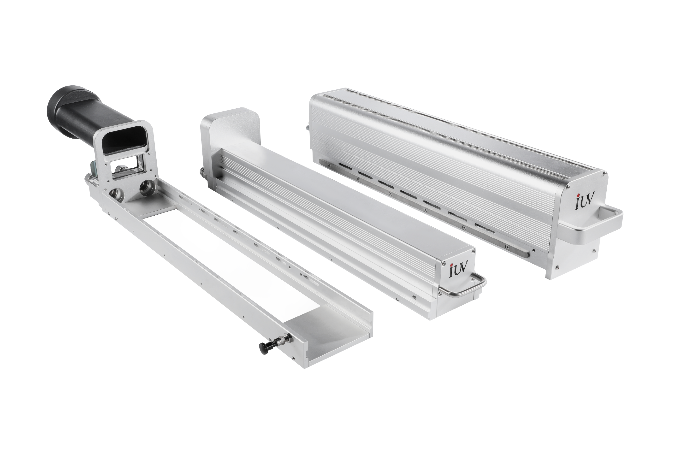
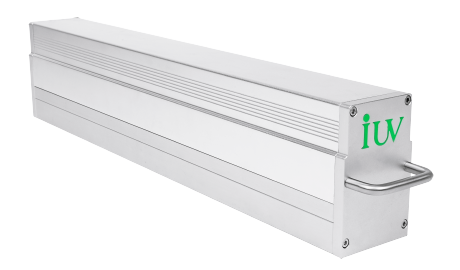
LED UV curing, a more modern advancement, offers several advantages over traditional mercury vapor lamps:
- Energy Efficiency: LEDs consume significantly less power.
- Longer Lifespan: They last much longer than mercury lamps.
- Instant On/Off: This reduces energy waste and prevents premature curing.
- Lower Heat Emission: This is particularly beneficial for heat-sensitive substrates common in narrow web printing.
- Specific Wavelength Control: LEDs can be tuned to emit precise UV wavelengths, optimizing the photoinitiator’s response for faster and more complete curing.
Advanced UV Ink Formulations for Enhanced Density
Modern UV ink formulations are engineered to maximize color performance. Key advancements include:
- High-Performance Pigments: The development of pigments with superior tinting strength and lightfastness allows for higher color saturation with less ink. These pigments are often surface-treated to improve dispersion and compatibility within the ink vehicle.
- Optimized Pigment Dispersion: Advanced milling techniques break down pigment particles to their optimal size and ensure they are evenly dispersed throughout the ink. This uniformity is critical for consistent light absorption and preventing scattering.
- Resin Systems: The binder (resin) in UV inks is crucial. New resin chemistries are designed to provide excellent gloss, adhesion, and scuff resistance, all of which contribute to a perceived higher color density by reflecting light more effectively and protecting the ink film.
- Photoinitiator Packages: The choice and concentration of photoinitiators dictate how efficiently the UV light triggers the curing process. Advanced packages ensure rapid and thorough polymerization, creating a dense, cross-linked ink film.
Optimizing UV Ink Performance in Specific Printing Processes
The application of these advanced UV inks and curing techniques varies slightly across different printing methods:
1. Flexographic Printing (Narrow Web)
Flexography, particularly in narrow web applications for labels and packaging, relies on ink transfer from a raised image carrier to the substrate.
- Ink Transfer: The rheology of the UV flexo ink is paramount. It must have sufficient viscosity to be held on the anilox roll and transfer cleanly to the printing plate, but flow just enough to create a smooth, unbroken ink film on the substrate. Advanced inks are formulated with improved flow properties for better laydown.
- Anilox Roll Selection: The cell volume and engraving pattern of the anilox roll directly control ink transfer volume. Using a finer anilox with appropriate cell geometry can deliver a more consistent and thinner ink film, which, when combined with high-pigment inks, can actually boost density without over-inking.
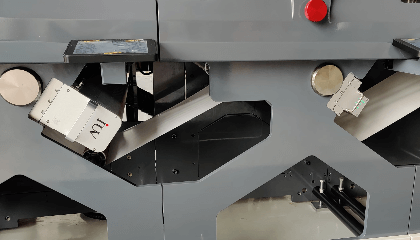
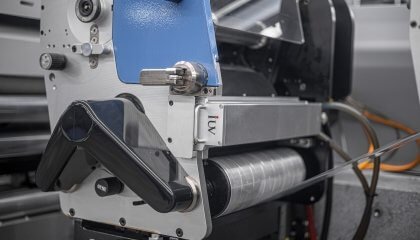
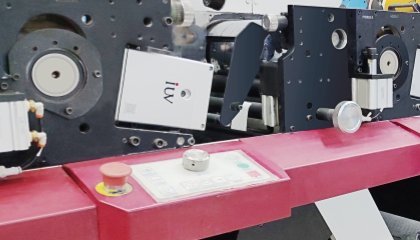
- Curing: LED UV curing units are increasingly common in narrow web flexo presses. Proper placement and power of the LEDs, along with correct web speed, are essential. Too little UV energy leads to uncured ink, reduced gloss, and lower density. Too much can cause scorching or ink degradation. Fine-tuning the UV dose for the specific ink and substrate combination is critical.
2. Offset Printing (Sheetfed and Web)
Offset printing uses an intermediate plate to transfer ink to a blanket, then to the substrate.
- Ink Transfer and Ink Film: UV offset inks are designed for excellent transfer and laydown. Formulators focus on viscosity and tack to ensure a smooth, uniform film is applied by the rollers. The higher the pigment loading and the better the dispersion, the more density can be achieved with a controlled ink film thickness.
- Substrate Interaction: The surface energy and absorbency of the substrate are key. For offset, especially on coated papers and films, the ink should sit on the surface to maximize gloss and density. Advanced UV offset inks often have formulations that resist excessive wetting into the substrate.
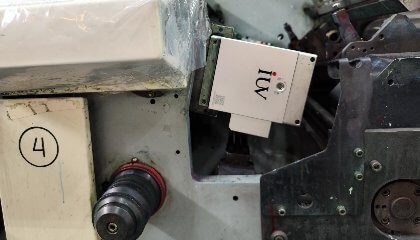
- Curing: In both sheetfed and web offset, UV curing stations follow the printing units. For narrow web offset, a well-matched LED UV system is vital. The spectral output of the LED must align with the photoinitiators in the ink. Insufficient cure will result in poor rub resistance and a duller appearance, which diminishes perceived color density.
Key Considerations for Maximizing Color Density
To consistently achieve superior color density using advanced UV ink performance techniques, consider these practical aspects:
- Substrate Choice: Always test inks on the actual substrate intended for the print run. Surface properties, color, and absorbency vary widely and significantly impact the final color. Brighter, smoother, and less absorbent substrates generally yield higher density.
- Color Management: A robust color management workflow, from design to final print, ensures that color intentions are accurately translated. This includes calibrated monitors, correct color profiles, and proofing.
- Press Setup and Maintenance: Properly maintained printing presses ensure consistent ink transfer. Anilox rolls should be clean and undamaged. Printing plates must be accurately mounted and in good condition.
- Ink Handling and Storage: UV inks are sensitive to light and heat. Store them in opaque containers away from direct sunlight and heat sources. Avoid contamination.
- Curing Unit Optimization: Regularly check the output of your UV curing units. Ensure lamps are clean and, for LEDs, that the output has not degraded over time. The distance between the lamp and the substrate is also a critical factor.
- Testing and Calibration: Develop a system for testing new ink batches and periodically recalibrating press parameters. This might involve using densitometers or colorimeters to measure color density and consistency.
- Ink Film Thickness Measurement: Where possible, use tools to estimate or measure ink film thickness to ensure it’s within the optimal range for the specific ink and application. Too thin won’t provide enough coverage; too thick can lead to drying issues or dot gain.
By integrating advanced UV ink formulations with precise control over curing processes and a deep understanding of the chosen printing technology—whether flexography, offset, or narrow web applications—printers can elevate their output. The result is consistently vibrant, high-density colors that capture attention and communicate quality. This focus on technical excellence ensures that printed materials not only look good but also perform exceptionally well in the market.