In the competitive world of printing, delivering vibrant, eye-catching graphics is only half the battle. For labels, flexible packaging, and a myriad of other printed products, durability and scratch resistance are paramount. Customers demand prints that can withstand the rigors of handling, shipping, and end-use without fading or degrading. This is where UV curing technology steps in, revolutionizing the way we achieve superior print performance.
The Challenge: Print Survivability in Demanding Applications
Traditional printing methods often rely on air-drying inks, which can be a slow and sometimes incomplete process. This can leave prints vulnerable to damage. Imagine a product label that gets scuffed on a store shelf, or a flexible package that experiences abrasion during transportation. These scenarios not only impact the product’s appearance but can also compromise brand integrity.
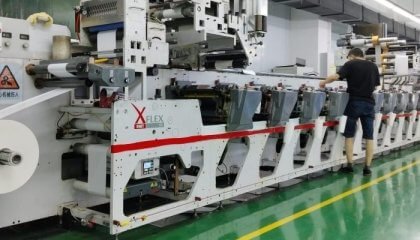
For applications like label printing, where products are frequently handled and exposed to various environments, the need for robust inks is critical. Similarly, in flexographic printing and offset printing (or sheetfed printing), especially within narrow web printing applications serving the label and packaging sectors, achieving high levels of rub and scratch resistance directly impacts customer satisfaction and product longevity.
Enter UV Curing: A Leap in Ink Technology
UV curing is a photochemical process that uses ultraviolet (UV) light to instantly solidify liquid inks, coatings, or adhesives. Unlike conventional inks that evaporate a solvent or water, UV-curable inks contain monomers and oligomers that form a solid, cross-linked polymer network when exposed to UV radiation. This rapid and complete transformation is the key to their enhanced performance.
How UV Light Powers the Transformation
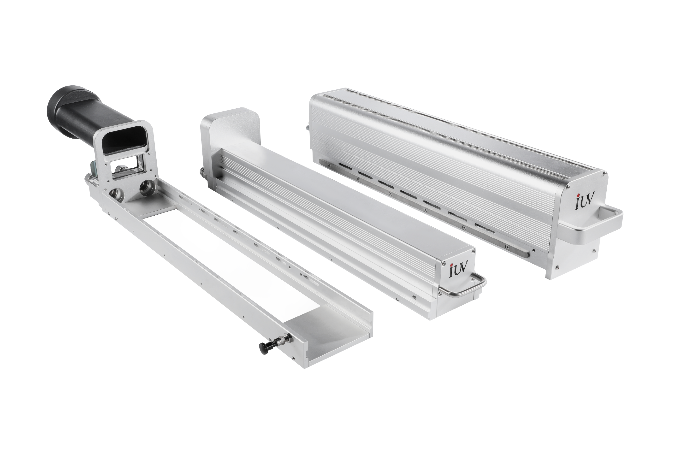
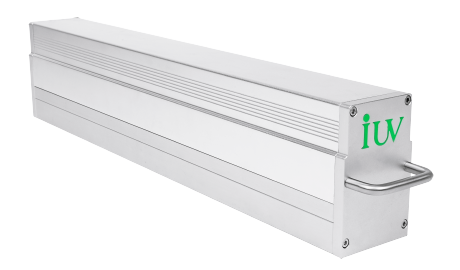
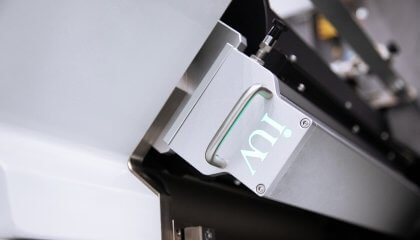
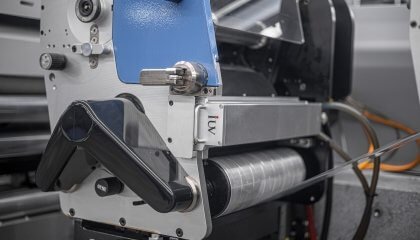
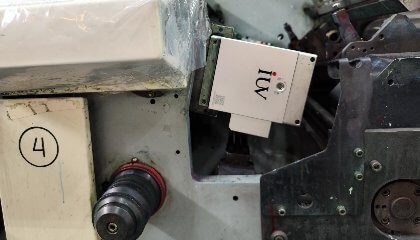
The magic happens within specialized UV curing systems, often utilizing UV lamps or, increasingly, LED UV curing technology. When UV light of specific wavelengths interacts with photoinitiators present in the ink, it triggers a chain reaction. This reaction rapidly polymerizes the ink, transforming it from a liquid to a solid film in a matter of seconds, or even fractions of a second.
The Science Behind Enhanced Durability and Scratch Resistance
The fundamental difference in how UV-curable inks solidify directly translates to superior physical properties.
1. Complete Polymerization: A Solid Foundation
Because UV curing is a rapid, 100% solids process (meaning there’s no solvent evaporation), it results in a dense, tightly cross-linked polymer film. This tightly bound molecular structure is inherently stronger and more resistant to physical stress.
- Improved Hardness: The cured ink film is significantly harder than air-dried inks, making it more difficult for abrasive materials to scratch the surface.
- Enhanced Chemical Resistance: The cross-linked network also creates a barrier against many chemicals, solvents, and cleaning agents, protecting the print from degradation.
2. Superior Adhesion: Bonding with the Substrate
UV-curable inks are formulated to bond exceptionally well to a wide range of substrates commonly used in label printing, flexographic printing, and offset printing. This strong adhesion prevents ink from lifting or peeling, further contributing to its overall durability.
- Resilience on Diverse Materials: Whether printing on paper, plastic films, or metallic foils, UV inks form a robust bond that withstands physical manipulation.
3. Gloss and Finish Options: Beyond Protection
Beyond just protection, UV curing offers aesthetic advantages. The rapid solidification process often results in a smoother ink surface, which can lead to enhanced gloss levels and a more vibrant appearance. This also contributes to scratch resistance, as a glossier surface is generally less prone to showing minor abrasions.
UV Curing Across Key Printing Technologies
The benefits of UV curing are widely applicable across various printing sectors, enhancing performance without requiring a complete overhaul of existing processes.
1. UV in Flexographic Printing
Flexographic printing, particularly in narrow web printing for labels and flexible packaging, has widely adopted UV curing. UV-flexo inks offer:
- Fast Speeds: UV curing allows presses to run at higher speeds without compromising ink drying, a critical factor in high-volume label production.
- Vibrant Colors: The density of UV inks helps achieve excellent color saturation.
- Durability: Prints are immediately ready for finishing processes like die-cutting or lamination, with excellent resistance to handling.
2. UV in Offset Printing (Sheetfed and Web)
In offset printing, both sheetfed and web presses benefit from UV technology. UV offset inks provide:
- Instant Handling: Sheets or webs are dry immediately after printing, eliminating wait times and enabling faster turnaround.
- Exceptional Rub Resistance: Crucial for brochures, packaging, and high-end commercial prints that endure extensive handling.
- Versatility: UV offset inks perform well on a broad spectrum of paper stocks and coated materials.
3. UV in Narrow Web Printing
The narrow web printing sector, which predominantly serves the label and packaging markets, has seen UV curing become a standard. This is due to:
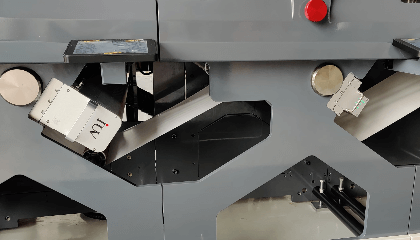
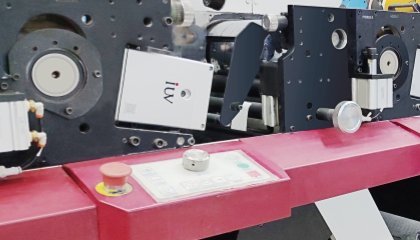
- Compact Integration: UV curing units integrate seamlessly into narrow web presses.
- High-Quality Output: Delivering durable, high-resolution prints essential for branding on small packaging.
- Reduced Waste: The instant drying minimizes smudging and misprints, leading to less material waste.
The Rise of LED UV Curing
While traditional mercury vapor UV lamps have been the workhorse, LED UV curing is rapidly gaining traction. LED UV systems offer distinct advantages:
- Energy Efficiency: LEDs consume significantly less power than traditional lamps, leading to reduced operating costs and a smaller carbon footprint.
- Longer Lifespan: LED lamps have a much longer operational life, reducing replacement frequency and maintenance.
- Instant On/Off: Unlike mercury lamps that require warm-up and cool-down periods, LEDs can be switched on and off instantly, saving energy and reducing heat exposure to the substrate.
- Focused Wavelengths: LEDs emit specific UV wavelengths, allowing for more precise control over the curing process and compatibility with a wider range of ink formulations.
- Lower Heat Emission: This is particularly beneficial for heat-sensitive substrates commonly used in label printing and flexible packaging.
Implementing UV Curing for Optimal Results
To fully leverage the benefits of UV curing for enhanced durability and scratch resistance, consider these points:
- Ink Selection: Choose UV inks specifically formulated for your printing technology and intended application. Different ink chemistries offer varying levels of hardness, flexibility, and resistance properties.
- Curing System Optimization: Ensure your UV curing system (whether traditional lamps or LEDs) is correctly configured. This includes lamp intensity, exposure time, and spectral output to achieve full cure.
- Substrate Compatibility: While UV inks adhere well to many surfaces, proper surface preparation and ink-substrate matching are still important for optimal adhesion and performance.
- Quality Control: Implement rigorous quality checks to ensure complete UV cure. This can involve rub tests, scratch tests, and adhesion tests to verify that the printed product meets the required durability standards.
Conclusion: Investing in Lasting Impressions
In today’s market, where print quality and longevity are non-negotiable, UV curing technology offers a clear path to superior print durability and scratch resistance. By providing a rapid, efficient, and robust method for solidifying inks, UV curing enhances the perceived value and practical performance of printed materials across label printing, flexographic printing, offset printing, and narrow web printing. Whether utilizing traditional UV lamps or the cutting-edge efficiency of LED UV curing, this technology is an indispensable tool for printers aiming to deliver prints that not only look exceptional but also stand the test of time. Embrace UV curing and ensure your prints leave a lasting, resilient impression.