<!-- Meta Pixel Code --> <!-- 结束元像素代码 -->

How UV Curing Affects Adhesive Performance in Self-Adhesive Label Printing

How UV Curing Affects Adhesive Performance in Self-Adhesive Label Printing

In the dynamic world of label printing, achieving the perfect bond is paramount. Self-adhesive labels rely on sophisticated adhesives that must perform flawlessly across a myriad of applications and substrates. A critical factor influencing this performance is the curing process, particularly when employing UV (ultraviolet) curing technology. This article delves into the intricate relationship between UV curing and adhesive performance, exploring its impact on narrow web printing, flexographic printing, and offset printing processes.

Understanding UV Curing: The Foundation of Performance

UV curing is a photochemical process where high-intensity ultraviolet light initiates a rapid polymerization reaction in specially formulated inks, coatings, and adhesives. Unlike traditional thermal drying, which relies on heat to evaporate solvents or water, UV curing is an instantaneous, energy-efficient process. It involves photoinitiators within the formulation that absorb UV light and generate free radicals. These radicals then trigger a chain reaction, cross-linking monomers and oligomers to form a solid, durable film.

This rapid transformation is key. It means that the adhesive is exposed to energy, causing it to cure and develop its final properties almost instantly. The specific wavelength and intensity of the UV light, along with the formulation of the adhesive itself, play a crucial role in determining the success of this process.

The Impact on Adhesive Properties: Beyond Just Drying

The influence of UV curing on adhesive performance extends far beyond simply drying the material. It fundamentally alters the molecular structure of the adhesive, leading to a range of enhanced properties:

  • Improved Bond Strength: UV curing promotes thorough cross-linking within the adhesive. This creates a robust, three-dimensional molecular network, significantly increasing the adhesive’s tensile strength and its ability to resist shear forces. For labels subjected to heavy loads or constant stress, this enhanced bond strength is indispensable.
  • Enhanced Chemical Resistance: The highly cross-linked nature of UV-cured adhesives makes them exceptionally resistant to a wide array of chemicals, solvents, oils, and environmental factors. This is vital for labels used in harsh industrial environments, food and beverage packaging, or pharmaceutical applications where exposure to cleaning agents or product contents is common.
  • Greater Durability and Scratch Resistance: The cured film formed by UV radiation is typically harder and more resistant to physical abrasion and scratching. This preserves the label’s aesthetic appeal and legibility, even under demanding handling conditions.
  • Controlled Tack and Peel Strength: UV curing allows for precise control over the final tack (initial stickiness) and peel strength (the force required to remove the label). By adjusting curing parameters and adhesive formulations, printers can tailor these properties to specific end-use requirements, ensuring the label adheres securely without being overly difficult to remove when intended.
  • Reduced VOC Emissions: A significant advantage of UV curing is its solvent-free nature. This dramatically reduces volatile organic compound (VOC) emissions, contributing to a safer working environment and more environmentally friendly printing operations. This, in turn, simplifies compliance with environmental regulations.

UV Curing in Narrow Web Label Printing: Precision and Speed

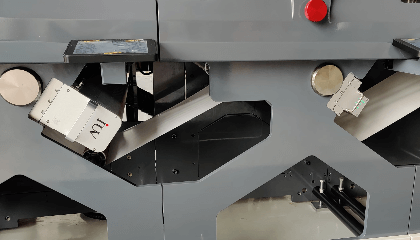
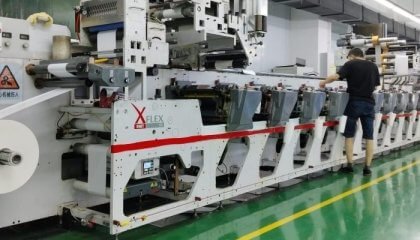
Narrow web printing, typically producing labels and flexible packaging on rolls with widths up to 20 inches, is a prime application for UV curing technology. The compact nature of narrow web presses, often configured for flexographic or offset printing, lends itself well to integrating UV curing units between print stations.

In this context, UV curing offers several distinct advantages for label adhesives:

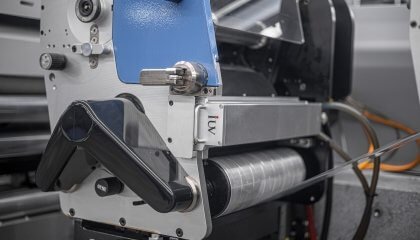
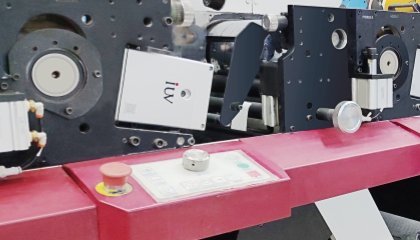
  • Instantaneous Drying Between Stations: UV units positioned between printing stations allow for the rapid curing of adhesives applied to the label face or liner. This prevents ink or adhesive transfer to the reverse side of the web or to adjacent labels during the printing and rewinding process.
  • High-Speed Production: Narrow web presses operate at high speeds. UV curing’s ability to cure instantaneously keeps pace with these speeds, eliminating bottlenecks associated with slower drying methods. This translates directly to increased productivity and lower production costs.
  • Versatility on Diverse Substrates: UV-curable adhesives can be formulated to adhere to a wide range of substrates commonly used in narrow web label printing, including papers, films (BOPP, PET, PE), and foils. The rapid curing process ensures a strong bond is achieved regardless of the substrate’s porosity or surface energy.

Flexographic Printing and UV Cured Adhesives: A Natural Fit

Flexographic printing, with its inherent flexibility and suitability for web-based processes, has embraced UV curing technology with open arms, especially in label printing. The process involves raised image plates transferring ink to the substrate. When UV-curable adhesives are used, they can be applied in various ways:

  • Adhesive as a Coating: In some applications, the UV-curable adhesive can be applied as a coating over a printed layer or directly to the face stock. The subsequent UV light exposure cures the adhesive, ensuring its integrity before the label is die-cut and applied.
  • Liner Coating: UV-curable adhesives can also be applied to the release liner. This ensures a consistent and controlled release of the label, crucial for automated application systems.
  • Direct Print Adhesion: For labels requiring specific adhesion properties directly from the printing unit, UV-curable adhesives can be incorporated into the ink formulation or applied as a separate layer. The rapid cure ensures the adhesive develops its full performance characteristics immediately.

The synergy between flexographic printing and UV curing allows for high-quality labels with excellent adhesion, durability, and resistance, all produced efficiently.

Offset Printing and UV Cured Adhesives: Fine Detail and Performance

While flexography is dominant in narrow web, sheetfed offset printing is also employed for certain types of labels, particularly those requiring high-resolution graphics and fine detail. UV curing is equally effective in these offset environments:

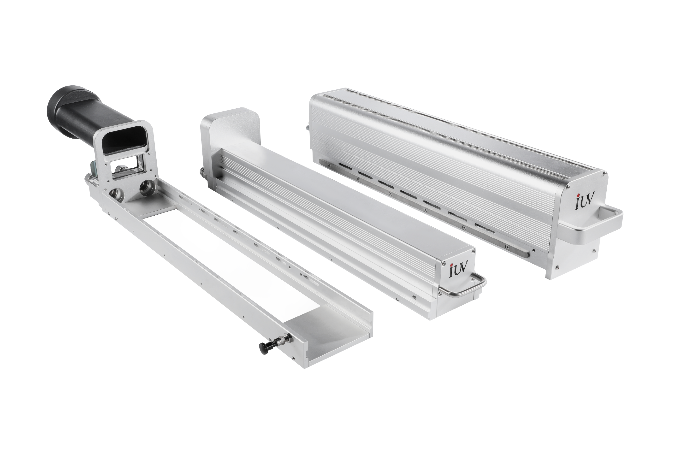
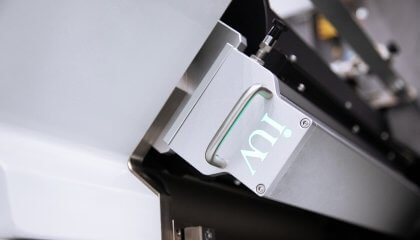
  • In-Line Curing: Offset presses can be equipped with UV curing units positioned after the last printing unit or after coating units. This allows for the immediate curing of UV-curable adhesives applied during the printing process.
  • Handling of Various Adhesives: UV offset inks and coatings, including adhesives, offer excellent print quality, color vibrancy, and sharp dot reproduction. The rapid curing process prevents smudging and ensures sharp, clean images and reliable adhesive performance.
  • Specialty Labels: For specialty labels that might involve intricate designs or specific tactile finishes, UV-curable adhesives in offset printing provide the necessary control and performance. They can be applied precisely where needed, ensuring a strong bond without compromising the overall label design.

The Critical Role of Photoinitiators and Formulation

The efficacy of UV curing for adhesives hinges on the careful selection and use of photoinitiators and the overall adhesive formulation. Photoinitiators are compounds that absorb UV light and initiate the polymerization process. Different photoinitiators absorb at different wavelengths and have varying efficiencies.

  • Type of Photoinitiator: The choice depends on the UV lamp technology (mercury vapor lamps vs. LED curing systems) and the specific adhesive chemistry.
  • Concentration: The amount of photoinitiator directly impacts the cure speed and depth. Too little will result in an incomplete cure, while too much can sometimes lead to brittleness or yellowing.
  • Adhesive Chemistry: The backbone of the adhesive – whether it’s acrylate-based, epoxy-based, or another chemistry – dictates how it will react to the free radicals generated by the photoinitiators. Modern UV-curable adhesives are engineered for specific performance characteristics like temperature resistance, outdoor durability, and low migration.

LED Curing: A Modern Evolution

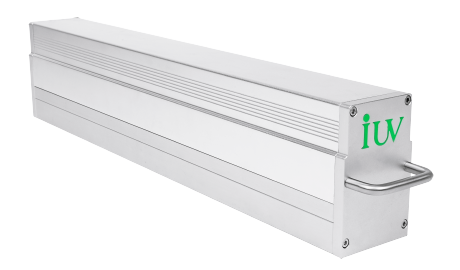
A significant advancement in UV curing technology is the advent of LED curing systems. Unlike traditional mercury vapor lamps, LEDs emit light at very specific wavelengths. This offers several benefits for adhesive performance:

  • Narrower Wavelength Emission: LEDs can be designed to emit light within a very narrow band, perfectly matching the absorption spectrum of specific photoinitiators. This leads to more efficient curing and reduces wasted energy.
  • Lower Heat Output: LEDs generate significantly less heat than mercury lamps. This is crucial for heat-sensitive substrates, preventing label deformation or premature adhesive degradation.
  • Longer Lifespan and Lower Maintenance: LEDs have a much longer operational life and require less maintenance than mercury lamps, contributing to lower overall operating costs.
  • Instant On/Off: LEDs offer instant on/off capabilities, which is beneficial for intermittent curing applications and can further enhance energy efficiency.

When using LED curing for adhesives, careful selection of photoinitiators and adhesive formulations that are highly responsive to the specific LED wavelengths is paramount. This ensures optimal cross-linking and, consequently, the highest level of adhesive performance.

Conclusion: A Stronger Bond Through Advanced Curing

In self-adhesive label printing, the choice of curing technology profoundly impacts adhesive performance. UV curing, with its speed, efficiency, and ability to enhance critical properties like bond strength, chemical resistance, and durability, has become an indispensable tool. Whether in narrow web, flexographic, or offset printing, UV curing, particularly with the advancements in LED technology, empowers label printers to achieve superior results. By understanding the science behind UV curing and its interaction with adhesive formulations, printers can unlock new levels of performance, ensuring their labels not only look good but also perform reliably in any application.

Contact IUV Curing Experts

滚动至顶部