In the modern narrow-web printing environment, versatility is the primary driver of profitability. Label converters no longer stick to just paper or standard films. Today, a single press might run heat-sensitive shrink sleeves in the morning and heavy textured wine labels in the afternoon. This diversity creates a significant challenge for the curing process. Defining a precise UV curing window is the only way to ensure consistent quality across these varied materials.
A curing window represents the safe operating range between two failure points. The bottom of the window is the minimum energy required for full polymerization. The top of the window is the maximum heat or energy the substrate can handle before warping, yellowing, or losing dimensional stability.
The Physics of UV Curing in Narrow-Web Printing
UV curing is a photochemical reaction, not a drying process. When UV light hits the ink, photoinitiators absorb the energy and trigger a chain reaction. This turns liquid monomers and oligomers into a solid polymer matrix.
In flexographic and offset printing, this happens in milliseconds. As the press speeds up, the time the ink spends under the lamp decreases. If the press runs at 150 meters per minute, the “dwell time” is incredibly short. This is why understanding irradiance and dosage is mandatory for any engineer.
Irradiance refers to the “brightness” or intensity of the light at the surface. Dosage refers to the total energy delivered over time. You can have high intensity but low dosage if the press is moving too fast. Conversely, low intensity with a long exposure time might reach the total dosage but fail to penetrate thick ink layers.
Substrate Variability and Its Impact
Different substrates react to UV energy and heat in vastly different ways.
- Paper and Cardstock: These are generally forgiving. They absorb some ink, which helps with mechanical anchoring. However, excessive UV exposure can cause paper to become brittle or yellow.
- Synthetic Films (PE, PP, PET): These materials are non-porous. Adhesion relies entirely on surface energy and chemical bonding. These films are also sensitive to the IR (infrared) heat generated by traditional mercury lamps.
- Heat-Shrink Materials: These have the narrowest curing window. If the curing system generates too much heat, the film will shrink on the press, leading to registration errors and wasted material.
- Metallic Foils: Reflective surfaces can bounce UV light back toward the print head or plates. This requires careful adjustment of the lamp angles and shields.
Transitioning from Mercury to LED UV Curing
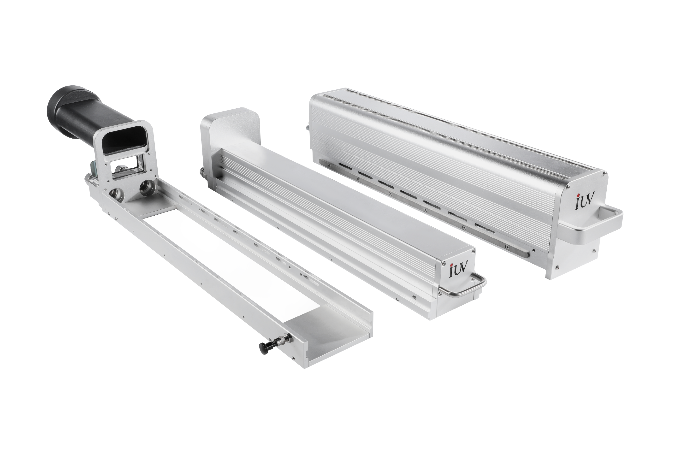
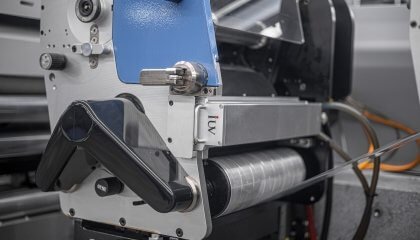
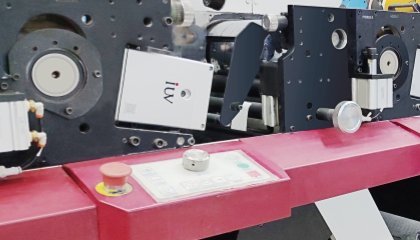
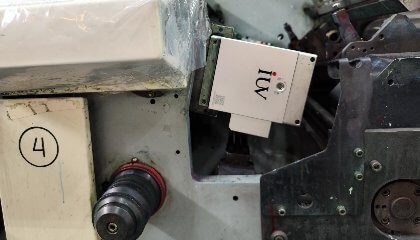
The shift toward LED UV technology has fundamentally changed how we set curing windows. Traditional mercury vapor lamps emit a broad spectrum of light. This includes UVC, UVB, UVA, and a significant amount of infrared heat.
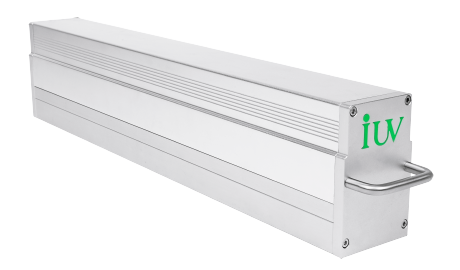
LED systems are monochromatic, typically peaking at 385nm or 395nm. This narrow output offers several advantages for multi-substrate work:
- Heat Management: LEDs do not emit IR. This keeps the substrate cool, allowing for the processing of thinner, heat-sensitive films that would melt under mercury lamps.
- Instant On/Off: There is no warm-up time. The energy output is consistent from the second the press starts.
- Stability: Mercury lamps degrade over time. Their output drops, which causes the curing window to drift. LEDs stay stable for tens of thousands of hours.
However, the narrow spectrum of LED requires specific ink chemistry. You cannot simply use “standard” UV inks and expect a perfect cure. The photoinitiators must be tuned to the 395nm wavelength.
Establishing the Minimum Cure Threshold
To find the bottom of your curing window, you must perform a “Ladder Test.” This involves running the press at increasing speeds while keeping the lamp power constant, or decreasing lamp power at a constant speed.
For flexo and offset labels, use these three standard tests to verify the minimum cure:
1. The Tape Test: Apply a high-tack adhesive tape to the printed surface. Rub it firmly, then pull it off quickly. If any ink transfers to the tape, the cure is insufficient.
2. The Thumb Twist: Press your thumb firmly against the ink and twist. If the ink smears or the surface feels “tacky,” the polymerization is incomplete. This often indicates that the surface is cured, but the base of the ink layer is still liquid.
3. The Solvent Rub: Use a cotton swab soaked in Methyl Ethyl Ketone (MEK) or Isopropyl Alcohol (IPA). Count how many double-rubs the ink can withstand before the substrate shows through. This is the most scientific way to measure the density of the polymer cross-linking.
Managing the Upper Limit: Heat and Over-Curing
While under-curing leads to smearing and migration, over-curing creates its own set of problems. In narrow-web applications, too much energy can lead to “ink brittleness.” If the label needs to be wrapped around a tight radius, like a small pharma vial, brittle ink will crack.
For thermal-sensitive films, the upper limit of the window is determined by material deformation. Modern presses use chilled impression rollers to pull heat away from the film. Even with chill rolls, a lamp running at 100% power on a slow-moving web will cause the material to stretch.
If you see the web fluttering or losing registration after the curing station, you have exceeded the upper limit of your window. You must either increase the press speed or dim the UV output.
Optimized Settings for Flexographic vs. Offset Labels
Flexo inks are generally lower in viscosity. They are applied in thin films via an anilox roller. Because the film is thin, oxygen inhibition can be an issue. Oxygen in the air can interfere with the chemical reaction at the very surface of the ink. High-intensity LED systems help “drive through” this inhibition layer.
Offset inks are much thicker and more viscous. They require high peak irradiance to penetrate the dense pigment load. When setting the curing window for offset labels on a narrow-web press, the focus is often on deep-curring. If the bottom layer isn’t cured, the ink will peel off the substrate despite looking perfect on the surface.
The Role of Sensors and Data Logging
You cannot manage what you do not measure. A professional printing setup should include a UV radiometer. This device measures the actual millijoules (mJ/cm²) and milliwatts (mW/cm²) reaching the web.
Don’t rely on the “percentage” shown on the press screen. A lamp set to 50% power on Monday might produce different results by Friday if the reflectors are dirty or the bulbs are aging. Use the radiometer to create a “Gold Standard” for each substrate.
For example:
- Clear PE Film: 80 mJ/cm² at 395nm.
- Semi-Gloss Paper: 120 mJ/cm² at 395nm.
- Silver Metallic Foil: 150 mJ/cm² (to compensate for reflection).
Record these values in your job tickets. This allows the operator to set the curing system based on hard data rather than guesswork.
Troubleshooting the Window
If you find your curing window is too small—meaning you have almost no room between under-curing and melting the film—consider these variables:
- Ink Pigmentation: Black, White, and Metallic inks are the hardest to cure. They block UV light from reaching the bottom of the ink film. You may need to reduce your speed or increase the lamp intensity specifically for these stations.
- Reflector Condition: In mercury systems, the reflectors are responsible for 70% of the curing energy. If they are dull or dusty, the “irradiance” drops, forcing you to slow down the press.
- Dyne Level: If the ink is cured (passes the solvent rub) but still fails the tape test, the issue is adhesion, not curing. You may need a corona treater to raise the surface energy of the substrate.
Conclusion: The Competitive Edge of Precision
Setting UV curing windows for multi-substrate production is a blend of chemistry, physics, and practical engineering. By documenting the specific energy requirements for every material in your inventory, you eliminate the “trial and error” that eats into margins.
The goal is a repeatable process. When the operator knows the exact window for a 30-micron PET film, they can run the press at maximum speed with total confidence. This reduces waste, prevents product recalls due to ink migration, and ensures that every label leaving the dock meets the highest standards of durability. In the world of high-speed narrow-web printing, the curing window isn’t just a technical setting—it is the foundation of quality control.