<!-- Meta Pixel Code --> <!-- 结束元像素代码 -->

How to Reduce Odor and Migration Risks with LED UV Curing in Labels

How to Reduce Odor and Migration Risks with LED UV Curing in Labels

The label printing industry faces increasing pressure regarding product safety and sensory quality. Food, beverage, and pharmaceutical brands demand packaging that does not compromise the contents. Two primary challenges emerge in this environment: residual odor and chemical migration. Traditional UV curing using mercury lamps often struggles to meet the strictest safety standards. However, the shift toward LED UV curing provides a robust technical solution. By understanding the interaction between ink chemistry and spectral output, printers can significantly reduce risks.

Understanding the Roots of Odor and Migration

Migration occurs when unreacted chemicals move from the printed ink layer into the packaged product. This happens through diffusion, set-off, or gas-phase transfer. Odor usually results from volatile organic compounds (VOCs) or specific photoinitiator byproducts. In conventional UV systems, the broad-spectrum light creates heat and ozone. These factors can degrade substrates and inks, adding to the “burnt” smell often associated with UV printing.

In narrow-web applications, where speeds are high and substrates are often thin, the curing window is tight. If the ink does not reach full polymerization, monomers remains mobile. These small molecules are the primary culprits in migration. LED UV technology addresses this by providing a more concentrated and consistent energy source.

The Role of Spectral Precision in Polymerization

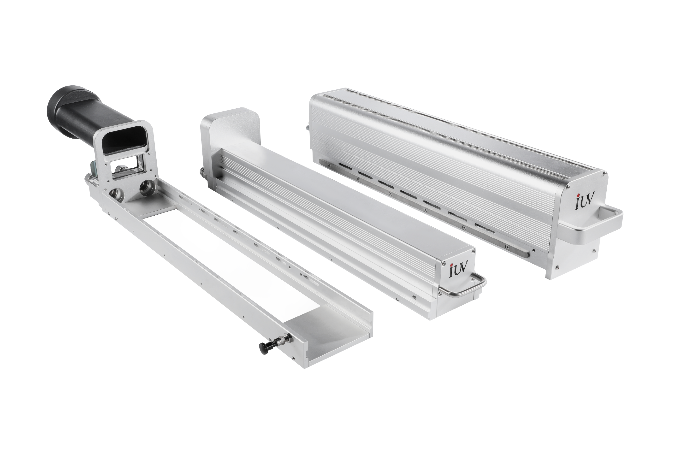
Traditional mercury lamps emit a wide range of wavelengths, including UVC, UVB, and UVA. While this covers many bases, it is inefficient. Much of the energy converts into heat rather than chemical curing. LED UV lamps emit light in a very narrow band, typically 385nm or 395nm.

Modern ink manufacturers now formulate “LED-optimized” inks. These inks contain photoinitiators specifically tuned to these wavelengths. This spectral matching ensures that the energy is absorbed deep into the ink film. Deep curing is vital for preventing migration. If the surface cures but the base remains liquid, the risk of chemical transfer increases. LED systems deliver high peak irradiance that penetrates thick ink layers, which is common in flexographic and screen printing for labels.

Eliminating Ozone and Thermal Degradation

One of the biggest advantages of LED UV is the absence of ozone. Conventional UV lamps ionize oxygen in the air, creating O3. Ozone has a pungent smell and requires extensive extraction systems. Even with extraction, some ozone can linger in the production area or on the substrate. LED UV does not produce ozone because it lacks the short-wavelength UVC required for its formation.

Furthermore, LED is a “cold” curing technology. Mercury lamps reach surface temperatures that can exceed 600 degrees Celsius. This heat often causes plastic films to stretch or release their own odors. Narrow-web printers working with heat-sensitive materials like PE or PP find LED invaluable. By keeping the substrate cool, you prevent the release of internal additives from the film. This keeps the overall sensory profile of the label neutral.

Optimization Strategies for Flexographic Label Printing

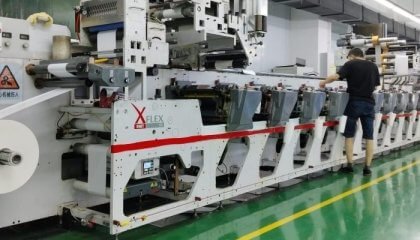
Flexo remains the dominant process for high-volume label production. To reduce migration in flexo, the balance between press speed and irradiance is critical. LED UV systems provide instant on/off capabilities and stable output over time. Unlike mercury bulbs, which degrade and lose intensity, LEDs remain consistent for thousands of hours.

Engineers must ensure the anilox volume matches the curing capacity of the LED array. Excessive ink film thickness can lead to “shadowing,” where the bottom of the ink layer doesn’t see enough light. By using high-reactivity low-migration (LM) inks designed for LED, flexo printers can achieve 100% conversion rates at high speeds. This conversion is the best defense against migration.

Enhancing Quality in Offset Narrow-Web Applications

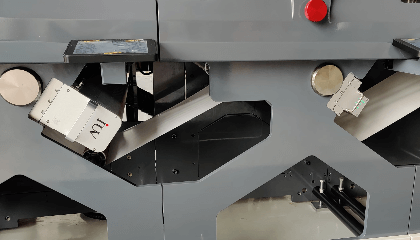
Offset printing provides high resolution but uses thinner ink films compared to flexo. However, offset inks are highly complex and often contain more components that could potentially migrate. Integrating LED UV into narrow-web offset presses allows for better control over the ink-water balance.

Traditional UV heat can fluctuate the viscosity of offset inks. LED UV keeps the press environment stable. This stability allows for a more consistent application of the ink film. For food-grade labels, printers should use “Low Migration” offset inks specifically validated for LED curing. These formulations use large-molecule photoinitiators that are physically too big to migrate through the packaging substrate.

The Importance of Cross-linking Density

Migration risk is inversely proportional to cross-linking density. High cross-linking creates a dense polymer network that traps other components like pigments and waxes. LED UV lamps provide high “peak” intensity, which initiates a rapid and dense polymer chain formation.

In a professional printing setup, we measure this via “dose” (total energy) and “irradiance” (peak power). While dose ensures the ink is dry to the touch, high irradiance ensures the chemical structure is sound. To reduce odor, the goal is to leave zero unreacted monomers. Regularly testing the cure with a rub test or a more advanced FTIR (Fourier Transform Infrared) spectroscopy can verify that polymerization is complete.

Selecting Substrates for Low Migration

The substrate acts as a barrier or a bridge. In narrow-web printing, paper and plastic are common. Porous papers can absorb monomers before they cure, making them nearly impossible to reach with UV light. This leads to high migration.

When using LED UV, choosing the right coating or primer can help. Primers can seal the substrate surface, ensuring the ink stays on top where the LED light can reach it. For plastic films, ensuring proper surface tension via corona treatment helps the ink spread evenly. An even ink film cures more predictably than a mottled one, further reducing the chance of “wet” pockets that cause odor.

Maintenance and Calibration for Safety

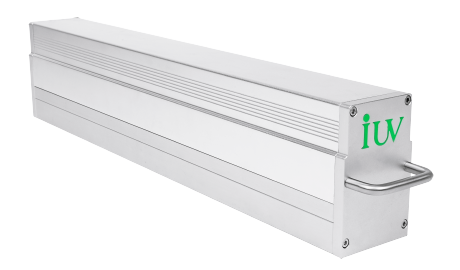
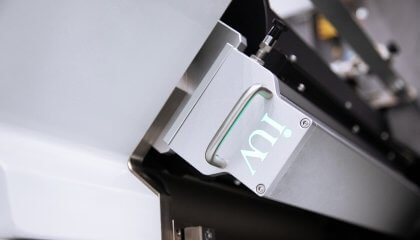
A professional engineer knows that a system is only as good as its maintenance. LED UV lamps do not “burn out” like bulbs, but they can get dirty. Dust or ink mist on the LED window will block the 395nm light. This reduction in energy can lead to “under-curing,” which is the leading cause of sudden migration spikes.

Implement a strict cleaning schedule for the LED glass. Use high-quality radiometers to check the output weekly. If the irradiance drops below a certain threshold, the press speed must be reduced to maintain the required safety margins. This proactive approach ensures that every label produced meets the brand owner’s migration limits.

Regulatory Standards and Testing Protocols

Labels for the food industry must comply with regulations like the Swiss Ordinance or Nestlé Guidance. These documents list approved substances and set strict migration limits, often as low as 10 parts per billion (ppb).

To prove compliance, printers must conduct migration testing. This involves using food simulants (like acetic acid or ethanol) to see what leaches out of the label over time. Transitioning to LED UV makes passing these tests easier. The technology provides a wider “safety window.” Because the energy output is stable, you don’t have to worry about the “mid-shift” curing failures that plague old mercury systems.

Operational Efficiency and Environmental Impact

Beyond safety, LED UV offers significant operational benefits. It consumes up to 70% less electricity than mercury systems. There is no warm-up time, which increases press uptime in narrow-web shops. From a SEO and branding perspective, “Mercury-Free” and “Ozone-Free” labels are strong selling points for environmentally conscious consumers.

The reduction in odor also improves the working environment for press operators. Traditional UV rooms often smell strongly of chemicals. An LED-equipped facility is much cleaner and more pleasant. This health and safety aspect often goes hand-in-hand with the goal of producing a safer, low-migration product.

Future-Proofing Label Production

The printing industry is moving toward a total phase-out of mercury. Investing in LED UV technology today is a strategic move to future-proof your production line. As ink chemistry continues to evolve, the efficiency of LED curing will only improve.

By focusing on the synergy between narrow-band light and low-migration chemistry, label printers can eliminate the risks of odor and chemical transfer. This ensures that the final packaging is as safe as it is visually appealing. High-performance LED UV is no longer an optional upgrade; it is the standard for high-quality, low-risk label manufacturing in the modern era.

Contact IUV Curing Experts

滚动至顶部