<!-- Meta Pixel Code --> <!-- 结束元像素代码 -->

How to Optimize UV Curing for Ultra-High Line Speeds in Label Printing

How to Optimize UV Curing for Ultra-High Line Speeds in Label Printing

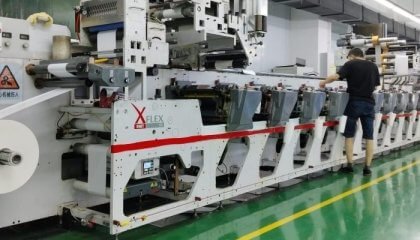
Label converters today face a relentless drive for productivity. Press manufacturers now offer narrow-web machines capable of exceeding 300 meters per minute (1,000 feet per minute). However, mechanical speed is meaningless if the UV curing system cannot keep pace. When the line speed doubles, the “dwell time”—the window where the ink stays under the UV light—is halved.

Achieving a full cure at ultra-high speeds requires more than just turning up the power. It demands a sophisticated understanding of the interaction between photonics, ink chemistry, and press mechanics.

The Physics of High-Speed Curing: Irradiance vs. Dose

In UV curing, we measure two primary metrics: peak irradiance and energy density (dose). Peak irradiance refers to the intensity of light hitting the surface at a specific moment. Energy density is the total accumulated energy the ink receives during its passage under the lamp.

At ultra-high speeds, the energy density naturally drops because the exposure time is so short. To compensate, engineers must maximize peak irradiance. High peak irradiance drives the photoinitiators to create a massive burst of free radicals instantly. This rapid initiation is what allows the polymerization process to complete before the web moves to the next station or the rewind.

For flexo printing, where ink films are thicker than in offset, high peak irradiance is necessary for deep-through curing. Without it, you risk a “skinning” effect. This happens when the surface cures, but the bottom of the ink layer remains liquid, leading to poor adhesion and ink pick-off.

Transitioning to LED UV for High-Speed Narrow Web

Conventional mercury arc lamps have served the industry for decades. However, they struggle at the upper limits of modern press speeds. Mercury lamps emit a broad spectrum of light, much of which is wasted as infrared heat. When pushed to high power levels, the heat can distort thin film liners or heat-sensitive label stocks.

LED UV technology has changed the math for high-speed printing. LED systems provide a monochromatic output, typically at 395nm or 385nm. This specific wavelength penetrates deep into the ink or coating. Because LEDs reach full intensity instantly and remain stable, they provide consistent curing results even during ramp-up and ramp-down phases.

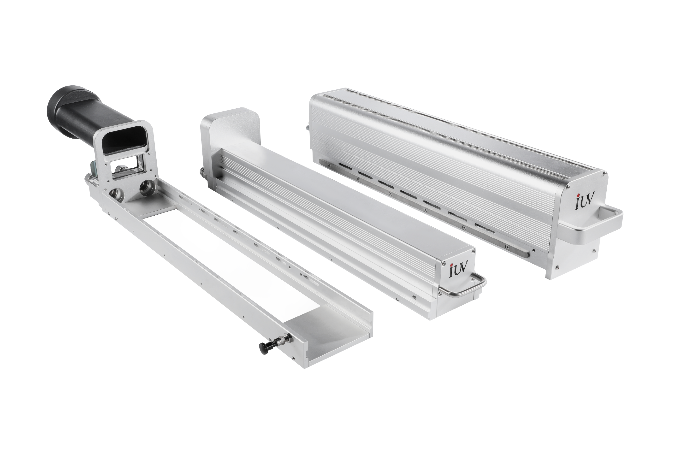
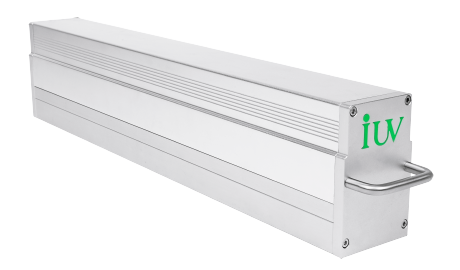
Furthermore, LED units offer much higher peak irradiance compared to standard arc lamps. A high-end LED lamp can deliver 20W/cm² or more directly to the substrate. This concentrated power is the primary engine behind achieving speeds of 500 meters per minute without compromising the integrity of the print.

Tackling Oxygen Inhibition in Flexo and Offset

One of the biggest obstacles to high-speed UV curing is oxygen inhibition. In free-radical UV systems, oxygen molecules at the surface of the ink film can trap free radicals. This slows down the polymerization process. At high speeds, the moving web creates a boundary layer of air that constantly feeds fresh oxygen into the curing zone.

This results in a “tacky” surface, even if the core of the ink is solid. To combat this at ultra-high speeds, printers have two main options:

  1. Nitrogen Inerting: Replacing the air in the curing chamber with nitrogen gas. This eliminates oxygen and allows the photoinitiators to work with near 100% efficiency. It is the gold standard for high-speed food packaging and high-end label production.
  2. High-Power LED Boosters: Using an extremely high-intensity LED array to “overwhelm” the oxygen. By generating a massive concentration of radicals instantly, the system can outpace the inhibitory effects of the oxygen boundary layer.

Ink Formulation and Photoinitiator Chemistry

You cannot optimize the hardware without addressing the chemistry. Inks designed for 100 meters per minute will fail at 300 meters per minute. High-speed ink formulations contain a higher concentration of photoinitiators that are tuned to the specific wavelength of the lamp.

In narrow-web flexo, viscosity control is also vital. As the press speeds up, the shear forces in the doctor blade and anilox system increase. If the ink viscosity is too high, the lay-down becomes uneven. If it is too low, the UV light might not interact correctly with the resin matrix.

Collaborating with ink suppliers is necessary to ensure the “cure speed” of the ink matches the “line speed” of the press. For offset printing, the ink films are much thinner, but the high speeds of narrow-web offset presses require rapid surface curing to prevent marking on the turn bars or nipping rollers.

Optimizing Lamp Geometry and Focal Points

The physical placement of the UV lamp relative to the substrate is a variable many operators overlook. For conventional arc lamps, the light is focused by elliptical reflectors. If the lamp is even a few millimeters out of focus, the peak irradiance at the web surface drops significantly.

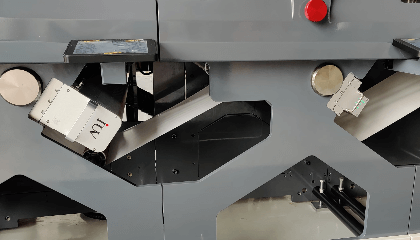
For LED systems, the light is more divergent. However, modern LED lamps use optics and lenses to colimate the light. To optimize for ultra-high speed, the distance between the LED window and the substrate should be kept as small as possible—usually between 5mm and 10mm. Every extra millimeter of distance results in a loss of intensity due to the inverse square law of light.

In narrow-web presses, space is limited. Integrated cooling systems (usually water-cooled for high-speed applications) allow the curing units to be compact. This enables engineers to place multiple lamps in a row if a single lamp cannot provide the necessary dose at maximum speed.

Substrate Heat Management

High-speed printing often involves thin films, foils, and shrink materials. Even with LED technology, which is “cold” compared to mercury, the polymerization process itself is exothermic. It generates heat.

When running at ultra-high speeds, the web spends very little time between stations. Heat can build up quickly. To manage this, high-speed lines must utilize chill rolls (water-cooled drums). These drums pull heat away from the substrate immediately after curing. This prevents the material from stretching or shrinking, which would ruin the registration of the print.

Maintaining a stable substrate temperature is also beneficial for the curing chemistry. Inks generally cure more efficiently when the substrate is slightly warm, but excessive heat leads to mechanical instability and web breaks.

Real-Time Monitoring and Quality Assurance

At 300 meters per minute, a curing failure can result in thousands of meters of wasted material in just a few minutes. Relying on a “thumb test” at the end of the roll is insufficient for modern quality standards.

High-speed lines should be equipped with online radiometers. These sensors monitor the output of the UV lamps in real-time. If the intensity drops below a pre-set threshold—perhaps due to a dirty lens or a failing power supply—the system alerts the operator or automatically slows the press.

Advanced converters also use UV dose mapping. By running a calibrated sensor through the press at various speeds, engineers can create a “curing curve.” This curve tells the operator exactly how much power is needed for any given speed, ensuring they never under-cure or waste energy by over-curing.

Maintenance Protocols for High-Speed Reliability

The demands of ultra-high-speed printing leave no room for equipment neglect. For mercury systems, reflectors must be cleaned weekly. A dull or dusty reflector can lose 30% of its curing efficiency. Lamps should be replaced before they reach their end-of-life flickers, as their spectral output shifts over time.

For LED systems, maintenance is simpler but still vital. The protective glass or lens must be kept free of ink mist and paper dust. If the cooling water becomes contaminated or the flow rate drops, the LED chips will overheat and lose power.

Regularly checking the chiller unit and the air filtration systems ensures the curing environment remains consistent. In the world of high-speed label printing, consistency is the foundation of speed.

Strategic Integration for Future Growth

Optimizing UV curing for high line speeds is a holistic challenge. It bridges the gap between the mechanical capabilities of the press and the chemical limits of the ink. By moving toward high-intensity LED systems, managing oxygen inhibition, and maintaining strict control over lamp geometry, converters can push their equipment to its true potential.

The goal is not just to run faster, but to run faster with total confidence in the finished product. As label designs become more complex and substrates become thinner, the ability to control the curing process at high velocities remains a significant competitive advantage in the narrow-web market.

Contact IUV Curing Experts

滚动至顶部