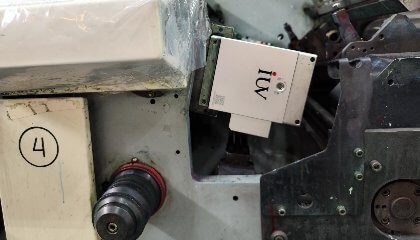
Achieving consistent results across varying web widths remains a significant challenge for label converters. Whether running a narrow-web flexographic press or a wide-format offset line, the goal is the same: a perfect polymer cross-linking across every inch of the substrate. When UV curing lacks uniformity, printers face issues like tacky ink surfaces, poor adhesion, or substrate warping. These problems often stem from the physics of light distribution and the mechanical setup of the curing system.
Improving curing performance requires a deep dive into how UV energy interacts with ink chemistry and press speed. By understanding the variables of irradiance and energy density, operators can fine-tune their processes for both wide and narrow designs.
The Physics of Light Distribution in UV Systems
Uniformity starts with how light leaves the lamp head. In traditional mercury vapor systems, reflectors play a primary role in directing energy. These reflectors are designed to focus light into a high-intensity peak at a specific focal point. However, as the lamp ages or the reflectors degrade, the light distribution becomes uneven.
In wide-web applications, the “edge effect” is a common hurdle. The intensity of UV light often drops off toward the ends of the lamp tube. To compensate, engineers often specify lamps that are slightly wider than the maximum web width. For narrow-web designs, the challenge shifts. If a narrow web passes through a wide UV system, the excess energy on the sides is wasted and can generate unnecessary heat within the press environment.
Transitioning to LED UV Curing Technology
LED UV technology has transformed how the industry approaches uniformity. Unlike arc lamps, LED arrays consist of multiple individual diodes. This modular nature allows for much tighter control over light distribution.
High-quality LED systems utilize optics—lenses or reflectors—to ensure the light beams are collimated. Collimation reduces the scattering of light, ensuring that the irradiance remains consistent even if the distance between the lamp and the substrate varies slightly. For printers switching between wide and narrow labels, LED systems offer “addressable zones.” Operators can turn off the outer sections of the LED bar when running narrow webs. This prevents light leakage and saves energy while maintaining a perfectly uniform profile across the active printing area.
Managing Thermal Loads on Sensitive Substrates
UV curing is not just about light; it is also about heat management. Traditional UV lamps emit a significant amount of infrared (IR) radiation. On a narrow web, this heat is concentrated in a small area. If the press slows down or the design requires high lamp power, the substrate can stretch or melt.
To improve uniformity without damaging the material, printers must balance web speed with UV output. Using chill rollers is a standard solution in flexographic printing. These rollers pull heat away from the substrate during the curing process. In offset printing, where ink layers are thinner, the thermal margin is even tighter. LED curing is inherently cooler because it does not emit IR radiation, making it the preferred choice for heat-sensitive films like PE or PP labels.
Reflector Maintenance and Geometry
In arc-based systems, the reflector is the most critical component for uniformity. Over time, dust, ink mist, and ozone can coat the reflector surface. This reduces its ability to focus UV energy, leading to “soft spots” in the cure.
Engineers should implement a strict cleaning schedule using lint-free cloths and approved solvents. Furthermore, the geometry of the reflector must match the application. Elliptical reflectors are excellent for high-intensity, narrow-focus curing, while parabolic reflectors provide a wider, more diffused light path. If you are struggling with uniformity on a wide-format press, switching to a more efficient reflector coating, such as dichroic “cold” mirrors, can help focus UV energy while reflecting IR heat away from the web.
Addressing Oxygen Inhibition in Flexo Inks
Flexographic inks are particularly susceptible to oxygen inhibition. Oxygen molecules at the surface of the ink layer can interfere with the free-radical polymerization process. This often results in a surface that feels dry but remains uncured underneath, or a “greasy” surface finish.
When printing wide labels, the air boundary layer moving with the web can create turbulence. This turbulence introduces more oxygen into the curing zone. To improve uniformity, some high-end narrow-web presses use nitrogen inerting. By replacing the oxygen in the curing chamber with nitrogen, the UV energy can work more efficiently. This results in a faster cure and a much harder, more consistent surface finish across the entire width of the design.
The Role of Web Speed and Irradiance
There is a common misconception that simply increasing lamp power will fix curing issues. However, curing is a balance between irradiance (the “brightness” of the light) and energy density (the total “dose” of light).
Irradiance is measured in Watts per square centimeter ($W/cm^2$). It is responsible for penetrating the ink layer to ensure adhesion to the substrate. Energy density is measured in Joules per square centimeter ($J/cm^2$) and is a function of time. If the press speed increases, the energy density decreases. To maintain uniformity across different label designs, operators must calibrate their UV systems to ensure that even at peak speeds, the center and the edges of the web receive the same Joules.
Strategic Lamp Positioning and Angling
The mechanical alignment of the UV system relative to the substrate is often overlooked. If the lamp head is not perfectly parallel to the chill roller or the flatbed, one side of the web will receive more energy than the other.
For wide-web offset or flexo presses, using a staggered lamp configuration can improve uniformity. Instead of one long lamp, two or more overlapping lamps are used. This ensures that the drop-off zones at the ends of the tubes are covered by the center-point of the adjacent lamp. In narrow-web setups, adjusting the lamp height is more effective. Lowering the lamp increases irradiance but narrows the curing window. Finding the “sweet spot” requires testing with UV-sensitive strips or radiometers across the full width of the web.
Monitoring with Radiometry
You cannot manage what you do not measure. To ensure uniformity across wide and narrow designs, periodic radiometry is essential. Using a “Power Map” radiometer allows engineers to see the exact profile of the UV output.
By passing the radiometer through the curing system at different positions (left, center, right), you can identify if a lamp is sagging or if a specific LED module is failing. For narrow-web printers, this data helps in setting the baseline for different substrates. If a clear-on-clear label requires $150 mJ/cm^2$, the radiometer confirms that this dose is consistent regardless of the design width.
Ink Chemistry and Pigment Loading
Different ink colors absorb UV light at different rates. Black and white inks are notoriously difficult to cure uniformly because their high pigment loading blocks UV penetration. When printing wide designs with heavy ink coverage, the demand on the UV system is much higher than for a simple line-art narrow label.
To improve results, work with ink suppliers to match the photoinitiator package to the output spectrum of your lamps. LED-optimized inks are formulated to react specifically to the 365nm or 395nm wavelengths. Using the wrong ink-lamp combination leads to patchy curing, which is often mistaken for a mechanical uniformity issue.
Precision Control of Web Tension
Uniform curing also depends on the physical stability of the substrate. If web tension is inconsistent, the material may flutter or “smile” as it passes under the UV lamps. This movement changes the distance between the ink and the light source, causing fluctuations in irradiance.
In narrow-web printing, tension control is usually easier to manage. However, on wider webs, maintaining even tension across the entire width requires precision-ground rollers and sophisticated drive systems. Any slack in the web will lead to localized under-curing, especially in high-speed flexo environments.
Practical Steps for Daily Production
Improving UV curing uniformity is an iterative process. Start by inspecting the hardware. Ensure reflectors are shiny and LED windows are free of ink splatter. Next, verify the alignment. A simple level can tell you if the lamp head is tilted.
For converters running a mix of wide and narrow jobs, documentation is your best tool. Record the power settings, web speeds, and radiometer readings for every major job type. When a uniformity issue arises, these records allow you to quickly determine if the problem is a degrading component or a change in the process variables.
By focusing on the synergy between mechanical alignment, LED control, and ink chemistry, label printers can achieve a level of consistency that satisfies even the most demanding brand owners. Uniformity is not a one-time setup; it is a standard of operation that defines the quality of the modern printing plant.