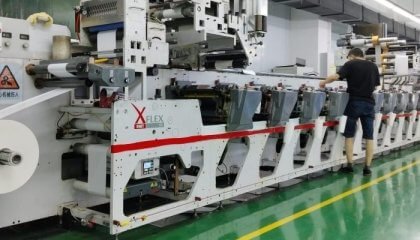
Label converters face a relentless demand for consistency. A brand’s signature red must look the same on a shelf in New York as it does six months later in a humid climate in Southeast Asia. In the world of narrow-web printing, achieving this level of long-term color stability depends on more than just high-quality pigments. It relies heavily on the precision of the UV curing process.
Whether you are running a high-speed flexographic press or a detailed offset line, the transition of ink from a liquid state to a solid film is a complex chemical reaction. If this reaction is incomplete or poorly managed, the color integrity of the label is compromised.
The Chemistry of Color Stability
UV-curable inks are composed of photoinitiators, monomers, oligomers, and pigments. When these inks pass under a UV lamp—whether traditional mercury vapor or modern LED—the photoinitiators absorb light energy and trigger a chain reaction called polymerization. This process turns the liquid ink into a hard, cross-linked polymer matrix.
Color stability is directly tied to the density of this cross-linking. When ink is “properly” cured, the pigment particles are locked into a stable structure. If the curing is insufficient, the ink remains chemically “active.” Unreacted monomers can migrate, and the pigment can shift or react with environmental factors like oxygen and moisture. This leads to fading, darkening, or a shift in hue over time.
Why UV LED Curing is Changing the Standard
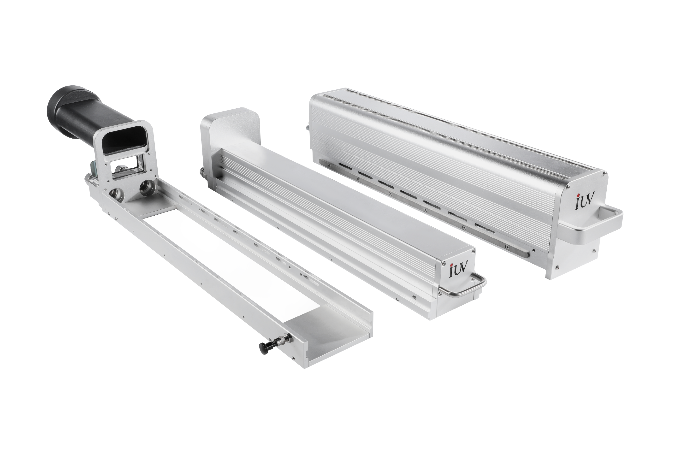
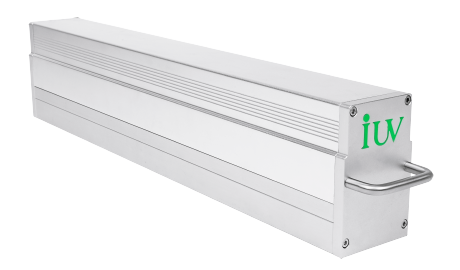
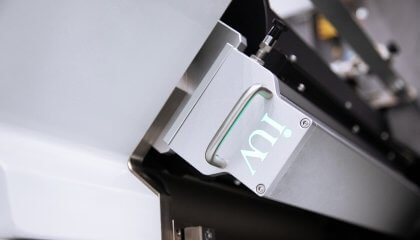
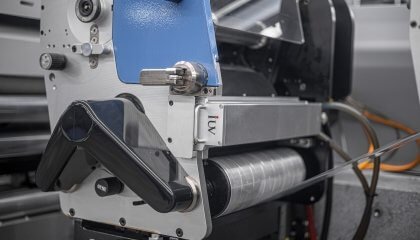
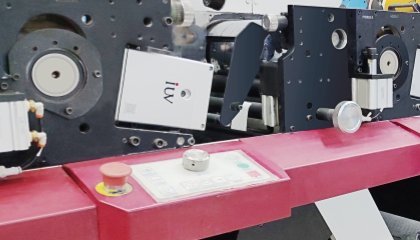
In recent years, LED UV curing has become the gold standard for narrow-web label printing. Unlike mercury lamps, which emit a broad spectrum of light (including a significant amount of infrared heat), LED lamps emit a narrow, concentrated wavelength—typically 365nm or 395nm.
This spectral consistency is a primary driver of color stability. Traditional mercury lamps degrade over time. As the bulb ages, its spectral output shifts, and its intensity drops. This means the “dose” of UV light the ink receives today might be different from what it receives next week. Such fluctuations lead to subtle variations in the polymerization degree, resulting in inconsistent color across different production runs.
LED systems, by contrast, maintain a stable output for tens of thousands of hours. Because the energy delivery is consistent, the chemical structure of the cured ink film remains identical from the first foot of the roll to the last.
Managing the Heat Factor in Narrow-Web Printing
Heat is an often-overlooked enemy of color stability. In narrow-web flexo and offset printing, thin film substrates are common. Mercury lamps generate intense heat, which can cause the substrate to stretch or distort. Even a microscopic change in the material’s dimensions during the printing process affects dot gain and ink laydown.
When the substrate fluctuates, the perceived color changes. LED UV curing is a “cold” process. By eliminating infrared radiation, the substrate remains stable and flat. This allows for tighter registration and more predictable color reproduction on heat-sensitive materials like PE, BOPP, and shrink sleeves. Keeping the material cool ensures that the physical foundation of your color remains unchanged.
Over-Curing vs. Under-Curing: Finding the Sweet Spot
Achieving long-term color stability requires a balance. Both under-curing and over-curing present risks to the finished product.
Under-Curing: This occurs when the UV dose is too low to reach the bottom of the ink film. While the surface might feel dry, the base remains soft. This results in poor adhesion and “ghosting.” Over time, the unreacted components can cause the color to “yellow” or bleed. In multi-color flexo printing, under-cured trap colors can mix on the press, leading to muddy mid-tones that shift as the product sits in storage.
Over-Curing: It is a common misconception that more light is always better. Excessive UV exposure can cause “solarization” or degradation of the polymer matrix. High-intensity UV can actually break the chemical bonds it just created, leading to a brittle ink film that cracks or flakes. More importantly, over-exposure to certain UV wavelengths can bleach the organic pigments used in many bright labels, causing the color to look washed out before it even leaves the factory.
The Impact of Ink Film Thickness in Offset and Flexo
The curing requirements differ significantly between printing processes.
In offset printing, the ink film is extremely thin. This allows UV light to penetrate easily, but it also makes the ink more susceptible to oxygen inhibition. Oxygen can interfere with the polymerization at the surface, leaving a tacky finish that attracts dust and dulls the color. Proper UV system calibration ensures that the energy density is high enough to overcome this inhibition.
In flexographic printing, the ink film is thicker. To ensure long-term color stability, the UV light must penetrate through the entire pigment layer to the substrate. If you are using high-opacity inks or heavy pigment loads (common in premium labels), the UV system must provide enough “peak irradiance” to reach the bottom. If the bottom layer isn’t cured, the label will eventually suffer from “delamination,” where the color literally peels off the material.
Process Control: The Key to Repeatability
Professional printing engineers know that you cannot manage what you do not measure. To guarantee color stability, converters must implement rigorous process controls.
- Radiometry: Periodically measuring the output of UV lamps with a radiometer is essential. This ensures the system is delivering the required Joules (energy) and Watts (intensity).
- Reflector Maintenance: In mercury systems, the reflectors focus the light. If they are dusty or warped, the “focus” of the UV beam shifts, leading to uneven curing across the web width. This creates “side-to-center” color variation.
- Chilled Rollers: For high-speed narrow-web presses, chilled rollers help manage the exothermic heat of the curing reaction. Keeping the web temperature consistent prevents the substrate from “breathing,” which stabilizes the dot structure.
The Role of Photoinitiators and Pigment Interaction
Not all pigments react to UV light the same way. Some pigments, particularly blacks and opaque whites, actually compete with the photoinitiators for UV light. They absorb the energy that the ink needs to cure.
Engineers must match the UV lamp’s output to the ink’s absorption profile. This is where LED UV shines. Since the wavelength is specific, ink chemists can formulate “LED-optimized” inks that utilize every bit of the emitted light. This synergy between the lamp and the ink chemistry creates the most stable, light-fast, and durable finish possible in modern printing.
Long-Term Environmental Resistance
Properly cured UV ink acts as a protective shield. In outdoor applications or industrial environments, labels are exposed to sunlight (UV), chemicals, and mechanical abrasion.
A fully cross-linked ink film is chemically inert. It prevents oxygen from reaching the pigment molecules, which slows down the oxidative fading process. If the curing is botched, the “open” chemical structure allows environmental pollutants to penetrate the ink, accelerating color degradation. Therefore, proper UV curing is effectively the primary “varnish” or protective layer for the label’s visual identity.
Conclusion: Investing in Consistency
For label printers, color stability is a core part of the value proposition. While ink selection and substrate quality are vital, the UV curing system is the engine that locks that quality in place.
By transitioning to stable LED UV technology and maintaining strict curing protocols, narrow-web converters can eliminate the variables that lead to color drift. Proper curing ensures that the vibrant, crisp labels produced today remain exactly that way until the consumer picks them up months later. In a competitive market, this technical reliability is what builds long-term trust between the printer and the brand owner.