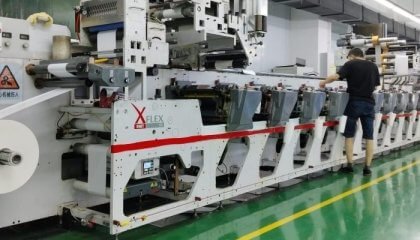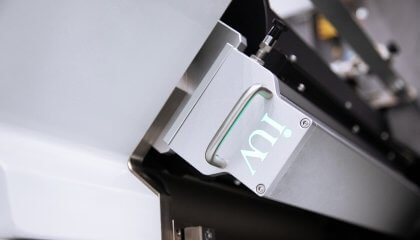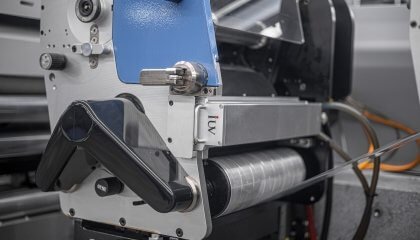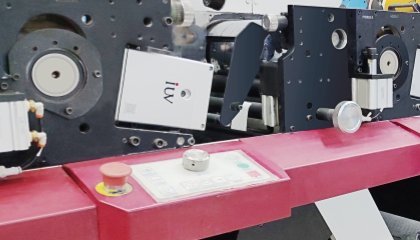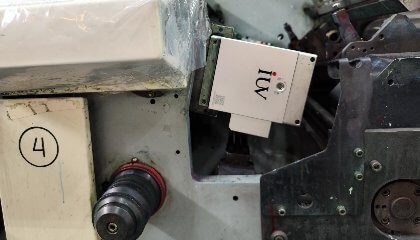
In the competitive world of label and packaging printing, achieving consistent, razor-sharp results is paramount. Brands demand vibrant colors and crisp details to capture consumer attention. Print service providers constantly seek technologies that deliver superior output while optimizing efficiency. For narrow web, flexographic, and offset printing applications, LED UV curing systems have emerged as a transformative solution, directly impacting print consistency and sharpness in profound ways.
The traditional reliance on mercury vapor lamps for UV curing, while effective, presents inherent limitations. These lamps generate significant heat, leading to potential substrate distortion and requiring extensive cooling systems. Furthermore, their energy output can fluctuate with lamp age, introducing variability in the curing process. This variability often translates to inconsistent ink film hardness, uneven gloss levels, and a subtle loss of fine detail over a print run. The uneven spectral output of mercury lamps can also lead to over-curing or under-curing of specific ink components, further compromising final print quality.
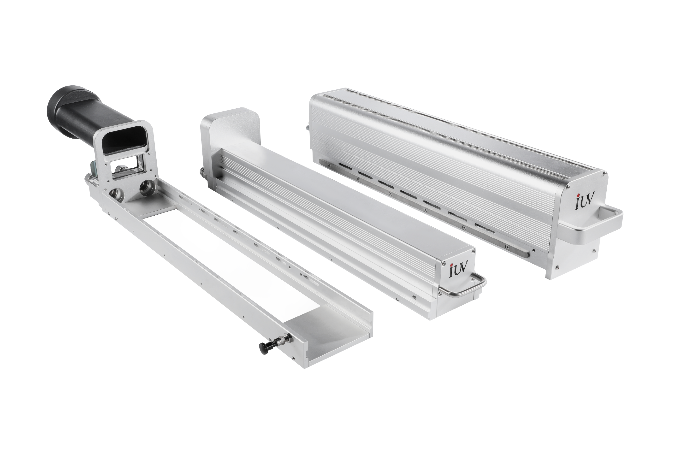
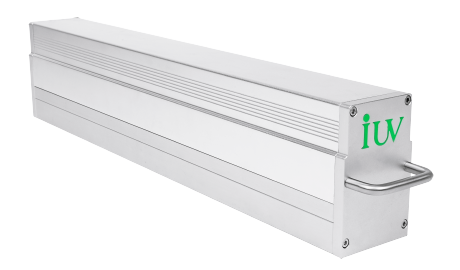
LED UV curing technology represents a paradigm shift. Instead of broad-spectrum UV light, LEDs emit highly focused wavelengths of UV energy. This precise wavelength control allows for highly efficient and targeted curing of specific UV-reactive inks, coatings, and adhesives. The result is a more uniform and complete cure across the entire ink film. This uniformity is the bedrock of improved print consistency.
The Science Behind Enhanced Consistency
One of the most significant advantages of LED UV curing is its stable and consistent energy output. Unlike mercury lamps that degrade over time, LEDs maintain their intensity for tens of thousands of hours. This longevity ensures that the energy delivered to the ink remains constant from the first print to the last. For printers, this means predictable curing performance and a significant reduction in the need for constant adjustments to maintain quality. When every printed piece cures identically, color registration remains stable, ink dot gain is controlled, and overall appearance is uniform across the entire production run.
The reduced heat generation from LED systems also plays a crucial role in consistency. Mercury lamps emit a substantial amount of infrared radiation, which is essentially heat. This can cause substrates, especially thinner films and papers used in narrow web printing, to expand and contract. These dimensional changes during the printing process can lead to misregistration of colors, particularly in multi-color jobs. LED systems, by contrast, generate very little heat. This keeps the substrate stable, allowing for precise registration of all printed elements, from fine text to intricate graphics. The result is sharper images and crisper lines, as the printed elements remain exactly where they were intended to be.
Achieving Superior Sharpness Through Precise Curing
Print sharpness is directly linked to how well the ink film is cured and how it interacts with the substrate. In offset and flexographic printing, achieving sharp dots and clean lines is essential for legibility and visual appeal. LED UV curing contributes to this in several ways.
The targeted wavelengths of LED emitters promote rapid and efficient polymerization of the UV ink. This quick and complete cross-linking of the ink molecules creates a robust, tightly bound film. This dense ink film is less prone to spreading or feathering on the substrate. Think of it like setting concrete; a fast, complete cure results in a solid structure. In printing, this translates to well-defined edges around text and graphics, preventing the “halo” effect that can reduce sharpness.
Furthermore, the controlled energy output of LEDs allows printers to fine-tune the curing process to match specific ink formulations. Different inks and coatings have optimal curing parameters. LED systems can be precisely set to deliver the exact amount and type of UV energy required, ensuring complete cure without over-exposure. Over-exposure can sometimes lead to brittleness or a change in the ink’s surface properties, indirectly affecting sharpness. Under-exposure, of course, leads to uncured ink, smudging, and poor adhesion, which are the antithesis of sharpness.
Benefits Across Printing Technologies
Flexographic Printing: In flexo, where plates are raised and ink is transferred via an anilox roll, achieving sharp dots is critical for fine details and smooth tonal gradations. LED UV curing helps maintain the integrity of these dots. The precise cure prevents dot gain associated with incomplete drying and ensures that the ink film solidifies quickly without excessive spreading, preserving the fine relief of the image. This is especially important for high-resolution graphics and small text commonly found on labels.
Offset Printing: For offset printing, particularly web offset used in narrow web applications, consistency is key for long runs. LED UV curing provides stable, repeatable curing that maintains ink film hardness and gloss from start to finish. This consistency means that the visual appearance of the print, including the sharpness of image elements and the clarity of text, remains the same throughout the entire job, reducing waste and ensuring brand color accuracy.
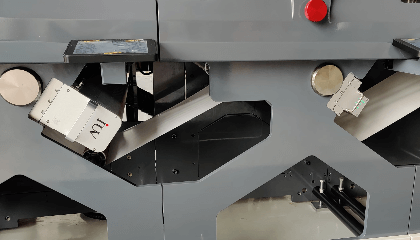
Narrow Web Printing: This sector often deals with a wide array of substrates, from paper to complex plastic films. The low-heat output of LED UV systems is a major advantage here. It prevents delicate films from shrinking or distorting, which can compromise registration and sharpness. The efficient cure also means that inks and coatings adhere strongly, even to low-surface-energy plastics, preserving the crispness and durability of the print.
Overcoming Challenges and Embracing the Future
While LED UV curing offers substantial benefits, it’s important to note that successful implementation requires compatible inks, coatings, and anilox rolls. Printers need to work with suppliers who offer formulations specifically designed for LED curing. The wavelengths emitted by LEDs are typically in the UVA spectrum (e.g., 365 nm, 395 nm, 405 nm), and inks must be formulated to absorb this energy efficiently.
The initial investment in LED UV curing systems may be higher than traditional mercury lamp systems. However, this is often offset by significant long-term savings. LEDs consume considerably less energy, have a much longer lifespan, and require less maintenance. The reduction in downtime due to lamp replacement and the decreased need for cooling also contribute to a lower total cost of ownership.
The drive for enhanced print quality, coupled with the growing demand for sustainable and efficient printing processes, positions LED UV curing as the future for label and narrow web printing. Its ability to deliver consistent, sharp, and vibrant results directly addresses the core needs of brand owners and the operational demands of printers. By providing a stable, controlled, and efficient curing process, LED UV technology empowers printers to achieve a new level of excellence in their finished products.