<!-- Meta Pixel Code --> <!-- 结束元像素代码 -->

How LED UV Curing Systems Enable Instant Handling and Faster Finishing

How LED UV Curing Systems Enable Instant Handling and Faster Finishing

The printing industry is in constant pursuit of speed and efficiency. Delays in handling and finishing can significantly bottleneck production, impacting turnaround times and profitability. Enter LED UV curing systems – a transformative technology that is fundamentally changing how we approach print finishing. This article explores how these advanced systems enable instant handling and faster finishing across various printing applications, from labels to wider formats.

The Challenge of Traditional Curing

For decades, printers relied on heat-set or mercury vapor UV curing. While effective to a degree, these methods came with inherent limitations. Heat-set curing requires significant energy consumption and extended cooling times before stacked or further processed. Mercury vapor UV lamps, while faster than heat-set, still present challenges. They generate substantial heat, which can damage sensitive substrates, and their lifespan is limited, requiring frequent replacement and incurring disposal costs. Furthermore, the uneven energy output and ozone generation associated with mercury lamps posed operational and environmental concerns. The “tack” – the sticky residue left on printed surfaces – often meant waiting periods were still necessary, delaying the crucial next steps in the production workflow.

The LED UV Advantage: Speed and Precision

LED UV curing systems operate on a fundamentally different principle. Instead of broad-spectrum light, LEDs emit highly focused wavelengths of UV light. This targeted emission offers several key advantages.

Instantaneous Curing: The most striking benefit is the speed at which LED UV inks and coatings cure. When exposed to the specific wavelengths emitted by the LEDs, the photoinitiators within the ink or coating react almost instantaneously, forming a solid, durable film. This means printed materials are dry and ready for the next stage of production – whether it’s stacking, rewinding, die-cutting, or further finishing – immediately after exiting the curing zone. This eliminates the waiting times associated with traditional methods, dramatically speeding up the entire process.

Reduced Heat Transfer: Unlike mercury lamps, LED UV systems generate very little heat. This is a game-changer for printing on heat-sensitive substrates like thin films, certain plastics, and delicate papers. The reduced thermal load prevents substrate distortion, curling, or damage, ensuring the integrity of the printed product. This opens up new possibilities for substrate selection and application.

Energy Efficiency: LED UV systems are remarkably energy-efficient. They consume significantly less power compared to conventional UV lamps and heat-set dryers. LEDs only emit light when activated, and their energy output is consistent. This translates to lower operational costs and a smaller carbon footprint, aligning with increasing industry demands for sustainability.

Longer Lifespan and Reduced Maintenance: The operational lifespan of LED UV lamps is significantly longer than mercury vapor lamps, often reaching tens of thousands of hours. This reduces downtime for replacements, minimizes maintenance costs, and lowers the environmental impact of waste disposal. The consistent output also means less variability in curing performance over time.

Impact on Specific Printing Sectors

The advantages of LED UV curing are particularly pronounced in sectors that demand high-speed, high-quality output with immediate finishing capabilities.

Label Printing: The Perfect Fit

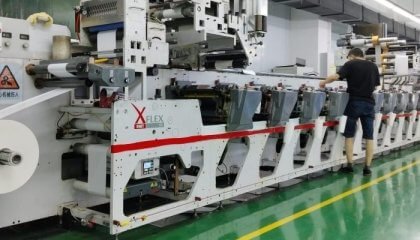
The narrow web label printing industry is a prime example of where LED UV curing has made a profound impact. Labels often require intricate designs, vibrant colors, and a durable finish that can withstand handling and environmental exposure.

  • Instant Handling: In label printing, rolls of labels are often printed at very high speeds. The ability to immediately rewind the printed web without tack or smudging is critical. LED UV allows for instant tack-free curing, enabling high-speed rewinding and slitting operations without the risk of ink transfer between layers or damage to the printed surface. This means finished rolls are ready for die-cutting or other post-press operations much faster.
  • Versatile Substrates: Labels are printed on a vast array of materials, including paper, films, and foils. The low heat output of LED UV curing is ideal for printing on thin, heat-sensitive films and plastics commonly used for food, beverage, and cosmetic labels. This expands the range of label applications printers can offer.
  • Specialty Finishes: With LED UV, printers can achieve a variety of high-gloss or matte finishes with specialized coatings. These finishes are cured instantly, adding value and visual appeal to the label without slowing down the press.

Flexographic Printing: Enhancing Speed and Quality

Flexography, a versatile printing process widely used for packaging, labels, and commercial printing, benefits immensely from LED UV technology.

  • Faster Press Speeds: LED UV curing allows flexo presses to run at higher speeds than previously possible with conventional curing methods. The instantaneous cure means ink is fully set as it leaves the print station, preventing ink transfer to anilox rolls, plates, or other parts of the press, thus maintaining print quality at elevated speeds.
  • Improved Ink Laydown and Color Density: The precise control over the UV spectrum ensures optimal curing of specialized flexo inks, leading to excellent color density and sharp image reproduction. This is crucial for brand owners who require accurate color representation.
  • Reduced Dot Gain: For fine details and halftones, the ability to achieve a fast, solid cure helps minimize dot gain, resulting in cleaner, more defined printed images.

Offset Printing (Sheetfed and Web): Streamlining the Workflow

While offset printing has traditionally relied on heat-set for web applications or air drying for sheetfed, LED UV is increasingly being adopted.

  • Sheetfed Offset: In sheetfed offset, LED UV curing enables instant handling of printed sheets. This means sheets can be stacked immediately without the need for anti-set powders, which can interfere with subsequent printing or finishing processes. It also eliminates the waiting time for sheets to dry, allowing for faster finishing operations like cutting, folding, and gluing. The low heat is also beneficial for printing on thinner stocks.
  • Web Offset: For web offset printers, particularly in commercial printing and publication applications, LED UV can significantly improve turnaround times. The instant drying capability allows for immediate rewinding or processing, reducing the need for large drying towers and associated energy costs. This is particularly advantageous for short-run, quick-turnaround jobs.

Narrow Web Printing: A Natural Evolution

As mentioned with labels, narrow web printing, encompassing a range of applications beyond labels such as flexible packaging and specialty tapes, finds LED UV to be a perfect synergy. The high speeds inherent in narrow web presses are fully supported by the rapid curing capabilities of LED UV, ensuring consistent quality and immediate post-print handling.

Beyond Basic Curing: Advanced Finishing Capabilities

The benefits of LED UV curing extend beyond simply drying ink. The technology enables a new range of finishing possibilities that can be integrated directly into the printing process.

  • Inline Coating and Varnishing: LED UV systems can be used to apply and cure a variety of coatings and varnishes in-line with printing. This includes high-gloss, matte, textured, and even soft-touch finishes. Because the curing is instantaneous, these finishes can be applied without slowing down the press, adding significant value to printed products.
  • Special Effects: Specialty inks and coatings designed for LED UV curing allow for unique visual and tactile effects, such as raised printing (embossing-like effects), metallic finishes, and even scratch-resistant coatings, all cured on-the-fly.
  • Digital Finishing Integration: The compatibility of LED UV curing with digital finishing equipment is another major advantage. Processes like digital die-cutting, foiling, and embellishment can be integrated seamlessly with LED UV-cured prints, further streamlining production and enabling customization.

Addressing Concerns and Future Outlook

While the benefits are clear, some considerations remain. The initial investment in LED UV curing equipment can be higher than traditional systems. However, the long-term savings in energy consumption, reduced waste, and increased throughput often provide a compelling return on investment. It’s also important to ensure compatibility with existing inks and coatings, though the market for LED UV-curable inks has expanded dramatically.

The future of LED UV curing in the printing industry looks exceptionally bright. As the technology continues to evolve, we can expect even greater efficiency, wider substrate compatibility, and new innovative applications. The drive for faster production cycles, reduced environmental impact, and enhanced finishing capabilities will undoubtedly see LED UV curing systems become an even more indispensable part of the modern print workflow. For printers looking to boost productivity, expand their service offerings, and gain a competitive edge, embracing LED UV technology is no longer just an option – it’s a strategic imperative.

Contact IUV Curing Experts

滚动至顶部